

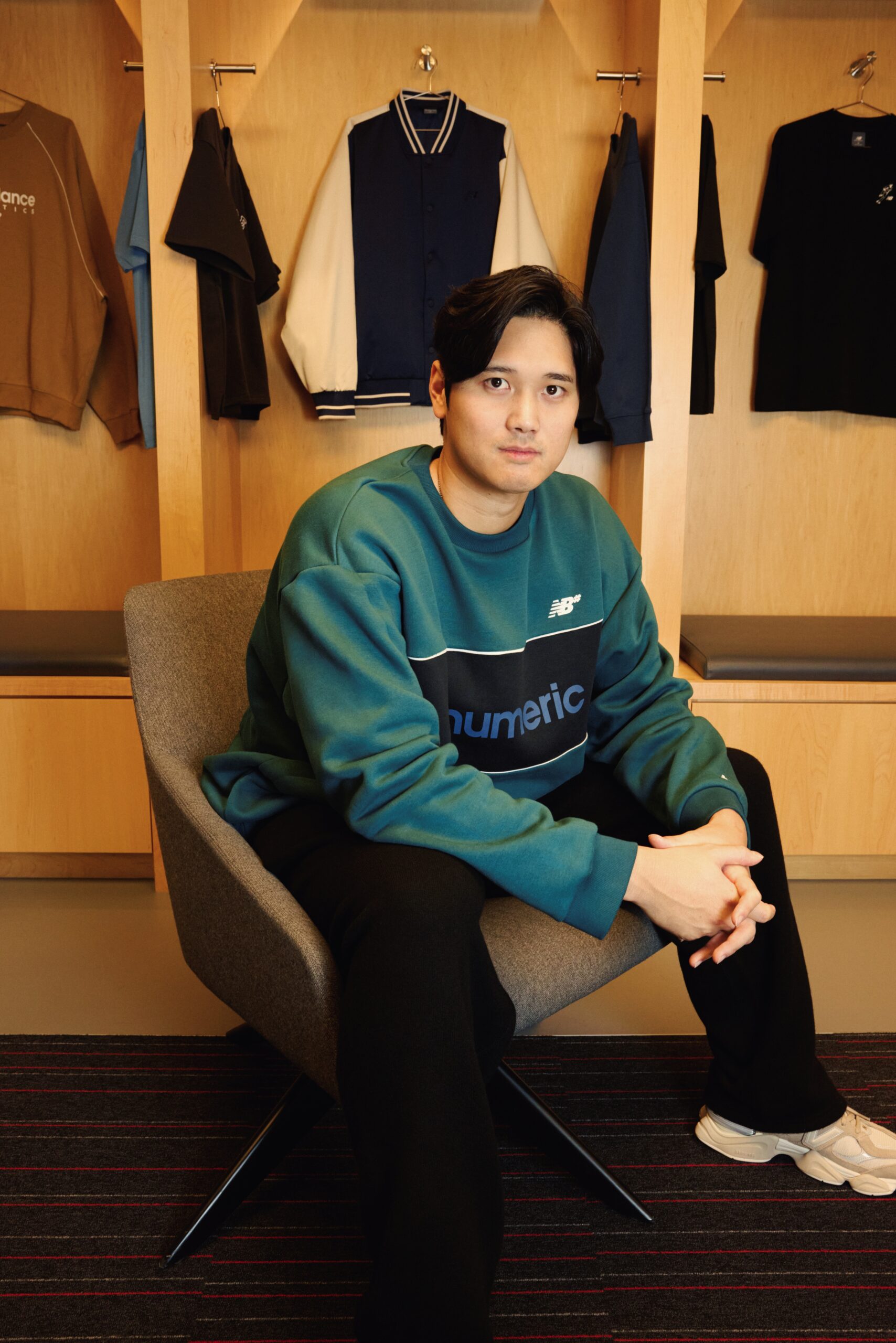
Shohei Ohtani and New Balance Are Building Something Beyond an Endorsement
By DaMarko GianCarlo
When Shohei Ohtani joined New Balance in 2023, the company was already working to establish a larger presence in baseball. It had spent years developing relationships with players, refining performance footwear, and building an athlete roster that could give the brand credibility in a sport long associated with competing athletic companies. Ohtani brought something different to that effort: an extraordinary combination of athletic ability, international recognition, and cultural influence that extended far beyond the field.
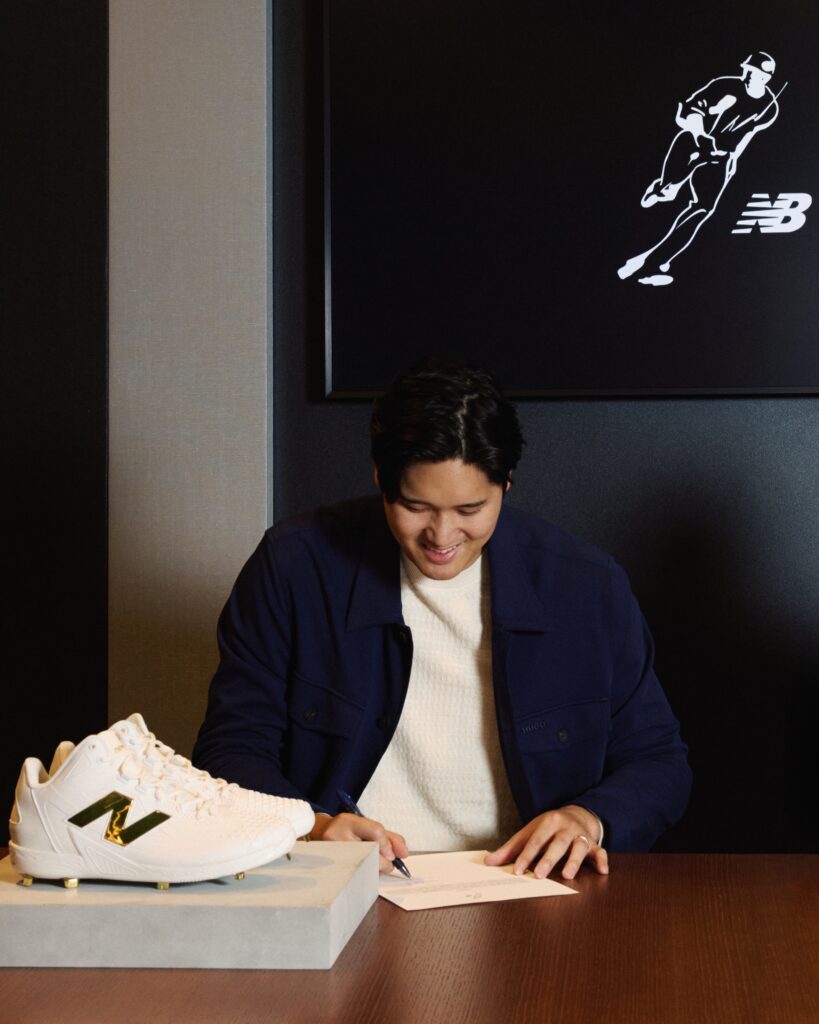
On November 20, 2026, New Balance announced that its relationship with Ohtani would continue for the remainder of his playing career. The agreement also includes renaming the company’s existing Sports Research Lab in Boston the Shohei Ohtani Sports Research Lab, recognizing his contributions to athlete research, product development, and innovation. The extension represents another stage in a partnership that has grown from performance equipment into signature products and a broader collaboration between an athlete and a global sportswear company.
The announcement is significant not because New Balance has secured another endorsement from a famous player, but because it reveals how extensively Ohtani has become involved in the company’s approach to developing products. His involvement extends to product development, while the lab’s renaming formally recognizes his contributions to the company’s research and innovation efforts.
For Ohtani, whose career has been defined by the unusual demands of competing as both a pitcher and a hitter, those distinctions are particularly relevant.
In its announcement, New Balance described his work with designers, developers, and sports scientists as an ongoing collaboration informed by the physical requirements of his two-way role. Ohtani has provided feedback on footwear and apparel, helping the company evaluate how products perform under conditions specific to his game.
“When I first joined New Balance, they saw me as more than just an athlete, and that relationship has only grown stronger over time,” Ohtani said in the company’s announcement.
His explanation reflects the importance he places on participating in the process rather than simply representing the finished product. New Balance has positioned that participation as a defining element of the relationship, although the financial terms and contractual decision-making rights associated with the agreement have not been disclosed.
The history of New Balance’s baseball business provides important context for understanding how the company reached this moment.
Long before Ohtani joined its roster, New Balance was developing relationships with established major league players. Francisco Lindor signed with the company in 2017, following his previous endorsement arrangement with Under Armour. Reporting by FOX Business in May 2026, subsequently highlighted by Sports Business Journal, documented how New Balance wanted Lindor to become a central figure in its baseball business rather than simply another athlete wearing its products.
The company continued expanding its roster, eventually bringing together players including Cal Raleigh, Garrett Crochet, Pete Crow-Armstrong, and Jac Caglianone. Its approach involved developing products and campaigns that reflected individual players, their performance needs, and their connections with baseball audiences.
That history matters because Ohtani did not arrive at a company beginning its first serious effort in baseball. He joined a business that had already established relationships within the sport and was seeking to expand its influence.
His arrival in January 2023 gave New Balance a particularly prominent athlete around whom it could develop a signature collection with international appeal. Over the following years, the partnership expanded into specialized footwear, apparel, and a personal visual identity.
The development of that collection also brought Ohtani into conversations that extended beyond the appearance of the products.
In a November 2026 interview with GQ, Ohtani discussed his direct involvement in footwear and apparel development. During a visit to New Balance’s headquarters, he reviewed aspects of his pitching footwear and considered adjustments to the spike configuration that could improve its performance. The reporting provided a specific example of the technical collaboration New Balance describes in its announcement.
It also revealed something about Ohtani’s relationship with the products carrying his name. His preferences extend beyond what a shoe looks like or how a collection is marketed. The details of fit, stability, comfort, and movement are part of a continuing discussion between the athlete and the people responsible for developing his equipment.
That involvement is especially relevant in baseball, where footwear must accommodate different forms of movement across pitching, hitting, running, and fielding. Ohtani’s experience in multiple roles gives him a distinctive perspective on those demands.
The new research lab designation recognizes that relationship publicly.
New Balance is not announcing the construction of a new facility exclusively for Ohtani. It is renaming an existing research operation at its Boston headquarters. The distinction is important. The company is recognizing his contributions to product development, not announcing that he will own, operate, or independently direct the laboratory.
Still, placing an athlete’s name on a research facility is a meaningful expression of how New Balance wants the relationship to be understood.
Chris Davis, the company’s president and chief marketing officer, explained that philosophy in the announcement.
“Sport and culture are no longer separate conversations,” Davis said.
The statement captures an important element of New Balance’s broader business strategy. Its athlete relationships are intended to extend across performance, fashion, and cultural identity rather than remain confined to a single sports category.
That approach was evident before the Ohtani extension. In January 2026, Sports Business Journal highlighted reporting about New Balance’s growing roster of athletes and its emphasis on what Davis described as “partnership over sponsorship.” The company’s strategy was to develop relationships that could influence the brand beyond traditional advertising campaigns.
Ohtani’s relationship offers a particularly visible example of that philosophy because of the different markets and audiences connected to his career.
His influence in Japan gives the partnership an international dimension that goes beyond Major League Baseball’s American audience. New Balance has identified Japan as an important market in its international strategy, and its November announcement connected the Ohtani relationship to the company’s efforts to strengthen its presence and relationships with Japanese athletes and consumers. These are stated business priorities, rather than independently measured commercial results attributable to Ohtani.
That strategy has also appeared in the development of his signature products, including apparel and footwear designed for both athletic performance and everyday use. The partnership gives New Balance an opportunity to connect baseball equipment with a wider lifestyle business while maintaining a recognizable relationship with one of Japan’s most prominent athletes.
The commercial opportunity is evident in the company’s stated objectives, although the precise financial contribution of Ohtani’s partnership has not been publicly established.
New Balance reported worldwide sales of $9.2 billion for 2025. That figure reflects the company’s overall operations across numerous product categories, athlete relationships, and international markets. It does not establish how much revenue Ohtani generated or what portion of the company’s growth can be attributed to him.
The distinction is essential when examining the business of celebrity partnerships. A prominent athlete can contribute to a company’s visibility, credibility, and product identity without publicly available evidence demonstrating the precise financial value of those contributions.
The Ohtani agreement also raises questions about the evolving structure of athlete endorsements. Traditional sponsorships often emphasize compensation in exchange for wearing products, appearing in campaigns, and associating an athlete’s reputation with a brand. More extensive collaborations can involve signature collections, technical feedback, and participation in product development.
Ohtani’s arrangement includes several of those elements, but the public announcement does not disclose whether he receives product royalties, holds equity in New Balance, or possesses contractual authority over particular business decisions. Nor does it establish what rights or obligations may continue after his playing career ends.
Those unanswered questions do not diminish what has been announced. They simply define the limits of what can presently be established about the agreement.
New Balance has committed to maintaining its relationship with Ohtani throughout his remaining playing career. It has developed signature products around his identity, incorporated his technical feedback into its design process, and chosen to recognize his contributions by placing his name on a research facility.
For Ohtani, the agreement provides continuity with a company whose products have become part of his professional routine. For New Balance, it secures an ongoing relationship with an athlete whose influence reaches audiences across baseball, fashion, and international popular culture.
There is something particularly revealing about the research lab announcement. An athlete’s name on a shoe or advertising campaign is immediately recognizable to consumers. A name attached to a laboratory speaks to a different part of the business, one concerned with how products are studied, tested, and developed before they reach the public.
It suggests that New Balance wants Ohtani’s contribution to be associated not only with what consumers see, but also with the work behind the products they use.
That does not make him an owner of the company or establish him as the architect of its baseball business. New Balance’s development in the sport began before his arrival and continues through relationships with numerous athletes. His partnership is part of that larger history, even as it has become one of the company’s most visible examples.
The career-long extension brings those different elements together. It recognizes an athlete whose performance has helped define a generation of baseball while formalizing a relationship that New Balance says will continue to influence its product development.
Ohtani will eventually reach the end of his playing career, although neither he nor New Balance has established when that will happen. Until then, the company has committed to continuing a collaboration that extends from the baseball field to the research and design process.
The larger significance lies in what that collaboration reveals about the changing relationship between athletes and the businesses they represent. The most recognizable figure in an advertising campaign may also be someone whose experience helps shape the product being advertised.
For New Balance and Shohei Ohtani, that relationship is no longer defined solely by what he wears when he takes the field. It is increasingly defined by the work they do together before he gets there.

DaMarko GianCarlo
DaMarko GianCarlo is the founder and Editor-in-Chief of GREAY Magazine, an independent publication examining the people, ideas, and industries shaping contemporary pop culture. Working across editorial direction, photography, and production, he approaches publishing as both a creative practice and a system for documenting culture. His work reflects a commitment to original storytelling, independent journalism, and the human experiences behind the stories GREAY tells.
Related Posts
From Starlet to Southpaw: Sydney Sweeney’s Knockout Transformation
Blood, Bruises, and Breakthroughs
Red Sole Evolution: Jaden Smith Named Christian Louboutin’s First Men’s Creative Director
A New Era of Luxury

Buildings that once distributed culture are now hosting it
The Lobby Isn’t for Waiting Anymore
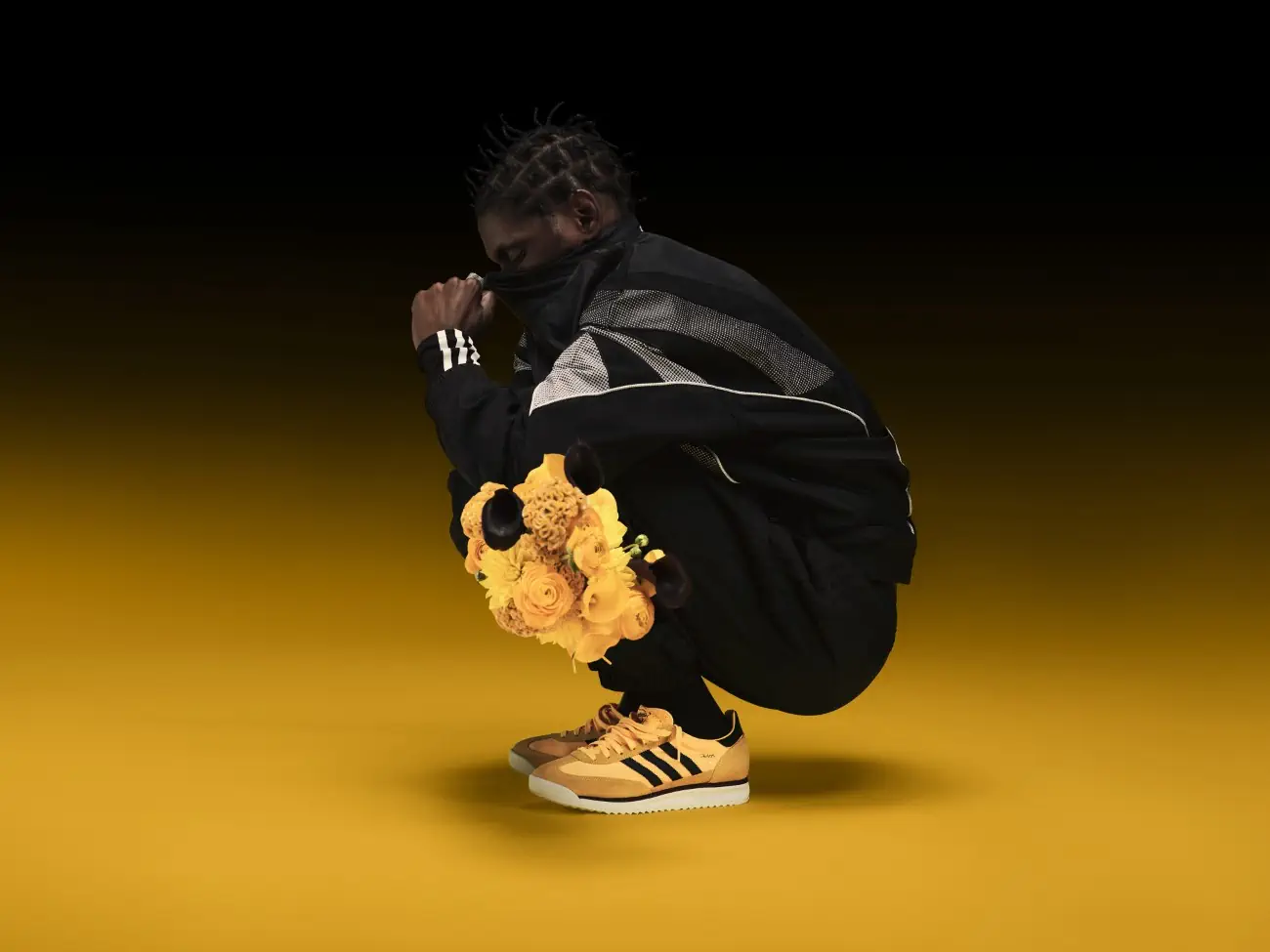
A$AP Nast Stars in adidas Originals’ Tribute to the Iconic SL 72
adidas Originals celebrates iconic SL 72.

Chainsaw Man: Reze Arc Hits Theaters Early With New Dubbed Trailer
From TV to Big Screen
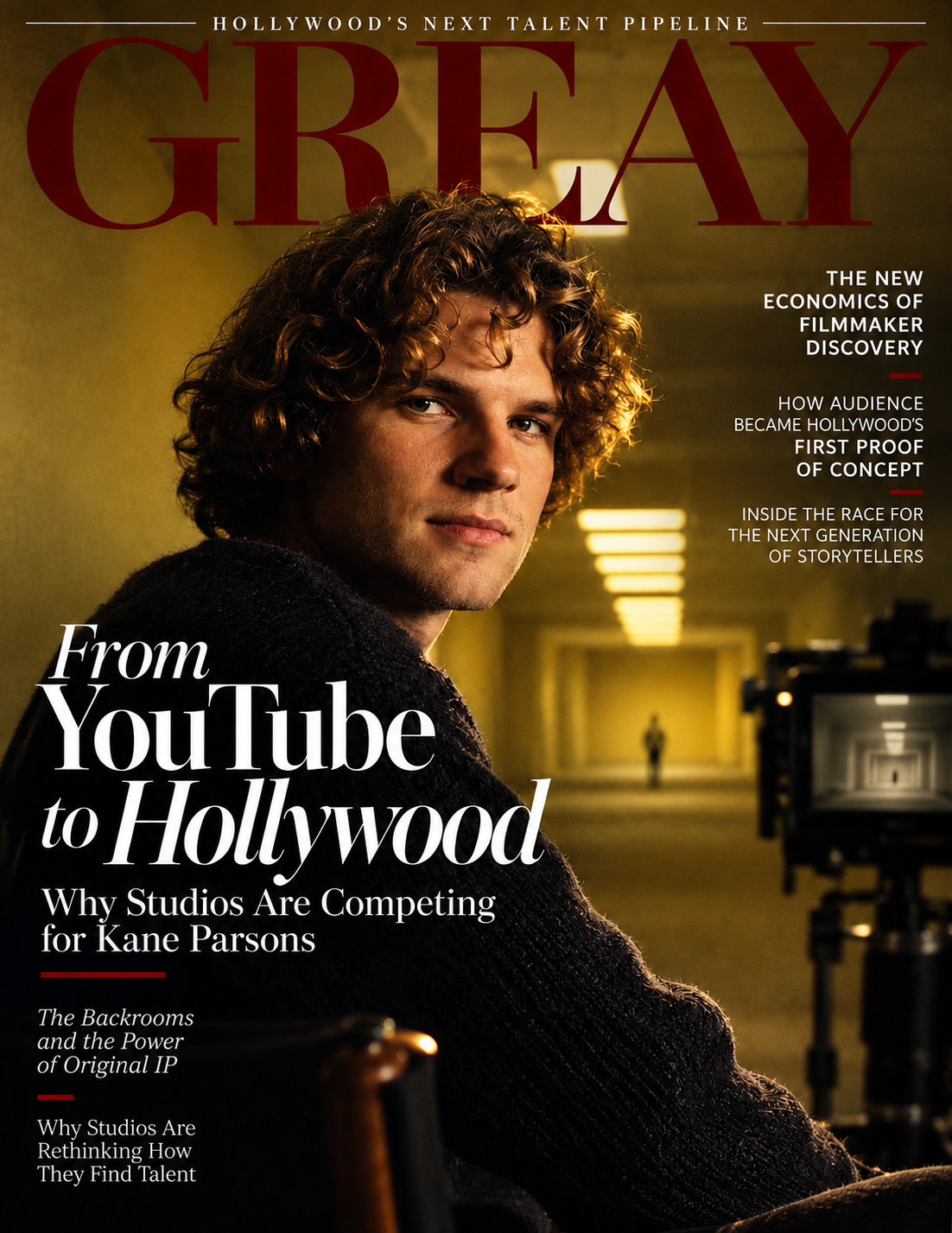
Kane Parsons Shows Why Hollywood Is Looking to YouTube for Its Next Filmmakers
A new generation of filmmakers is arriving with proof already in hand
POST COMMENT