

Banana Republic Is Bringing Scripted Entertainment Into Its Fashion Strategy
By DaMarko GianCarlo
With its new comedy series The Agency, the fashion retailer is revisiting its storytelling roots while exploring a new way to reach audiences through original entertainment.
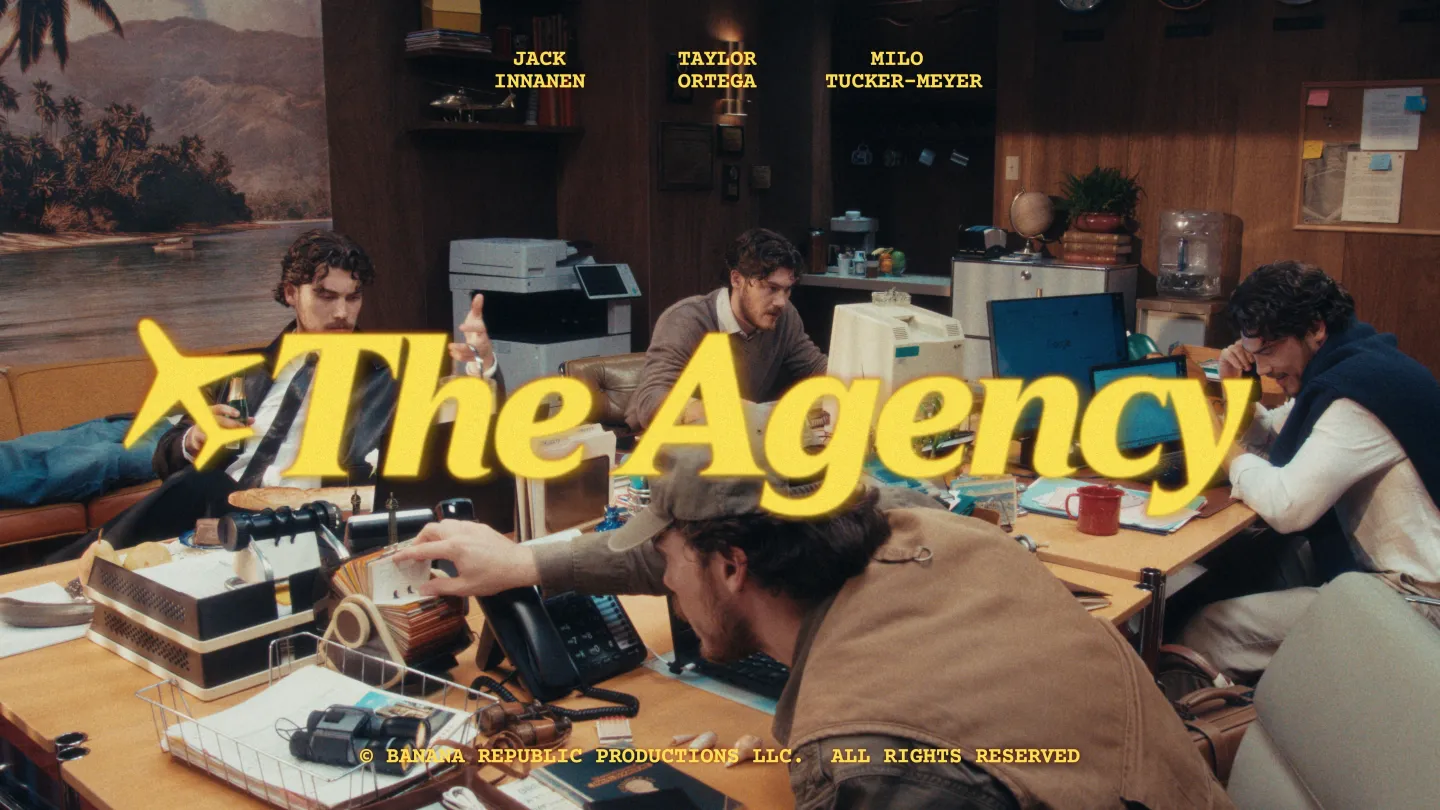
Banana Republic is entering scripted entertainment with The Agency, a five-part workplace comedy that debuted October 14, 2026. The TikTok-first series marks the retailer’s first channel-first original programming initiative, placing actors, fictional characters, and serialized storytelling at the center of a fashion marketing campaign. Rather than introducing a collection through conventional advertising, the company is using entertainment to invite audiences into a world built around its identity.
The decision has an interesting connection to Banana Republic’s beginnings. Founded in 1978 by journalist Mel Ziegler and illustrator Patricia Ziegler, the company originally approached clothing through travel, adventure, and imaginative storytelling. Its early catalogs combined illustrations, fictional narratives, and descriptive writing with merchandise, creating an experience that extended beyond the garments themselves. Nearly five decades later, the retailer is returning to that creative tradition through a format designed for contemporary digital audiences.
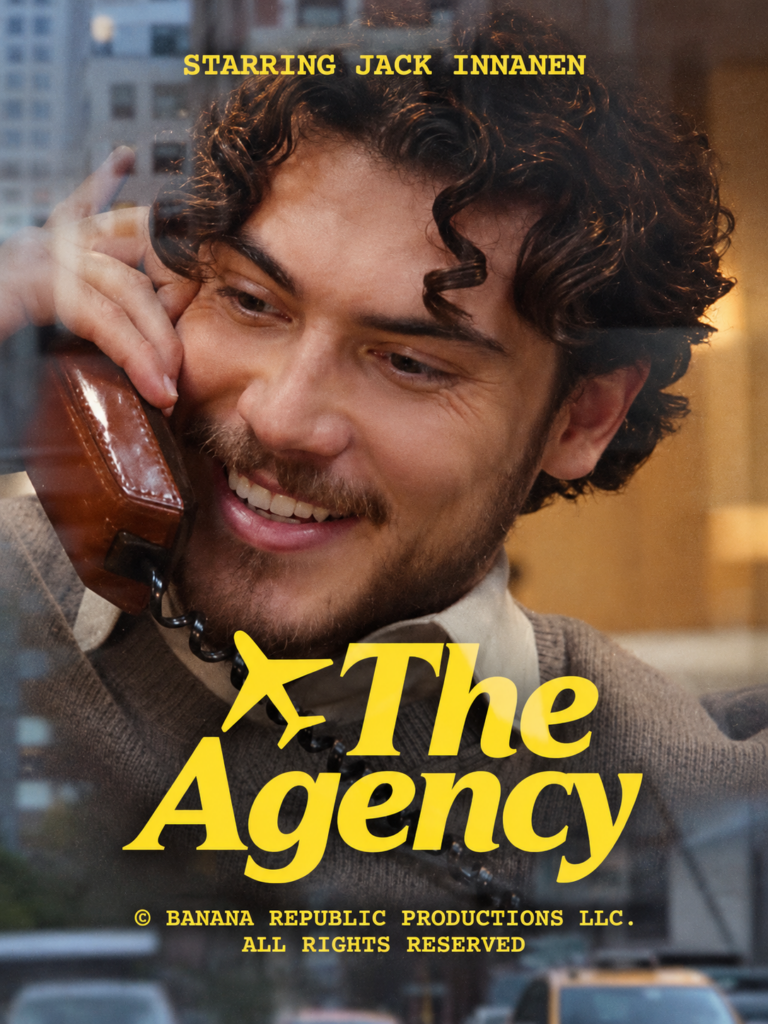
Starring Jack Innanen, Taylor Ortega, and Milo Tucker-Meyer, The Agency follows Travel & Tours, a fictional New York travel agency confronting the demands of modernization. Innanen portrays four employees, each representing a different personality within the struggling business. Ortega plays Dana, a corporate consultant assigned to bring the agency into the modern era, while Tucker-Meyer portrays Eli, an intern whose father manages the office.
The premise draws on a familiar workplace tension: an established organization attempting to adapt without losing the qualities that make it distinctive. The characters resist change, misunderstand one another, and navigate the absurdities of corporate expectations. For Banana Republic, the fictional travel agency provides a setting that connects naturally to the brand’s longstanding association with exploration and discovery.
That relationship between past and present is central to the company’s explanation of the project. Meena Anvary, Banana Republic’s chief marketing officer, described storytelling as part of the retailer’s identity since its founding. Speaking about The Agency, she explained that the company is “blending fashion and entertainment with a nostalgic sense of wit and irreverence.” Anvary also positioned the series as an opportunity to reinterpret the brand’s heritage for a new generation through stories designed to entertain.
The production operates under the Banana Republic Productions identity, with creative development involving COPE Global and Grand Nature. Jeffrey Scotti Schroeder wrote and directed the series, with Brianna Sedor also contributing to the writing. Cinematographer Sean Price Williams helped establish a visual language that draws on the atmosphere of an earlier era of office life. Wood-paneled interiors, aging equipment, analog telephones, and muted colors create a workplace that appears caught between its history and the demands of the present.
Clothing remains essential to the project, but its role has changed. Rather than interrupting the story to present products, Banana Republic uses wardrobe to establish character. The costumes incorporate contemporary designs alongside references to the retailer’s archives, allowing clothing to communicate personality, professional identity, and the contrast between generations.
These decisions allow the brand’s clothing to function as part of the fictional environment. The garments are visible and commercially relevant, but they also serve the narrative. Viewers encounter the products through characters and situations rather than through a conventional presentation of seasonal merchandise.
The distinction matters because fashion companies have traditionally depended on outside entertainment and media platforms to reach consumers. Television advertising, magazine campaigns, celebrity endorsements, and sponsored content have placed brands alongside stories created by others. With The Agency, Banana Republic is commissioning the story itself and distributing it directly through its own social channels.
The company plans to release episodes weekly, accompanied by behind-the-scenes material that extends the production beyond the scripted installments. This approach allows Banana Republic to maintain an ongoing presence with viewers throughout the series rather than concentrating attention around a single campaign launch.
The strategy also reflects a broader change in the relationship between consumer brands and entertainment. Companies including Marc Jacobs, Maybelline, and Crocs have experimented with short-form scripted storytelling as social platforms have become increasingly important destinations for entertainment. These initiatives differ in execution, but they share an interest in engaging audiences through characters and narratives rather than relying entirely on traditional promotional messages.
For Banana Republic, the involvement of Innanen is particularly relevant. The Canadian actor and comedian developed an audience through short-form comedy before expanding into television, including FX’s Adults. His career reflects the increasingly fluid relationship between digital creators and established entertainment, making him a fitting creative presence for a production intended to operate across those environments.
There is also a commercial question beneath the creative experiment. Traditional fashion advertising is often designed to generate awareness, interest, or purchases within a relatively direct relationship between exposure and consumer action. Scripted entertainment introduces another possibility: audiences may return because they are interested in the characters or the story, even when they have no immediate intention of purchasing clothing.
That distinction does not eliminate the commercial purpose of the production. The Agency remains branded entertainment, developed to support Banana Republic’s identity and relationship with consumers. Its significance lies in how the company is choosing to pursue that objective, using entertainment as the primary experience rather than treating it as a secondary element of advertising.
The project also raises questions about what success will mean. Audience views and engagement can demonstrate whether the series attracts attention, but they do not automatically establish whether viewers develop a stronger relationship with the brand or become customers. A successful comedy and a successful retail campaign may overlap without being measured in precisely the same way.
For now, Banana Republic has announced a limited five-part series, not a permanent slate of scripted productions or a sustained entertainment studio. The Banana Republic Productions identity establishes a creative framework for this initiative, but the company has not confirmed that it will continue producing original series beyond The Agency. Whether the experiment leads to additional programming remains an open question.
What makes the launch distinctive is the connection between the company’s history and its current ambitions. Banana Republic began with founders who understood that clothing could become more compelling when surrounded by imaginative stories. Its illustrated catalogs invited customers to participate in a fictional world of travel and adventure long before digital platforms made serialized entertainment available directly through a retailer’s own channels.
The medium has changed, but the underlying relationship between storytelling and commerce remains recognizable.
With The Agency, Banana Republic is testing whether audiences will spend time with a fashion brand not simply because they want its clothing, but because they want to see what happens next.
Related Posts
High Fashion, Higher Frequency: A$AP Rocky x Moncler
Cold World, Hot Style
Dua Lipa Stars in YSL Beauty’s New ‘Libre Flowers & Flames’ Campaign
Introducing YSL Beauty's LIBRE FLOWERS & FLAMES: A Fiery New Fragrance
Gridiron Greatness Meets Lifestyle Legacy—Josh Allen’s Stylish Leap to New Balance
From Firebaugh to Footwear
Where Fashion, Art, and Culture Unite: H&M, Ev Bravado, and Téla D’Amore Collaborate on a Collection Featuring Jean-Michel Basquiat’s Works
H&M, Ev Bravado, and Téla D'Amore Collaborate

Football Star Jude Bellingham stars in SKIMS’ latest men’s underwear campaign
SKIMS introduces its campaign featuring English football sensation Jud
Michelle Núñez: Fearless in Film, Music, and Storytelling
Michelle Nunez multi talented.
POST COMMENT