

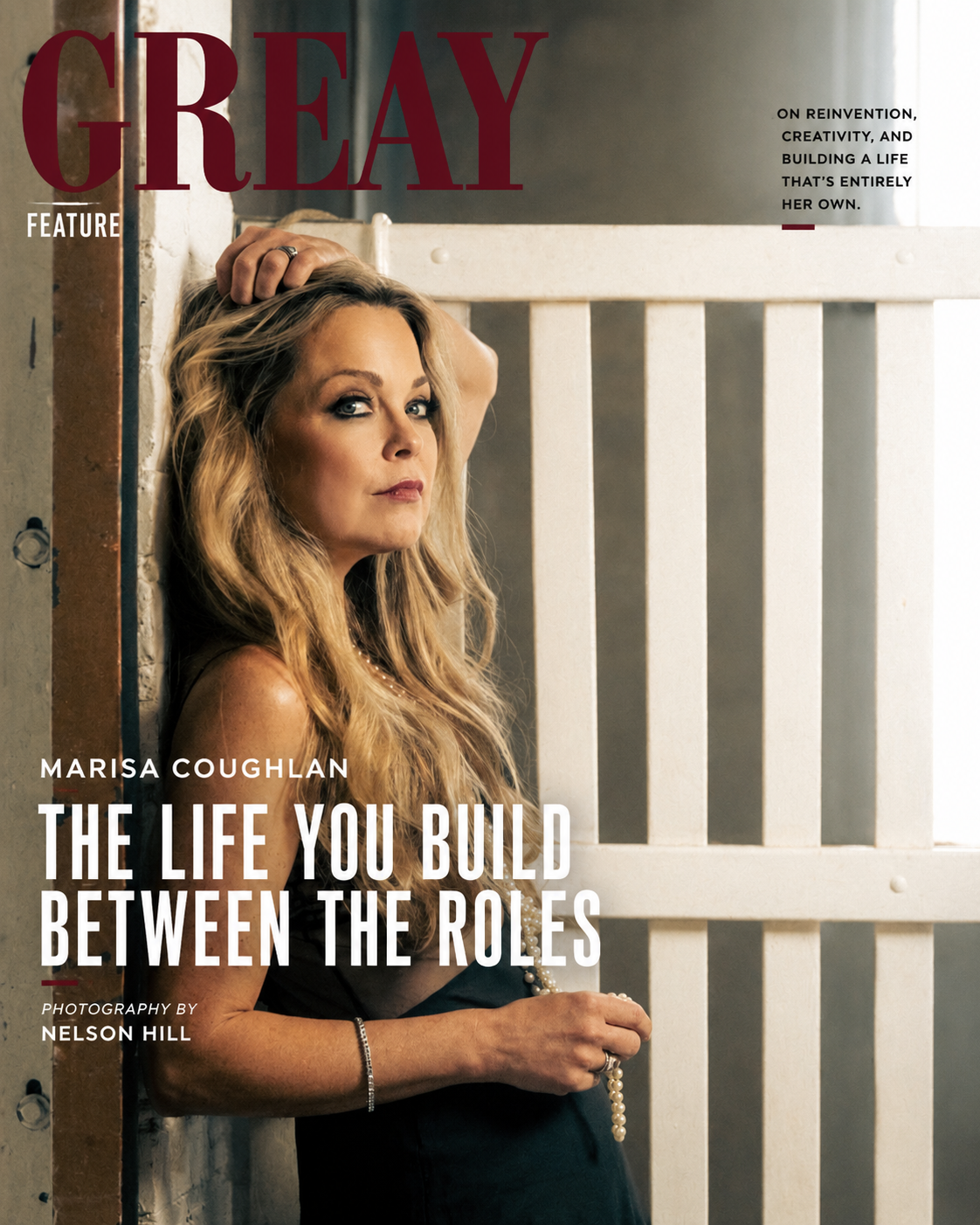
Marisa Coughlan on Building a Creative Life That Lasts
By Kyra Greene
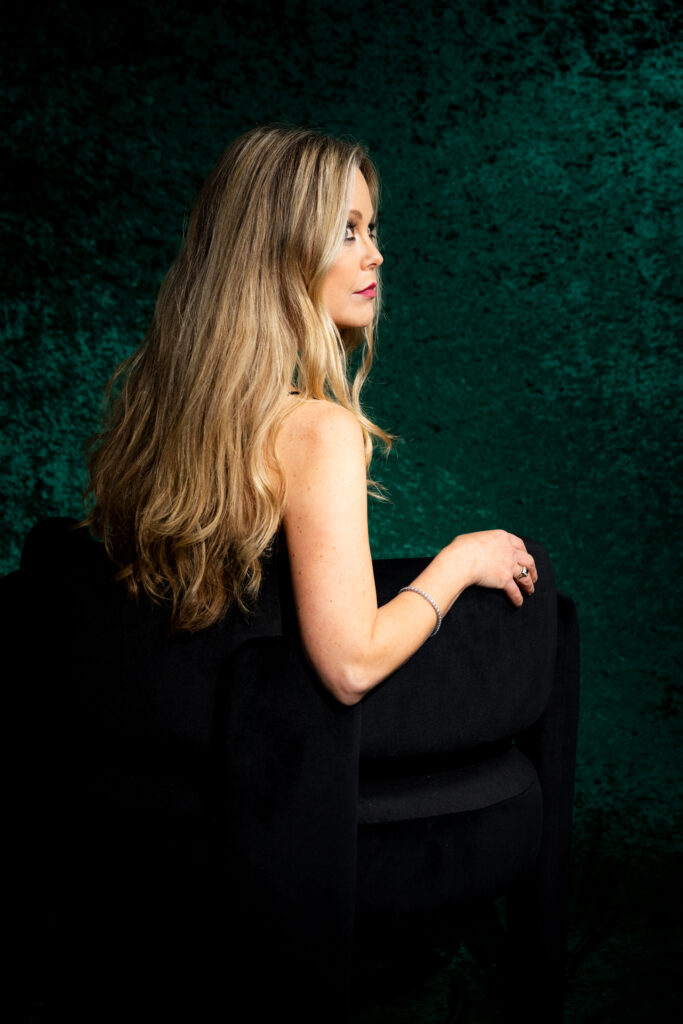
There is a moment in every creative life when the work begins to mirror the person behind it. The pursuit of the next opportunity slowly gives way to a deeper pursuit—creating with intention, protecting what matters, and discovering that success is measured by more than a résumé. Marisa Coughlan has arrived at that moment with remarkable clarity. Best known to generations of audiences for Super Troopers, she has spent the years since quietly expanding her creative world as a writer, producer, filmmaker, and storyteller. In this conversation with GREAY, Coughlan reflects on returning to a beloved character, the creative relationships that have shaped her career, and why the most meaningful life is often the one built between the roles.
GREAY: Super Troopers has remained part of the cultural conversation for more than two decades. Why do you think audiences continue to return to it in a way that feels less like nostalgia and more like shared tradition?
Marisa Coughlan: I think that’s a perfect way to describe it, because the audience has grown up with us. I think so many fond memories are attached to the first movie for a lot of people, so being able to stay with those characters and enjoy another movie with all of them—it just brings joy. We are sharing in that joy. It’s so great to feel like we have been on this journey with fans of our generation for a long time.
GREAY: Returning to Ursula meant revisiting a character you created years ago. Did stepping back into that role reveal anything about the person you’ve become since first playing her?
Marisa Coughlan: I think the biggest shift is having a stronger sense of myself, more confidence in comedy, and just generally. I also appreciated the experience that much more. I love the Broken Lizard guys so much. We have a huge amount of shared history now, and it was just the most amazing experience to get to do it all again.
GREAY: Comedy depends on timing, but great comedy also depends on trust. What has working with the Super Troopers team over the years taught you about the kind of creative relationships that stand the test of time?
Marisa Coughlan: I have a huge amount of respect for all of them, for what they’ve built. I’ve shadowed Jay as a director a few times and know that I’m in great hands. I’ve bantered with Paul Soter (Foster) for three movies now and adore him. They are pros. I know that I’m playing with the best.
GREAY: You’ve built a career both in front of and behind the camera. Has becoming a writer and producer changed the questions you ask yourself before saying yes to a role?
Marisa Coughlan: It’s changed everything! I made a movie called Blue Eyed Girl and wore every hat imaginable to get that to the finish line. It taught me a lot about what it takes. Now I’m more focused on finding partners to create with. It’s so fun to build it from the ground up, as long as you are surrounded by the right people.
GREAY: Your career has never followed a straight line, yet every chapter seems intentionally chosen. Looking back, what has been the quiet thread connecting all of those decisions?
Marisa Coughlan: I’m tenacious as hell. I don’t think I even knew that about myself, but looking back that’s probably the through-line. You have to be, in our business. Tenacity and reinvention. It can be exhausting but, on the flip side, it’s never boring. In the end, I’d rather be kept on my toes than bored.
GREAY: As artists grow, there’s often a shift from chasing opportunity to protecting perspective. Was there a moment when your definition of success fundamentally changed?
Marisa Coughlan: Yes, I have certainly felt that shift. I was on a show where I was number one on the call sheet, so basically 15-hour days, every day. It was a great cast, and I loved it, but I felt a lack of agency. So, when the show was cancelled, I seized the opportunity to shift into a place of creating. I started writing, I started looking for stories to create. Chasing auditions and trying to get past the gatekeepers is fun for a while, but it gets old. Creating opportunity and having a sense of control over it all is much more rewarding—particularly when you have a family that you’d like to see.
GREAY: You’ve spent years bringing other people’s stories to life while also writing stories of your own. What have you discovered about yourself through writing that acting alone could never have revealed?
Marisa Coughlan: I’ve never been a journal keeper, but I guess in a way starting to write gave me a chance to process things the way one might journal. I often don’t even know what I plan to write, but when I read it later there’s always a huge part of my actual life in there, and usually parts of it that I didn’t even realize I needed to process.
GREAY: Outside of Hollywood, you’re also raising four children. Has becoming a parent changed the kinds of stories you feel responsible for telling—or simply changed the way you see people?
Marisa Coughlan: I am actively living through the “sandwich generation” conundrum—where your parents are getting older, your kids are getting older, and you are getting older. I think walking through this phase has made me realize that there’s not enough film and television addressing mid-life issues. So yes, standing in the thick of it makes me want to tell stories for other people who are walking through it. It can feel like an overwhelming time. The movie we made, Blue Eyed Girl, really delves into some of those mid-life issues.
GREAY: After decades of working across film and television, what truth about people has remained constant, regardless of how much the industry itself has changed?
Marisa Coughlan: I have been fortunate to be surrounded by creatives, and I’ve seen that truly creative people will always find a way to tell stories—to create. I have had many a day where I quit, I hate it all, I want to become an investment banker or something, but then I get an idea a few days later, I get excited, and I can’t help myself—I’m right back in. I love that about our business. Ultimately, it’s a bunch of people who really love stories, and that’s been a part of the human experience since the beginning.
GREAY: When someone finishes watching one of your films, it’s natural for them to remember the character. Years from now, what do you hope the people who know you personally remember most about Marisa Coughlan?
Marisa Coughlan: Being in our business is so fun, but of course when all is said and done nothing matters more to me than showing up for what really matters. I’ve been fortunate that as a writer I could be home with my kids a lot, and I hope they remember me as a mom who prioritized them above it all. Telling stories about the human experience is important, but showing up for the actual humans in your life is more important.
Photography Nelson Hill @nelsonhillphotography
Related Posts
Vas Saranga Believes Every Story Begins With Understanding People
Vas reflects on storytelling, observation, and the enduring value of e
Timberland and Veneda Carter Unveil Their Sophomore Collaboration
Timberland and Veneda Carter launch their second collaboration

UGG x Palace Turns Looney Tunes Nostalgia Into Streetwear Currency
When Comfort Meets Counterculture

Drake Unveils NOCTA Basketball Campaign Featuring Kevin Durant
Drake Unveils NOCTA Basketball Campaign
“Iceman: The George Gervin Story” Hits the NBA App for Streaming
The eagerly anticipated documentary, "ICEMAN," showcasing the remarkab

Michael Bublé Brings It Home in Rolex’s Most Intimate Documentary Yet
Time, Family, and Craft