

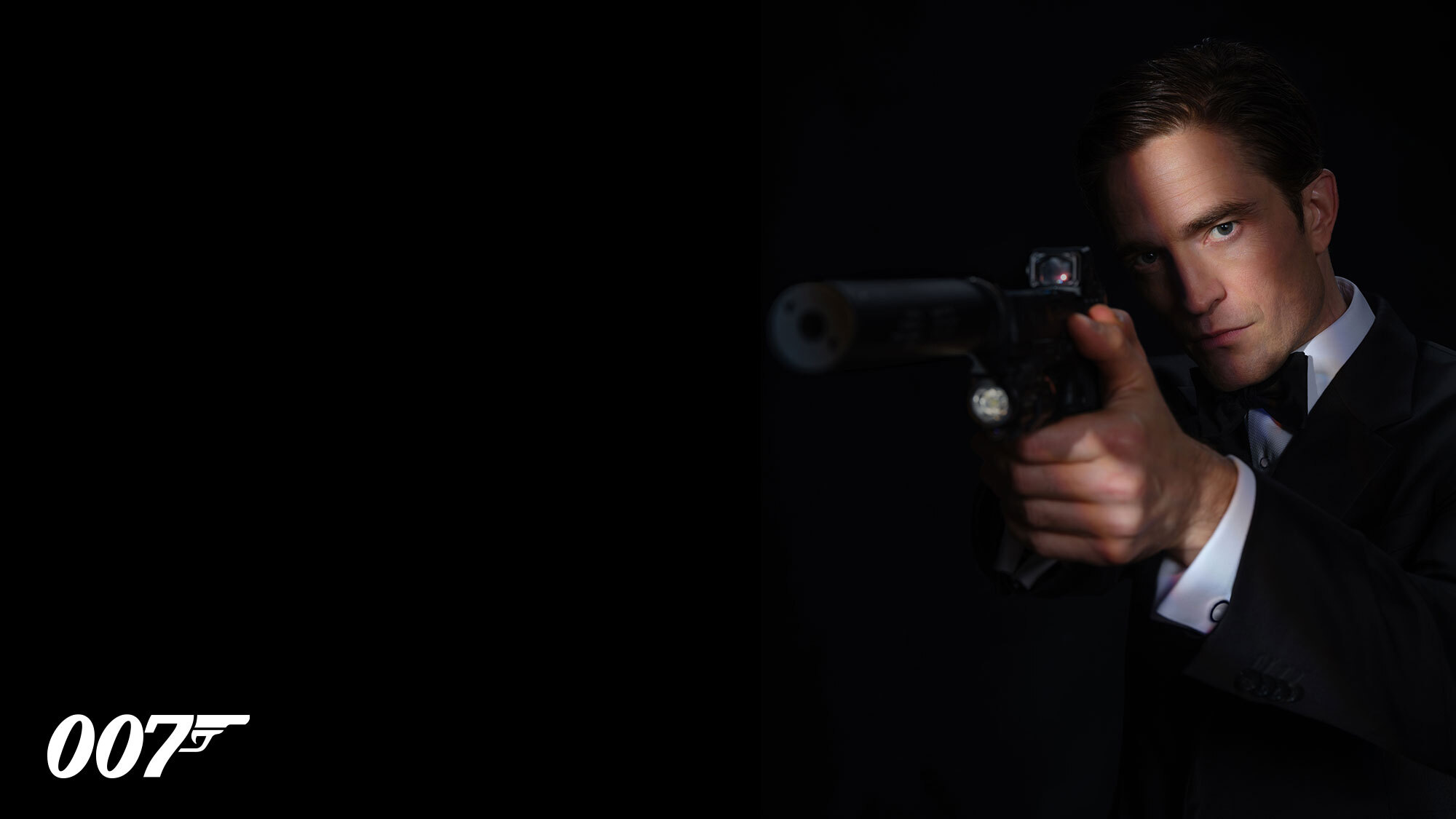
Robert Pattinson Is the New James Bond as Amazon Begins a New Era for 007
By DaMarko GianCarlo
Robert Pattinson is the new James Bond, bringing one of Hollywood’s most closely watched casting searches to an end and beginning a consequential new chapter for one of cinema’s longest-running franchises. Amazon MGM Studios confirmed the appointment on November 16, 2026, naming the British actor as Daniel Craig’s successor in the next installment of the 007 series. Denis Villeneuve will direct from a screenplay by Steven Knight, with Amy Pascal and David Heyman producing and Tanya Lapointe serving as executive producer.
The announcement answers a question that has followed the franchise since Craig’s departure in No Time to Die in 2021. But Pattinson’s arrival represents more than the introduction of another actor to an established role. He will become the first James Bond selected under Amazon MGM Studios’ creative leadership, following a historic restructuring of the franchise’s ownership and decision-making authority. For the first time in decades, the future of Bond is being shaped outside the creative stewardship that defined much of its cinematic history.
Pattinson acknowledged the significance of the appointment in Amazon MGM’s official announcement, describing being entrusted with 007 as the “honour of a lifetime.” He added, “To say this role is a dream come true is an understatement.” It is a remarkable destination for an actor whose career has moved between global commercial franchises and independent films that challenged the expectations created by his early success. At 40, Pattinson becomes the seventh actor to portray Bond in the official film series, following Sean Connery, George Lazenby, Roger Moore, Timothy Dalton, Pierce Brosnan, and Craig.
His journey to 007 has been anything but conventional. Pattinson first attracted international attention in Harry Potter and the Goblet of Fire before becoming a global celebrity through The Twilight Saga. Rather than remaining exclusively within the blockbuster system, he pursued collaborations with filmmakers whose work demanded a different kind of performance. David Cronenberg’s Cosmopolis, the Safdie brothers’ Good Time, and Robert Eggers’ The Lighthouse demonstrated an actor increasingly interested in psychological complexity, unconventional storytelling, and characters whose internal conflicts were as important as their external circumstances.
Those choices eventually informed his return to major studio filmmaking. Christopher Nolan’s Tenet placed him inside a large-scale espionage thriller, while Matt Reeves’s The Batman introduced a version of Bruce Wayne defined by isolation, emotional restraint, and unresolved personal conflict. More recently, Pattinson appeared in Bong Joon Ho’s Mickey 17, A24’s The Drama, and Nolan’s The Odyssey, continuing to move between ambitious studio productions and filmmaker-driven projects. His casting as Bond extends that trajectory rather than abandoning it.
The character he inherits carries a different set of expectations from those attached to most established screen properties. Since Dr. No premiered in 1962, James Bond has remained recognizable through changes in actors, filmmaking styles, international politics, and audience tastes. Connery established the character’s cinematic identity, Moore embraced a lighter approach, Dalton explored a more severe interpretation, Brosnan brought a polished confidence to the role, and Craig introduced a greater emphasis on physical vulnerability and emotional consequence. Each version reflected its era while retaining the essential identity of Ian Fleming’s fictional British intelligence officer.
Pattinson now faces the challenge of finding his own place within that history. His performances frequently depend on ambiguity, restraint, and the tension between public appearance and private motivation. Those qualities could provide an interesting foundation for a character whose profession requires deception, composure, and the ability to operate under extraordinary pressure. Whether they become central to the next film remains unknown. Amazon MGM has not disclosed the story, and Pattinson’s previous performances should not be treated as a blueprint for an interpretation that audiences have yet to see.
Villeneuve’s involvement adds another dimension to the transition. The filmmaker behind Arrival, Blade Runner 2049, and the Dune films has built a career around visually distinctive worlds, atmospheric storytelling, and characters confronting forces larger than themselves. His appointment places the next Bond film in the hands of a director with an established cinematic identity rather than someone known primarily for maintaining an existing franchise formula.
When Villeneuve was announced as director in June 2025, he described Bond as “sacred territory,” reflecting a personal connection to the films that began during childhood. His stated ambition was to respect the character’s traditions while opening the way for future missions. Following Pattinson’s appointment, Villeneuve described his new leading actor as someone with the “timeless soul of 007,” a characterization that places continuity and reinvention at the center of the creative team’s public vision.
Pattinson and Villeneuve are also connected through Dune: Part Three, in which Pattinson has been cast as a shapeshifting Face Dancer assassin. The film is scheduled for release in December 2026. Their involvement in the same production establishes a professional connection, although neither has publicly explained how that experience may influence their approach to Bond. The collaboration is relevant to the new film’s creative team without providing evidence of what its eventual direction will be.
The production also brings together individuals whose professional histories intersect with Pattinson’s earlier career. Heyman produced Harry Potter and the Goblet of Fire, the film that helped introduce Pattinson to a wider international audience. Pascal brings extensive experience with the Spider-Man franchise, while Knight, creator of Peaky Blinders, has established a body of work involving crime, ambition, power, and morally complicated characters. Tanya Lapointe, who has worked with Villeneuve on the Dune films, joins as executive producer.
Together, these appointments place the next Bond film in the hands of filmmakers experienced in both major studio productions and character-driven storytelling. Pascal and Heyman identified Pattinson’s “ability to continually reinvent himself” as one of the qualities behind their confidence in his selection. Their statement is significant because reinvention has become one of the central challenges facing Bond itself.
Yet the most consequential transformation surrounding the franchise began before Pattinson was cast.
In 2022, Amazon completed its acquisition of MGM, gaining a historic film and television library that included the James Bond franchise. The acquisition gave Amazon an important position within the business surrounding Bond, but it did not immediately transfer the franchise’s creative authority away from its longtime custodians. That distinction remained essential because Bond had operated for decades under an unusually consistent system of family stewardship.
Albert R. Broccoli helped establish the cinematic franchise alongside Harry Saltzman, and subsequent generations continued its development through EON Productions. Barbara Broccoli and Michael G. Wilson became central figures in determining the direction of the films, overseeing the franchise through changes in actors, filmmakers, and the wider entertainment industry. Their involvement helped provide continuity across a series that frequently reinvented itself while remaining closely associated with its original production legacy.
That structure changed in 2025. Amazon MGM Studios, Broccoli, and Wilson established a joint venture housing the James Bond intellectual property rights. The parties remained co-owners, but Amazon MGM gained creative control following the completion of the transaction in March. The agreement represented a fundamental shift in authority over the character’s cinematic future, separating the continuation of the franchise from the longstanding arrangement under which the Broccoli family exercised creative oversight.
It is this change that gives Pattinson’s casting its larger importance.
Amazon MGM is not simply financing or distributing another Bond film developed under the franchise’s previous creative leadership. The studio is now responsible for shaping the next chapter, including the selection of the leading actor and the filmmaking team surrounding him. Pattinson’s appointment is therefore among the clearest public expressions of how Amazon intends to exercise its new authority.
The implications extend beyond casting. James Bond is one of the entertainment industry’s most durable properties, with 25 official films released between 1962 and 2021. Its continued relevance has depended on a careful balance between recognizable conventions and periodic reinvention. Audiences expect certain elements from Bond, but the films have repeatedly adapted their tone, action, technology, and dramatic priorities to reflect changes in filmmaking and popular culture.
The next installment arrives within an entertainment industry increasingly organized around intellectual property that can support multiple forms of distribution and audience engagement. Amazon operates a global streaming platform through Prime Video, maintains extensive digital and commercial infrastructure, and now controls the creative direction of a franchise whose theatrical identity predates the modern streaming business by decades. The 25 official Bond films are available through Prime Video, placing the existing cinematic history within the same corporate ecosystem responsible for developing its future.
That creates an opportunity, but it also introduces a creative responsibility. The commercial value of Bond extends beyond individual theatrical releases, yet the character’s cultural standing was established through films that audiences experienced as major cinematic events. The challenge for Amazon MGM will be to preserve that identity while developing the franchise within a business whose interests and distribution capabilities extend well beyond movie theaters.
There is no confirmed indication that Amazon intends to replace Bond’s theatrical identity with a streaming-first strategy, nor has the studio announced a broader collection of new Bond productions connected to Pattinson’s casting. The possibilities created by Amazon’s ownership structure should not be confused with projects that have actually been commissioned. What is established is that the company now possesses the creative authority to determine how the property develops.
Craig’s departure makes that responsibility especially significant. His five-film tenure, beginning with Casino Royale in 2006, introduced a more interconnected narrative structure and gave Bond a sustained emotional history. Relationships, personal losses, institutional loyalties, and the consequences of his profession became central elements of the character’s development. By the conclusion of No Time to Die, Craig’s interpretation had reached a definitive narrative ending.
Pattinson is therefore not entering a franchise with an unfinished story waiting to be continued. He is arriving after a version of Bond whose dramatic arc was deliberately brought to a close. The next film must establish its own identity, define its relationship to the character’s established mythology, and determine what kind of world this Bond inhabits. Whether it returns to a more episodic structure, develops another interconnected narrative, or introduces an entirely different approach has not been announced.
The actor’s existing commitment to Batman adds another unusual dimension. Pattinson is currently involved in production on The Batman Part II, continuing his portrayal of Bruce Wayne while preparing to take on another globally recognizable character. Batman and Bond occupy different fictional worlds, but both have been interpreted by multiple actors across generations, and both carry expectations that extend beyond any individual performance.
For Pattinson, the challenge will be maintaining distinct identities within two franchises whose characters are already deeply embedded in popular culture. His career suggests an interest in finding unconventional approaches to familiar material, but the eventual success of either performance will depend on the films themselves. The announcement establishes an extraordinary professional position; it does not yet establish the outcome.
There is also an important distinction between Pattinson’s casting and the creative direction that audiences will eventually encounter. Villeneuve’s visual language, Knight’s writing, and the producers’ experience offer clues about the sensibilities involved, but they do not amount to a confirmed description of the film. No official title, theatrical release date, or complete supporting cast has been announced. The production’s eventual interpretation of Bond will become clearer as those details emerge.
For now, the decisions already made are substantial. Amazon MGM has assembled an established director, a prominent screenwriter, experienced franchise producers, and an actor whose career has moved repeatedly between independent filmmaking and major commercial productions. Those choices establish the foundation of a new Bond era while leaving its defining creative questions unanswered.
James Bond has survived for more than six decades because the character has never belonged entirely to one performer or one moment in filmmaking history. Each generation has inherited an established identity and then reshaped it for a different audience. Pattinson now enters that tradition at a moment when the organization responsible for Bond’s future has undergone a transformation of its own.
His appointment closes the search for Daniel Craig’s successor, but it also brings a much larger transition into focus. The next James Bond will be developed under new creative leadership, shaped by a new filmmaking team, and carried by an actor whose professional history has been built around resisting easy categorization.
For Amazon MGM Studios, this is the first major opportunity to demonstrate what its creative control of Bond will mean on screen. For Pattinson, it is the beginning of a role that will place him within one of cinema’s most recognizable lineages.
The next chapter of James Bond is no longer a question of who will play 007. It is a question of what the character will become now that the actor, the filmmakers, and the authority behind the franchise have all changed.
Related Posts

‘What If…? Venom’ Unleashes the Symbiote on Wolverine, She-Hulk, Loki, and Other Marvel Icons
'What If...? Venom' Unleashes the Symbiote

Cincoro Tequila and AC Milan Unite for Exclusive 125th Anniversary Release
Cincoro Tequila and AC Milan Unveil Exclusive Limited-Edition Bottle.
Universal Music Latino Is Using Streamer YaBoyyWill to Find Reparto’s Next Artists
From Stream to Studio
AMC’s Best Quarter in Its History Suggests the Future of Theatrical Exhibition Is More Resilient Than Many Predicted
The Reinvention of Moviegoing

Why Tao Group Keeps Building Bigger Rooms
Vegas Isn’t Selling Gambling Anymore

The Industry Changed : Robert Ri’chard Remained
The Legacy Continues
POST COMMENT