
Hollywood Is Turning Digital Identity Into a Business
By Brian K. Neal
Hollywood has spent generations building businesses around recognizable faces. An actor’s image can sell a movie, a musician’s name can move merchandise, and an athlete’s likeness can appear in everything from advertising campaigns to video games. The person remains at the center of the transaction, even when their image travels somewhere they do not. Now, an agreement between United Talent Agency and digital avatar company Genies is exploring what happens when that image can also respond.
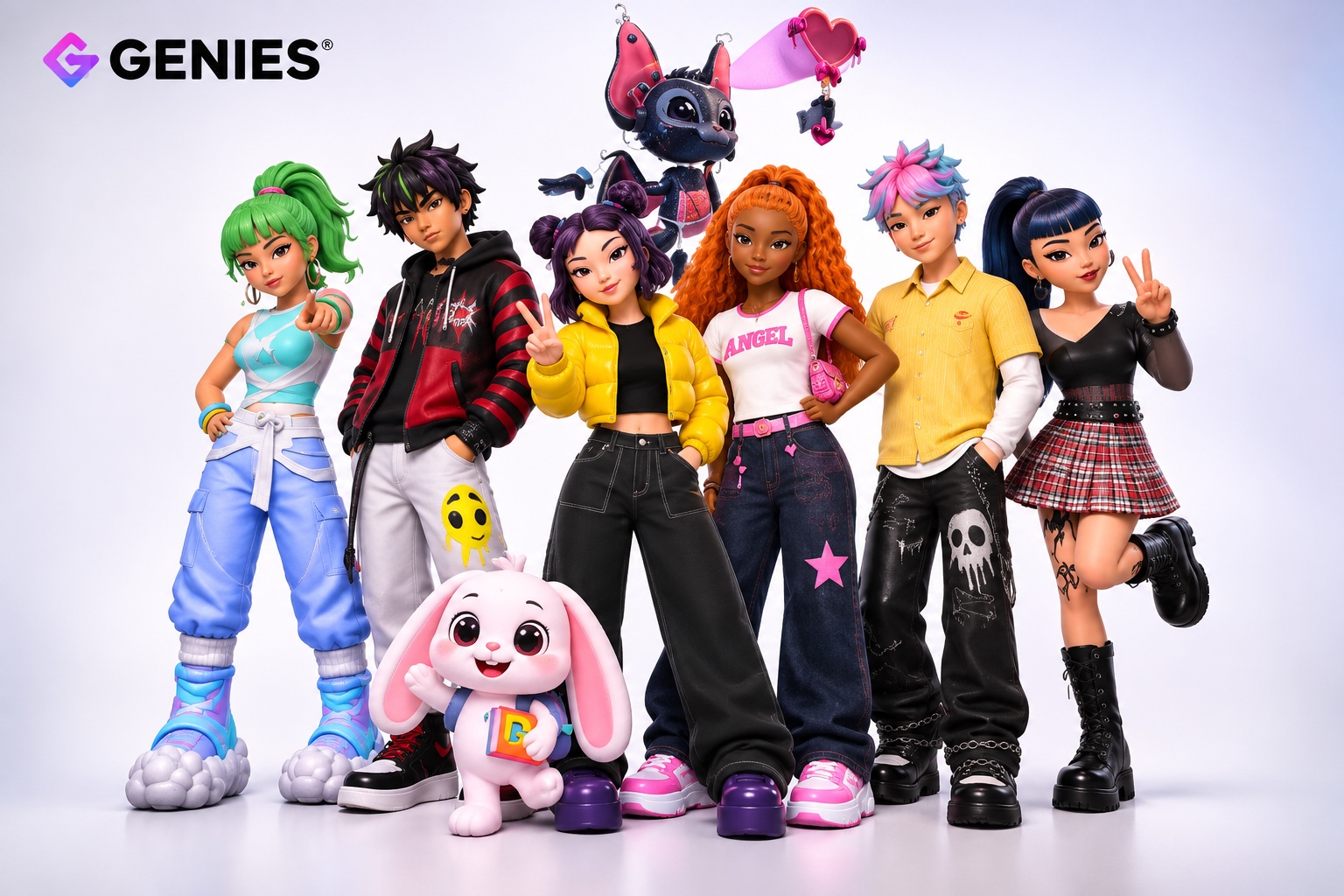
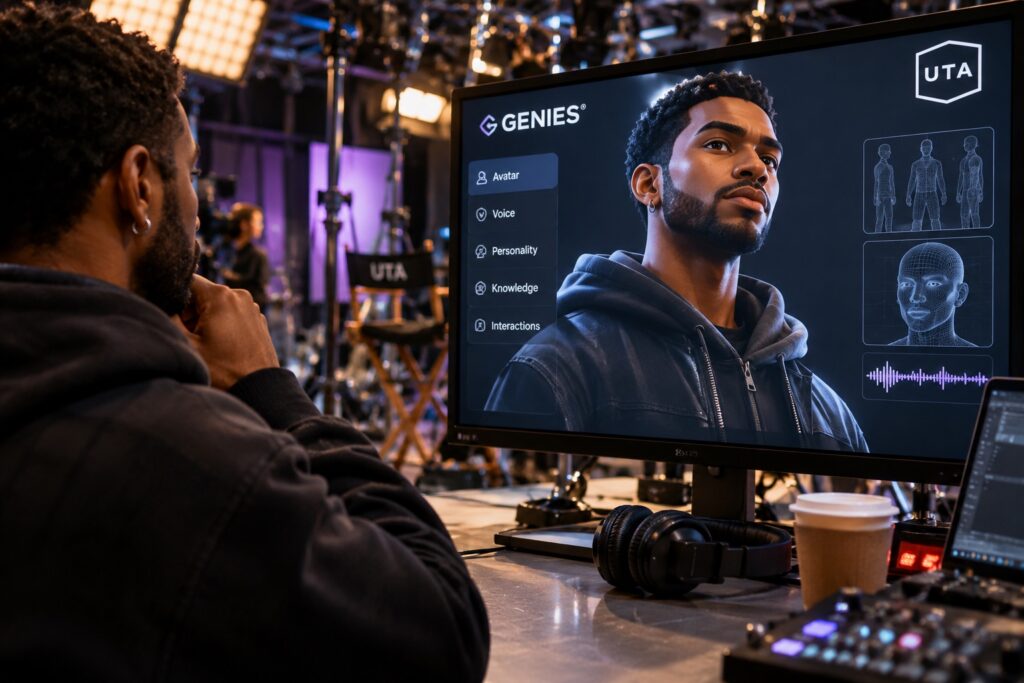
Announced in October 2026, the partnership makes Genies’ artificial intelligence character technology available to UTA’s roster of actors, musicians, athletes, comedians, and creators. Participating talent can develop stylized digital versions of themselves, shaped by their likeness, voice, personality, and knowledge. These characters are designed to interact with audiences, potentially appearing in applications, games, and other digital environments without requiring the entertainer to participate in every exchange.
The agreement does not mean Hollywood’s performers are being replaced by artificial intelligence. It introduces a different proposition: that a performer’s identity might become an interactive commercial property, capable of extending their relationship with audiences beyond the traditional boundaries of a performance, endorsement, or public appearance.
That distinction matters because celebrity likenesses have long been licensed. What changes here is the proposed behavior of the licensed property. A photograph cannot answer a question. A conventional video game character follows the possibilities its developers have programmed. An AI-powered representation is intended to respond dynamically, creating interactions that may feel personal even though the individual being represented is not directly participating.
Genies is betting that this difference can support a business.
The company has been building toward that possibility beyond Hollywood. Earlier in 2026, it entered licensing agreements involving the commercial arms of the Major League Baseball Players Association and the National Basketball Players Association. Those arrangements established a path toward interactive representations of professional athletes. A separate partnership with WEBTOON Entertainment extended the concept to fictional characters, allowing participating creators to explore AI-driven versions of their intellectual property.
Together, the agreements reveal a consistent strategy. Genies is approaching organizations that already represent or commercialize recognizable identities, whether those identities belong to entertainers, athletes, or fictional characters. Rather than asking audiences to form attachments to entirely unfamiliar digital personalities, the company is working with names and characters that already carry cultural recognition.
UTA brings that strategy into one of Hollywood’s most established systems of talent representation.
For agencies, the commercial possibilities are understandable. Their business has traditionally depended on negotiating opportunities around a client’s work, public image, and professional relationships. Interactive digital characters could eventually introduce additional licensing arrangements, branded experiences, subscriptions, and other forms of engagement. For performers, the appeal is the possibility of extending an existing business without making every interaction dependent on their physical availability.
But an available technology is not the same thing as a proven market. The financial terms of the UTA agreement have not been disclosed, and there is no established public evidence that this partnership is already generating substantial recurring revenue for participating entertainers. The number of characters that will reach consumers, the audiences they might attract, and the money those experiences could produce remain open questions.
The distinction between commercial ambition and commercial performance is especially important in an industry accustomed to presenting technological possibility as inevitable change.
One of the first named participants gives the concept a more tangible purpose. Rapper and actor Ludacris, whose given name is Chris Bridges, is developing AI characters connected to KidNation, his educational entertainment platform, according to Bloomberg. Rather than simply recreating a celebrity for conversation, the proposed application connects an interactive character to an existing business and its intended audience.
It suggests that the technology’s usefulness may depend less on how convincingly it imitates a famous person than on what it allows that person’s audience to do.
A musician could potentially use an authorized character to introduce listeners to new material. An athlete might offer interactive educational experiences. A fictional character could extend a story beyond the screen or page. Each application creates a possible new point of contact between an audience and a recognizable identity. None guarantees that audiences will find the experience meaningful enough to return, much less pay for it.
The deeper question is what happens to the relationship between a person and their commercial identity once that identity becomes software.
That question becomes more complicated when a digital character is capable of producing responses its human counterpart never personally approved. Genies says its technology allows talent to shape and moderate how their characters behave. In an October interview with Bloomberg, founder and chief executive Akash Nigam described a future in which AI personalities become commonplace across digital services. “Every single thing on Earth is gonna have an AI personality,” he said.
It is an expansive prediction, but the more immediate issue is considerably narrower. If a performer authorizes an AI character to interact with fans, who determines the limits of those conversations? Who approves a commercial endorsement? Who is responsible if the character makes an inaccurate statement, misrepresents the performer’s beliefs, or participates in an interaction that damages their reputation?
Those questions cannot be answered by the promise of ownership alone. Ownership of an identity, permission to reproduce it, control over a software product, and entitlement to its revenue are related but distinct matters. The terms governing those rights will determine whether a performer is operating a new business or simply licensing another company to operate one around them.
The actual UTA–Genies contracts have not been made public. Although Genies says participating talent will retain control over their characters, the available reporting does not establish how those rights are enforced, how revenue is divided, or what happens when an individual decides to withdraw from the arrangement.
Other Genies partnerships offer some indication of how these questions might be addressed. In announcing its agreement with WEBTOON, the company emphasized creator participation and approval. WEBTOON President Yongsoo Kim described the arrangement as “deliberately creator-first,” with participation voluntary and the original work’s integrity central to the experience. WEBTOON’s published creator guidance also states that participating artists retain ownership of their intellectual property and can review character experiences before launch.
Those commitments are meaningful, but they belong to that particular partnership. They do not establish identical protections for every performer represented by UTA.
The distinction arrives at a sensitive moment for the entertainment industry. In June, SAG-AFTRA members ratified a new television and theatrical agreement containing additional protections for digital replicas and synthetic performers. The union secured provisions addressing consent, biometric data, digital-replica security, and the use of artificial intelligence in covered productions. It also strengthened restrictions intended to protect human performance from displacement by synthetic performers.
The agreement reflects an industry working to establish boundaries around technology that can reproduce human appearances and performances. Yet a voluntary digital character created for fan engagement or an independent commercial application is not necessarily governed by the same contractual provisions as a digital replica used in a film or television production. The applicable protections depend on the work, the agreements involved, and the circumstances of use.
That difference is important. An actor can support stronger protections against unauthorized replication while also wanting the freedom to develop an authorized digital version of themselves. The two positions are not contradictory. Both concern the performer’s ability to determine how their identity is used.
The commercial interests are not necessarily contradictory either. A technology company wants to build products people use. An agency wants to create opportunities for its clients. A performer wants to protect their reputation while earning a living from their work. Those interests can align, but the existence of a partnership does not guarantee that they always will.
There is also the question of whether audiences want the experience being offered.
Entertainment has always depended on more than recognition. Fans follow performers because of their choices, personalities, talent, and the unpredictable qualities that distinguish one human being from another. A digital character may reproduce elements of that identity, but it cannot automatically reproduce the relationship audiences believe they have with the person.
For some purposes, the distinction may be unimportant. An interactive educational character might succeed because it explains something clearly or makes learning enjoyable. A digital athlete might offer a compelling experience inside a game. A fictional character could provide an entertaining extension of a story. In those situations, the technology’s value would come from what the experience delivers, not from convincing anyone that the character is human.
Other uses may be harder to sustain. A fan who values an artist’s judgment might have little interest in receiving recommendations generated by software. A conversation with a digital representation might satisfy curiosity without creating the emotional connection of an actual encounter. Recognition can attract an audience, but it does not guarantee that the audience will remain.
That uncertainty is central to the economics. Genies has attracted approximately $200 million in investment, and a 2022 funding round valued the company at roughly $1 billion. Those figures demonstrate investor interest and access to capital, not the current commercial performance of its celebrity AI products. Its agreements with established entertainment and sports organizations likewise demonstrate business development rather than widespread consumer adoption.
The UTA partnership therefore deserves attention for what it makes possible, not for results that have yet to be demonstrated.
It places interactive digital identity within the reach of a major talent agency’s clients. It connects an emerging technology company with an established system for representing entertainers and negotiating the commercial use of their identities. And it adds another potential form of licensing and commercial use to an industry already built around the value of recognizable people.
Whether that becomes a lasting business will depend on the agreements performers sign, the experiences developers create, and the willingness of audiences to participate.
For generations, entertainers have had to consider where their image might appear, who could use their name, and what associations those uses might create. Artificial intelligence introduces another dimension to those decisions. Their authorized digital representations may now be capable of speaking, responding, and participating in commercial experiences that continue beyond any single performance.
The person remains the source of the identity, but the software may become another way that identity reaches the world.
The question is no longer simply where a performer’s likeness can appear. It is what that likeness can be allowed to do when the performer is not there.
Related Posts

Virtual Internet Unveils “Continuous Connectivity” with Virtual 5g
Virtual Internet, a pioneer in Software 5G (Fifth Generation) Mobile B
Samsung and Technogym Team Up to Revolutionize At-Home Fitness with New App for 2024 Smart TVs
Samsung TVs Boost Home Fitness Offerings With Technogym App

HaloBraid Is Bringing Robotics Into the Hair Salon
A Machine Built Around Human Hands

Apple Music Hall Is Built for an Audience Bigger Than the Room
SMALL ROOM, GLOBAL REACH
CINEMAGNUM Isn’t Just Building the World’s Largest Cinema LED Screen—It’s Building the Kind of Experience Streaming Can’t Recreate
Streaming Changed the Rules. Theaters Are Changing the Experience.
The Daily Show and The Tonight Show Signal How Television Franchises Are Evolving
The rise of platform-flexible television franchises
POST COMMENT