
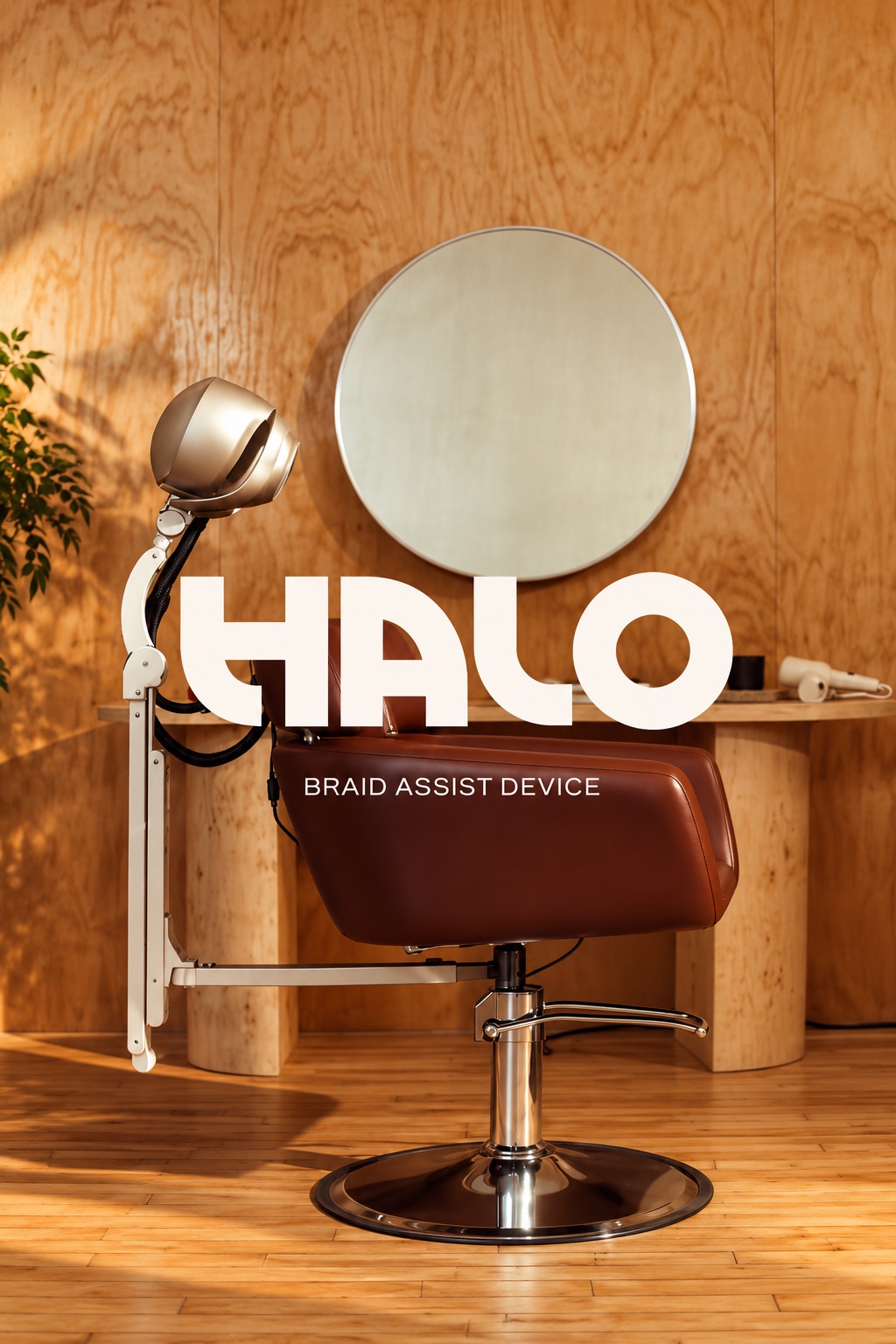
HaloBraid Is Bringing Robotics Into the Hair Salon
By Kyra Greene
For generations, hair braiding has depended on something technology has struggled to reproduce: the precision of human hands. The process requires patience, experience, and an understanding of hair that extends beyond technique. A single appointment can occupy much of a day. For the person sitting in the chair, those hours are an investment in appearance, identity, and care. For the professional standing behind it, they represent sustained physical labor, often repeated across several appointments each week.
A technology company called Halo is attempting to change that experience without removing the person whose expertise makes it possible.
Founded by biomechanical engineer Yinka Ogunbiyi alongside co-founder David Afolabi, Halo has developed HaloBraid, a robotic device designed to assist professional hairstylists with the repetitive work of braiding hair. After years of development, a $7 million funding announcement in June 2026, and the September appointment of celebrity hairstylist Vernon François as its first Creative Engineer, the company has drawn renewed attention with a public demonstration of its technology in late October.
The development offers a closer look at how robotics might enter a profession built around human skill. It also raises a larger question about automation: whether machines can make specialized work more sustainable without diminishing the people who perform it.
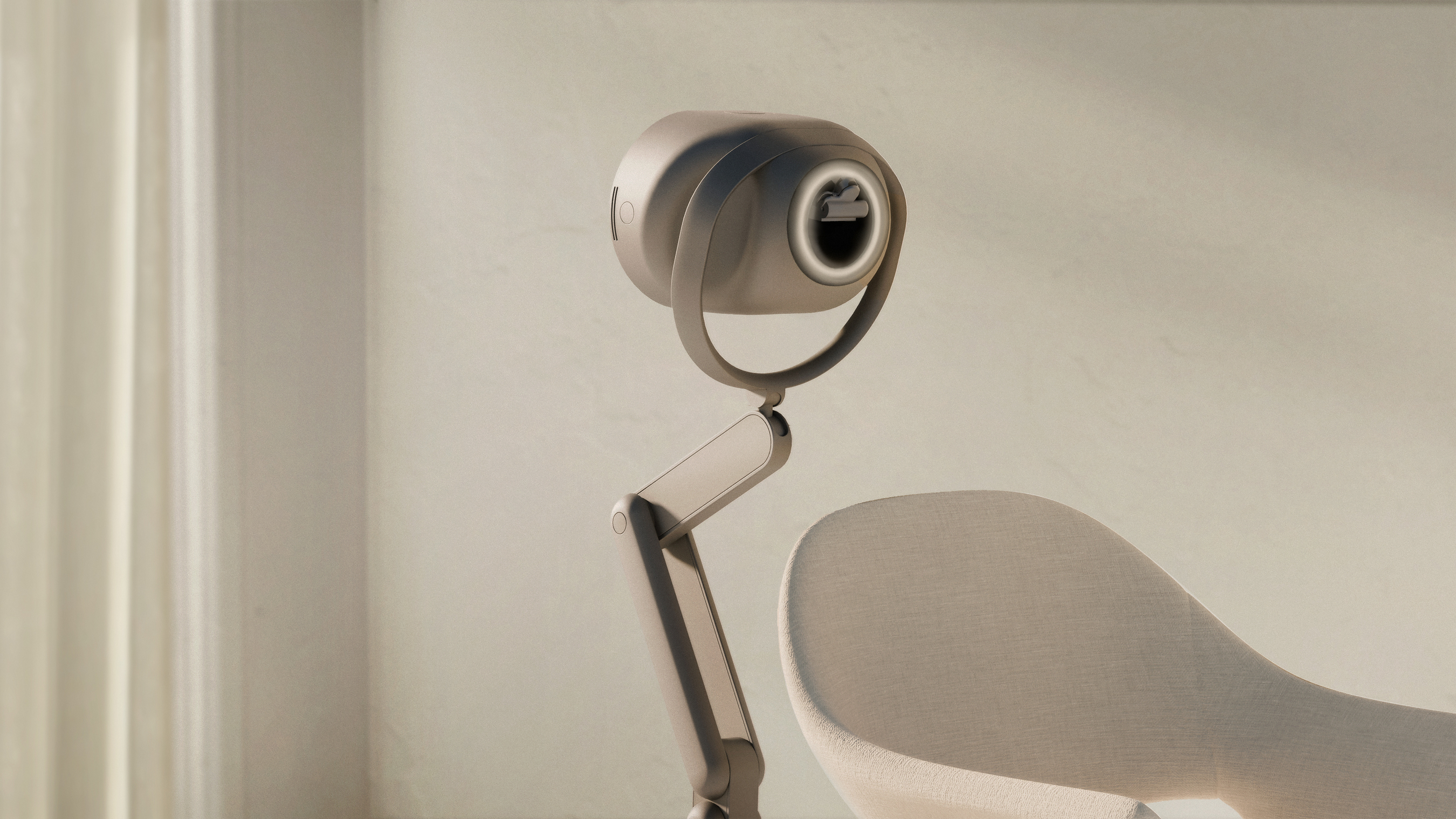
HaloBraid is not an autonomous hairstylist. It does not determine how someone should wear their hair, create the initial sections, or independently construct an entire hairstyle. A professional stylist remains responsible for establishing the braid, determining its size and pattern, and preparing the hair before guiding it into the device. HaloBraid then performs the repetitive three-strand weaving along the remaining length, allowing the stylist to return to the finishing details.
The device cannot currently create cornrows or other intricate styles braided directly against the scalp. Its function is more specific, addressing one particularly time-consuming stage of certain braided hairstyles rather than attempting to reproduce the full range of a professional’s abilities.
That distinction is central to the company’s approach.
In Halo’s June announcement, Ogunbiyi explained that the technology was developed in collaboration with the people it intends to serve. “We designed this with stylists, using their perspective to build a product that supports them, without replacing them.”
The idea originated in an experience Ogunbiyi understood personally. During the COVID-19 pandemic, she attempted to braid her own hair. The process took four days. As a biomechanical engineer with experience developing consumer hardware, she began considering whether technology could address a task that demanded so much time and repetitive physical effort.
What began as a personal frustration became an engineering challenge.
Over more than three years, Halo developed approximately 600 prototypes, examining existing braiding mechanisms and working with professional stylists to understand the demands of real salon environments. Early versions of the device were handheld, but feedback from stylists helped move the design toward a chair-mounted system that would better accommodate their workflow.
The process illustrates an important difference between inventing a machine that can perform a task and designing one that professionals can realistically use.
Hair braiding is not a uniform mechanical operation. Texture, length, density, extensions, tension, and the desired style all influence the work. A device must accommodate those variations while remaining comfortable for clients and practical for stylists who move between different techniques throughout an appointment.
Halo says its technology can complete individual braids up to five times faster than manual braiding. That claim refers to the portion of the braid handled by the device, not an entire hairstyle. The time saved across a full appointment will depend on how many braids are required, how much preparation remains manual, and how efficiently the stylist and machine work together.
The company’s public demonstration provides evidence of the device performing its intended function. It does not yet establish how consistently those results can be reproduced across a broad range of salons, clients, and working conditions.
That next stage is where the commercial significance of HaloBraid will be determined.
In June, Halo announced $7 million in seed funding led by Seven Seven Six, the venture capital firm founded by Reddit co-founder Alexis Ohanian, with participation from AlleyCorp and Bling Capital. The investment is intended to support continued product development, testing, manufacturing readiness, and partnerships with professional salons.
Ohanian described the opportunity in the company’s funding announcement: “Halo has introduced a novel technology to a manual and highly specialized professional service.”
The investment reflects a broader business proposition. Braiding is an established service with considerable demand, yet its capacity remains closely tied to the number of hours a professional can physically work. Unlike businesses that can increase output by adding equipment or automating production, many independent stylists generate income through services that require their continuous attention.
Reducing the time spent on repetitive braiding could change that equation.
A stylist who completes an appointment more quickly might be able to accommodate another client, shorten the workday, or preserve earnings while reducing the hours spent performing physically demanding movements. Those possibilities are meaningful, but they are not interchangeable. Greater productivity does not automatically produce higher income or better working conditions.
The economics will depend on how salons incorporate the technology and how the financial benefits are distributed.
Halo is pursuing a model that does not require participating stylists to purchase the device outright. Instead, the company plans to receive a percentage of revenue generated from appointments using HaloBraid. The exact percentage has not been publicly disclosed.
That arrangement could make the equipment more accessible to independent professionals, but it also introduces an important question. If a stylist completes more appointments while sharing a portion of each service’s revenue with the technology provider, the actual financial benefit will depend on pricing, demand, operating efficiency, and the cost of using the device.
The promise of faster braiding is therefore only one part of the story. Whether it creates a stronger business for the stylist remains to be demonstrated.
There is also a physical dimension that cannot be separated from the economics.
Professional braiding involves repeated movements of the hands, wrists, shoulders, and arms, sometimes sustained for many hours. Stylists have described experiencing fatigue and physical strain associated with the demands of their work. Halo’s technology is intended to reduce some of that repetitive activity, although its long-term effects on occupational health have not been independently established.
For some professionals, the most meaningful benefit might not be the ability to accept additional appointments. It could be the ability to go home earlier.
The company has also taken a notable step toward incorporating professional expertise directly into its engineering process.
In September, Halo appointed Vernon François, the internationally recognized hairstylist, educator, and founder whose work has included collaborations with Lupita Nyong’o, Serena Williams, Solange Knowles, and other prominent figures, as its first Creative Engineer.
François is working directly with Halo’s engineering team, contributing his knowledge of hair textures, professional technique, and the realities of salon work to the continued development of the device.
His involvement brings a perspective that cannot be supplied by mechanical engineering alone. Hair is not simply a material to be manipulated. Across African and Black communities, braiding carries histories of identity, beauty, craftsmanship, and personal expression. The techniques are learned, refined, and passed between generations, often within relationships that extend beyond a single appointment.
François addressed that relationship in Halo’s announcement, explaining that his role brings lived professional knowledge into the engineering process. “Meaningful innovation should not distance us from the craft; it should give the craft greater possibility.”
The statement captures the central tension surrounding HaloBraid.
Automation is often discussed through the possibility of replacing workers. Halo’s proposed model instead places technology within an existing professional relationship, assigning repetitive mechanical work to a device while preserving the stylist’s judgment, creative decisions, and responsibility for the finished result.
That division does not eliminate every concern. It creates a different set of questions about who controls the technology, how it affects pricing, and whether its benefits ultimately reach the professionals whose labor makes the service possible.
The cultural significance of the salon adds another layer.
For many clients, a braiding appointment is not simply a transaction. It can be a familiar environment shaped by conversation, community, and trust. A stylist may understand a client’s hair history, preferences, sensitivities, and personal style through years of experience. That relationship cannot be measured solely by the number of hours required to complete an appointment.
HaloBraid does not attempt to replicate those human connections. Its proposed contribution is narrower: making one repetitive portion of the work faster while allowing the professional to remain responsible for the experience.
Whether clients and stylists embrace that arrangement will depend on more than engineering performance. Comfort, consistency, confidence in the finished hairstyle, and the ease of incorporating the device into an existing salon routine will all matter.
Interest has already been substantial. Reports surrounding the company’s development indicate that thousands of stylists and salons have registered interest in the technology. Those figures suggest potential demand, but they do not establish the number of devices operating commercially or the level of sustained adoption.
Halo’s next challenge is moving from demonstration and controlled testing into regular professional use.
That transition will require the company to establish whether its technology performs consistently across different hair textures and styles, whether the promised time savings hold up during full appointments, and whether its business model produces measurable advantages for the salons adopting it.
The answers will determine whether HaloBraid becomes a widely used professional tool or remains a promising technological achievement with a more limited market.
For now, its significance does not depend on predicting either outcome.
A Black-founded technology company has developed and publicly demonstrated a robotic system addressing a specific challenge in textured hair care. It has secured venture capital, incorporated established professional expertise into its engineering process, and outlined a commercial model intended to bring the technology into salons without requiring stylists to purchase the equipment.
Those developments are real. The broader transformation remains to be proven.
What makes HaloBraid consequential is not simply that a machine can finish a braid. It is the possibility that a profession historically dependent on hours of repetitive human labor could gain a new tool without surrendering the skill, judgment, and cultural knowledge that define the work.
The next measure of progress will not be how quickly the machine moves in a demonstration. It will be what changes for the people working behind the chair.
Related Posts

Audigo Unveils Wireless Mobile Studio with Multi-Microphone Recording Capability
By DaMarko Webster Audigo, the innovator behind the compact, wireless
Picture-in-Picture Rolls Out to All YouTube Users
By Anthony Finn YouTube is finally removing one of its most frustratin
LG and Blacknut Launch Single Game Subscription Service on LG Smart TVs in the U.S.
LG AND BLACKNUT LAUNCH SINGLE GAME SUBSCRIPTION SERVICE.
Toyota Research Institute Unveils Breakthrough in Teaching Robots New Behaviors
By DaMarko Webster Toyota Research Institute (TRI) announced a break

Four American Giants Are Leaving the S&P 100 Technology Is Taking Their Place
A New Class of American Giants Is Emerging

Apple Didn’t Replace Tim Cook. They Repositioned Power
The iPhone Era Didn’t End. It Got Outflanked
POST COMMENT