

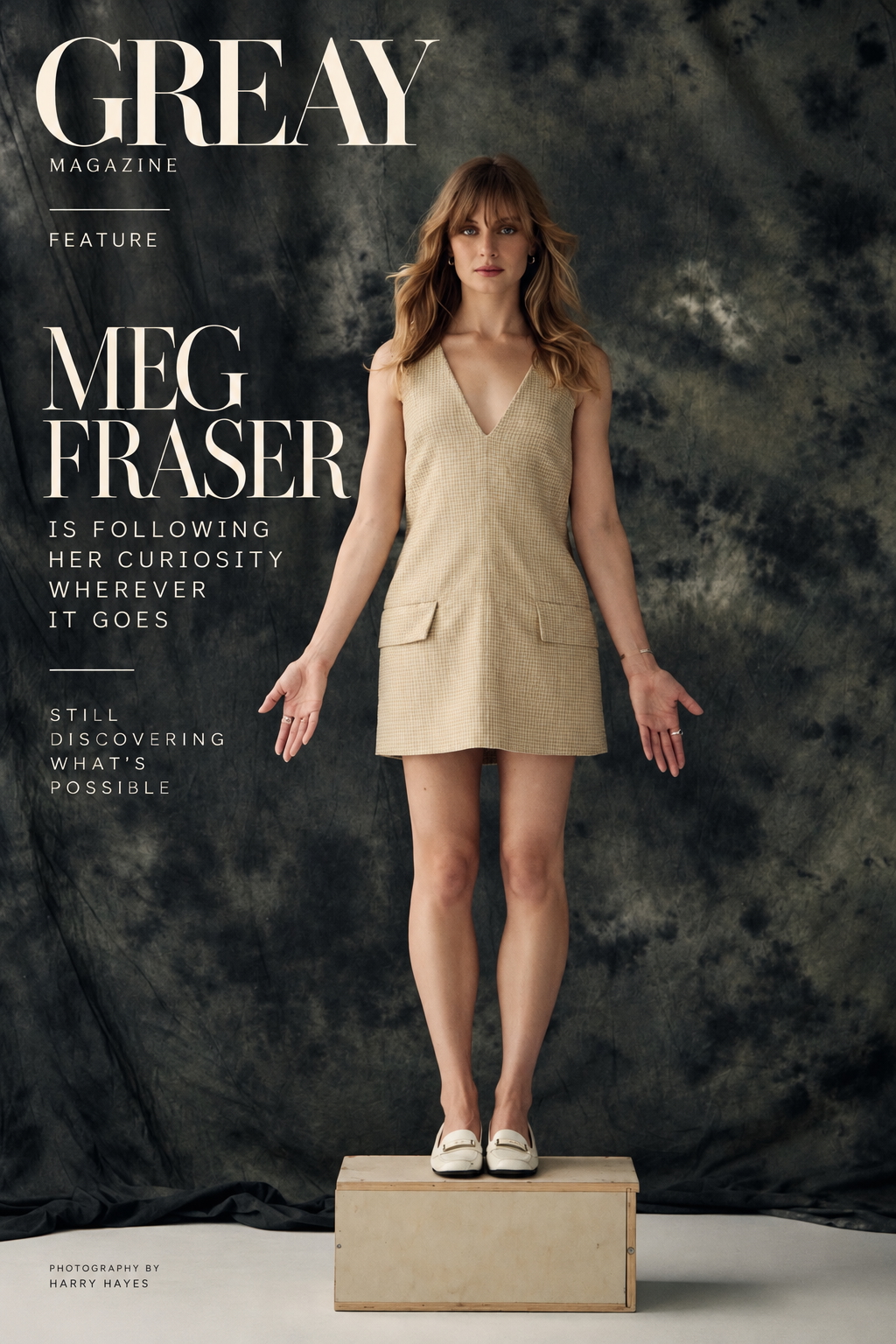
Meg Fraser Is Following Her Curiosity Wherever It Goes

By Kyra Greene
For Meg Fraser, becoming an actor has never been about arriving at one defining moment. It has been about learning to remain curious, committed, and open to possibility, even when the path forward is uncertain. From her early days in Queensland Theatre’s youth ensemble to her first feature film, Bloody Hell, Fraser has built a career shaped as much by the opportunities that didn’t materialize as those that did. Now, as Angel and the Badman opens in theaters on October 9, she takes on one of her most significant roles yet, starring opposite Zachary Levi in director Julio Quintana’s reimagining of the classic John Wayne Western. Fraser plays Penny, a young woman whose compassion and belief in nonviolence challenge a wounded outlaw to reconsider the life he has known. It is a character whose quiet strength reflects Fraser’s growing interest in women defined by their convictions rather than their relationships. But behind this significant professional opportunity is an actress who has learned that a meaningful life cannot depend entirely on the next audition or the next role. In conversation with GREAY, Fraser reflects on the uncertainty of building an acting career, the importance of protecting her creative curiosity, and the personal growth that happens long before the world recognizes it.
GREAY: When you think about the girl who first walked into Queensland Theatre’s youth ensemble and the actor you are now, what part of her is still present every time you walk onto a set?
Meg Fraser: I think her curiosity. I was so hungry to learn at that age, and I still am. I just want to be a sponge in every new work environment I find myself in.
I think as you get older and become more aware of the industry, it’s easy to start intellectualising everything or worrying about how your work will be received. So, I try to protect that younger version of myself who was just completely in love with acting. She wasn’t thinking about careers or outcomes. She just wanted to play and learn. I think that’s still what I try to do.
GREAY: What did Bloody Hell teach you that you couldn’t have learned in drama school?
Meg Fraser: Oh, so much. Drama school is this wonderful, relatively protected environment where you’re encouraged to experiment and fail and try again. A film set is a completely different beast. There’s a camera in your face, a hundred people waiting on you, and suddenly the work has to exist within a very real work environment.
I think the biggest lesson was learning to trust myself. I’d come straight out of three years of training where you’re constantly being given notes and feedback, and suddenly I was expected to arrive with my own ideas and make decisions about this character. That was both terrifying and very exciting.
GREAY: Did doing something as technically demanding as Alia so early in your career change what you believed you were capable of as an actor?
Meg Fraser: Absolutely. I think I was more naive about the undertaking, but that was probably a good thing because, while I was nervous, I wasn’t intimidated, just eager to get into the work.
The Finnish accent was a big undertaking, but beyond that, Alia existed in this very heightened world. She had to be funny and strange and vulnerable, sometimes all within the same scene, and I had to find a way to make those contradictions feel truthful.
It gave me a real appetite for characters who don’t fit neatly into one category.
GREAY: What did the years between Bloody Hell and Angel and the Badman teach you about staying committed to acting?
Meg Fraser: That commitment and momentum are two very different things.
There have been periods where I’ve felt incredibly close to something, where the work has been exciting and opportunities have seemed to be opening up, followed by stretches where everything goes very quiet. I think one of the hardest things about being an actor is learning not to interpret that silence as a reflection of your ability or your worth.
I’ve had to develop a much healthier relationship with uncertainty. To find ways to keep growing creatively even when I’m not working, and to build a life that feels rich and fulfilling outside of acting.
I love this job enormously, but I think I’ve learned that you can’t put your entire life on hold waiting for someone to give you permission to do it.
GREAY: Was there a particular day on Angel and the Badman when you understood the scale of what you were doing had changed?
Meg Fraser: I don’t know that there was one enormous cinematic moment where it all clicked. I think it was more a collection of little moments.
There’s something quite surreal about standing in the middle of New Mexico, surrounded by these extraordinary landscapes, in full period costume, looking across at actors whose work you’ve grown up watching. Every now and then, I’d have this little out-of-body moment of thinking, how amazing that this is my job.
But the funny thing is, once you’re actually working, the scale of the production becomes much less important. I found it reassuring that I could still just come back to the fact that this is my job and I know I can do it.
GREAY: How do you respect the original Penny without allowing Gail Russell’s performance to dictate your own?
Meg Fraser: I have so much admiration for Gail Russell, and I’ve seen the original film. My grandfather is a massive John Wayne fan, so those films were certainly part of my world growing up.
But I think the most respectful thing you can do when revisiting a character is to approach her with genuine curiosity rather than trying to recreate somebody else’s choices.
Our writers had done a wonderful job of giving Penny a more fully realised interior life. She’s still deeply compassionate and principled, but she’s also questioning, independent and capable of challenging the people around her.
I wanted to honour the spirit of the original Penny, particularly her conviction in the goodness of people, while allowing this version of her to be a woman who feels entirely her own.
GREAY: What did you want to make sure belonged specifically to Penny rather than simply to her relationship with Quirt?
Meg Fraser: Her convictions. Absolutely.
Penny has this huge belief in nonviolence and in the inherent goodness of people, and what’s interesting to me is that those beliefs aren’t born out of naivety. They’re a conscious choice. She has a very strong understanding of who she is and what she believes.
I was really determined that her relationship with Quirt wouldn’t become the thing that defined her. She’s intrigued by him, and there’s an undeniable attraction, but she doesn’t suddenly abandon her principles because a charismatic man walks into her life.
She challenges him. She disagrees with him. And ultimately, she knows she can rely on herself.
GREAY: How do you play sincerity without becoming sentimental, especially in a Western?
Meg Fraser: As an actor, your job is to play the reality of the moment. Penny doesn’t think of herself as particularly noble or inspiring. She’s simply living according to what she believes is right.
And I think there’s something really beautiful about that, particularly in a contemporary landscape where we can be quite suspicious of earnestness.
One of the things I loved about Julio’s approach was that he wasn’t afraid of the heart of this story. And I think when you approach something with that level of honesty, you don’t need to dress it up too much.
GREAY: What does another actor have to give you for you to feel safe enough to stop performing a scene and simply be present inside it?
Meg Fraser: I think just being open and receptive, and then, outside of the work, having built some sort of trust in our relationship as actors.
Listening, as they say, is everything. There’s no better feeling when you can feel that you’re both riffing off of each other and something surprises you in the scene.
GREAY: Did working in the Western landscape change the way you use stillness, silence or your body on camera?
Meg Fraser: I think it reminded me how little you actually need to do sometimes.
There’s something about being in a landscape as vast as New Mexico that makes you very aware of your own physical presence. The environment is already doing so much storytelling for you.
And Penny, just as a character, has a strength that is often very quiet. She’s not someone who needs to dominate a room or assert herself physically to have authority. So, I became quite interested in the idea of stillness as an active choice rather than a passive one.
GREAY: Was there something you observed from the more experienced performers that changed your understanding of longevity as an actor?
Meg Fraser: They’re all so incredibly well prepared, obviously, but they weren’t attached to that preparation. They could arrive on set with a really strong understanding of the scene and a clear choice about how they wanted to play it, but were always willing to throw that away if something more interesting presented itself.
But in terms of them as humans, being respectful is so important to longevity. It’s something I’ve always known, but it was great seeing it exemplified in these actors who have been doing it for a very long time.
GREAY: Do you feel like audiences are meeting you for the first time again?
Meg Fraser: I think in some ways, yes. Bloody Hell was such a wonderfully strange introduction to the industry. I’m enormously proud of that film, but it occupied a very particular world. And I think one of the lovely things about acting is that different projects introduce you to entirely different audiences.
Angel and the Badman is certainly a different kind of film, and Penny is a very different character again. But I hope there’s a through line in the work.
I quite like the idea that people might discover me in one role and be surprised by what they find in another.
GREAY: Has there been a moment when you seriously questioned whether acting was going to become the life you hoped it would?
Meg Fraser: Oh, absolutely. Many times. I think there’s a strange tension in pursuing something that you feel so certain about internally, while having very little control over how or when it materialises externally.
I’ve had moments where I’ve come incredibly close to roles that would have changed the trajectory of my career, and then watched them disappear.
But I think what keeps bringing me back is that I genuinely love the work. Not just the idea of being an actor, but the actual process of investigating a person, finding their contradictions and trying to make sense of them.
And I’ve become increasingly aware that there isn’t one singular moment where a career suddenly becomes legitimate. It’s something you’re building all the time, often in ways you can’t yet see.

GREAY: Are you thinking strategically about the roles you want this performance to open up, or protecting space to be surprised?
Meg Fraser: A bit of both.
I’m certainly becoming more conscious of the kinds of stories I want to tell and the women I’m interested in playing. I’m really drawn to women who aren’t necessarily easy to understand or even particularly likeable, but whose humanity you can recognise.
But I also think one of the greatest pleasures of this career is being surprised. Some of the most rewarding opportunities I’ve had weren’t necessarily things I could have predicted for myself.
So, I want to be intentional about the career I’m building without becoming so prescriptive that I close myself off to something wonderful and unexpected.
GREAY: What do you hope audiences understand about you as an actor when they leave the theatre, and what do you hope they still don’t quite know yet?
Meg Fraser: I hope they recognise that I’m interested in the complexity of people. That even when I’m playing someone who seems quite straightforward on the surface, I’m always looking for the contradictions underneath.
As for what I hope they don’t know yet? Hopefully quite a lot. There are still so many characters and ideas I’d love to explore.
For Meg Fraser, the significance of Angel and the Badman is not simply that it represents a larger opportunity, but that she arrives at it with a clearer understanding of herself. The years between roles have taught her that commitment and momentum are not the same thing, and that professional recognition cannot be the sole measure of a meaningful life. She has learned to value the work without allowing the uncertainty surrounding it to define her worth. That perspective carries into the characters she hopes to portray: women whose contradictions, imperfections, and humanity resist easy explanation. Fraser is becoming more intentional about the career she wants to build, but she is equally willing to leave room for the unexpected. There is no declaration that she has finally arrived, and perhaps that is what makes this moment interesting. She understands now that a career is not legitimized by a single role. It is built through the choices, experiences, and convictions that remain long after the cameras stop rolling.
Photographer Harry Hayes @harryhayes
Related Posts

Lenny Kravitz to Rock the UEFA Champions League Final Kick Off Show Presented by Pepsi
Lenny Kravitz to perform for UEFA

Mr. & Mrs. Smith’s Donald Glover and Maya Erskine First Trailer
By DaMarko Webster Discussing potential homicides on a first date migh

Steph Curry and Li-Ning Are Betting on a Global Basketball Future
Basketball is no longer moving in one direction
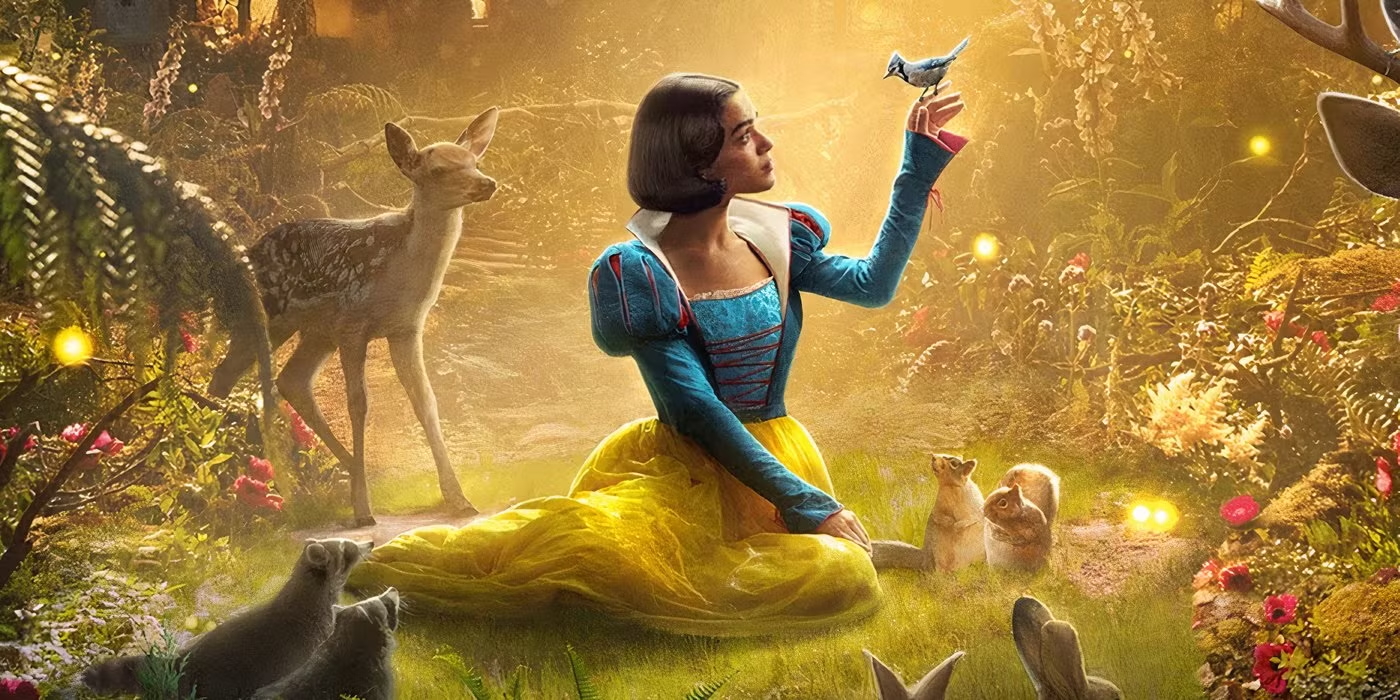
Disney Unveils Official Trailer for Live-Action Snow White
Disney releases Trailer for Upcoming 'Snow White' Live-Action.

The Significance of the Blaxploitation Film Era: A Revolution in Cinema and Society
By Tyson Graves The Blaxploitation film era, which emerged in the 1970
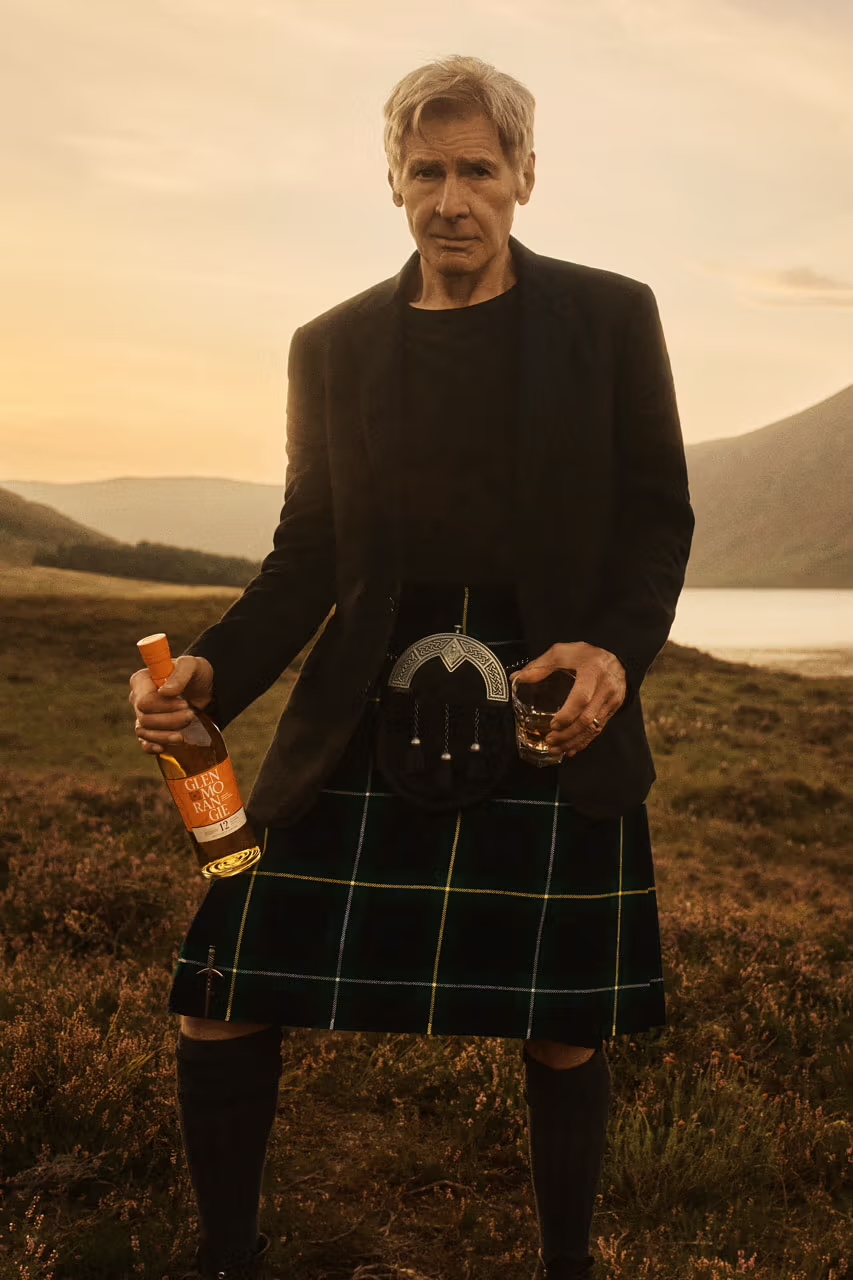
Harrison Ford Embarks on a Whisky Adventure in Glenmorangie’s New Campaign
Harrison Ford Has Become the Face Of Glenmorangie Highland Single Malt
POST COMMENT