

The Hollywood Bowl Isn’t Modernizing Its Identity—It’s Modernizing the Experience
By Brian K. Neal
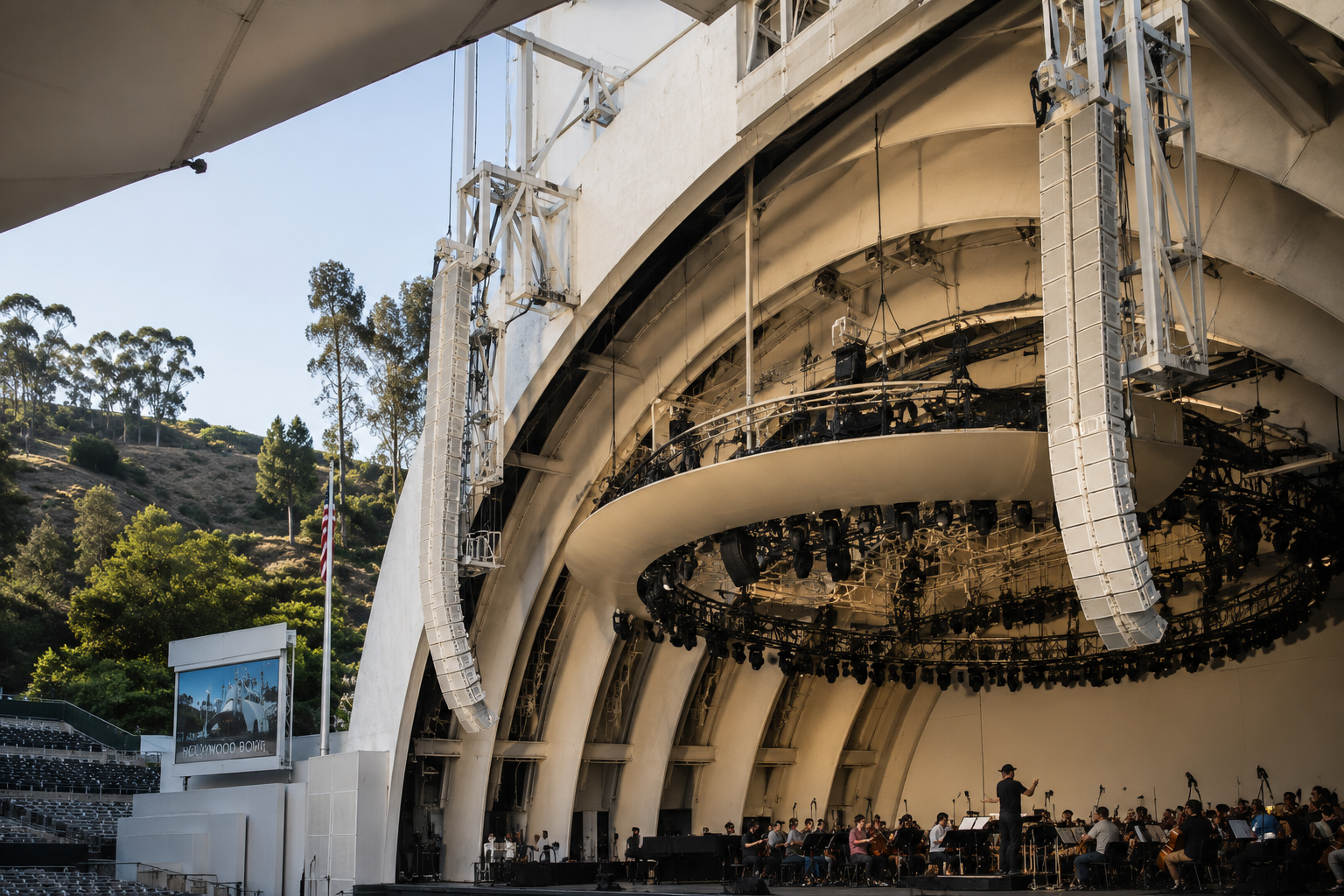
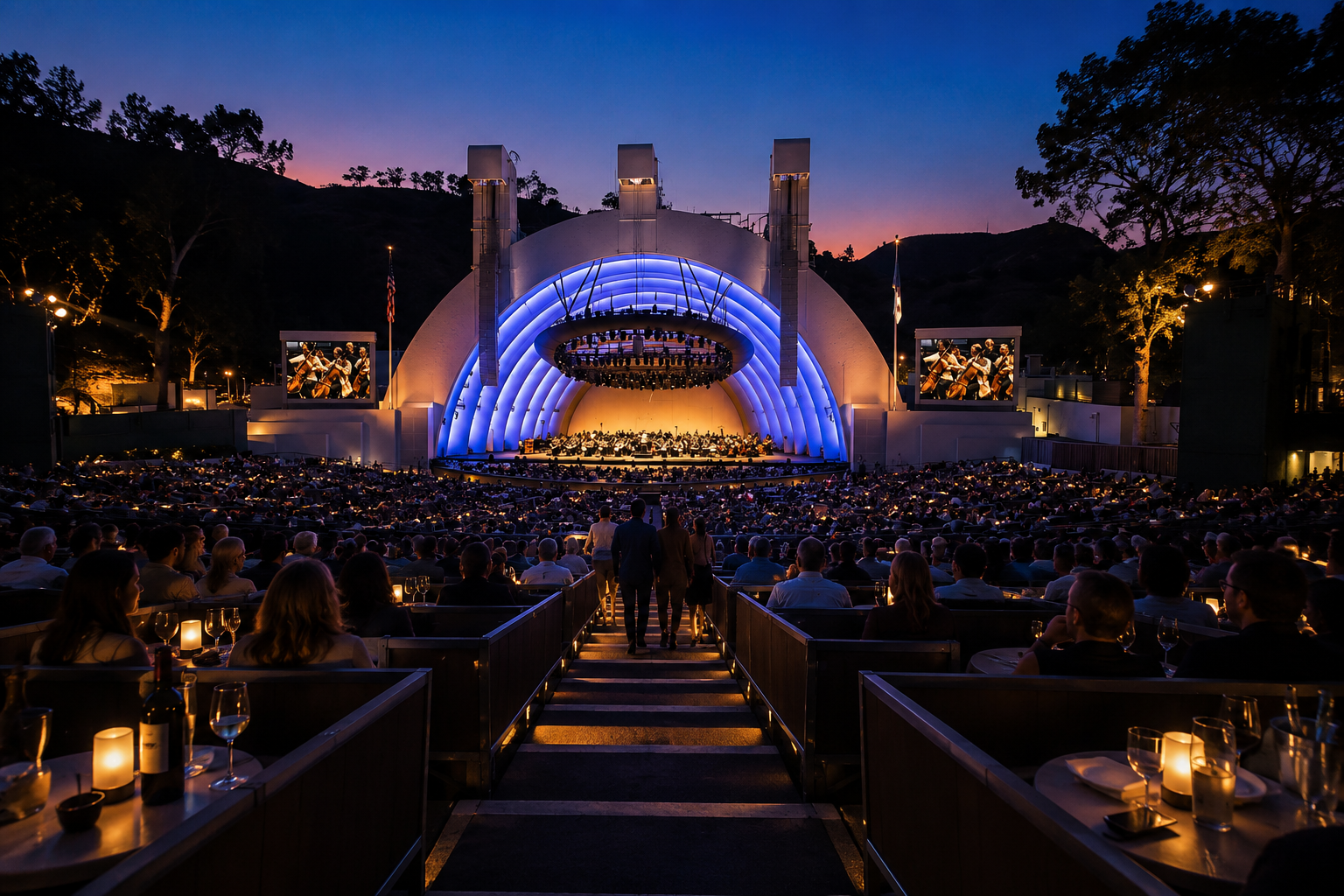
For more than a century, the Hollywood Bowl has remained one of America’s most recognizable live music venues. Its iconic shell, hillside setting, and tradition of gathering audiences under the Los Angeles sky have become part of its identity. That identity is not what needed updating. The latest investment in a new sound system, supported by AI-assisted audio optimization, reflects a different objective: ensuring that the experience of attending the Hollywood Bowl continues to justify why people choose to be there.
At first glance, the story appears to be about technology. In reality, it is about value.
The Hollywood Bowl is not competing against another sound system. It is competing against every alternative to leaving home. Audiences today can stream virtually any song, watch live performances on demand, listen through premium headphones, and access an almost limitless library of entertainment without ever purchasing a ticket or finding a parking space. In that environment, every live venue faces the same question: What makes being there worth it?
The answer is not simply better artists or larger productions. It is the quality of the experience itself.
That is where the Bowl’s investment becomes significant. The upgraded audio system is designed to improve clarity, consistency, and immersion throughout the venue. While artificial intelligence has attracted much of the attention, its role is ultimately secondary. The technology exists to support the performance, not compete with it. If audiences leave talking about the music instead of the system that delivered it, the investment has succeeded.
This reflects a broader shift in how modernization is taking place across established institutions.
For decades, progress was often associated with visible change. New buildings, dramatic architecture, larger screens, and headline-grabbing technology became symbols of innovation. Today, many of the most meaningful improvements are almost invisible. They operate behind the scenes, quietly removing friction, improving quality, and allowing people to focus entirely on the experience in front of them.
The Hollywood Bowl demonstrates that this approach may be more valuable than reinvention.
Its identity has already earned public trust over generations. The objective is not to replace that identity with something new but to strengthen it through better infrastructure. The venue understands that while technology evolves every few years, trust is built over decades. Preserving one increasingly depends on improving the other.
This principle is emerging across the experience economy. Airports are investing in smoother passenger journeys rather than simply building larger terminals. Hotels are refining service, comfort, and personalization instead of relying on size alone. Historic theaters are upgrading acoustics, lighting, and production capabilities while preserving the architecture audiences cherish. Across industries, institutions are discovering that their greatest competitive advantage is not novelty but the ability to continually improve the experience without abandoning the qualities that made them successful in the first place.
There is an important lesson in how artificial intelligence is being applied here.
Much of the public conversation treats AI as something that should always be visible. Yet its highest purpose may be exactly the opposite. The most effective technology often disappears into the background, allowing human experiences to feel richer, more natural, and more memorable. Great engineering rarely demands applause. It earns it indirectly by making everything else better.
Ultimately, the Hollywood Bowl is investing in something more valuable than sound. It is investing in presence.
In an era when almost every form of entertainment can be streamed, downloaded, or experienced remotely, cultural institutions must continually demonstrate why gathering in person still matters. They are no longer competing only on content; they are competing on the quality of the moments that can exist only when people choose to leave home and experience something together.
That may become the defining challenge of the next generation of live entertainment. The institutions that thrive will not necessarily be those that reinvent themselves most dramatically. They will be the ones that quietly strengthen the reasons people continue to show up.
The Hollywood Bowl isn’t modernizing its identity—it’s ensuring that the experience of being there remains something no screen, speaker, or algorithm can fully replace.
Related Posts

Smoke, Cinema, and Dafoe: Laphroaig’s Latest Masterstroke
A Dram of Drama

Why Vertical Video Now Decides Who Gets the Next Opportunity
Proof Over Permission
Yasmin Kassim Is Creating the Stories She Once Needed to See
Making room for more voices to be heard

Chief of War and Beyond: Siua Ikale’o’s Journey Through Truth
From Tonga to Hollywood

The Sunset Strip After Relevance
The Place Is No Longer the Platform