


Peyton Jackson Is Learning to Become More Than the Roles He Plays

Peyton Jackson has spent much of his life learning how to become someone else. Long before he understood the business of entertainment, he was a young boy from Atlanta who discovered something extraordinary in the simple act of performing. Two first-place wins at Amateur Night at the Apollo helped establish his confidence, but the years that followed would give him a different understanding of what it means to succeed. Through roles in Nobody’s Fool, Respect, Best Foot Forward, and The Woman in the Yard, Jackson has grown from a child performer into a young actor increasingly interested in the emotional lives of the characters he portrays. Now, playing Qwest in Hollywood Arts, he finds himself at a particularly revealing moment in his own life. His ambitions are expanding beyond acting into music, animation, writing, and the possibility of creating entire worlds of his own. Yet alongside that creative curiosity is something more personal: a growing appreciation for the ordinary experiences, relationships, and moments of happiness that exist beyond a professional accomplishment. Jackson is beginning to understand that discovering what he can do and discovering who he is are not necessarily the same journey. In conversation with GREAY, he reflects on the lessons of growing up in entertainment, the people and experiences that have shaped his perspective, and the freedom of allowing his future to remain unwritten.
GREAY: Peyton, you began performing at a very young age, long before acting became a professional career, and your early journey included winning Amateur Night at the Apollo twice. When you think about that little boy from Atlanta, what do you believe he understood about performing that you still carry with you today? And what would you want him to know about the person you’re becoming?
Peyton: I think that little boy understood the joy of performing before he understood what a career even was. When I started performing, it wasn’t about awards, recognition, or what might happen next. It was about getting onstage, expressing myself, and making people feel something. Winning Amateur Night at the Apollo twice was an incredible experience, especially at such a young age, but I think the biggest thing I took away from it was confidence in my own ability. I’d tell that little boy to keep that same excitement, confidence, and curiosity. Don’t let the industry make you forget why you fell in love with performing in the first place. I’m proud of how far we’ve come, but I also want him to know that it’s okay not to have everything figured out. We’re still learning, still growing, and still becoming who we’re supposed to be.

GREAY: Atlanta is where your journey began, and the city has such a distinct cultural identity, particularly in music and entertainment. Beyond the opportunities it gave you, what did growing up there teach you about yourself? Are there parts of Atlanta that still influence how you think, create or move through the world today?
Peyton: Atlanta is a big part of who I am. There’s so much creativity there, and music, film, and culture are woven into the city’s identity in a really special way. Growing up there taught me that you can dream big without losing touch with where you came from. I think Atlanta also gave me an appreciation for individuality. People have their own voices, their own styles, and their own ways of telling stories. That’s something I carry with me creatively. I don’t want to feel like I have to fit into one particular box just because that’s what people expect from me. And there’s something about being from Atlanta that keeps you grounded. No matter where work takes me, home is always a reminder of who I was before any of this happened. I think that’s important when you’re growing up in an industry where things can change so quickly.
GREAY: You’ve spent much of your childhood working in entertainment, and now you’re entering a different chapter of your life. Has there been a moment when you realized you were no longer approaching acting the way you did as a kid? What has changed most about how you see yourself, both professionally and personally?
Peyton: I think that in this chapter of my life the biggest change is that, when you’re a kid, you approach things with a kind of natural freedom. You’re excited to be there, you’re learning, and sometimes you don’t even realize how much you’re taking in. As I’ve gotten older, I’ve become more intentional about the choices I make and the kind of actor I want to become. I’m also learning that acting is only one part of who I am. I love it, and I want to continue growing in it, but I’m also interested in music, writing, animation, and creating things of my own. I’m discovering that I don’t have to limit myself to one identity. Personally, I’m learning to give myself room to grow outside of work. When you’ve been performing for so much of your life, it’s important to figure out who you are when the cameras aren’t rolling. I think that self-discovery is going to make me a better actor, too, because the more I understand myself, the more I can understand other people.
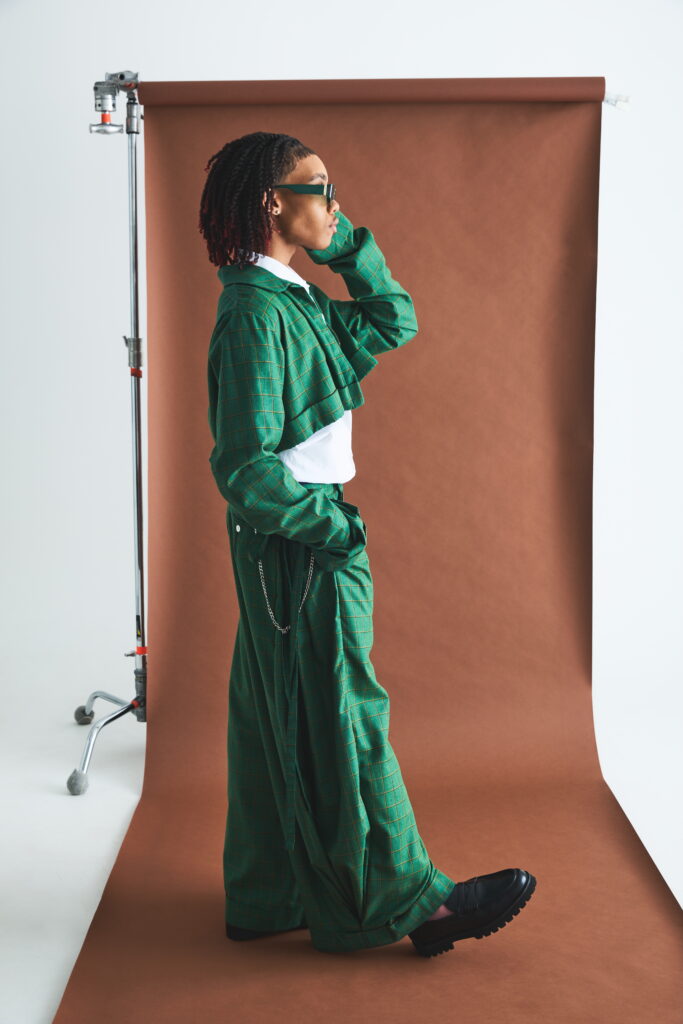
GREAY: In Hollywood Arts, you play Qwest, a gifted musician who tells his parents he’s attending school on a basketball scholarship because they don’t support his musical ambitions. Beneath the comedy, there’s a young person trying to pursue something he loves while worrying about disappointing his family. What did you recognize in Qwest when you first encountered him, and how did you approach that tension between his passion and his parents’ expectations?
Peyton: What I connected with about Qwest was that he has something he’s genuinely passionate about, but he’s also trying to figure out how to communicate that passion to the people whose opinions matter most to him. That tension makes him relatable. You can love your family and appreciate what they want for you while still knowing that your own dreams might look different from what they imagined. I approached him by trying to understand both sides of that conflict. Qwest isn’t just hiding his musical ambitions because he wants to be rebellious. There’s a fear of disappointing his parents, and I think that fear makes his situation more interesting. He’s trying to protect something important to him while also trying to maintain the relationships in his life. I wanted to find the sincerity underneath the comedy. The funny moments work because there’s something real at stake for him. I think a lot of young people can relate to wanting to pursue something they’re passionate about while wondering whether the people around them will understand.
GREAY: Hollywood Arts introduces a new generation of performers into a world audiences first came to know through Victorious. There’s a balance between honoring something people already love and creating something that belongs to your own generation. How did you and your castmates approach that responsibility, and what do you hope audiences discover about this new group of characters?
Peyton: I think the most important thing is to respect what audiences already love while allowing ourselves to bring something new to it. Victorious has a special place in people’s memories, and stepping into that world comes with a lot of excitement. At the same time, our characters have their own personalities, their own problems, and their own stories to tell. As a cast, I think we bring different energies to the show, and that makes the world feel fresh. We’re not trying to recreate the exact experiences of the original characters. We’re exploring what it means to be a young performer now, with all the pressures, friendships, insecurities, and ambitions that come with that. I hope audiences find characters they can see themselves in. Maybe they relate to Qwest’s passion for music, or they recognize something about themselves in another character’s struggles. Beyond the comedy, I hope people see that everyone is trying to figure themselves out in their own way. That’s what makes a group of characters feel real.
GREAY: Music has been part of your creative life for years, including your interests in songwriting and composition. Now you’re playing a musician in Hollywood Arts. Did that connection allow you to bring more of yourself into Qwest? And when you’re creating music for yourself, what does it give you that acting doesn’t?
Peyton: Absolutely. Having an interest in music definitely helped me understand Qwest from a different perspective. When you’re playing someone whose relationship with music is so important to his identity, it helps to appreciate that feeling of wanting to create something that belongs to you. Music has always been another way for me to express myself. When I’m writing a song or working on a composition, I can explore an emotion or an idea without having to communicate it through a character. Sometimes you have a feeling that you can’t quite explain in a conversation, but you can find a melody or a rhythm that captures it. Acting and music are different, but they complement each other. Acting teaches me to explore other people’s perspectives, while music allows me to explore my own. Both require honesty, patience, and a willingness to experiment. I don’t necessarily see them as competing creative outlets. I see them as different parts of the same creative side of me.
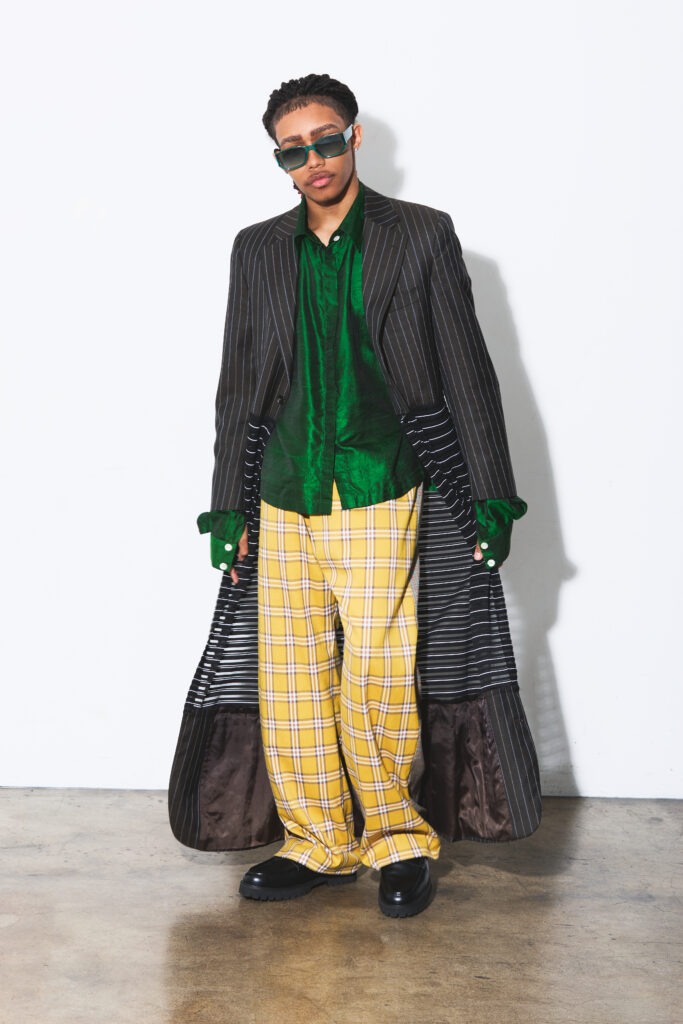
GREAY: In The Woman in the Yard, you played Taylor, a young man navigating grief while his family was struggling emotionally. You also worked closely with Danielle Deadwyler, whose performance carried so much emotional weight. What did that experience teach you about emotional honesty as an actor, and was there something you learned from working with Danielle that changed how you approach a scene?
Peyton: Playing Taylor challenged me to think about grief in a very personal and layered way. He’s dealing with the loss of someone important while also feeling responsible for his family. He’s trying to be strong for the people around him, but that doesn’t mean he isn’t struggling himself. I spent a lot of time thinking about what he was feeling in each moment and what he might be trying to hide. I think emotional honesty comes from understanding that a character doesn’t always know how to express what they’re going through. Sometimes the most powerful thing is what they don’t say. Working with Danielle Deadwyler was an incredible learning experience. She helped me understand the importance of controlling the intensity of a performance. Especially, in a film with so much suspense, you can feel a lot internally without having to show everything externally. There’s a balance between giving a scene enough emotion and trusting the audience to feel what’s happening. That experience reminded me that you don’t have to force a moment to make it powerful. If you understand the character and stay present, the emotion can come through naturally.
GREAY: Your career has placed you alongside established performers in projects including Nobody’s Fool, Respect, The First Lady and The Woman in the Yard. When you’re around actors who have spent decades developing their craft, what do you pay attention to beyond their performances? Has anyone taught you something about being a professional that has stayed with you?
Peyton: One of the biggest things I’ve learned from working with established actors is to pay attention to how they approach the work when nobody is watching. Of course, you learn a lot from seeing their performances, but you also learn from how they prepare, how they listen, how they treat the crew, and how they respond when something changes. I’ve been fortunate to work around some incredible performers, and those experiences have taught me that talent is only one part of being a professional. Preparation, consistency, humility, and respect matter just as much. I also pay attention to how experienced actors stay open to collaboration. You might have a plan for a scene, but filmmaking is a team effort, and sometimes the best moments happen when you allow yourself to respond to what’s happening around you. I want to carry that mindset with me. I want to keep learning, stay curious, and never reach a point where I feel like I have nothing left to learn from someone else.
GREAY: On Best Foot Forward, you played Kyle in a story that explored friendship, belonging and the assumptions people sometimes make about one another. What did playing Kyle teach you about the importance of listening and understanding another person’s experience? Did that role influence the way you think about friendship or empathy in your own life?
Peyton: Playing Kyle gave me an opportunity to explore how people can misunderstand one another when they make assumptions instead of taking the time to listen. It’s easy to look at someone else’s situation from the outside and think you understand it, but you never really know everything another person is dealing with. I think that’s especially important when it comes to friendship. Being a good friend isn’t always about having the right thing to say or trying to solve someone’s problems. Sometimes it’s about being willing to listen without immediately judging or deciding what they should do. The role reinforced the importance of seeing people as individuals rather than defining them by one experience or characteristic. Everyone has a story that you might not know anything about. It’s a lesson that applies beyond acting. The older I get, the more I appreciate relationships where people can be honest with each other, ask questions, and make an effort to understand rather than assume.
GREAY: You’ve worked across comedy, drama, horror and family entertainment, each requiring something different from you as a performer. As you’re getting older and discovering more about yourself, has your relationship with choosing roles changed? Are you becoming more interested in challenging yourself as an actor, or finding stories that reflect things you personally care about?
Peyton: I’m definitely becoming more interested in challenging myself. I’ve had the opportunity to work across comedy, drama, horror, and family entertainment, and each genre has taught me something different. I love that acting allows me to explore experiences that aren’t necessarily my own. As I get older, I’m paying more attention to what a story has to say and what I can discover through a character. I love a good script, especially one with complex characters and something meaningful underneath the surface. A role doesn’t have to be similar to my own life to connect with me. Sometimes the most interesting roles are the ones that force you to see the world differently. If I would have to say anything specifically, I would love to one day portray Miles Morales in a Marvel movie. That is a dream role of mine. I’m also interested in continuing to explore different genres and taking creative risks. I don’t want to become too comfortable doing only one kind of work. I want to keep surprising myself. At the same time, I’m learning that choosing roles isn’t just about proving what you can do. It’s about finding stories that excite you, working with people who inspire you, and making choices that help you grow as both an actor and a person.
GREAY: You’ve spoken about your interest in animation, voice acting, music composition and writing, and previously mentioned developing an animated series of your own. What first drew you toward creating stories beyond acting, and how has that animated project evolved? When you imagine having the freedom to build an entire world from the beginning, what excites you most about that possibility?
Peyton: I’ve always been interested in the different pieces that come together to tell a story. Acting and voice acting is one part of that, but there’s also writing, music, animation, directing, and all the creative decisions that help bring an idea to life. Animation especially interests me because you have so much freedom to imagine a world from the ground up. You can create characters, environments, and situations that might be impossible to capture in a traditional live-action project. Voice acting is exciting for a similar reason. You can give a character an entire personality through your voice, even when the audience never sees you. My interest in developing an animated series comes from wanting to create something that reflects my own imagination. I’m interested in the process of building a story, developing characters, and figuring out how all the pieces fit together. It’s a different kind of challenge from stepping into a role someone else has written. I’m still exploring what that project can become, and I don’t want to rush the creative process. What excites me most is the possibility of having an idea in my head and eventually being able to share that entire world with other people. I want to build things that allow me to combine all the different creative interests I’ve developed over the years.
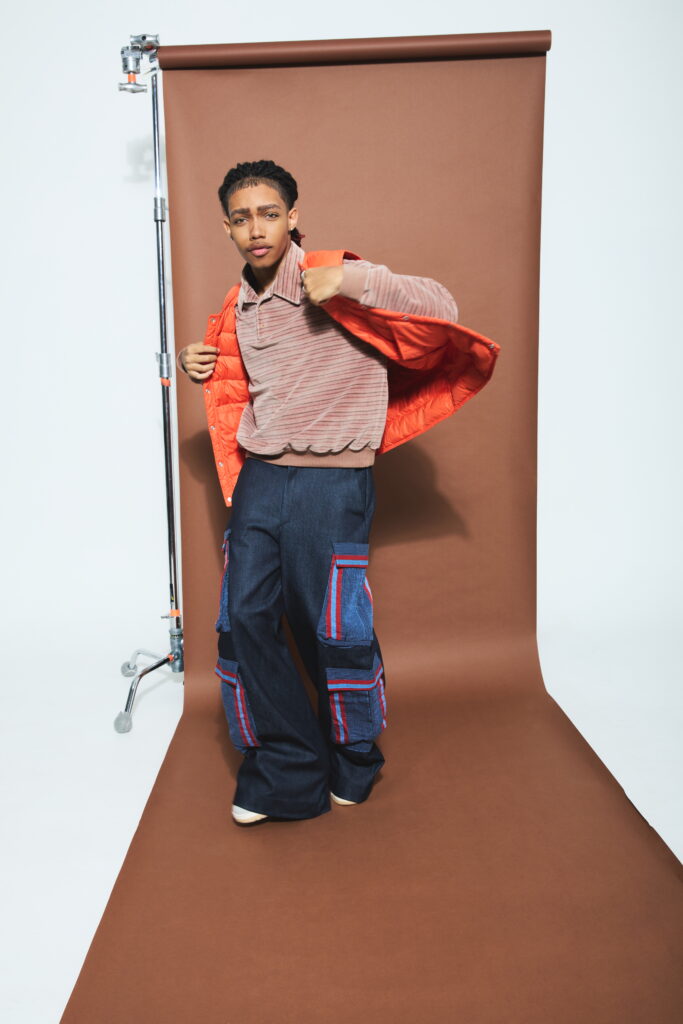
GREAY: Peyton, you’ve spent much of your life doing something that many people dream about, but you’re also still discovering the world and experiencing new things for yourself. What’s something about this chapter of your life that has genuinely surprised you or brought you happiness in a way you didn’t expect?
Peyton: I think one of the biggest surprises has been realizing how much there is to discover outside of work. When you’ve been doing something for a long time, it’s easy to focus on the next project, the next opportunity, or whatever goal you’re working toward. But I’m learning to appreciate the experiences that don’t necessarily lead to anything professionally. Trying something new, spending time with people I care about, exploring different creative interests, or simply having a day where I can relax and enjoy myself can be just as meaningful as reaching a career milestone. I’m also enjoying the process of discovering what I genuinely like, independent of what people might expect from me. I’m still young, and I don’t have to have every part of my future figured out right now. There’s something freeing about understanding that growth doesn’t always have to look like an accomplishment. Sometimes it’s just learning something new about yourself or realizing that you’re happier than you expected to be in a particular moment.
GREAY: You’ve grown up around people who know you through your work, but there are also people who know you without any of that attached. As you’ve gotten older, what have you come to value most in the friendships and relationships you keep close? What makes you feel genuinely understood by another person?
Peyton: I value authenticity a lot. It’s important to have people around you who see you as a person first, not just as someone who acts or someone they’ve seen on a screen. The entertainment industry can be exciting, but it can also make it easy for your work to become the main thing people associate with you. The relationships I appreciate most are the ones where I don’t have to perform. I can be myself, talk about what’s on my mind, laugh about something completely unrelated to work, or admit that I don’t have everything figured out. I think being genuinely understood comes from feeling that someone is interested in who you are, not just what you do. It’s about being able to have honest conversations, respect each other’s differences, and trust that you can show up as yourself. As I’ve gotten older, I’ve realized that the quality of your relationships matters much more than how many people know you. Having a few people who genuinely care about you and want to see you grow is something I never want to take for granted.
GREAY: Outside of acting, auditions, music and everything connected to your career, what does an ordinary, genuinely good day look like for you? When you have nothing you need to accomplish professionally, what are the little things that make you happiest or remind you of who you are?
Peyton: Honestly, a good day doesn’t have to be complicated. It might be a day when I can wake up without immediately feeling like I have a million things to do, spend some time with my family, play music, or work on an idea simply because it makes me happy. I love creating things, so sometimes I’ll find myself working on a song, writing something, or exploring an idea for a project without even realizing how much time has passed. But I also enjoy the simple things, like laughing with people I’m close to, spending time with my dog, or watching something that inspires me. I think having a balance is important. I love what I do, and I’m grateful for the opportunities I’ve had, but I don’t want to become so focused on my career that I forget to enjoy my life. A genuinely good day is one where I feel connected to the people I care about, have had a chance to do something I enjoy, and can go to sleep feeling good about how I spent my time. It doesn’t have to be productive in the traditional sense to be meaningful.

GREAY: You’ve already experienced several chapters of a career, yet there’s still so much of your life and creative identity ahead of you. With Hollywood Arts introducing you to another audience and your interests extending beyond acting, what are you most curious to discover about yourself over the next few years? Not necessarily what you want to achieve, but who you hope you’ll become along the way?
Peyton: Over the next few years, I’m most curious about discovering how far I can take my creativity and how many different ways I can tell stories. Acting will always be an important part of my life, but I’m excited about exploring music, animation, writing, and other opportunities to create things of my own. I’m also interested in learning more about myself outside of those ambitions. I want to become more confident in my decisions, more patient with the process, and more comfortable with the fact that growth doesn’t always happen on the timeline you expect. I hope I become someone who remains curious and open-minded, someone who works hard but remembers to enjoy the journey, and someone who treats people well regardless of where they are in their own lives. I’ve been fortunate to start this journey at a young age, and I’m grateful for the experiences that have brought me here. But I don’t want to measure my life only by the projects I’ve done or the things I’ve accomplished. I want to look back and know that I continued learning, stayed true to myself, and made room for the things that genuinely matter to me. Ultimately, I hope I become a person who creates meaningful work, inspires people through what I do, and never loses the excitement that little kid from Atlanta had when he first stepped onto a stage.
For someone who has spent so much of his life in front of an audience, Peyton Jackson speaks about his future with a refreshing willingness to leave parts of it undefined. He knows there are stories he wants to tell, characters he hopes to explore, and creative worlds he would like to build. But beneath those ambitions is an understanding that a meaningful life cannot be measured entirely by the work it produces. The friendships that allow him to be himself, the happiness he finds in ordinary moments, and the curiosity that continues to pull him toward new experiences are becoming just as important as the opportunities ahead. There is no grand declaration of reinvention in the way Jackson describes this chapter, only the gradual confidence of someone learning to trust his own evolution. The little boy from Atlanta who once stepped onto a stage with nothing more complicated than a love of performing has not disappeared. He has simply grown into a young man beginning to understand that the most important parts of his story may be the ones he has yet to discover. And perhaps that is where Peyton Jackson’s greatest freedom now lies: not in knowing exactly who he will become, but in giving himself the time and space to find out.
Photography Charles Benoit @Cbenoitphoto
Words Kyra Greene @noteasybeingreen
Grooming Dion Xu @makeupbydion
Wardrobe Vincent Weathersby Jr @styledbyweathersby
Asst Wadrobe @its_cheetah_fida @saddybears
Produced By Firstsight Productions @firstsight.intl
Related Posts

“Game Within the Game”: Melo Returns to NBC as NBA Coverage Reignites
From Hardwood to Headset: Melo Embraces New Role .

Black Promoters Collective Reveals Thrilling Collaboration with Jazz In The Gardens Music Festival, Showcasing Headlining Performance by Maxwell
Black Promoters Collective (BPC) proudly unfurls the banner of a groun

Reimagining Travel: How CASETiFY Is Shaking Up the Luggage Scene
CASETiFY Expands Into Travel.
Paul Becker Was Never Meant to Be Just One Thing
Where Movement Becomes Meaning

Globant and Formula 1 have unveiled a multi-year partnership aimed at elevating the digital experiences within the world of Formula 1
Globant and Formula 1 have unveiled a multi-year partnership

Paradise Returns: Sterling K. Brown Ignites Season 2 in Explosive New Trailer
Nothing Stays Buried
POST COMMENT