

Television Is Starting to Feel Engineered
By Tremaine Langston
There was a time when television felt expansive.
Not because every show was better, but because television ecosystems felt alive. Worlds stretched outward. Side characters carried emotional gravity beyond the central plot. Guest stars could steal entire episodes. Unknown actors appeared unexpectedly and became unforgettable. Shows had room for texture, detours, strange rhythms, and human unpredictability.
Now something feels tighter.
Audiences may not know the language of “top of show,” recurring classifications, co-star rates, or billing negotiations, but they increasingly feel the downstream effect of those decisions onscreen. Ensembles feel smaller. Supporting worlds feel thinner. The same actors circulate repeatedly across projects. Stories move faster, explain more directly, linger less, and leave behind fewer emotional residues.
Television is starting to feel engineered.
Not engineered in the conspiratorial sense. Engineered in the corporate sense. Optimized. Streamlined. Risk-managed. Structured around efficiency systems that are slowly becoming visible inside the storytelling itself.
The actors publicly discussing these shifts are not describing isolated frustrations. They are independently documenting the same pattern from inside the machine: fewer series regulars, more recurring classifications, compressed commitments, shrinking guest ecosystems, recognizable names competing for roles that once functioned as developmental pathways for working actors building sustainable careers.
But the real story is not simply economic.
It is cultural.
Because supporting actors were never just labor. They were narrative infrastructure.
A healthy television ecosystem depends on circulation. It depends on unfamiliar energy entering the frame. The recurring detective, the public defender, the grieving mother, the strange neighbor, the witness-of-the-week, the unexpectedly devastating guest performance — these characters made fictional worlds feel larger than the plot itself. They created unpredictability. They created emotional texture. They made stories feel lived-in.
Optimization removes excess first. Eventually, it starts removing humanity.
Streaming platforms expanded the amount of visible content while quietly compressing the ecosystems underneath it. Shorter seasons leave less room for narrative detours. Limited series reduce long-term character circulation. Platform economics increasingly reward retention metrics, completion rates, familiarity, and recognizable intellectual property. Executives are incentivized to reduce uncertainty.
But uncertainty is where discovery once lived.
So the industry increasingly recycles instead of circulates.
That distinction matters.
Circulation creates movement. Recycling creates repetition. One produces new stars, new emotional attachments, and new cultural memory. The other preserves platform stability through familiarity.
The audience feels the optimization long before it understands the mechanism.
That is why so much modern content is described with strangely contradictory language: expensive but forgettable, polished but emotionally thin, bingeable but difficult to remember six months later. The issue is not that television suddenly became untalented. The issue is that optimization logic has started flattening the ecosystems that once allowed stories to breathe.
And once you see the formula, you start seeing it everywhere.
The shrinking ensemble casts. The overexposed faces. The disappearance of meaty guest performances. The accelerated exposition. The sensation that every story is moving with mechanical urgency toward retention instead of emotional expansion.
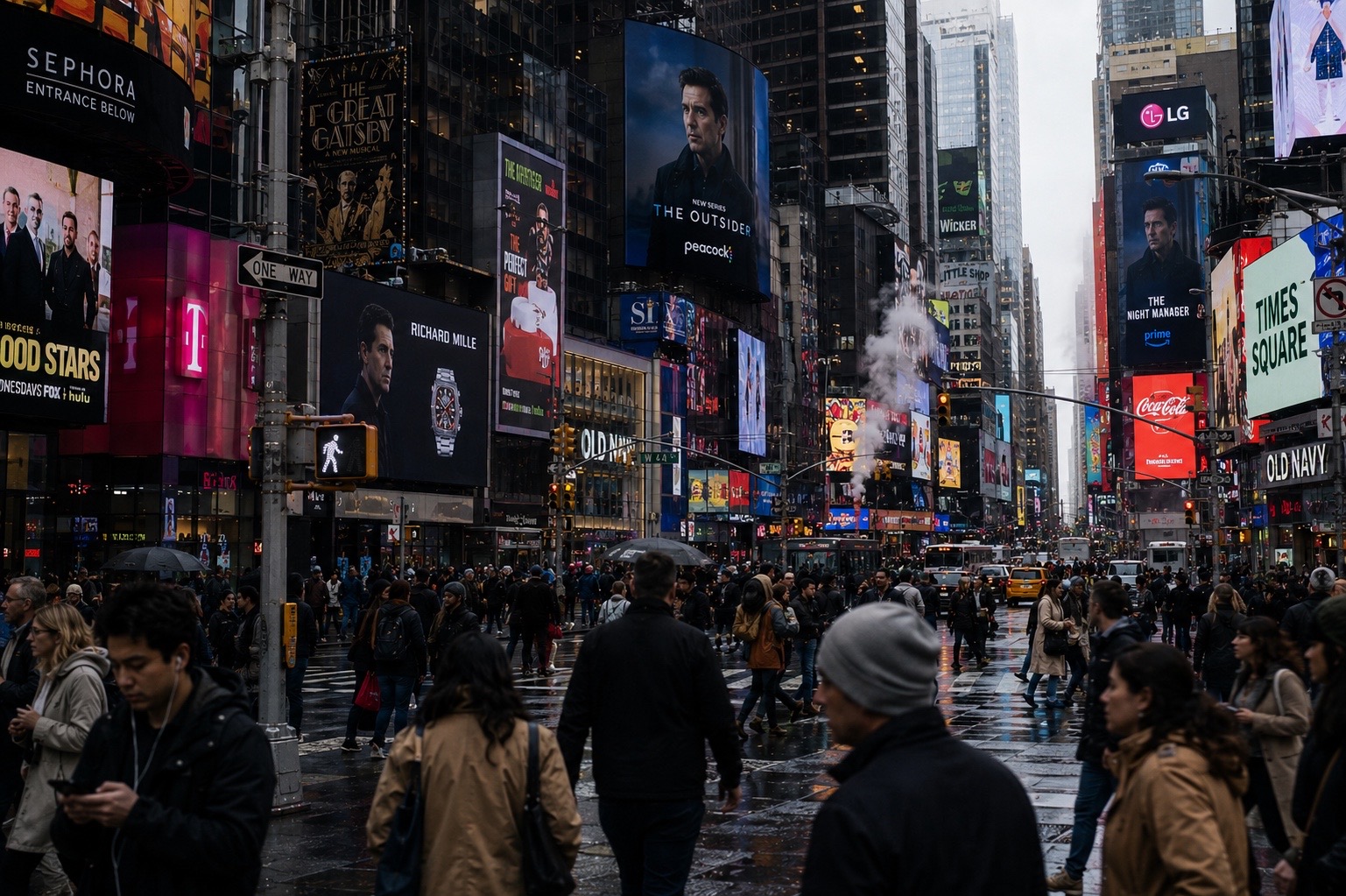
Even the visual language of modern entertainment increasingly reflects the same philosophy. Massive campaigns. Endless platform promotion. Familiar faces replicated across streaming billboards, social feeds, autoplay thumbnails, and recommendation systems until repetition itself becomes ambient. Culture starts looping in public while audiences continue moving through it almost unconsciously.
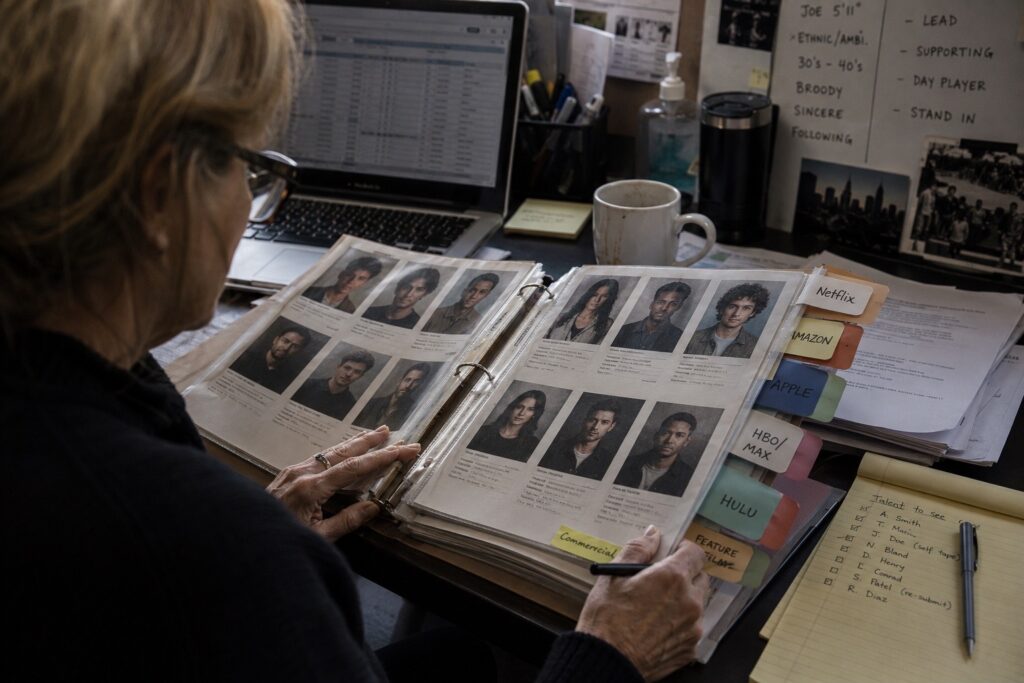
Behind the scenes, the same optimization logic quietly reorganizes the labor structure underneath the industry. Casting becomes categorization. Familiarity becomes insurance. Human beings increasingly move through sortable systems designed to minimize uncertainty at scale.
This is not happening only in Hollywood.
Music platforms optimize toward familiarity. Journalism optimizes toward engagement velocity. Social media optimizes toward behavioral predictability. Technology companies reduce permanent labor in favor of expandable temporary systems. Every modern platform eventually drifts toward the same destination: efficiency strong enough to suppress unpredictability.
But culture has always depended on unpredictability.
The irony is that optimization initially feels invisible because audiences enjoy convenience. More content. Faster pacing. Cleaner structures. Familiar franchises. Recognizable faces. But over time, excessive optimization creates sameness. Discovery slowly gets replaced by consumption. Stories stop feeling lived-in and start feeling processed.
That is the real danger.
Not that television disappears.
Not that Hollywood collapses.
But that storytelling slowly loses the human texture that made audiences emotionally attach to it in the first place.
The industry believes it is engineering efficiency.
The audience increasingly experiences it as emotional flattening.
And those are not the same thing.
Related Posts

Sia’s $180 Million Catalog Deal Shows What Music Rights Are Becoming
Turning Songs Into Experiences

Jeffrey Wright will officially reprise his role as Isaac for The Last of Us season 2
Jeffrey Wright will play Isaac Dixon in The Last of US 2

Unveiling “Indiana Jones and The Great Circle”: A Legendary Adventure by MachineGames
Indiana Jones and The Great Circle

Sophie Turner Teams Up with Elderflower Liqueur to “Spritz Up Your Summer”
Elderflower Liqueur announced collaboration with actress Sophie Turner

Fate Takes a Turn: Jackpot and Black Cat Unveil Their Luckless Alliance in a Fresh Team-Up Series
Marvel’s Unluckiest Pair

Dua Lipa Stars in YSL Beauty’s New ‘Libre Flowers & Flames’ Campaign
Introducing YSL Beauty's LIBRE FLOWERS & FLAMES: A Fiery New Fragrance