

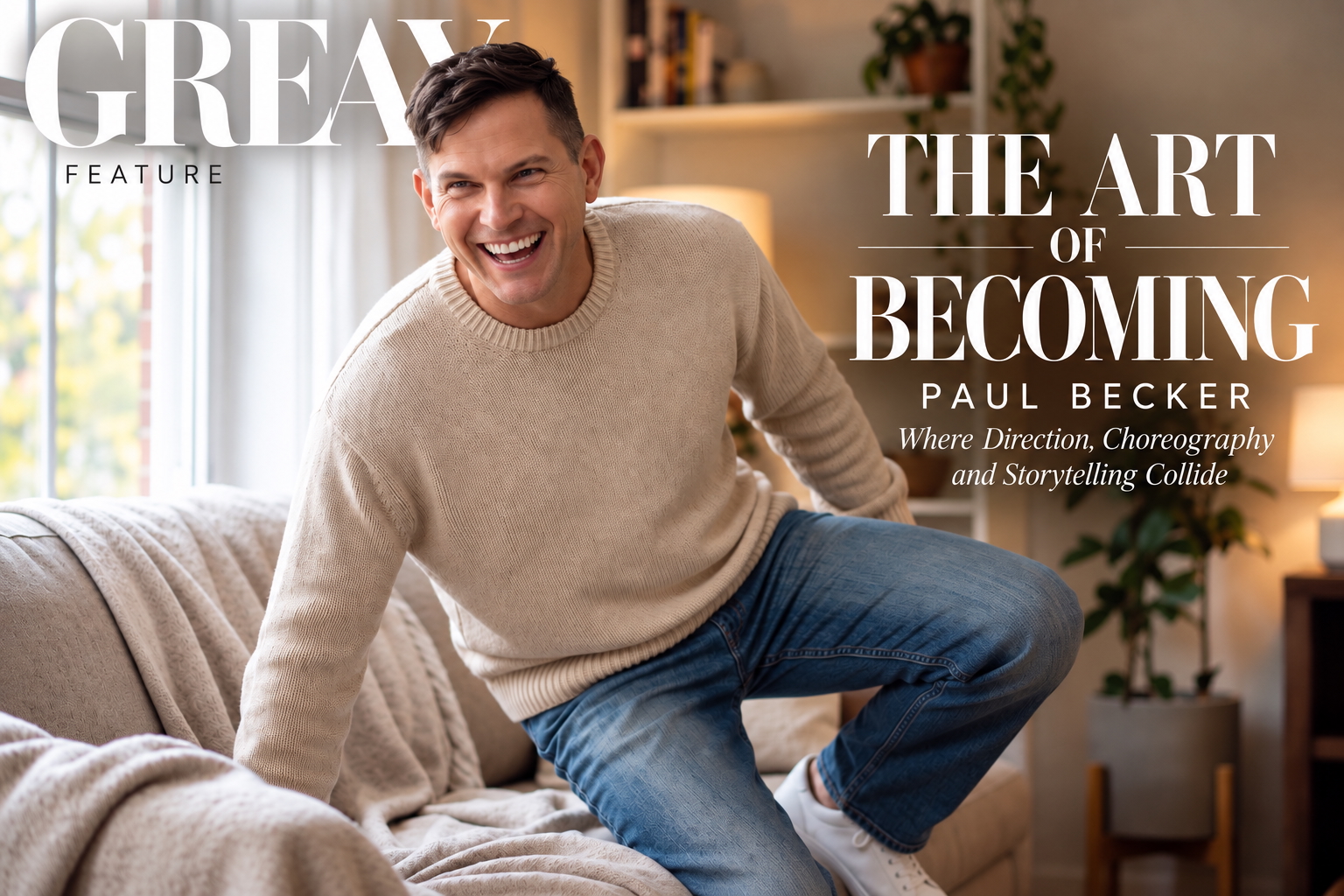
Paul Becker Was Never Meant to Be Just One Thing

By Kyra Greene
Long before Paul Becker was directing films, choreographing some of entertainment’s most recognizable productions, or bringing an imagined world to life through LEGO, he was a young boy in Victoria, British Columbia, finding quiet corners where his imagination could run uninterrupted. One of six brothers, he learned early to move between solitude and the commotion of family life, building, drawing, and discovering the possibilities of his own creativity. That instinct would eventually carry him into an industry where movement became his first language, but never his only one. Across a career spanning choreography, directing, writing, music, and production, Becker has resisted the limitations of any single creative identity. His latest project, LEGO Friends: Heartlake The Musical, brings those disciplines together, but the story behind the work is less about arriving at a destination than remaining curious enough to keep discovering new ones. For Becker, the imagination that started everything has never really left the room.
GREAY: You grew up in Victoria, British Columbia, Canada, as one of six boys, and you’ve talked about being the kid who was dancing in the corner while your brothers were roughhousing—and even building little worlds out of LEGO. Now you’re directing LEGO’s first live-action musical. When you look at that kid and the filmmaker you are today, what part of him do you think never changed?
Paul: The quiet creative kid is still very much there. Growing up, I’d find a corner, a little room, even a closet where I could draw, build, and create without interruption. Then I’d come out and join my brothers in the roughhousing. With five brothers, that part was inevitable. That hasn’t changed. I still need uninterrupted quiet to organize my thoughts and get the creative plan together. Once that’s clear, I’m ready to come out and roughhouse, creatively speaking.
GREAY: Your path into dance wasn’t particularly conventional. You were largely self-taught, learning from VHS tapes before following two dancers from your mother’s diner into a class. When you didn’t have a traditional roadmap in front of you, what made you believe there might still be a place for you in this world?
Paul: I never really had a roadmap. I’ve always been curious, and one thing I really appreciate about my parents is that they gave me a safe place to fail. I could try something, make a mistake, and still feel supported. That gave me the courage to jump in, even when I didn’t know where it would lead. They also taught me the value of hard work by example. My dad worked multiple shifts and my mom was a waitress who worked long hours. By twelve, I was working long hours in the diner too. That work ethic was instilled in me early. I didn’t know exactly where I’d fit, but I felt supported enough to try and knew I was willing to work for it.
GREAY: You’ve talked about working on Chicago and watching Rob Marshall use movement to build story as a pivotal experience. Do you remember the moment when you understood that choreography didn’t simply have to accompany a story—that movement itself could reveal character and move the narrative forward?
Paul: That realization started before Chicago, watching silent films and artists like Buster Keaton. He could reveal character, make you laugh, and tell a story entirely through physicality, without saying a word. That was an early education for me in how movement could carry a story. What I’ve learned along the way is that making the audience feel something is the most important thing. Pacing, rhythm, gesture, and structure all feed that. A hesitation or the way someone enters a room can tell you so much about them before they speak. And if you keep your eyes open, you start seeing choreography everywhere: objects, cars, fountains, even airplanes. Even color and the way energy moves. I’ve always been curious about those possibilities. Whatever I’m working with, the question is the same: what does it tell us, and what does it make us feel?
GREAY: You’ve built a creative relationship with Kenny Ortega that has lasted more than 16 years. Early in your career, you were already talking about watching him and wanting to direct. When did that relationship begin to shift from mentor and protégé into two filmmakers who could genuinely challenge and trust one another?
Paul: I wouldn’t point to one single moment. Working with Kenny is a masterclass, and I’ve learned a tremendous amount from him, but I also came in with my own career, instincts, and creative point of view. Early on, we recognized how much we had in common: our sense of humor, storytelling approach, and how we like to shoot choreography for the camera. We also share a love of classic musicals and artists like Gene Kelly. That common language gave us a strong foundation. The trust grew organically through the work on projects like Descendants and Julie and the Phantoms, while I was also developing my own projects. I think each of us having our own voice, and being able to challenge each other, is what makes us great creative partners.
GREAY: For years, millions of people could see your work without necessarily knowing your name—from Twilight and Descendants to The Last of Us, Julie and the Phantoms and major music artists. What did spending so much time creating from behind the camera teach you about needing—or not needing—recognition for the work you make?
Paul: Choreography can be a thankless job. Choreographers can be pivotal in elevating a project, but that contribution isn’t always recognized. I’ve contributed choreography, writing, and music to numerous films without receiving credit, so I know that firsthand. But credit isn’t the reason we do this as artists. I’ve always been comfortable helping someone else shine. There’s satisfaction in knowing you helped a performer find something or made a scene work, even if people don’t know your name. That doesn’t take away from the importance of recognizing people’s contributions. The work itself gives me satisfaction, and I also want choreography to be understood and valued as part of the storytelling.
GREAY: Your career eventually expanded beyond choreography into directing, writing, producing, story development and songwriting. Was there a moment when you realized that “choreographer” described something you did exceptionally well, but no longer described the entirety of who you were creatively?
Paul: There wasn’t one moment when I realized that. I’ve always been an artist with a lot of different interests: drawing, graphic design, editing, cameras, writing. I was always coming up with ideas and short concepts, even before I had an outlet for them. Choreography gave me a way into filmmaking, and it also became an education in storytelling. Sometimes a screenplay would simply say “They dance.” My job was to figure out what happened inside those two words. That, plus reading and studying those scripts, helped me grow as a writer. I’m proud I can work across different disciplines. Understanding editing shapes how I shoot; understanding the camera shapes how I choreograph; and lately I’ve been exploring how AI can help translate what’s in my head too. I love having different ways to express ideas, and I’m always adding to those skills.
GREAY: Moving into directing can also mean becoming responsible for people in a different way. You’re no longer only thinking about the movement or the frame—you’re helping establish the emotional environment everyone has to work inside. What kind of director did you consciously decide you wanted to be when people walked onto your set?
Paul: I’ve always wanted to create an environment where people feel like creative partners. That goes for my actors, my dancers, and every member of the crew. You can’t make a movie without those people. It takes a village, and I want everyone to feel heard and to understand that they share responsibility for the film we’re making together. My job as a director is to give them the space to contribute and do their best work. That’s how I’ve always worked with dancers, so in that sense, moving into directing wasn’t a huge shift. Choreography is already about telling a complete story through physical dialogue. Directing draws on that same instinct, with a wider group of collaborators. Of course, as the director, all eyes are on you. There’s a real weight on your shoulders, but I love it.
GREAY: You’ve spent a significant part of your career working with young performers. When a young actor or dancer arrives with enormous ambition but perhaps hasn’t yet developed the confidence to protect their own voice, what responsibility do you feel toward the person underneath the performance?
Paul: First thing I tell young performers is they don’t have to worry about making mistakes. I want them to be open to playing, trying things, and bringing their own ideas. Those ideas are welcome. If they’re trying to guess what will please me, we miss what’s interesting about them. My responsibility is to take that pressure off and create space for their voice to come through so they feel it matters alongside everyone else’s.
GREAY: Now you arrive at LEGO Friends: Heartlake The Musical, where directing, choreography, music, physical production and virtual production all have to speak the same language. Does this project feel like a culmination of all these different creative identities you’ve spent years developing?
Paul: Heartlake brought together many of the skills I’ve spent years developing. I helped develop the story and script, co-wrote music, choreographed, directed, and co-executive produced. It was also a huge collaboration with the LEGO Group. Working with an established brand means bringing your own creative voice while understanding the world and audience you’re creating for. There are decisions you make together and that’s part of the process. I felt we found a good balance. So yes, it brought a lot of those creative identities together. Each discipline informed the others and I got to draw on them throughout the film.
GREAY: The story follows Daisy, an imaginative young girl who builds a world from LEGO bricks and is then transported into Heartlake City, where creativity, friendship and belonging become part of her journey. Considering how unconventional your own path has been, was there anything about Daisy searching for where she belongs that became unexpectedly personal for you?
Paul: Honestly, I didn’t see Daisy’s story as a reflection of my own. I moved between schools when I was young, so I could understand some of the challenges around making friends and finding your place. But I don’t think a director needs to have lived a character’s experience to tell their story. My job was to understand Daisy on her own terms and help bring her journey to life.
GREAY: You also helped develop the story and co-wrote three of the original songs. When you’re accustomed to expressing emotion through bodies and movement, what did songwriting allow you to say that choreography couldn’t?
Paul: I’m a writer and a storyteller, so songwriting felt like an extension of that. In a musical, the song is part of the scene. The lyrics have to carry the story forward and express what the character needs to say. I’d contributed to music before, from the cheer material on Hellcats to dance breaks and lyrics on other productions, often without a songwriting credit. On Heartlake, helping develop the story meant I could bring that understanding of the characters directly into the songs. Movement can communicate so much, but lyrics let you give a thought specific language. You can let the audience hear what’s going on inside a character, then use the choreography to deepen it. I enjoy working across both because they give me different ways to tell the same story.
GREAY: Earlier in your career, you talked about choreography sometimes succeeding precisely because it doesn’t look choreographed. After hundreds of projects, has your definition of great movement become less about making an audience notice what you’ve created and more about making them feel something without necessarily understanding why?
Paul: It depends on the project. Sometimes you want a big, entertaining number where the audience notices every move. Other times, the movement needs to feel so natural that they’re simply caught up in the story. But either way, my goal is to make them feel something. They might leave laughing, crying, surprised, hopeful, or empowered. Most people watching aren’t dancers, and I don’t need them to remember the steps or understand how something was choreographed. I want them to carry the feeling with them. If the movement stays with them emotionally, it’s done its job.
GREAY: You’re now exploring the intersection of traditional filmmaking, virtual production and generative AI through your own company. After building a career around something as fundamentally human as bodies moving through physical space, what do you believe technology should be allowed to enhance—and what parts of the creative process do you believe must remain human?
Paul: I’m an AI-friendly filmmaker and a huge proponent of what these tools can do. I use AI every day as an extension of my creativity. It’s helped me enormously, and I don’t see myself going backwards. I’m particularly excited about creating environments, developing animation, and finding new VFX workflows. They also open doors for artists who’ve never had a studio behind them or couldn’t get a project greenlit. They can help people bring ideas to life that would otherwise stay in their heads. For me, the human contribution is the intention behind the work, the story you want to tell, the choices you make, and the feeling you want to leave with an audience. AI draws on what’s already out there. I bring my own experiences, instincts, and point of view to how I use it. What must remain human is the responsibility for the creative choices: what we’re saying, why we’re saying it, and whether the result feels true. I don’t have a crystal ball and I won’t pretend to know where all of this is going, but I’m interested in exploring what’s possible.
GREAY: You’ve spent much of your life helping other people move—across stages, through frames and through stories. After everything that has moved you from Victoria to where you are now, when you strip away the credits, awards and job titles, what is still moving Paul Becker?
Paul: Life still moves me. I love living, entertaining, and making people feel something, and getting to spend my life creating is a privilege I don’t want to take for granted.
For all the worlds Paul Becker has helped bring to life, perhaps the most revealing thing about his journey is how little his original motivation has changed. The tools have evolved, the responsibilities have grown, and the creative possibilities now extend into technologies that would have seemed unimaginable when he first began studying movement. Yet beneath the choreography, the directing, and the expanding language of filmmaking remains someone who still believes in the power of making another person feel something. His career has never been confined to a single discipline, nor has his imagination required one. The boy who once needed a quiet corner to imagine new worlds never stopped creating them. He simply found more ways to bring others inside.
Related Posts
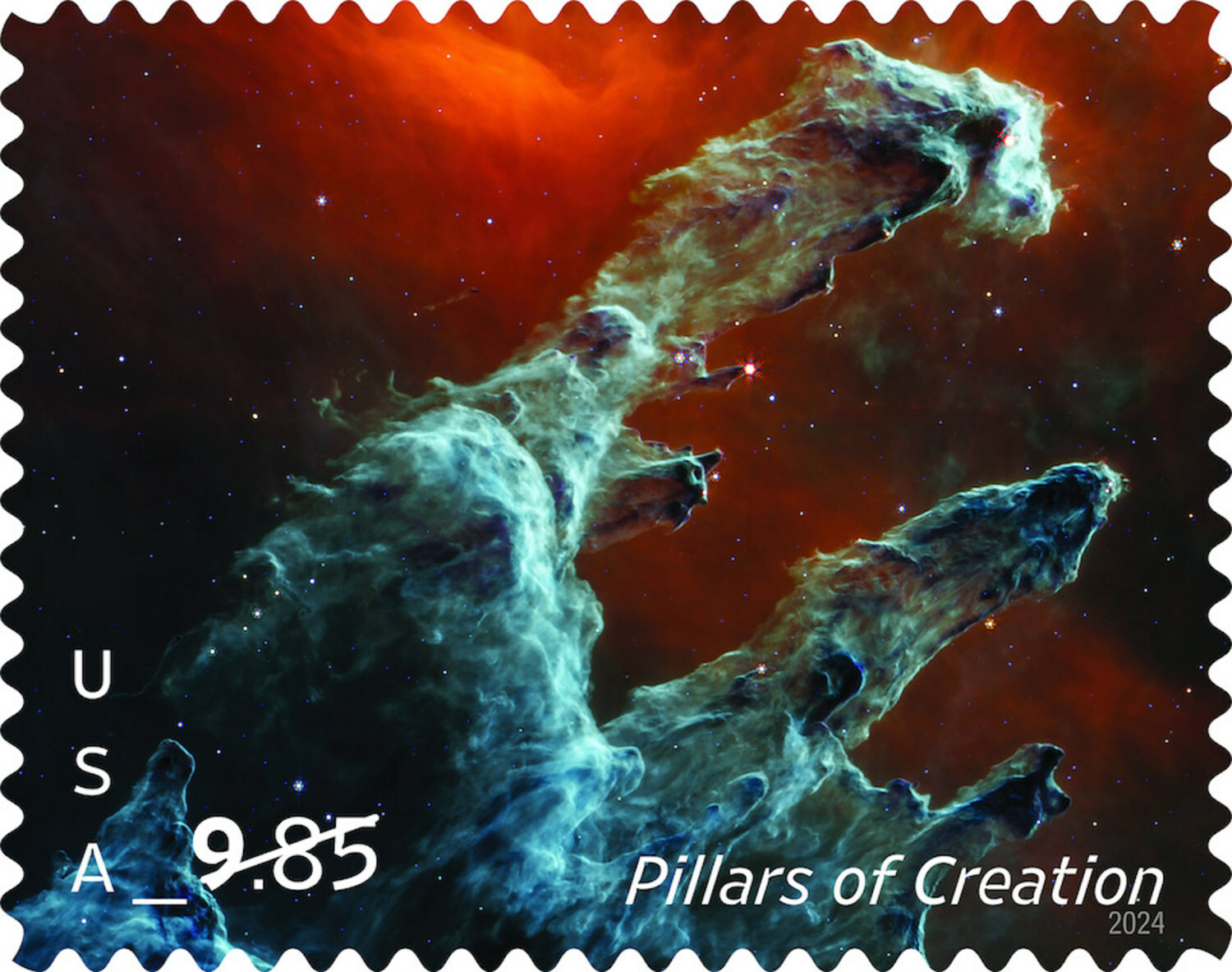
USPS Explores the Cosmos with Latest Priority Mail Stamps
USPS Explores the Cosmos.

McDonald’s Introduces CosMc’s: A New Galactic Experience
McDonald's is expanding its universe an innovative small-format conce

Google Decided Where Culture Moves — Dominican Republic
Culture Will Feel Global. The Route Will Be Local

Lacoste Unveils Arthur Fils as Official Brand Ambassador
Renowned luxury brand Lacoste has secured Arthur Fils

Sterling K. Brown’s ‘Paradise’ Renewed for Season 2 at Hulu
Paradise and Hulu are partners for another season.

Mercedes-AMG Is Engineering How Electric Performance Feels
By DaMarko GianCarlo Mercedes-AMG’s move into electric performance i
POST COMMENT