
Netflix Is Building a Studio Around the Comedians Who Built Their Own Audiences
By DaMarko GianCarlo
For years, comedians have built their careers one audience at a time. Some found their footing in small clubs, others through podcasts, social media, or stand-up specials that introduced their voices to millions of viewers. The path from performing comedy to creating television has never been particularly straightforward. A successful stand-up career can establish a recognizable personality, but developing a scripted series requires an entirely different combination of writing, production, financing, and creative collaboration.
Netflix has spent years working with comedians on both sides of that divide. Now, the company is giving that relationship a more formal home.
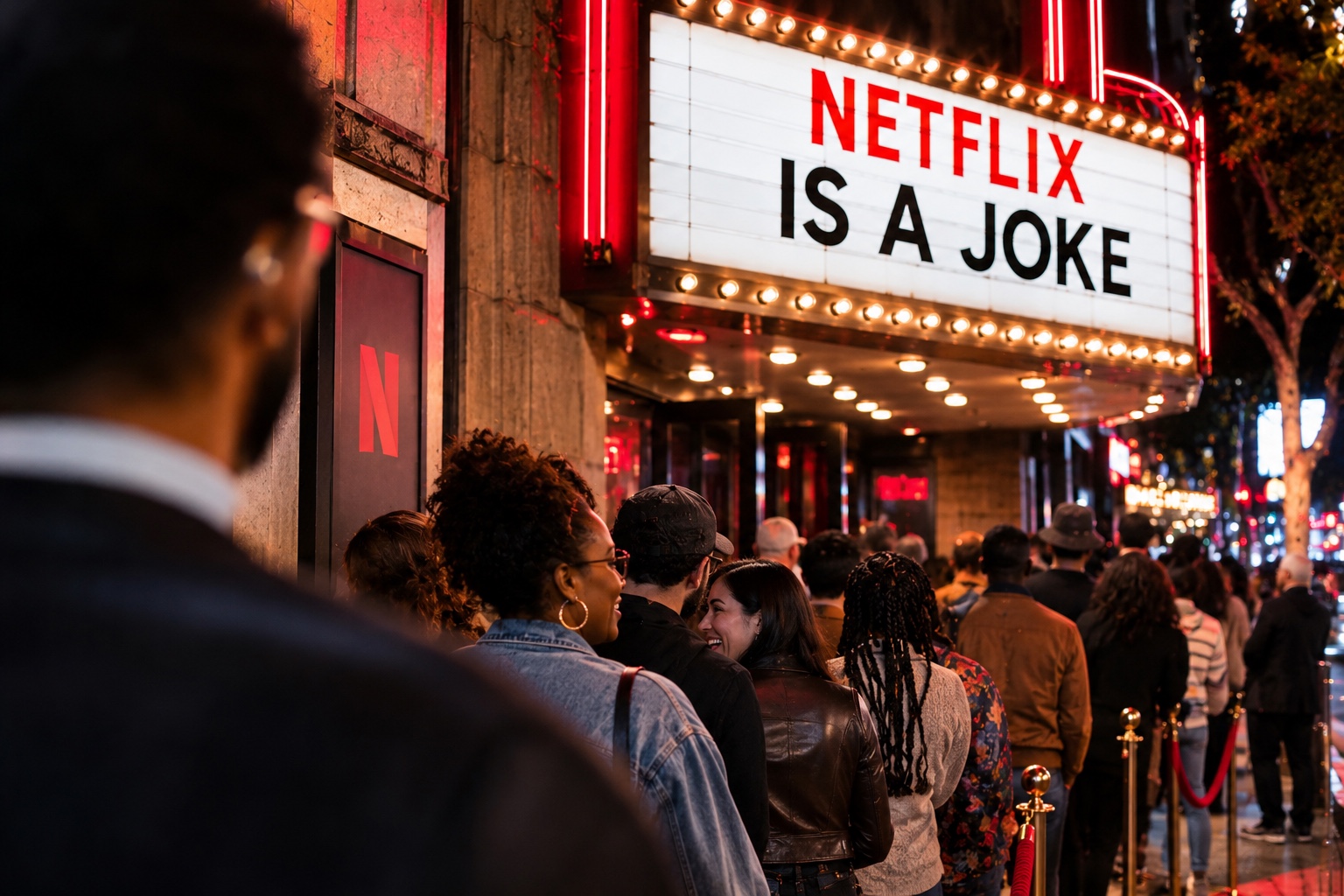
On November 19, Netflix announced the launch of Netflix Is a Joke Studios, an in-house development and production operation intended to create scripted comedies and original entertainment formats with established and emerging comedians. Nikki Glaser is its first announced creative partner, with plans to develop and star in a scripted series and appear in two additional Netflix comedy specials.
The announcement represents an expansion of Netflix’s comedy business, but not the beginning of its involvement in comedian-led television. The company has already demonstrated how relationships established through stand-up can develop into larger creative partnerships. What changes with Netflix Is a Joke Studios is the introduction of a dedicated operation designed to pursue those opportunities more deliberately.
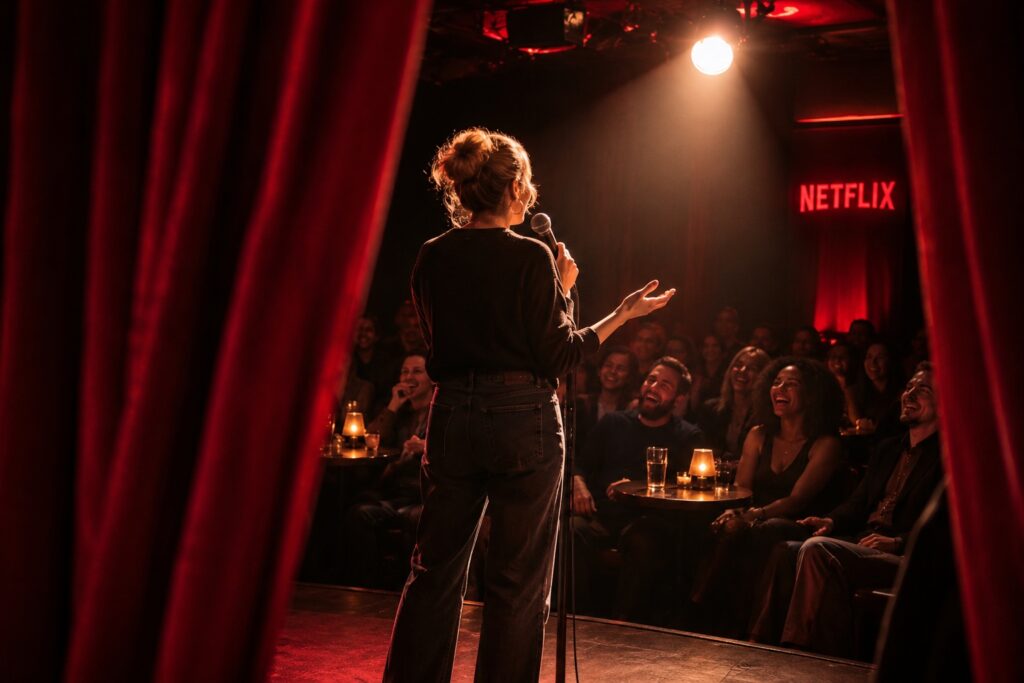
Netflix’s relationship with comedy extends well beyond its catalog of specials. Netflix Is a Joke has developed into a recognizable entertainment brand through live performances, festivals, digital programming, and audio distribution. Its Los Angeles comedy festival brings established performers and emerging talent together under the company’s banner, creating another point of connection between comedians and audiences.
The new studio gives that existing ecosystem a development and production function.
Robbie Praw, Netflix’s vice president of stand-up and comedy formats, described the launch as a continuation of the company’s investment in comedians, saying, “NIAJ Studios is the next step in our commitment to this community.”
That distinction is important. Netflix is not simply attaching a new name to its stand-up operation. It is establishing a dedicated business structure around the possibility that a comedian’s relationship with an audience can extend into other forms of entertainment.
The company has already seen that progression with performers including Shane Gillis, Tom Segura, Nick Kroll, and Leanne Morgan.
In 2024, Netflix acquired Tires, a scripted workplace comedy co-created by Gillis, Steven Gerben, and John McKeever. Set inside an automobile repair shop, the series followed a struggling manager navigating employees, family expectations, and the everyday frustrations of keeping a business alive. Gillis was already an established stand-up performer, but Tires demonstrated another dimension of his work: the ability to build a fictional environment around a recognizable comedic sensibility.
The project also illustrated the importance of creative development outside Netflix. Gillis and his collaborators had already assembled the series before Netflix acquired it. His Dad Sick Productions was involved alongside other production partners, showing how comedian-led projects could arrive at a major streaming platform with their creative foundations already established.
Tom Segura followed another version of that path with Bad Thoughts. Netflix announced the six-episode comedy in 2024 after Segura had written and produced a pilot. His YMH Studios participated in the production, extending a creative business that had already developed through stand-up, podcasting, and independent content.
These projects were not created under Netflix Is a Joke Studios. They preceded its launch and involved different development and production arrangements. Their significance lies in what they reveal about Netflix’s existing approach: the company was already interested in comedians as creators of scripted entertainment, not exclusively as performers delivering stand-up specials.
The new studio places that ambition within a more clearly defined operation.
For comedians, the distinction between performing material and building an entertainment property is substantial. Stand-up depends heavily on the individual voice. Scripted television requires that voice to function within a larger creative structure, often involving other writers, actors, directors, and producers. The challenge is preserving what made the comedian distinctive while developing characters and stories capable of sustaining an audience beyond a single performance.
That is where experienced production partners can become essential.
Although Netflix Is a Joke Studios is an in-house operation, its first announced scripted development already includes an outside company. Gloria Sanchez Productions, the production banner associated with Will Ferrell and Jessica Elbaum, is attached to executive produce Glaser’s developing series.
Its involvement is revealing. Netflix’s new studio does not necessarily eliminate the role of independent producers or require every project to be developed entirely within the company. Instead, the Glaser arrangement demonstrates how an internal development operation can work alongside outside creative partners.
The announcement does not disclose the financial terms of those relationships, the ownership of the developing series, or the distribution of underlying intellectual-property rights. Executive-producing credit establishes a creative or production role, but does not independently establish ownership.
Those distinctions matter in an entertainment industry where performers increasingly seek opportunities to build businesses around their creative work. A comedian may write, star in, or executive produce a project without necessarily controlling its underlying intellectual property. Conversely, participation by a streaming platform does not automatically mean that every creative right belongs to that platform.
For now, Netflix has confirmed the existence and purpose of its new studio, the involvement of its first creative partner, and the participation of Gloria Sanchez Productions. The precise contractual arrangements remain private.
Glaser’s selection offers another perspective on the company’s strategy.
Her relationship with Netflix predates the new studio by several years. She released her stand-up special Bangin’ on the platform in 2019 and participated in Netflix Is a Joke events, while continuing to develop a career that extends across television, live performance, and competing streaming services. Her appearance on Netflix’s The Roast of Tom Brady brought her comedy to another large audience, reinforcing the public recognition she had developed through years of performing.
Glaser has also built a career outside Netflix, an important reminder that the company is working with performers whose identities and audiences are not necessarily confined to one platform.
Reflecting on the partnership, Glaser said, “Netflix gave me some of my earliest and biggest opportunities in comedy.”
The statement speaks to a relationship that developed over time rather than one created specifically for the studio’s launch. Glaser arrives at this new stage with an established career, a recognizable comedic voice, and experience performing for audiences across different formats.
Her planned scripted series remains in development. Netflix has not announced a series order, premiere date, or additional cast. The two comedy specials are part of the announced agreement, but their release schedules have not been disclosed.
The distinction between development and production is important. Establishing a studio creates opportunities to pursue projects; it does not guarantee that every project will reach audiences.
There are also unanswered questions about the studio’s internal structure. Netflix has not publicly detailed a separate operating budget, independent greenlight authority, or a complete reorganization of its existing comedy development teams. The announcement therefore should not be interpreted as evidence that Netflix has replaced its previous approach to scripted comedy.
What the company has established is a dedicated operation intended to develop entertainment with comedians across formats.
That decision arrives at a time when the boundaries between performer, creator, producer, and entertainment business have become increasingly fluid. A comedian can build an audience through stand-up, sustain a direct relationship through podcasts and digital platforms, and eventually develop scripted projects that reach viewers who may never have attended a live performance.
For Netflix, those relationships offer opportunities to develop programming around creative voices that audiences already recognize. For comedians, they may provide access to the development resources and production partnerships needed to explore work beyond the stage.
Neither outcome is automatic. The success of the strategy will depend on the projects that emerge, the creative freedom available to the people making them, and whether the finished work can stand on its own.
There is a meaningful difference between an audience that enjoys watching a comedian perform and one willing to follow that comedian into an entirely fictional world. The best scripted comedies do more than reproduce a performer’s stand-up persona. They give that perspective room to develop through characters, relationships, and circumstances that audiences can recognize in their own lives.
Netflix Is a Joke Studios is being built around the possibility of making that transition more consistently.
The broader significance of the announcement is not that Netflix has discovered comedians can create television. That has been true for generations, and the company itself has already participated in that tradition. The development is that Netflix is now organizing part of its comedy business around a dedicated studio designed to pursue those creative relationships across multiple entertainment formats.
For Glaser, the partnership represents another opportunity to expand a career she has spent years building. For Netflix, it creates a more formal way to develop entertainment with performers whose voices have already found an audience.
What ultimately defines Netflix Is a Joke Studios will not be the number of comedians attached to its name or the prominence of its first partnership. It will be the work that reaches the screen, the creative relationships that endure, and whether the studio can help comedians develop something that feels as distinctly their own as the voices that brought audiences to them in the first place.

DaMarko GianCarlo
DaMarko GianCarlo is the founder and Editor-in-Chief of GREAY Magazine, an independent publication examining the people, ideas, and industries shaping contemporary pop culture. Working across editorial direction, photography, and production, he approaches publishing as both a creative practice and a system for documenting culture. His work reflects a commitment to original storytelling, independent journalism, and the human experiences behind the stories GREAY tells.
Related Posts

Serena Williams Doesn’t Need Tennis Anymore — Which Is Why Her Return Matters
The Institution Returns to the Institution

Drake’s OVO Hits the Fairway: Streetwear Swagger Meets Callaway Precision
By Jayson Echo Drake’s OVO has officially taken its talents to the f

Troye Sivan Named Rabanne’s Global Makeup Brand Ambassador
TROYE SIVAN New RABANNE GLOBAL AMBASSADOR.

Netflix Releases Teaser Trailer for Zack Snyder’s ‘Rebel Moon – Part Two: The Scargiver’
Netflix released trailer Rebel Moon 2
High Fashion, Higher Frequency: A$AP Rocky x Moncler
Cold World, Hot Style
Zara and Willy Chavarria Don’t Collaborate—They Align
Where Meaning Meets Distribution
POST COMMENT