
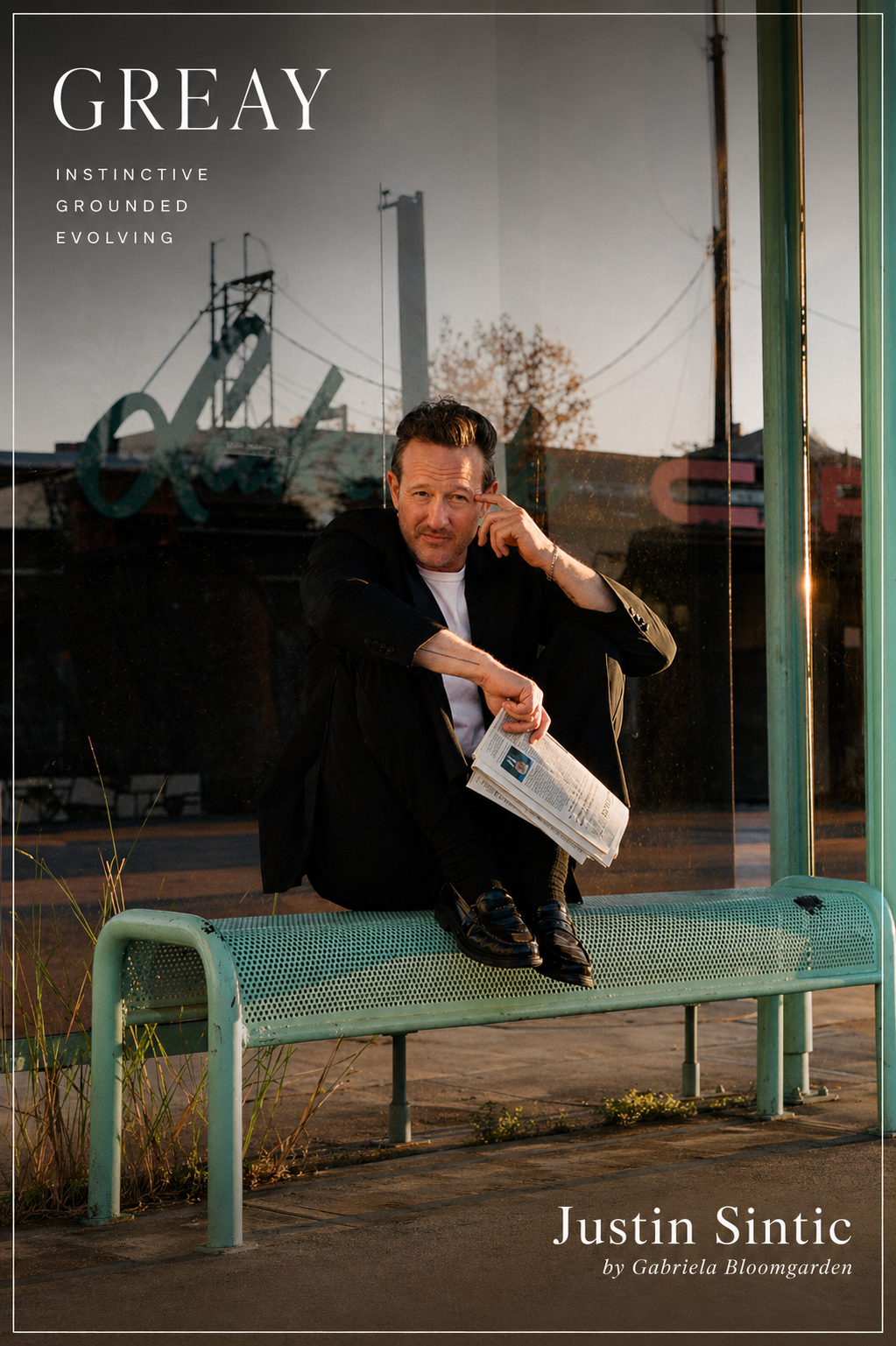
Justin Sintic Stays Present While the World Speeds Up
By Kyra Greene
There’s a certain kind of actor who doesn’t arrive by announcement—they arrive by presence. Euphoria has always been a world built on emotional precision and visual authorship, a place where even silence carries weight. And somewhere inside that architecture, Justin Sintic doesn’t try to disrupt the system—he learns how to move within it. What becomes clear, quickly, is that his approach isn’t about visibility or forcing a moment to belong to him. It’s about trust. Trust in the directors shaping the world, trust in the scene partner across from him, and most importantly, trust in the idea that performance is less about being seen and more about being felt. In a landscape that often rewards noise, Sintic is building something quieter—and far more durable.
When you step into a show like Euphoria, you’re not just entering a set—you’re entering an already established emotional and visual language. How conscious were you of adapting to that world versus protecting your own instincts as an actor?
It’s such a good question. I can’t honestly say that I was that conscious about this specifically. I did know they were making the transition from digital to film which was really exciting. I was already such a fan of the show and understood the tone of the first two seasons, but with third season time jump – I didn’t entirely know what to expect and storylines were kept under wraps. Sam now speaks openly about the influence of this season and paying homage to directors like Tarantino, Leone, and Fellini so the visual language has obviously changed. But when you’re working with Sam Levinson and cinematographer, Marcell Rev – you just immediately feel safe. And that trust gives you freedom while tapping into your instincts. I learned very quickly that Sam offers actors this magical playground to explore while at the same time, knowing exactly what he wants. So it became a beautiful collaboration of emotional, visual and instinctive storytelling.
There’s a difference between being seen and being recognized. In a role that unfolds over multiple episodes, how do you think about leaving an impression without forcing one?
I don’t necessarily think about my character leaving an impression. I don’t think that’s up to me. To me, acting is about being of service to the greater good and I feel I’m just a vessel to tell the story. I think more about leaving an impression off screen so to speak. I take pride in being an actor who is easy to work with and one who is nimble and can take direction quickly. When I was younger I was told by an acting coach, “if you want to be a leading man on the screen, you have to be a leading man off the screen.” That always stuck with me so I understand the value of an actor who treats everyone on a set with respect. That is what leaves an impression. In terms of performance…you do your work, stay open and present with your scene partners, and just trust the rest will take care of itself. It’s taken a long time for me to get to that place. Now I’m just trying to get the hell out of my own way and let the chips fall where they may.
You’re sharing space with actors like Jacob Elordi and Sydney Sweeney, who already carry audience expectation. What did you learn about presence—not performance—from being in scenes with them?
Those two are remarkable. I have more scenes with Jacob than I do with Sydney but both have this tremendous gravitas. They are stars. Jacob’s presence in scenes is undeniable. When the camera is rolling, he’s so available and there’s this intensity and focus layered in with a natural sense of playfulness that makes him so riveting. The juxtaposition of the two. I’m so lucky to have experienced that and grateful to him for all of his give while we were working.
A lot of actors talk about “getting the opportunity,” but fewer talk about what it feels like once you’re actually inside it. What surprised you most about being on set at that level?
Truly, what a family environment it was and how healthy and supportive everyone was. Everyone and I mean everyone, top to bottom. It felt like there were no egos. It starts with Sam and Ashley Levinson and trickles all the way down. You could just feel everyone pulling on the same rope and working together. It was an experience I will truly never forget and am endlessly thankful for.
There’s a discipline that comes from athletics—especially something like hockey—that doesn’t always get discussed in acting. Where do you feel that mindset show up most in your work?
Well hockey is the thing I have done the longest in my life. I was on skates when I was four and started playing competitively at eleven. I say that because it all feels very familiar to me to this day when I still play. I was introduced to the theater as a kid by my mother who worked in New York City for thirty years and used to take me to see plays. I remember marveling at what I was watching but was too young to know why, and definitely too into sports to explore that. So it wasn’t until college that I decided to join the small theater program that my school offered and step on to the stage. And all I can say is, that the feeling I had was exactly the same to the one I feel when I’m on the ice. It’s hard for me to describe it in literal terms. But externally, I find so many similarities between being on the ice and playing hockey as I do being on stage and doing a play or being in front of the camera…it’s all so moment to moment. The voice in my head quiets and I feel like I’m in flow and don’t know what’s going to happen next. You do all of this work to prepare, and then let it go and just play. I love that feeling because I tend to be an over thinker in my day to day.
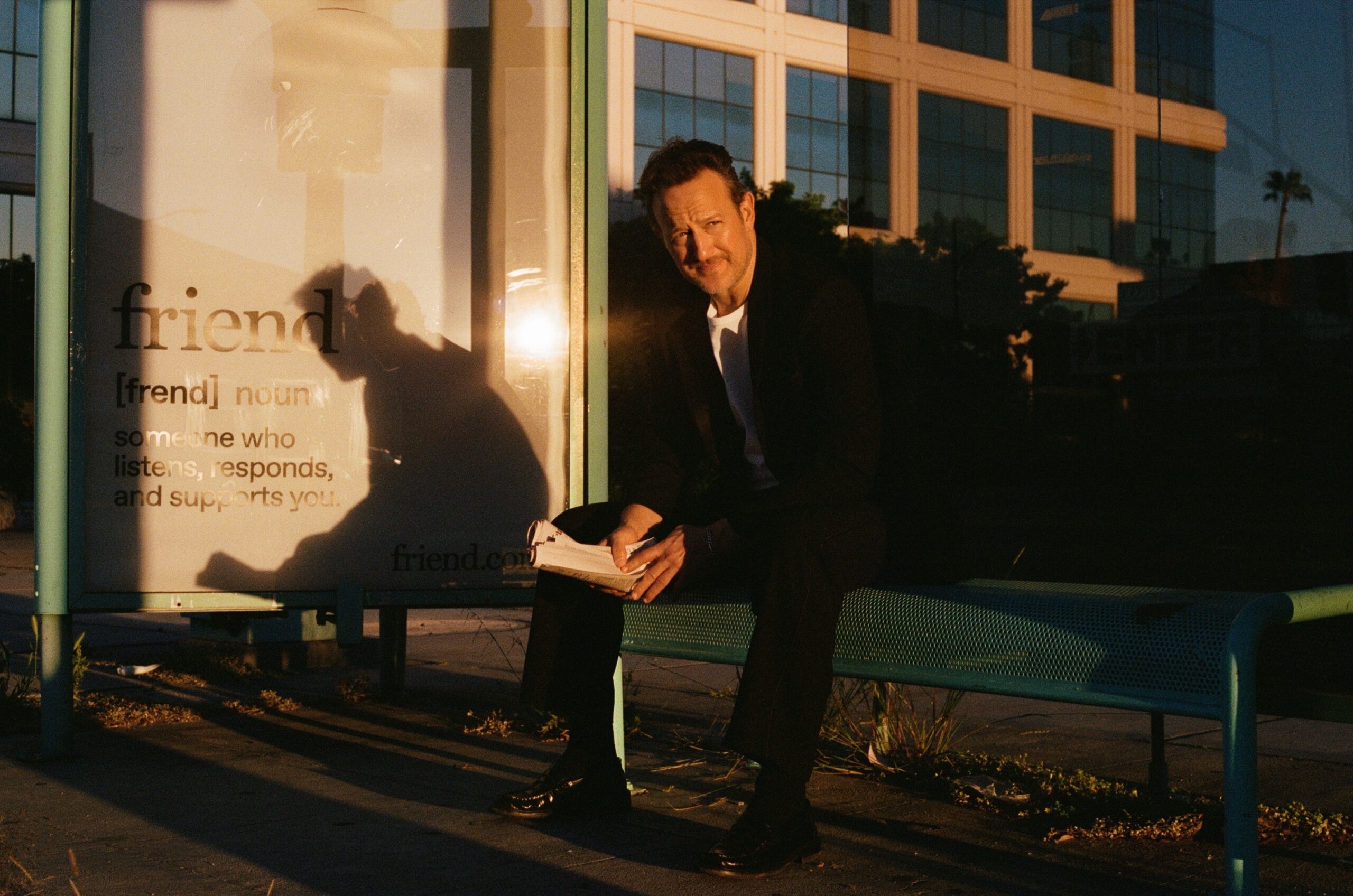
You shoot film on a Canon AE-1, which suggests a certain patience with process and imperfection. Do you see any parallels between how you approach photography and how you approach acting?
I love this question because I love film photography for exactly the reasons you mentioned. It’s a meditative experience for me which requires patience and the ability to accept imperfection. I find it very similar to acting. You explore, stay open, try to get really comfortable with the mundane and accept that just like in life, there will be imperfection. I find I can better understand my own psyche and anxiety in both art forms. I remember after my scene with Jacob in the third episode, we gave each other a high five and a hug and both said “well that felt really good,” and Jacob said to me “I really hope what we felt, translates on camera.” Film photography shares a similar quality. You line up the photo, check your light meter, hold that thing steady and push that shutter release button. Then you hope that what you saw though that lens, translates when you develop the photo. And there’s a chance it may be great, and also imperfect. So to me, they are similar. That’s the human experience. We are all beautiful and flawed at the same time.
At this stage in your career, how do you measure progress in a way that isn’t tied to visibility or credits?
I’m just hoping to get 1% better every day. As an actor and as a person. Over the course of a lifetime, if I do that, I’ll be okay. Progress to me is trying, failing, growing, and trying again. You always hear showing up is half the battle. I try to overcome fear and chose love over anger, which is the more challenging option. All of this to me is progress or evolving, if you will. They say your art is your life, and your life is your art. So I feel if I grow as a person, I’ll grow as an artist. That matters more to me than visibility. The credits will come.
The industry often frames “breakout” as a moment, but for most actors it’s a build. What does that build feel like from where you are right now?
It’s always been a build, and will continue to be so. People “breakout” and the general population may think it happened out of nowhere. I’ve been in acting class for 20 years. I think I stopped for one year to move to Portland, Oregon and get away from the industry all together. But even there, I was doing play readings with emerging playwrights and I did a weekend fringe festival where I worked opposite a bunch of these great high school actors. I never want to stop building and learning more about this craft – and myself. So I guess to answer your question…I can feel something is percolating, but all of it is internal. So yeah, it feels really nice.
When people watch your work on Euphoria, what do you hope they notice that might not be immediately obvious?
That I’m not just a meatball from New Jersey who loves hockey haha. I hope they notice my joy in playing characters.
What emerges from Sintic’s perspective is a philosophy that resists the industry’s obsession with arrival. There is no single moment, no manufactured “breakout”—only the steady accumulation of discipline, instinct, and lived experience. He speaks about growth in increments, about flow states that echo both the ice rink and the stage, about embracing imperfection as the only honest way forward. And that may be the clearest signal of where he’s headed: not toward spectacle, but toward depth. Not toward recognition, but toward resonance. In a system that often confuses momentum with meaning, Justin Sintic is choosing something else entirely—to build, patiently, until what’s felt on set translates beyond it.
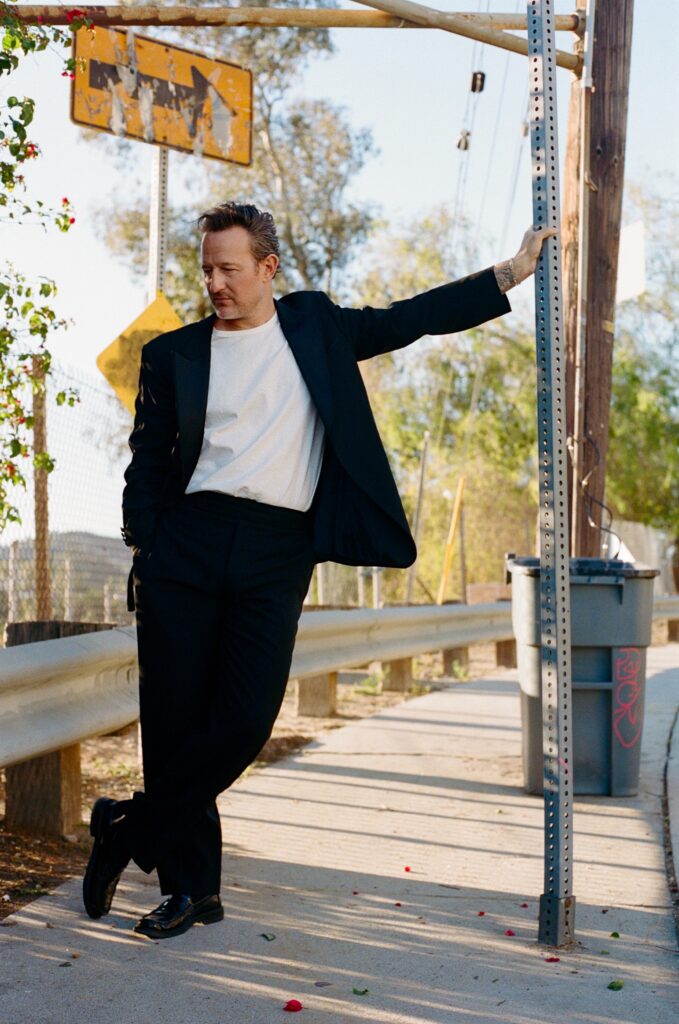
Photos by Gabriela Bloomgarden
Related Posts
Dior and A24 Are Taking Their Partnership Off Screen
More Than a Placement

Netflix Dives Deeper into Live Sports Streaming with Rafael Nadal vs. Carlos Alcaraz Tennis Exhibition
In a bold move, Netflix is set to live-stream its upcoming sports spec
Nike’s High School Football Strategy Shows the Economics of Sports Have Shifted
The Race to Find Tomorrow's Stars Today

Universal Announces Opening Date for Epic Universe, Its Most Ambitious Theme Park Yet
Universal Orlando To Open ‘Epic Universe’ Theme Park in May 2025.

Gatorade Revives Iconic “Is It In You?” Tagline in Largest Campaign Ever
Gatorade's Iconic "Is It In You?" Campaign

The Weeknd and Blue Bottle Debut Two Fresh Ethiopian Single Origin Coffees
The Weeknd continues to expand his collaboration with Australian coffe