

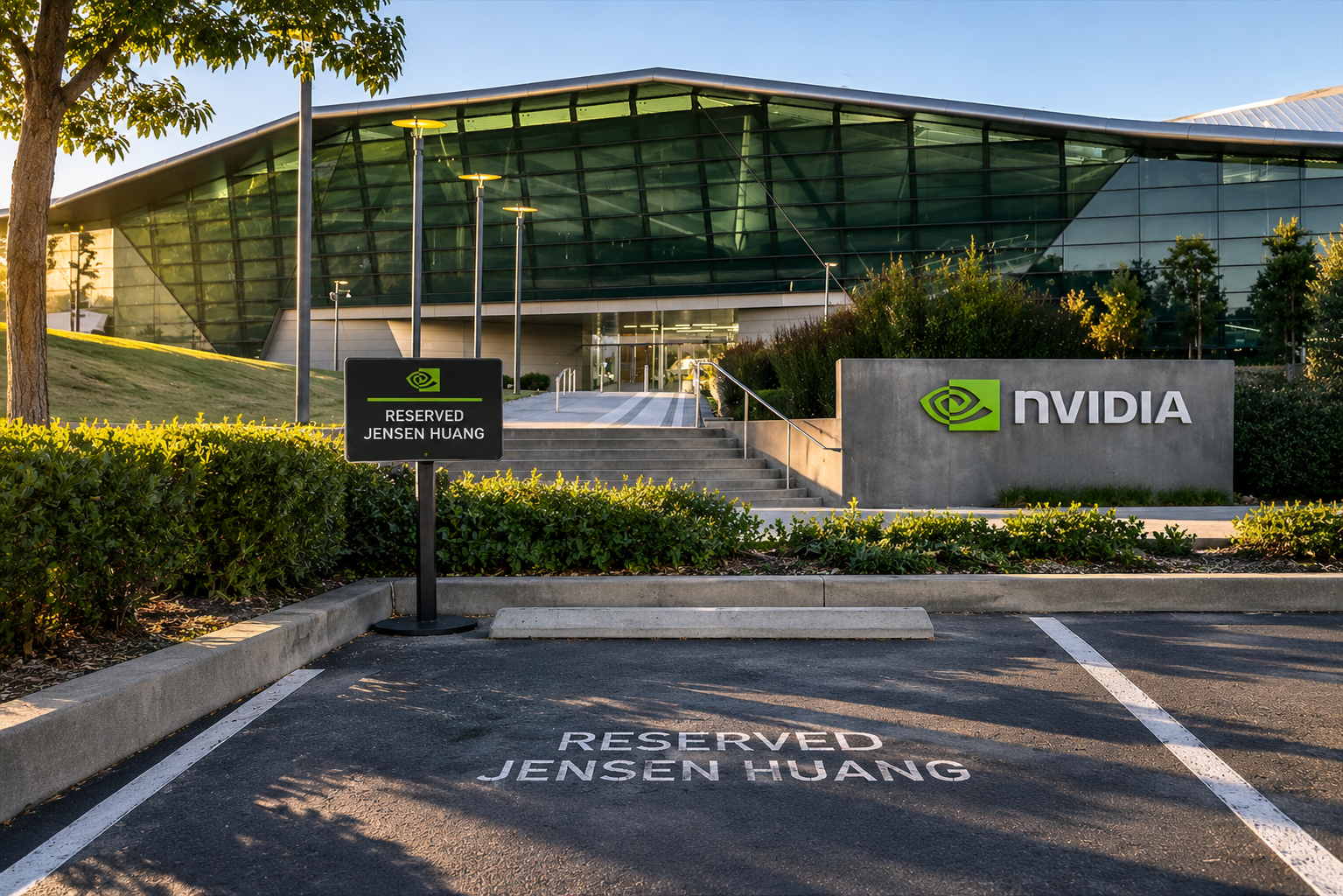
Jensen Huang Returns to Lead NVIDIA as the Company Moves Forward
By Brian K. Neal
Jensen Huang has returned to NVIDIA as president and chief executive officer, restoring the company’s co-founder to the leadership of one of the most influential businesses in modern computing. NVIDIA announced his reinstatement on November 23, eleven days after his resignation, following a unanimous decision by its board of directors.
His return restores a familiar leadership structure at a time when NVIDIA’s technology is helping shape the development of artificial intelligence and the infrastructure supporting it. The company’s processors, networking systems, and software are used across data centers, scientific research, robotics, gaming, and industries increasingly dependent on advanced computing. Huang’s reinstatement matters because of the role he played in establishing that direction and the responsibilities NVIDIA now carries within a much larger technological ecosystem.
The board voted to reinstate Huang on November 22 after a series of discussions and meetings with him. NVIDIA said directors were satisfied with his candor and ability to lead the company. The board also received input from senior levels of the United States government and said that, based on that input, it was confident his return presented no national security risk. That assessment was the board’s stated conclusion, rather than a finding that every outstanding concern had been resolved.
Harvey C. Jones will remain chair of the board. Colette Kress, who served as interim chief executive while continuing her responsibilities as chief financial officer, will continue as executive vice president and CFO. In announcing the decision, Jones said, “The Board believes Jensen is the right person to lead NVIDIA,” expressing confidence in his ability to resume leadership of the company.
The reinstatement follows a brief but significant leadership transition. On November 12, NVIDIA announced Huang’s resignation and appointed Kress as interim chief executive. During the company’s November 17 earnings call, Jones stated that the board did not intend to reinstate Huang and had begun searching for a permanent successor. The November 23 announcement establishes that the board subsequently changed its position. NVIDIA identified discussions with Huang and government input as elements of its decision, without providing a complete account of the deliberations.
Financial markets also reflected the uncertainty surrounding NVIDIA’s leadership. Shares declined following reports that the board was considering Huang’s removal, and the stock remained under pressure during the subsequent transition amid broader concerns about AI investment. His reinstatement on November 23 coincided with a sharp reversal, with NVIDIA shares closing approximately 31.5 percent higher. The reaction extended beyond NVIDIA, as other technology and AI-related stocks also advanced. The market response demonstrated the importance investors placed on leadership continuity, although the company’s valuation was also being influenced by wider economic and industry conditions.
Huang co-founded NVIDIA in 1993, when the company began developing graphics technology for personal computers. Over the following decades, its work expanded into scientific computing, accelerated computing, and artificial intelligence. The introduction of CUDA in 2006 enabled developers to use NVIDIA graphics processors for general-purpose computing, helping establish a technological foundation that became increasingly important to modern deep learning.
That history helps explain the significance of Huang’s return. He did not invent artificial intelligence, nor was NVIDIA solely responsible for its development. Advances in AI emerged through decades of work by researchers, universities, engineers, and technology companies around the world. NVIDIA’s contribution was to develop computing systems and software that enabled increasingly complex AI applications to be trained and operated at scale.
Today, NVIDIA’s influence extends beyond the products carrying its name. Its technology supports systems used by businesses, researchers, developers, and institutions working across multiple industries. Artificial intelligence is already affecting how people create, communicate, conduct research, and develop new technologies. NVIDIA is one of the companies providing the computing infrastructure behind that transformation.
Huang helped guide NVIDIA into that position, but the company’s accomplishments also reflect the work of its engineers, researchers, executives, and employees. Its technological roadmap and commercial relationships extend beyond any individual leader. That distinction became particularly visible during the transition.
At NVIDIA’s November 17 earnings call, Kress emphasized the company’s employees, its continuing relationships with customers and suppliers, and its multiyear technology roadmap. NVIDIA reported quarterly revenue of approximately $116 billion and discussed continuing demand for its computing systems. The results covered a period before Huang’s resignation, but the presentation demonstrated that the company continued conducting its business and communicating its plans during the leadership change.
Huang now returns to oversee those continuing operations. His reinstatement restores the executive who led NVIDIA through much of its expansion from graphics processing into accelerated computing, while leaving the company’s broader engineering organization and existing commitments in place.
The announcement also confirms that an independent board investigation remains ongoing. NVIDIA established a committee of independent directors to examine reports that Huang had been targeted by a foreign intelligence effort. The company said the committee’s work would proceed to completion and that Huang would cooperate with the investigation.
Separately, NVIDIA has formed a National Security and Export Control Committee to oversee trade compliance and national security risks. The company is also beginning a search for a chief compliance officer. These measures reflect responsibilities associated with NVIDIA’s position in advanced computing, where technological development intersects with international trade restrictions and government oversight.
The board’s decision to reinstate Huang does not conclude those processes. Its stated confidence in his leadership and the continuation of independent oversight are both elements of NVIDIA’s current position.
In his statement, Huang said, “I take this responsibility with the greatest humility and renewed commitment.” He thanked the board, Kress, the executive staff, employees, shareholders, industry partners, and his family for their support. His remarks concluded with a straightforward expression of his intention to resume his responsibilities: “I can’t wait to get back to work.”
The significance of his return lies in the relationship between his leadership and the company he helped build. NVIDIA’s growth has been shaped by long-term investments in computing technologies that now support industries extending far beyond gaming. Huang’s role in directing those investments is part of the company’s history, while its continued development depends on the people, partnerships, and technological work that sustain it.
His reinstatement restores leadership continuity at the highest executive level. It does not settle every outstanding question, nor does it establish what NVIDIA’s future performance will be. Those developments will be determined by the company’s decisions, execution, and the changing demands of the industries it serves.
NVIDIA occupies an important position in a technological transformation already underway. Artificial intelligence, robotics, scientific computing, and advanced digital systems are increasingly part of the world people experience today. The company is helping provide infrastructure for that work alongside a broad international network of researchers, manufacturers, developers, and technology businesses.
Huang returns to lead NVIDIA at a moment when the consequences of its work extend well beyond its own products. Its responsibilities to employees, customers, partners, and shareholders remain, as do the demands of an industry continuing to evolve.
Eleven days after his departure, NVIDIA’s co-founder is once again its chief executive. The company continues its work with Huang restored to the position from which he helped guide much of its development, and with its next chapter unfolding in real time.

DaMarko GianCarlo
DaMarko GianCarlo is the founder and Editor-in-Chief of GREAY Magazine, an independent publication examining the people, ideas, and industries shaping contemporary pop culture. Working across editorial direction, photography, and production, he approaches publishing as both a creative practice and a system for documenting culture. His work reflects a commitment to original storytelling, independent journalism, and the human experiences behind the stories GREAY tells.
Related Posts

SMART Unveils Innovative Inclusion Solution and Global Research to Support Neurodiverse Learners
SMART Unveils Innovative Inclusion Solution

The Most Powerful Media Companies Don’t Call Themselves Media
The Platform Is the Publisher Now

YouTube Explores AI Chatbot Integration Beneath Videos
YouTube Explores AI Chatbot

Graymatics Unveils Partnership Program for Smart Cities in Brazil
Graymatics, a globally recognized multimedia cognitive processing firm

HitPaw Voice Changer Introduces Exciting Features with V1.3.0 Update
HitPaw, a leading innovator in advanced multimedia software, is excite

Michelle Yeoh and the Authorization of the Next Standard
The New Weight of Film
POST COMMENT