

Instagram and Amazon Are Changing How Creator Content Becomes Commerce
By Brian K. Neal
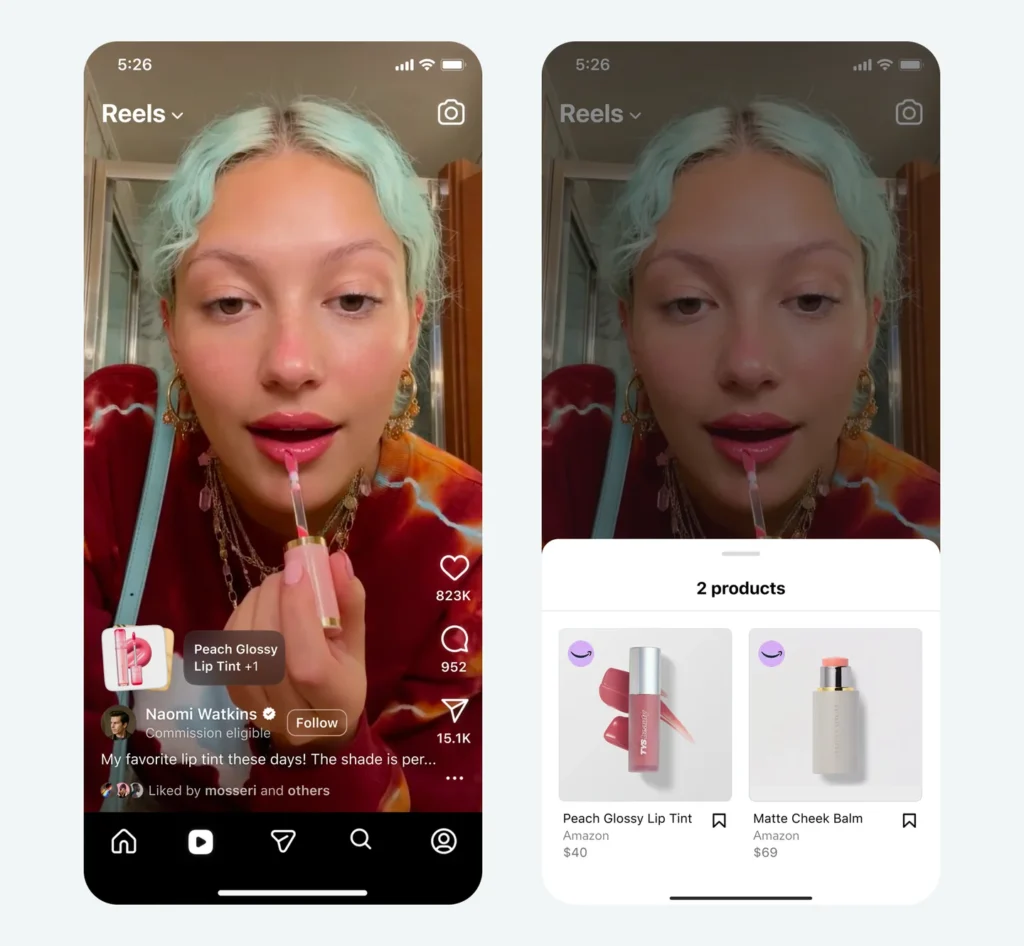
Instagram is making it easier for creators to earn money from the products they recommend, bringing Amazon affiliate links directly into Reels and feed posts. Announced on November 16, 2026, the integration allows eligible creators to connect their Instagram accounts to Amazon’s influencer program, attach products to their content, and receive commissions when qualifying purchases are made. The development places shopping closer to the videos and photographs that influence consumer decisions, reducing the need to direct audiences through profile biographies, separate storefronts, or manually generated affiliate links.
The change is straightforward for creators but more consequential for the businesses operating behind them. Instagram supplies the audience and the environment where products are discovered. Creators produce the content and establish the relationships that make recommendations meaningful. Amazon provides the retail infrastructure, processes purchases, and pays the resulting affiliate commissions. Each participant occupies a different position in the transaction, and the integration brings those positions closer together without combining them into a single business.
Under the arrangement, eligible creators can attach as many as 30 Amazon products to an individual Reel and 20 to a feed post, according to reporting by TechCrunch. They can connect their Instagram and Amazon Influencer accounts through Instagram’s Professional Dashboard. Once the accounts are connected, affiliate attribution is applied automatically when Amazon products are added, including when creators use ordinary product links rather than generating separate affiliate URLs. Instagram also displays estimated commission rates before products are attached, giving creators greater visibility into the potential earnings associated with their recommendations.
The Amazon integration is available to eligible creators in the United States. According to reporting by WIRED, participation requires creators to be at least 18 years old, maintain a professional Instagram account with more than 1,000 followers, and meet applicable program requirements. Instagram’s official announcement notes that eligibility requirements vary by program and region. The launch does not establish universal availability across Instagram’s global creator population. Nor does it guarantee that a recommendation will generate a commission. Purchases remain subject to Amazon’s affiliate program rules, including qualifying transactions, attribution conditions, and exclusions.
Instagram is not collecting a percentage of those affiliate earnings. In its November 16 announcement, the company stated, “It’s free to add product links, and Instagram doesn’t take a cut of your affiliate earnings.” Amazon continues to handle commission payments through its existing affiliate system. The distinction matters because the feature does not make Instagram the retailer or establish an Instagram-operated marketplace for these transactions. It creates a more direct connection between content published on Instagram and products sold through Amazon.
For years, creators have used Instagram to influence purchasing decisions while directing audiences elsewhere to complete transactions. A fashion creator might recommend clothing in a Reel and send followers to a storefront through a profile link. A technology creator might demonstrate a camera or microphone and provide an affiliate URL in a Story or direct message. The commercial relationship already existed, but the route between discovering a product and reaching the retailer often required additional steps. Instagram’s integration reduces some of that friction by placing products alongside the content that introduced them.
The shopping experience still involves a transition between platforms. Instagram’s official announcement states that when someone taps a linked Amazon product, it opens directly in the Amazon app. Instagram facilitates discovery and access, while Amazon remains responsible for the retail transaction. The integration brings the recommendation and purchasing pathway closer together without making them identical.
Instagram’s announcement also provides evidence supporting the decision to bring product links closer to content. According to the company, product links appearing directly in creators’ Reels and posts drew approximately twice as many clicks as links placed in their biographies. That comparison reflects Instagram’s existing product-linking experience, not measured results from the newly introduced Amazon integration. It is also a company-reported measurement rather than independently verified evidence of increased purchases. A click represents interest, not necessarily a completed transaction. The announcement does not establish that creators will double their affiliate earnings or that audiences will purchase more products simply because the links are easier to reach.
The development reflects a longer history of Instagram attempting to connect social activity with shopping. The platform introduced shopping features involving selected retailers in 2016 and subsequently experimented with product tagging, checkout tools, and creator monetization programs. In August 2022, Instagram discontinued an earlier native affiliate program, retreating from a system designed to compensate creators for sales generated through participating products.
That decision did not eliminate the commercial activity taking place through creator recommendations. Affiliate marketing continued through external services, brand relationships, and independent storefronts. Creators could still influence purchasing decisions, but much of the infrastructure connecting those recommendations to commissions remained outside Instagram’s publishing tools.
The company’s approach in 2026 reflects a different structure. Earlier this year, Meta expanded affiliate product linking in Reels, allowing eligible creators to attach shopping links directly to short-form videos. The November Amazon integration builds on Instagram’s existing product-linking infrastructure by connecting it more directly to Amazon’s established affiliate system.
The distinction is important because Instagram did not introduce affiliate product tagging for the first time in November. What changed was the depth of its connection to Amazon and the expansion of product-linking opportunities across content formats. The company is developing a more integrated commercial environment through successive additions rather than replacing its existing tools with an entirely new marketplace.
Amazon is not the only business involved in Instagram’s expanded affiliate strategy. The company is also supporting collection links from affiliate-commerce platforms LTK and ShopMy, allowing eligible creators to bring products from existing collections into Instagram’s product-linking experience. Instagram’s official announcement confirms that those collection integrations are available to eligible creators in the United States and Canada, while broader product-linking capabilities are available to eligible creators across 26 countries and regions. The geographic and eligibility requirements differ between programs, making it important not to treat the entire expansion as one universally available feature.
The involvement of LTK and ShopMy reveals something significant about the structure Instagram is developing. Creators have already built businesses around affiliate storefronts, brand relationships, product collections, and audiences that extend beyond a single social platform. Instagram’s latest tools do not require those businesses to disappear. Instead, they create additional ways for established affiliate relationships to operate within Instagram’s content experience.
The collection-link functionality also reduces the work required to make multiple recommendations shoppable. Rather than adding each product individually, eligible creators can paste an LTK or ShopMy collection link into Instagram’s Add Products feature. Instagram then adds supported products while preserving their associated affiliate links. The system allows creators to bring existing product collections into their content without rebuilding those collections from the beginning.
That approach gives Instagram an opportunity to become a more useful distribution environment for commercial recommendations without assuming every responsibility associated with retail operations. The platform can make products easier to discover while outside partners continue handling important elements of the transaction. Whether this arrangement ultimately strengthens or weakens independent affiliate platforms remains uncertain. The announcement establishes new integrations, not a measurable change in the market positions of those businesses.
The distinction becomes especially important when comparing Instagram’s strategy with TikTok Shop. TikTok has developed a marketplace model that more directly integrates product discovery, merchant participation, affiliate promotion, and purchasing within its platform. Instagram’s Amazon arrangement follows a different structure. Audiences encounter the product on Instagram, but the purchase is completed through Amazon’s shopping environment. The creator can earn a commission, while Amazon retains responsibility for the retail transaction.
Both models recognize the commercial influence of creators, but they organize the business around that influence differently. TikTok Shop brings marketplace activity into its platform ecosystem. Instagram connects its publishing environment to external commerce infrastructure. The difference is not simply where a customer clicks. It concerns which business operates the marketplace, manages the purchase, administers commissions, and maintains the resulting retail relationship.
Amazon’s role deserves particular attention because generating a sale is not the same as owning the customer relationship. Under the Amazon Associates Operating Agreement, customers who purchase through affiliate referrals do not automatically become customers of the referring affiliate. A creator may introduce a product, explain its value, and influence a purchasing decision without acquiring the commercial relationship associated with the completed Amazon order.
That separation has long existed in affiliate marketing, but Instagram’s integration brings it into a more immediate publishing environment. The creator’s influence can be connected more directly to a purchase while the retail relationship remains with Amazon. It would be inaccurate, however, to conclude from this arrangement that Amazon acquires ownership of the creator’s original content or that Instagram receives unrestricted access to Amazon’s customer records. Intellectual property rights, advertising permissions, and data-sharing arrangements are separate matters governed by their applicable terms.
The economics are equally important. Affiliate commissions depend on the category of product, the applicable program rate, and whether a purchase qualifies under Amazon’s policies. A creator recommending a product with a relatively modest commission may need substantial purchasing activity to generate meaningful revenue. Another creator may earn more from fewer transactions involving different products or commission structures. Instagram’s estimated commission display provides information before publishing, but it does not eliminate the conditions governing actual payment.
The ability to attach multiple products also changes how creators can organize commercial recommendations. A single video demonstrating a home recording setup, for example, might include a microphone, camera, lighting equipment, headphones, and accessories. Rather than requiring viewers to locate those products across separate links, a creator can present several within the same piece of content. The allowance of up to 30 products per Reel creates considerable capacity, although it does not establish that using every available link would improve the experience or increase sales.
The timing of the announcement is notable. Instagram introduced the integration shortly before the Thanksgiving holiday shopping period and Black Friday, when retailers, advertisers, and affiliate publishers traditionally compete for consumer spending. Instagram’s official announcement explicitly identifies holiday shopping as part of the launch’s timing. The feature gives eligible creators another way to connect seasonal recommendations to Amazon purchases, although the companies have not established how much additional spending it will produce.
There is also the question of how these tools might affect the experience of using Instagram itself. The platform has long balanced personal content, entertainment, brand promotion, and advertising. Making affiliate products more accessible could provide useful information to audiences who already rely on creators for recommendations. It could also increase the commercial character of content that previously required viewers to seek out shopping links separately.
Instagram spokesperson Megan Buckley told WIRED, “We don’t expect a sudden influx of shopping content from this launch.” The company also said its recommendation systems would continue prioritizing content based on users’ interests and perceived value. Those statements describe Instagram’s expectations and stated approach, not a demonstrated outcome. The longer-term effects on audience behavior, content recommendations, and the volume of affiliate promotion remain to be seen.
For creators, the opportunity carries a continuing responsibility to distinguish personal recommendations from commercial relationships. Affiliate links create a financial interest in resulting purchases, making clear disclosure important under applicable advertising requirements. Easier access to monetization does not change the need for audiences to understand when a recommendation may generate compensation for the person making it.
That responsibility extends to independent publishers. A media organization reviewing technology, fashion, gaming equipment, or other consumer products may have legitimate opportunities to earn affiliate revenue from its reporting. But the existence of a commission cannot substitute for independent evaluation. The commercial value of an article or video is different from its editorial value, and the credibility of a recommendation depends on maintaining that distinction.
The integration also illustrates how the creator economy is evolving beyond individual sponsorship arrangements. Brand partnerships remain important, but affiliate commerce allows content to generate potential earnings through purchases rather than through negotiated promotional fees alone. Instagram’s tools make that model more accessible within its publishing environment. They do not guarantee financial independence, predictable revenue, or control over the underlying retail infrastructure.
What Instagram and Amazon have introduced is therefore not an entirely new form of commerce. Creators have recommended products, retailers have paid referral commissions, and social platforms have experimented with shopping features for years. The consequential development is the closer integration of those existing activities. A creator can publish content, attach a product, and establish a potential commissionable connection to Amazon with fewer separate steps.
The arrangement demonstrates how several powerful businesses can participate in the value created by one piece of content without performing the same function. Instagram provides distribution and discovery. The creator supplies the recommendation and audience relationship. Amazon handles the retail purchase and affiliate payment. The resulting system depends on each participant, but their economic interests and responsibilities remain distinct.
For now, the announcement establishes expanded access to affiliate linking, not a proven transformation in creator income or consumer purchasing behavior. There are no verified results demonstrating how much additional revenue the integration will generate, whether it will change the competitive balance between Instagram and TikTok, or how extensively creators will adopt the new tools.
What is already clear is that Instagram is making commercial recommendations a more direct part of the content experience. Audiences have a shorter path from discovering a product to reaching the retailer, and creators have a simpler way to connect their influence to a potential transaction. The larger shift is not that every post will become an advertisement. It is that the distance between publishing, recommendation, and commerce is becoming smaller, while the businesses controlling those different stages remain separate.
Related Posts
Xencelabs Reveals Revolutionary 16-Inch 4K OLED Pen Display: The Perfect Fusion of Professionalism and Mobility
Xencelabs Reveals Revolutionary 16-Inch 4K OLED Pen Display

Toyota Research Institute Unveils Breakthrough in Teaching Robots New Behaviors
By DaMarko Webster Toyota Research Institute (TRI) announced a break

Apple Didn’t Replace Tim Cook. They Repositioned Power
The iPhone Era Didn’t End. It Got Outflanked

Snoop Dogg and Son Cordell broadus Introduce Death Row Games
By DaMarko Webster Snoop Dogg and his son, Cordell Broadus, have offic

Hi-Res Meets High Style: SteelSeries Introduces the Arctis Nova Elite
Gaming, Elevated

Zelda’s Hidden Battle Comes Into Focus
The Missing War in Zelda’s Timeline — Finally Played.
POST COMMENT