


Hollywood Isn’t Searching for Better Stories—It’s Searching for a Better Business Model
By Fredrick Samuels
For years, the conversation surrounding Hollywood’s mid-budget film has been framed as a story of decline. Franchises grew larger, streaming platforms became more influential, and adult dramas appeared less frequently in wide theatrical release. It became easy to conclude that Hollywood had stopped believing in this category of filmmaking.
The evidence points to something more significant.
Hollywood has not stopped investing in stories. It has begun reevaluating the business model that determines where those stories create the most value.
That distinction changes the conversation.
For decades, the economics of filmmaking were built on multiple layers of revenue. A theatrical release was only the beginning of a film’s commercial life. Home video, television licensing, international distribution, and long-term library value all contributed to a project’s financial return. A film did not have to become a blockbuster to justify its existence because profitability was measured across several revenue streams over many years.
That financial architecture no longer exists in the same form.
As physical media declined and subscription streaming became the dominant way many audiences consume films, the economics surrounding distribution changed. A movie is no longer evaluated only by opening weekend ticket sales or DVD purchases. It may now contribute to subscriber retention, platform engagement, international reach, brand positioning, awards recognition, or a combination of those objectives. The definition of value has expanded beyond the traditional theatrical box office.
That shift has fundamentally changed how risk is evaluated.
Today, studios are not simply asking whether a screenplay is compelling. They are asking whether a nationwide theatrical release represents the strongest use of capital, whether the marketing investment can be justified, whether the film strengthens a streaming platform, or whether the story is better suited to another format altogether.
These are not creative questions.
They are capital allocation decisions.
That is why Hollywood’s release strategies often appear inconsistent from the outside. One prestige drama receives a traditional theatrical rollout. Another debuts on a streaming platform. A third evolves into a limited series. Rather than representing conflicting philosophies, these choices reflect an industry testing different economic models for different kinds of storytelling.
The mid-budget film has become one of the clearest examples of this transition.
Independent distributors continue to demonstrate that audiences will support thoughtfully positioned adult dramas, thrillers, and character-driven films in theaters. Streaming platforms continue to finance prestige productions that might once have relied primarily on theatrical revenue. Studios continue to produce films that sit between independent cinema and blockbuster franchises. The category has not disappeared.
Its path to audiences has diversified.
That is the real story unfolding across Hollywood today.
The industry is no longer operating under a single distribution model. Theaters, streaming platforms, premium video-on-demand, and serialized television have each become viable destinations depending on the economics of an individual project. Distribution is no longer simply the final step in filmmaking. It has become one of the earliest strategic decisions.
This explains why Hollywood still feels busy.
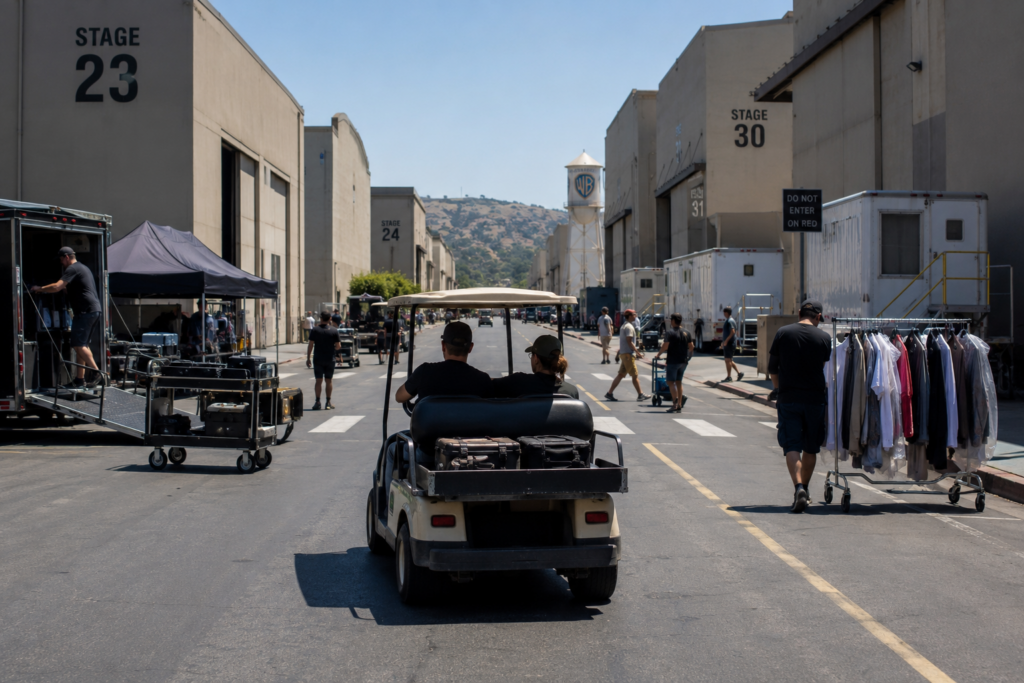
Soundstages remain active. Crews continue building sets. Producers continue developing projects. Cameras continue rolling across studio lots every day. The business has not stopped making stories.
It is deciding which economic model gives each story its greatest opportunity to succeed.
That search remains unfinished.
Every festival acquisition, every debate over theatrical windows, every streaming investment, and every carefully planned theatrical release represents an industry still refining the financial architecture that will define its next era.
History suggests audiences never lost their appetite for thoughtful storytelling.
What changed was the system that determines how those stories reach them.
Hollywood’s future will not be shaped solely by the next great screenplay or the next blockbuster franchise.
It will be shaped by the business model that makes the widest range of stories financially sustainable once again.
The question facing Hollywood is no longer whether audiences want more stories.
It is whether the industry can build an economic framework that allows more of those stories to be made, financed, distributed, and discovered.
That is the business decision quietly unfolding behind every working soundstage—and it may become one of the defining questions of Hollywood’s next chapter.
Related Posts

Connection Above All: Nuria Vega on the Art That Moves Us
From Mexico to the Mythic West

GLOSSIER RENEWS AND BROADENS COLLABORATION WITH WNBA
GLOSSIER RENEWS AND EXPANDS PARTNERSHIP WITH WNBA
ASOS Names Law Roach Its Stylist in Residence
Styling the Next Chapter

Jude Bellingham: The New Face of EA Sports FC 25
Jude Bellingham Is the ‘EA SPORTS FC 25’ Cover Star.

ESPN Thinks SportsCenter NEXT Can Become a Lifestyle Brand: Kaleena Smith and Beckham Black Are the Bet
The apparel matters, but the identity is the real product

The collaboration between Nike and Spotify is sparking a transformative movement in the UK with the introduction of the Make Moves Fund
By Tucker Adams In the United Kingdom, a remarkable movement of libera