

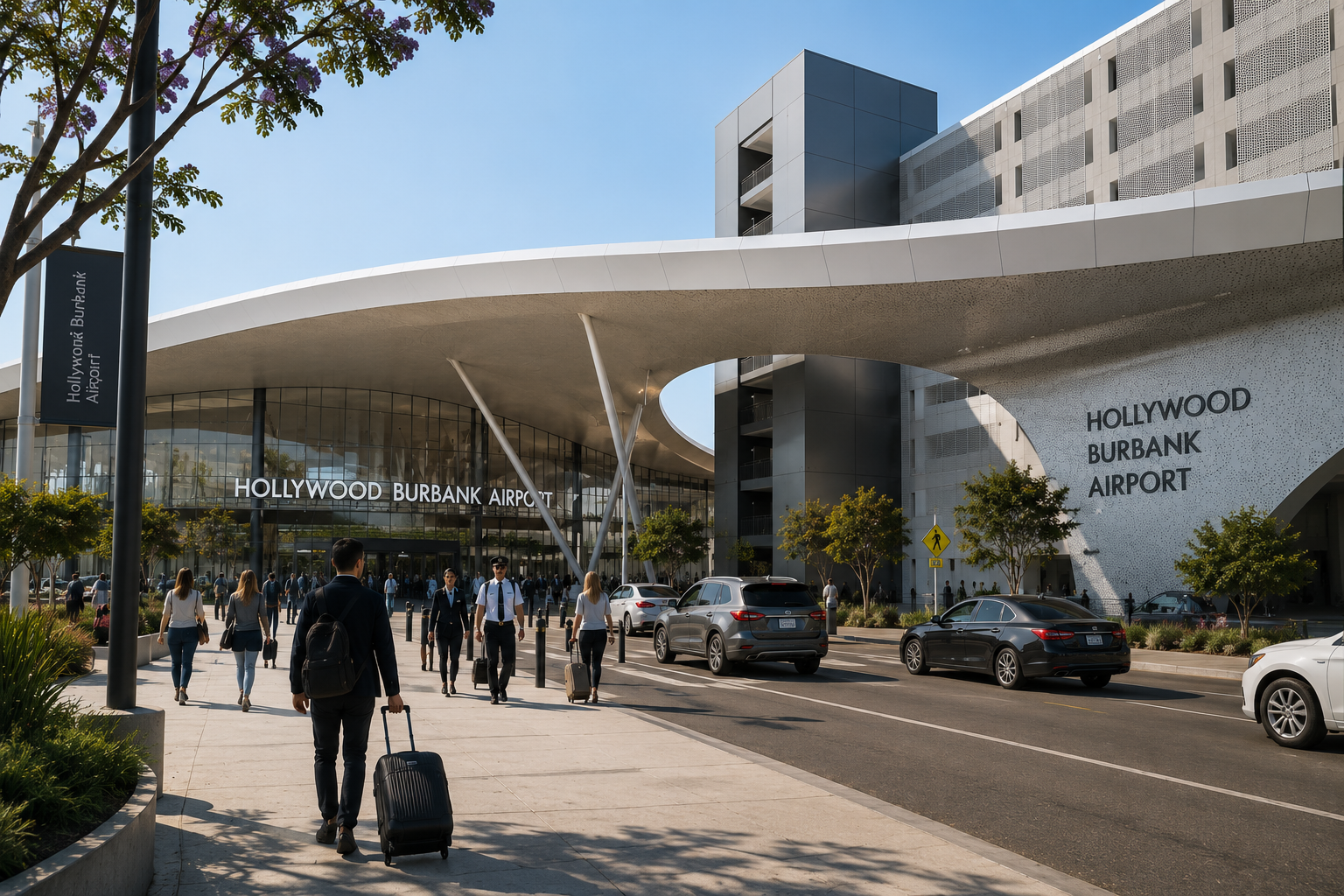
Hollywood Burbank Airport Shows That Bigger Isn’t the Only Measure of Modernization
By Kyler James
For generations, infrastructure has been judged by a simple equation: bigger meant better. A larger terminal, more gates, more runways, and greater passenger capacity became the visible signs of progress. Expansion was easy to measure, easy to celebrate, and easy to understand.
Hollywood Burbank Airport offers a different definition of modernization.
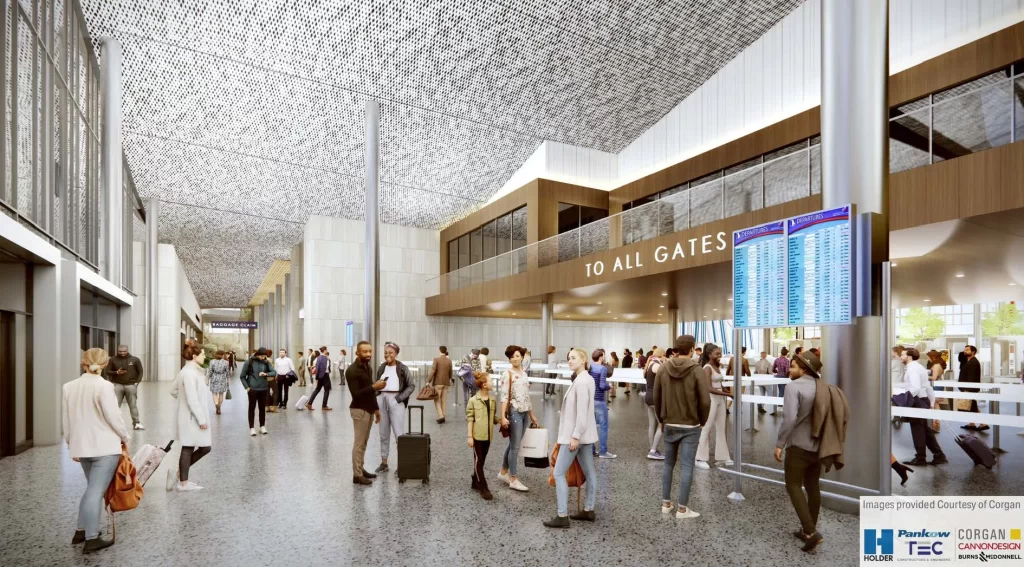
Its new terminal replaces a facility that had long outlived the standards of modern aviation. While the building itself is larger, the airport is not transforming into a sprawling international hub or dramatically increasing its number of gates. Instead, the investment is focused on something less obvious but ultimately more meaningful: creating a safer, more efficient, more accessible experience for the people who use it every day.
That distinction reflects a broader shift in how we evaluate infrastructure.
For much of the twentieth century, public projects were designed to solve one dominant problem—accommodating more people. Success was measured by throughput. The more passengers an airport could process or the more vehicles a highway could carry, the more successful the project was considered to be.
Today’s challenges are different.
Most travelers already expect airports to move people from one place to another. What increasingly shapes their perception is everything that happens in between. The ease of navigating a terminal. The efficiency of security. The clarity of wayfinding. The accessibility of the building. The confidence that the infrastructure beneath them has been designed for the realities of today rather than the standards of decades past.
In other words, experience has become part of infrastructure itself.
That represents an important evolution. Modern infrastructure is no longer judged solely by what it adds. It is increasingly judged by what it removes: unnecessary friction, outdated systems, confusing layouts, avoidable delays, and barriers that quietly diminish the experience of moving through a space.
The most successful public environments often share this characteristic. They do not demand attention. They allow people to focus on where they are going rather than the obstacles standing in their way.
Hollywood Burbank Airport embodies that philosophy. Its modernization is not an argument against growth. Large international airports will continue to expand as demand requires. Instead, it demonstrates that growth and modernization are not interchangeable. An infrastructure project can create meaningful public value without fundamentally changing the scale of the institution it serves.
That idea extends well beyond aviation.
Cities are reimagining transit stations around accessibility instead of size. Hotels increasingly compete through seamless guest experiences rather than sheer square footage. Retail environments are designed to simplify navigation instead of maximizing inventory. Across industries, investment is shifting toward systems that feel more intuitive because they have been designed around people rather than capacity alone.
The result is a new way of thinking about progress.
The most valuable infrastructure is not always the infrastructure that occupies the most space.
It is the infrastructure that asks the least of the people moving through it.
That may ultimately be the lesson of Hollywood Burbank Airport’s new terminal. Its significance is not that it proves bigger airports no longer matter. They do, and they always will where demand requires them.
Its significance is that it reminds us modernization has another measure.
Not how much larger a place becomes.
But how much better it serves the people it was built for.
Related Posts

Konami Unveils Story Trailer for Silent Hill 2 Remake
Konami releases Silent Hill 2 trailer

LeBron James: From Hardwood Hero to Cycling Advocate
Canyon and LeBron James' "Find Your Freedom"

Yahya Abdul-Mateen II to Lead Man on Fire Adaptation for Netflix
Yahya Abdul-Mateen ll to Lead Man on Fire Adaptation for Netflix

Nintendo and Sony Join Forces for Live-Action Adaptation of Legend of Zelda
Nintendo and Sony Join Forces

Roku Secures Exclusive Rights to MLB’s Sunday Leadoff Games
Roku Scores Exclusive MLB Sunday Games Package

Clase Azul México Unveils Exclusive Limited Edition Tequila: The Loft Brooklyn Collection I
Clase Azul Tequila Pays Homage to New York City.