

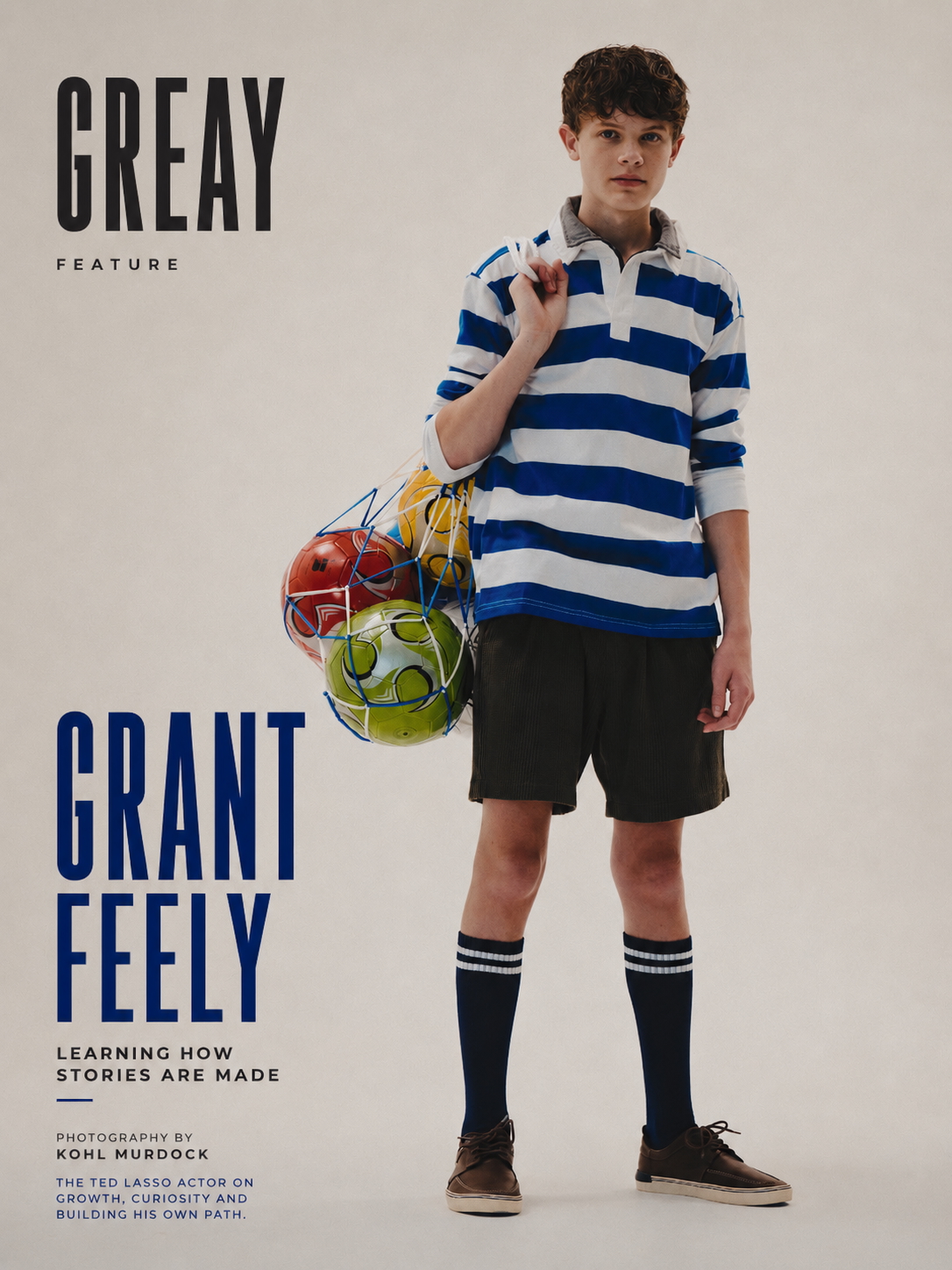
Grant Feely Is Finding His Place in the Bigger Picture

There is an interesting distinction in the way Grant Feely talks about acting: he loves being in front of the camera, but he has never been interested only in what happens there. Long before his career began moving through recognizable worlds and characters, he was paying attention to how stories were assembled—the directing, the writing, the decisions happening around a performance that eventually become invisible once a film or television episode reaches an audience.
That curiosity feels especially important now. Feely has already been entrusted with characters carrying histories larger than his own résumé, and with Ted Lasso, he enters another world audiences feel deeply protective of. Yet there is little sense that he is in a hurry to prove he belongs there. He talks instead about listening, observing and learning from the people around him. At an age when it would be easy to measure progress by increasingly visible roles, Feely seems just as interested in understanding the work itself—and in discovering how many different ways he may eventually contribute to it.
GREAY: You once said it wasn’t just watching movies that inspired you—it was watching how movies were made. Looking back now, do you think that curiosity was really about acting, or was it always about understanding how stories come to life?
GRANT FEELY: I think it was always bigger than just acting. I’ve always been interested in how everything comes together to tell a story. Acting is still what I love most, but I definitely hope to explore writing, directing, and producing in the future.
GREAY: You’ve now stepped into the shoes of characters that audiences already loved long before you arrived. What have those experiences taught you about earning people’s trust when you’re becoming part of a story that already means something to them?
GRANT FEELY: I think you have to respect what people already love about a character without being afraid to make it your own. I try not to think too much about expectations and just focus on making the character my own.
GREAY: You’ve spoken about wanting to write and direct one day. Is there something you’ve seen a director do on set that completely changed the way you think about storytelling?
GRANT FEELY: I’ve learned a lot just from watching different directors work. I’ve really enjoyed working with directors who collaborate with their actors and are open to different ideas.
GREAY: Ted Lasso has always believed that kindness can be just as powerful as confidence or talent. After spending time inside that world, do you think that idea has stayed with you off camera as well?
GRANT FEELY: Definitely. The Ted Lasso set is such an upbeat environment, and everyone genuinely seems excited to be there. That positivity really carries over from the show into the people making it.

GREAY: Henry Lasso has grown up alongside the audience, even though they haven’t seen every chapter of his life. When you first started building your version of Henry, where did you begin?
GRANT FEELY: I was already a big fan of the show, but I rewatched it before we started filming to really understand Henry and his relationships. When the scripts are as well written as they are, it makes building a character and those dynamics so much easier.
GREAY: Without giving anything away, was there a moment while making Ted Lasso when you realized why this series continues to mean so much to so many people?
GRANT FEELY: What stood out to me most was the people behind the show. Everyone on set is incredibly positive and talented, and I think that environment translates directly into the series and is a big part of what makes it so special.
GREAY: You’ve already shared scenes with actors whose careers span decades. When you leave a set, do you find yourself remembering the performances, or are there conversations, small moments, or pieces of advice that stay with you even more?
GRANT FEELY: The behind-the-scenes moments and interactions are often what stay with me the most. On Ted Lasso, I especially remember the experiences I shared with the cast outside of filming, like going to Arsenal games and concerts together.
GREAY: Your career has moved quickly, but you’re also still growing up. How do you make sure you’re discovering who Grant is at the same time you’re discovering who all of these characters are?
GRANT FEELY: Acting has definitely shaped a lot of who I am outside of it. Growing up on sets and working with adults from a young age has made me more mature and taught me how to communicate well with different kinds of people. I think a lot of that has carried into how I handle myself in everyday life.
GREAY: Home often gives us our first understanding of the world before our careers introduce us to completely different ones. As your life has changed, what parts of growing up in Alabama still feel like the strongest influence on the person you’re becoming?
GRANT FEELY: I think growing up in Alabama has given me a really strong sense of home. I’ve known many of the same people for most of my life, and having that familiarity has kept me grounded even as other parts of my life have changed pretty quickly.
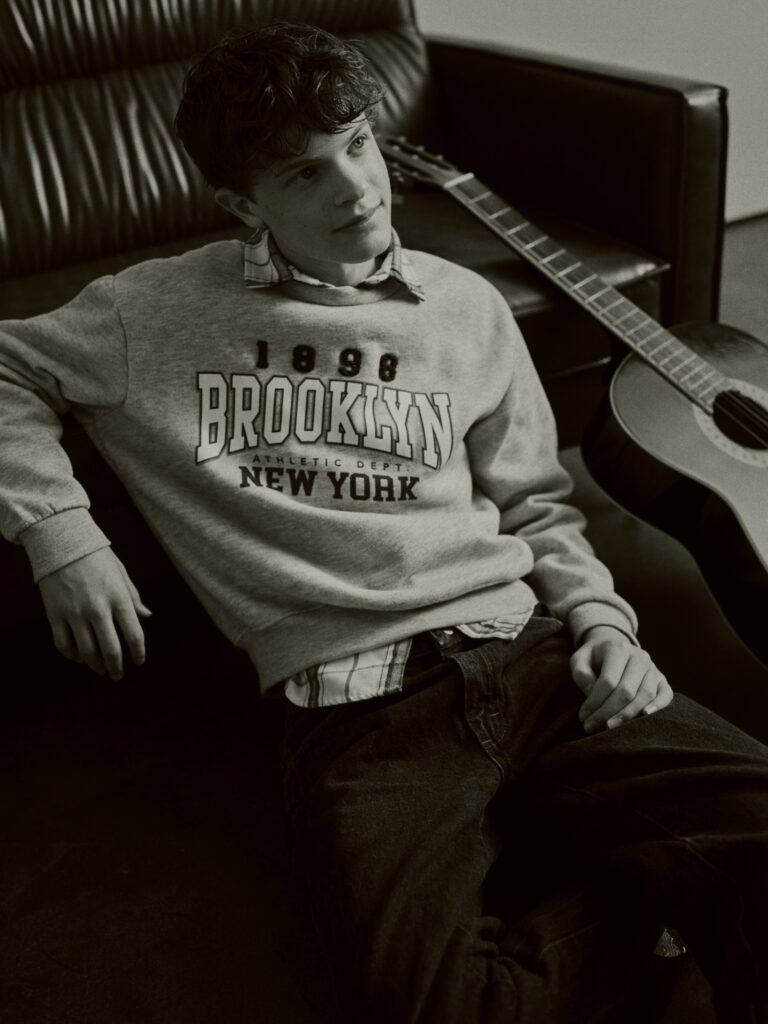
GREAY: One day people will know you for characters that begin with your own name instead of someone else’s legacy. When that chapter arrives, what kinds of stories do you hope people will say only Grant Feely could have told?
GRANT FEELY: I’m drawn to all sorts of styles and genres, so I don’t think there’s one type of story I want to be known for. I also hope to take on different roles on set over time, whether that’s acting, writing, directing, or producing.
Perhaps the most revealing thing about Grant Feely right now is how comfortable he seems leaving parts of his future undefined. Acting remains the center of what he loves, but he can already imagine himself writing, directing and producing, moving between the different disciplines he has spent years quietly observing.
There is something fitting about that openness. His young career has repeatedly asked him to enter stories with histories that existed before him, but the larger story of who he becomes as an artist is still entirely unwritten. For now, Alabama remains home, the people he has known for years remain part of what keeps his life recognizable, and the sets he travels to continue expanding his understanding of what storytelling can be.
Eventually, Feely may find himself creating characters and worlds that arrive without an inheritance attached to them—stories audiences encounter for the first time through him. He does not yet know exactly what those stories will look like. At this stage of his life, that may be less an uncertainty than an advantage: Grant Feely is still learning how stories are made while quietly becoming someone capable of making his own.
Creative Director Irina Van Verseveld @wonderzuzu
Photographer Kohl Murdock @Kohlmurdock
Words Kyra Greene @Noteastbeingreen
Stylist Roxy Ogle @roxyogle
Grooming / MUA Gigii @giigiisbeauty
Mua Assist Martha German @_xomj
Related Posts

Marriott Bonvoy and Starbucks Launch New Loyalty Program Collaboration
Starbucks and Marriott Bonvoy Collaboration Unlocks Exclusive Benefits

Lewis Hamilton Shifts Gears from F1 to Fashion: Unveiled as Dior’s Latest Menswear Ambassador and Guest Designer
Dior Announces Lewis Hamilton as Brand Ambassador and Guest Designer

TOMMY HILFIGER ENLISTS DJ Steve Aoki AND SKATEBOADER Sage Elsesser TO SHOWCASE NEW YORK PUFFER
By Alex Ford Tommy Hilfiger’s latest collection redefines the pu

RAP SNACKS ANNOUNCES ENTRY INTO TRUCKING BUSINESS
By Jamal Suiter Rap Snacks, a trailblazing pioneer in the Consumer Pac

Calm Is the New Power: Volvo’s EX60 Redefines Electric Luxury
Less Noise, More Meaning

Usher Reveals Super Bowl Halftime Show Commercial: A 30-Year Journey Unleashed
Usher's Musical Journey Culminates at Apple Music Super Bowl Halftime