
Ayra Starr Is Showing How Instagram’s Profile Grid Is Changing
By DaMarko GianCarlo
For most of Instagram’s history, the main profile grid carried a simple implication: these are the things this person posted. Other people could photograph you, mention you, celebrate you or create something around you, but those posts largely lived somewhere else. They could appear under the Tagged tab, move through Stories or circulate through Instagram’s other sharing tools, while the main grid remained the part of the profile most closely associated with what came directly from the account itself. Instagram is now beginning to loosen that boundary.
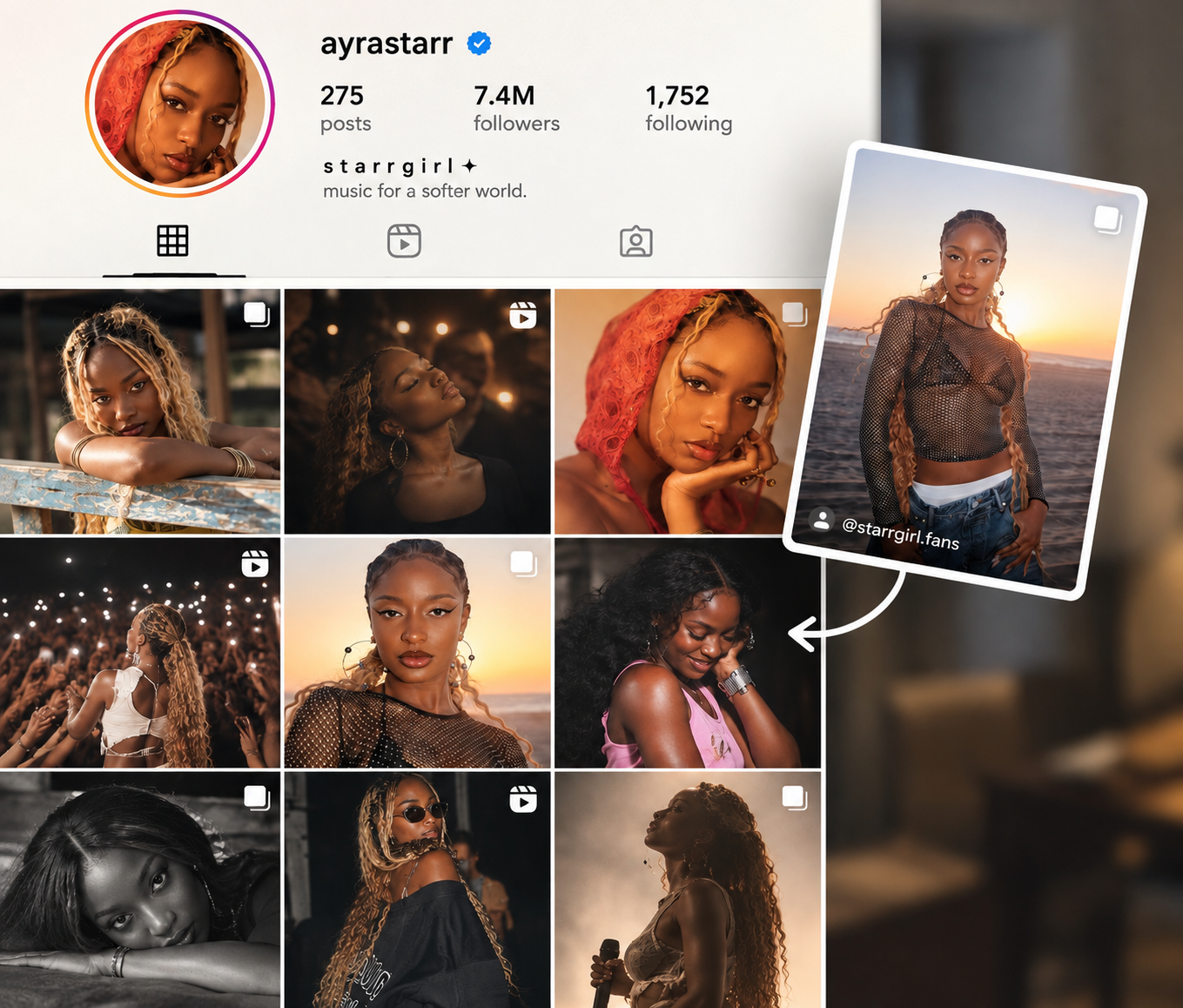
On September 10, Instagram began rolling out a feature that allows users to add posts they have been tagged in directly to their main profile grids. The original creator remains attached to the post, and displaying it on another person’s grid doesn’t suddenly make that person its author. Users also can’t simply choose any post they like and place it on their profiles; they have to be tagged in the original. It sounds like a relatively small product update, but the distinction underneath it is more significant: Instagram is beginning to separate publishing something from choosing to present it.
That is what makes this different from Instagram’s other sharing tools. Reposts allow people to redistribute public posts and Reels while maintaining attribution to the original creator, and Collabs allow multiple accounts to participate more directly in the same post. This new feature does something else. Someone else can create and publish the material, while the person tagged in it can decide that the material deserves a place in the version of themselves presented on their main profile. The post hasn’t changed ownership. What has changed is its position.
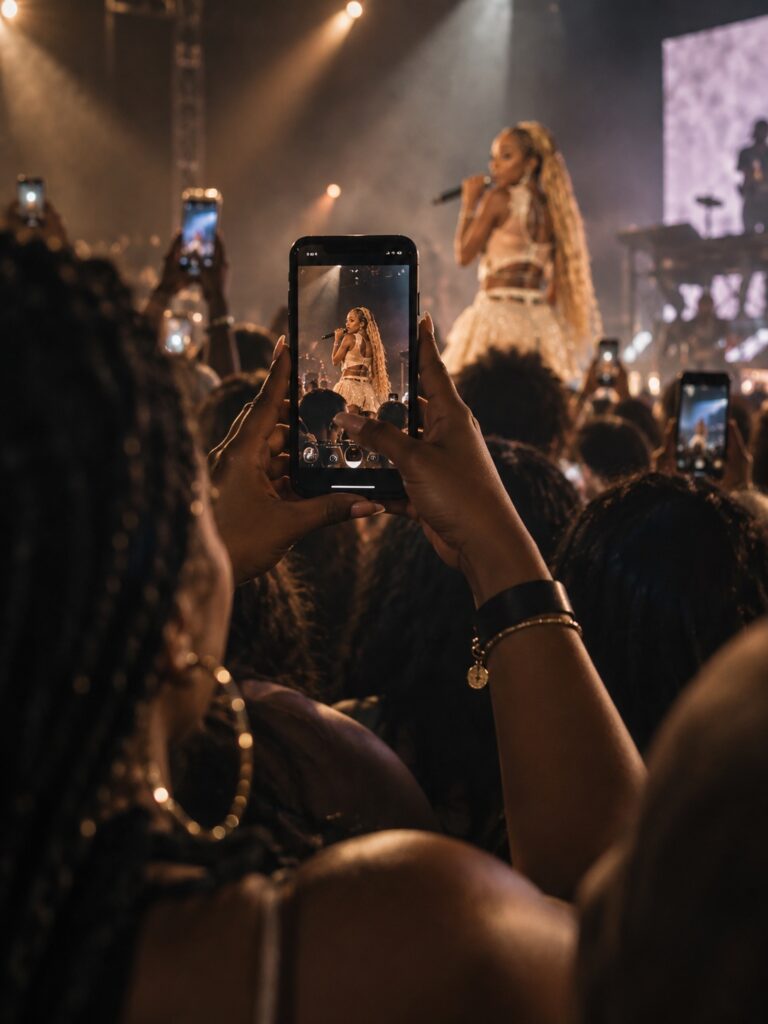
Ayra Starr makes that distinction particularly easy to understand. Instagram partnered with Starr as the first artist to showcase the feature, allowing her to select fan posts in which she has been tagged and bring some of them onto her main grid. That creates a different relationship between the artist, the audience and the profile connecting them. A fan could photograph Starr during a performance, publish that photograph from their own account and tag her. The fan remains the publisher of the image, but Starr can now decide that their perspective also belongs in the visual story she presents to everyone arriving at her profile.
In that exchange, the fan remains the creator and Starr becomes the curator. That may be the most useful way to understand what Instagram has actually changed. The platform isn’t giving people ownership of content created by others, and it isn’t turning every tagged fan into an official collaborator. It is giving account holders more editorial control over what appears at the front door of their profiles.
That possibility extends well beyond musicians. An actor could surface a photograph published by a production. A photographer could bring a magazine’s post featuring their work onto their main grid. A designer could highlight someone wearing a piece they created. An athlete could select an image captured from the stands. In each case, the account holder doesn’t need to have originally published the material for it to become part of their primary profile presentation. The grid can increasingly contain both what someone publishes and what they deliberately select from what others publish about them.
The timing also matters because Instagram has already been changing how much control users have over the composition of their profiles. The platform introduced the ability to rearrange posts on the grid rather than permanently allowing publishing chronology to determine where everything sits. Put that beside the ability to add selected tagged posts and a larger direction becomes visible. Instagram is making the profile increasingly curatorial. Reordering lets someone decide where their existing posts belong; adding tagged posts expands what can belong there in the first place.
Neither change radically transforms Instagram by itself. Together, however, they move the profile farther away from functioning purely as an archive of publishing activity. For years, social media identity was closely tied to posting: you made something, uploaded something, and that accumulating history became your profile. Instagram is increasingly adding another behavior to that process — arranging. Users can decide what belongs, where it belongs and, now, whether selected perspectives created outside their own publishing history should become part of the presentation.
Ayra Starr’s involvement also reveals why the feature could become particularly interesting for artists with highly active communities. The traditional relationship between an artist and their Instagram audience has largely moved in one direction. The artist or their team publishes something, and the audience responds underneath or around it by liking, commenting, remixing, photographing and creating its own material. Much of that fan activity can become culturally important without ever entering the artist’s primary profile.
This feature creates a narrow path in the opposite direction. A fan can independently capture a moment, publish it, tag an artist and potentially see that perspective selected for the artist’s main grid. There is no guarantee of selection, and the fan doesn’t become an Instagram collaborator simply because the artist chooses the post. But the artist gains a new editorial decision: does this perspective belong in the story I am presenting here?
That is especially compelling in Starr’s case because the material surrounding a contemporary musician doesn’t come exclusively from official shoots, music videos and campaign photography. Fans are already documenting concerts, fashion, travel and the small moments surrounding an artist’s public life. Instagram’s change gives artists a way to acknowledge some of that culture without having to recreate it themselves. The audience can remain the author of its perspective while the artist decides whether that perspective belongs within the larger presentation.
The real play, then, isn’t that Instagram has invented another way to repost something. It has changed a boundary around the profile itself. The main grid once answered a relatively straightforward question: What did this account post? Increasingly, Instagram is allowing it to answer a different one: What does this account want you to see?
Those questions sound similar, but they describe two different versions of social media. One treats the profile primarily as a record of publishing. The other treats it as an edited surface, where authorship, selection and presentation can come from different places. Ownership still matters. Credit still matters. The person who created the original post remains its publisher. What Instagram has expanded is the account holder’s ability to decide which perspectives become part of the profile people encounter first.
Ayra Starr is the cultural doorway into that change, but the feature reaches beyond her. Her rollout simply makes the shift unusually easy to see: a fan can capture the artist from the crowd, publish that moment from their own perspective, and potentially watch that perspective move from the edges of the artist’s Instagram presence onto the main grid itself.
Instagram hasn’t made other people’s content yours. It has made your profile more curatable. And that is the actual play happening in real time.
Related Posts
Alexie Olivo Is Learning That Success Means Choosing Her Own Direction
Choosing purpose over expectation

Ancestry Inspires People to Discover, Preserve and Represent All That They Are With “It’s a Family Thing” Integrated Brand Campaign
By Tanner James Ancestry®, the global leader in family history, today
LA Comic Con 2024: A Must-Have Event for POp Culture World
LA Comic Con 2024 overview

Paris Saint-Germain Set to Unveil World’s Largest Store on New York’s Fifth Avenue
Paris Saint-Germain, the prominent French soccer team, is unveiling a

The Joker Has Always Needed Batman More Than Batman Needed the Joker
Who Are You Without Them?

ANTA and Kyrie Irving Celebrate the Launch of ANTA KAI 1
ANTA and Kyrie Irving Launch ANTA KAI 1
POST COMMENT