

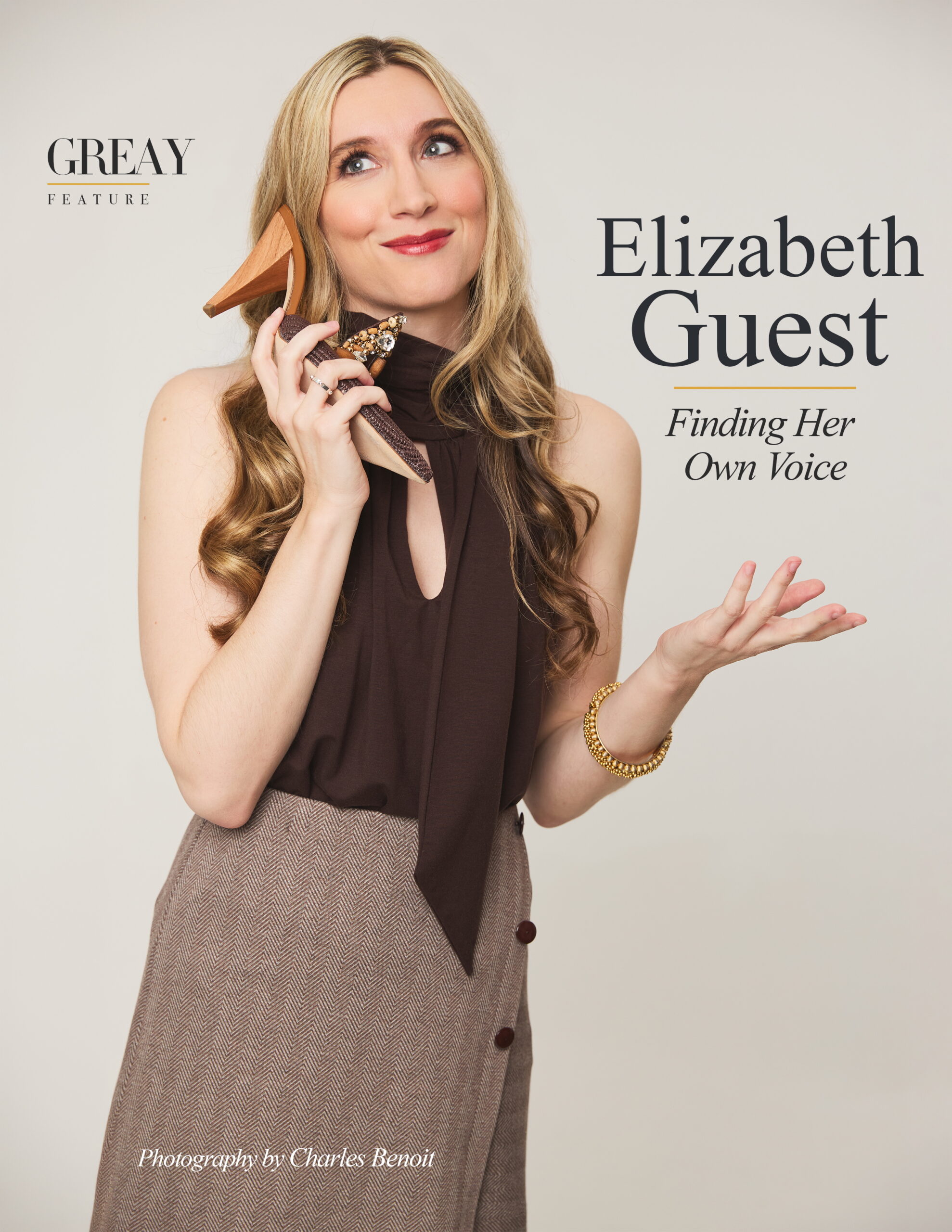
Elizabeth Guest Is Finding Freedom in Being Herself

Elizabeth Guest grew up around filmmaking, but knowing a world and finding your own place within it are two different experiences. As the daughter of actors Nicholas and Pamela Guest, she was introduced early to an industry where storytelling was both a profession and a familiar part of everyday life. Yet her own creative path was something she had to discover for herself. Through acting, improvisation, and writing, Elizabeth developed a voice shaped by her sense of humor, her curiosity about people, and an instinct to create rather than wait for opportunities to arrive.
She began studying theater at the University of Southern California before moving into its film program, drawn to a broader understanding of how stories are brought to life. Acting offered her a particular kind of freedom. Stepping into another character allowed her to set aside insecurities that could feel more difficult to navigate in her own life, while writing became a way to make sense of the experiences and observations she was continually collecting.
That creative independence eventually led to A Very Merry Breakup, a romantic comedy she wrote, directed, produced, and starred in. At its center is Lydia, a woman whose search for love is complicated by her own fears, insecurities, and the patterns she has yet to understand. Elizabeth began developing the character in her twenties, and as her own relationship with herself changed, so did Lydia. What emerged was a story about more than finding the right person. It became an exploration of the honesty, vulnerability, and self-compassion that meaningful relationships require.
Bringing the film to life challenged Elizabeth in new ways, asking her to balance the demands of filmmaking with the responsibility of creating an environment where others could feel supported and inspired. Working alongside her parents also allowed her to appreciate their encouragement and trust from a different perspective. There is an openness in the way Elizabeth speaks about these experiences, often finding humor in the moments that tested her confidence. She doesn’t suggest that making a film has answered every question she has about herself. Instead, she recognizes that confidence continues to develop, that mistakes can become opportunities for compassion, and that understanding ourselves is an ongoing process. In conversation with GREAY, Elizabeth reflects on the family that shaped her, the creative independence she has built, and the personal discoveries that accompanied bringing a story she had lived with for years to the screen.
GREAY: You grew up around film sets, and you’ve spoken about watching your father work when you were young. What interests me is how differently we sometimes understand our childhood as adults. When you look back on those experiences now, what do you recognize about yourself that you might not have understood then? And what parts of your upbringing had nothing to do with Hollywood but helped shape the person you became?
Elizabeth: I think before you start making things and being part of productions you just can’t know how much hard work goes into it. My dad always made it look easy. But work is work. And I’m grateful that I actually didn’t learn that lesson until I was an adult. It was nice to have a semi-normal childhood. That’s interesting, about what non-Hollywood aspects of my childhood shaped who I am… I think our parents of course have a huge impact on us. My dad grew up in New York City and my mom grew up in the midwest. I’ve been told I’m very much a combination of both of them. I am nice and I walk fast!
GREAY: You began studying theater at USC before moving into its film program because you wanted to understand more of the filmmaking process. That decision feels significant because it suggests you were already thinking beyond the opportunities traditionally available to an actress. At that point in your life, what did success look like to you, and how different is that definition today?
Elizabeth: I don’t know if I thought a lot about success then. I did get my SAG card while I was in college, however, and I remember being able to use it to go to see movies at the Arclight during awards season for the ‘Variety Screening Series;’ that made me feel successful!
GREAY: You’ve spent time in improvisation and comedy, where the unexpected can sometimes become the most memorable part of a performance. But being naturally funny and feeling comfortable allowing people to see your personality aren’t necessarily the same thing. Were you always comfortable taking up space and making people laugh, or was that confidence something you had to develop?
Elizabeth: I think I’m still developing my confidence 🙂 It’s a lifelong task. I do think the appeal of acting and playing different characters has always been the fact that I get to sort of drop my insecurities and fears “offstage” or “off-camera” and disappear into another character’s situation or set of circumstances. It’s almost like the moment I was playing another character (even in an improv scene) I felt free. It’s like that mask speech in “As You Like It.” The disguise can give you the courage to do things you wouldn’t be able to do in real life.

GREAY: You’ve spoken about receiving encouragement from Nancy Meyers to continue creating your own opportunities through writing. Advice can be meaningful, but believing in it enough to build a career around it is something else entirely. Was there a particular moment when you stopped waiting for someone else’s permission and began trusting that your own stories deserved to be told?
Elizabeth: That’s a great question. I honestly think that moment did start in college. I think I inherited my mother’s disinterest in “waiting” and so I started writing so that I wasn’t “waiting” if that makes sense. And I don’t know that I ever thought “this deserves to be told” I just got busy and tried to make myself laugh. I think that’s all we can do!
GREAY: Guest Appearances eventually helped lay the foundation for A Very Merry Breakup. There’s something revealing about living with a creative idea long enough for it to grow alongside you. How did your relationship with this story change over the years, and is there something in the finished film that reflects a version of Elizabeth who didn’t exist when you first began writing?
Elizabeth: Love this question! My relationship to this story definitely changed. Lydia is a love addict and when I started writing this character I was 24? So, the fears, insecurities and even just the situations she finds herself in were reflected in my fears and my situations. And so as I’ve evolved as a human, so did the character of Lydia. Although I like to think she’s maybe 6 or 7 years behind me. Hindsight is 20-20 so how I write her reflects that for sure. I’ve been able to develop a stronger relationship with myself especially in the last few years and that theme or message is a huge part of the film. Lydia has to forge that relationship to herself in order to get to the next phase of her life.
GREAY: Your character Lydia is romantic, impulsive, and sometimes responsible for creating the very problems she’s trying to escape. You’ve acknowledged drawing inspiration from your own experiences with dating. What interests me is the honesty required to write a character who doesn’t always make the right decisions. Have you become more compassionate toward your own mistakes as you’ve gotten older, and did that change the way you wrote Lydia?
Elizabeth: Absolutely. I think being more compassionate towards myself is truly the biggest lesson I’ve learned. We have to love ourselves through it all and that was a huge part of what I wanted Lydia to learn how to do.
GREAY: Romantic comedies often revolve around finding someone who loves us, but there’s another story underneath that about learning how to recognize and accept love. When you were writing A Very Merry Breakup, what were you trying to understand about the difference between wanting to be loved and being emotionally ready to let someone know the real you?
Elizabeth: For Lydia, it was about learning how to love herself SO she can be loved. And I think you can’t really be loved if you’re not ready to share the good, the bad and the ugly with that person. I think people tend to hide parts of themselves out of fear when in fact real and true love requires full disclosure and rigorous honesty. But in order to get there, you have to be comfortable with who you are, yourself, then the rest works itself out.
GREAY: Writing, directing, producing, and starring in your first feature meant carrying a great deal of responsibility while still needing the freedom to be present as an actress. Were there moments when you felt overwhelmed by everything you had taken on? And when those moments came, what helped you find your footing again?
Elizabeth: Oh, yes, indeed, overwhelming is a great way to describe indie filmmaking! Breathing helped me a lot, conscious breathing of course. Laughter. I had a few good cries. I tried to remember to eat regularly. I also had an incredible group of people around me. There was so much love and care. It also helped that I was the director/producer. It was my job to take care of others, that also helped ground me a lot.
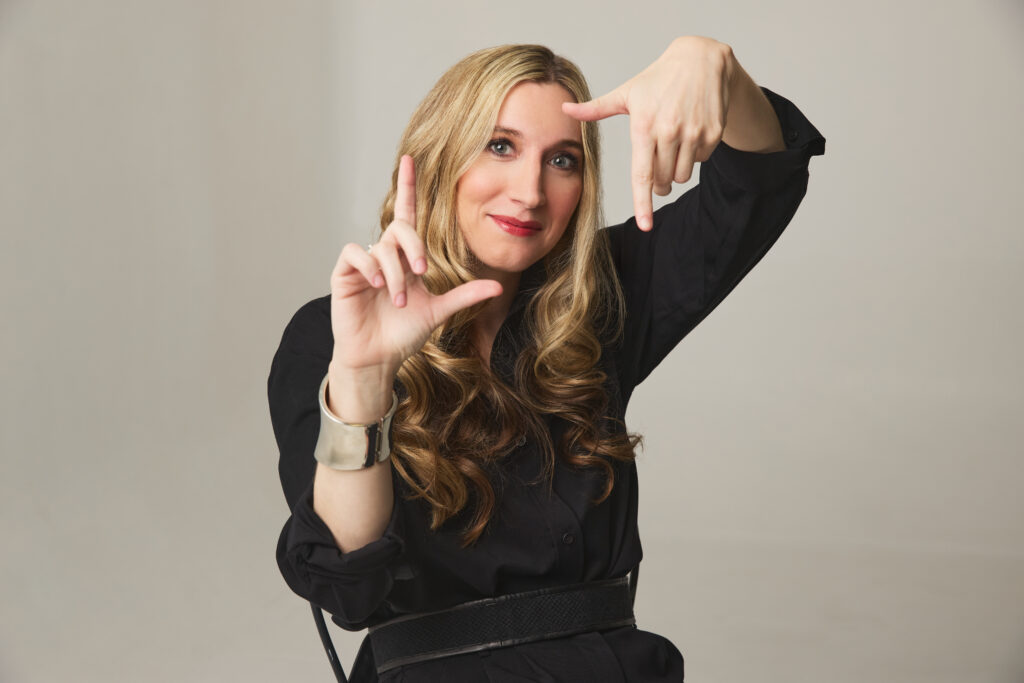
GREAY: Your parents, Nicholas and Pamela Guest, are part of the film, and you’ve spoken about the honesty and familiarity that comes with directing family. But I wonder whether working together as adults changes the way we see people we’ve known our entire lives. Was there a moment during production when you recognized something new about your parents, or perhaps something new about yourself through their eyes?
Elizabeth: It was really amazing to see my mom in her element as an actress on this. And because we produced the movie together I also got to see her solve problems in real time and that was incredibly cool too. I always knew she was smart but I saw it up close on this and in a new way. She also gave me the freedom to make the movie I wanted to make and I appreciated that every single day. She’s always been my biggest cheerleader and there were a few moments in this movie I realized I wouldn’t have even felt empowered enough to do all these jobs if it weren’t for her. My dad was incredibly sweet every day (he loves being on set) and he actually loves when I direct him so he too is a huge part of why I had the confidence to direct this movie at all.
GREAY: You’ve worked within established television productions while continuing to create independent work. Those experiences require different kinds of patience and trust. What have you learned from being an actress on someone else’s set that has influenced how you treat performers on your own? And what kind of environment do you hope people remember when they’ve finished working with you?
Elizabeth: I think all of my experiences as an actress supported me in this movie. I wanted this to be a fun and safe working environment for everyone involved. I always hope people have a good time and feel comfortable and inspired to do their work and walk away feeling proud of what they accomplished and maybe they even had such a good time that they’re sad it’s over! (I love that feeling).
GREAY: A Very Merry Breakup won the Audience Award for Best Comedy Feature at the Newport Beach Film Festival and was later acquired by Tribeca Films. After spending years developing a project, finally seeing it reach audiences must bring a complicated mix of emotions. Beyond the recognition and the professional milestone, was there a private moment when you allowed yourself to feel proud of what you had accomplished?
Elizabeth: I remember when I was brushing my teeth the last night of the shoot, after we had wrapped, it must have been 1 AM or something. I looked in the mirror and smiled. I never do that. I think I must have been proud of myself or grateful or both.
GREAY: In an earlier interview, you described yourself as sensitive, someone who wears her heart on her sleeve, and someone who sometimes laughs when she probably shouldn’t. I find that combination interesting because humor and sensitivity can be two very different ways of experiencing the world. As you’ve gotten older, have you learned to embrace those qualities more fully, or are there still parts of yourself you’re learning to understand?
Elizabeth: I’m definitely still trying to understand myself but yes, I really have had to embrace the sensitivity and the need to laugh. I was trying to move an office chair and desk into the back of my car last weekend and I erupted into a giggle fit because it was very clear there was not room for both. Maybe it slowed me down a little, the laughs, but it made accepting defeat a whole lot easier!
GREAY: You’ve said that creating makes you happy, and it’s clear that storytelling occupies an important place in your life. But I’m curious about the Elizabeth who exists when there’s nothing to write, produce, or accomplish. What brings you joy in the ordinary moments? And what have you discovered about yourself that has absolutely nothing to do with your career?
Elizabeth: Seeing plays, watching movies/shows, singing/playing guitar/sitting and eating are all big big hobbies of mine. Food has always brought me a lot of joy. I also love walking. And walking and talking. Big fan. I think I’ve discovered that I am hyper aware of myself and others and that’s what makes me want to write all the time. I’m just constantly taking in information. But I’ve learned that sometimes I can just…be. Whether that means vegging out and watching TV or going and supporting someone else’s work or just simply lending an ear to a friend makes me very happy too. I like doing things that feel esteemable and it turns out that’s not just my work!
GREAY: You’re arriving at a moment when something you’ve spent years building is finally finding its audience. But I imagine the person who began this journey and the woman sitting here today are not entirely the same. When you think about the next chapter of your life, what parts of yourself are you most determined to hold onto, what are you ready to leave behind, and what would a genuinely beautiful life look like to you beyond professional achievement?
Elizabeth: I’m determined to hold onto my care and concern for other people’s feelings, my empathetic side if you will. I think that’s so necessary in life and in the work I want to do. As far as something to leave behind, probably the desire to put other people’s feelings above my own. It’s impossible to please everyone all the time – as much as I’d love to do so. I think a beautiful life is one filled with family and friends who love and support you that you can love and support right back. Oh and good food, that’s a must. And coffee. Definitely coffee. My grandma just turned 99 and has about 5 cups a day. She’s doing something right!

On the final night of filming A Very Merry Breakup, Elizabeth Guest remembers brushing her teeth sometime around one in the morning, after production had wrapped. She looked into the mirror and smiled, something she says she rarely does. She isn’t entirely certain whether the feeling was pride, gratitude, or a combination of both, but the moment stayed with her. After years of developing a character who needed to learn how to love herself, Elizabeth had completed a film that explored some of the same questions she had been confronting in her own life.
The connection is meaningful, although she makes no claim to having resolved everything Lydia struggles to understand. Elizabeth still considers confidence something she is developing. She speaks about learning to approach her mistakes with greater compassion, accepting her sensitivity, and recognizing that caring about other people’s feelings should not mean consistently placing her own needs aside. These lessons extend beyond the story she created and into the way she approaches her work and relationships.
As a director, she wanted the people around her to feel comfortable, supported, and inspired, remembering how much those qualities mattered during her own experiences as an actress. Working with her parents offered another kind of understanding. She watched her mother navigate the challenges of producing while giving Elizabeth the freedom to make the film she envisioned. Her father’s enjoyment of being on set and his willingness to trust her direction reinforced the confidence their encouragement had helped her develop.
Yet some of the most revealing parts of Elizabeth’s conversation have little to do with filmmaking. She finds joy in seeing plays, watching movies, singing, playing guitar, walking, sharing conversations, and occasionally allowing herself to do nothing at all. When asked what a beautiful life would look like, she describes family and friends who love and support one another, good food, and coffee. She mentions her grandmother, who recently turned 99 and drinks about five cups a day, with the humor that appears so naturally throughout her answers. There is something revealing in the simplicity of that vision. Elizabeth has worked to create opportunities for herself, but she doesn’t measure the value of her life solely through professional achievement. The relationships she nurtures, the empathy she extends to others, and the ability to feel comfortable with herself matter just as much.
She is still learning when to trust her instincts, how to make room for her own needs, and how to preserve the sensitivity she considers an important part of who she is. Perhaps that is why the memory of the bathroom mirror carries such quiet significance. It wasn’t a public celebration or a declaration that she had finally arrived. It was a private moment at the end of something she had worked hard to create, when she recognized a feeling she didn’t often allow herself to express. For a woman who began writing because she didn’t want to spend her life waiting, there is something fitting about that memory. She had made something of her own. And for an instant, she allowed herself to appreciate it.
Photography Charles Benoit @charlesbenoit
Words Kiara Greene @noteasybeingreen
Hair & Makeup Sabrina Ozuna @sabrinaozuna
Wardrobe Ayanna Brumfield @stylesayanna
Produced By FSI Productions @firstsight.intl
Related Posts
The Game Is No Longer the Product-The World Is
The Product Was the Entry Point
Young, Fearless, and Unstoppable: The Rise of Reagan To
Dancing Through Hollywood

Luxury, Authored: Willy Chavarria and Cultural Gravity
Defining Luxury Without Permission

Speedo Unveils the Vanquisher 3.0: A Game-Changer for Swimmers
SPEEDO LAUNCHES NEW & IMPROVED #1 TRAINING & RACING GOGGLE.
From Bedroom Tapes to Big Screen: Jeremy Allen White Channels The Boss in Springsteen: Deliver Me From Nowhere
Soundtrack of Solitude
Justin Sintic Stays Present While the World Speeds Up
You Don’t Force the Moment. You Meet It
POST COMMENT