


The Clipping Economy Is Reshaping How Attention Is Bought and Sold

By DaMarko GianCarlo
The internet has spent much of the past two decades changing how content is created. Cameras became smaller, production tools became cheaper, and social platforms gave individuals access to audiences once controlled by television networks, publishers, and entertainment companies. But another transformation is taking shape around a different part of the media business. Rather than producing original material, a growing network of independent editors and distributors is being compensated to circulate material that already exists.
The practice is known as clipping. Although extracting short segments from longer recordings is hardly new, its emerging commercial structure represents something more consequential than a change in editing habits. Podcasts, livestreams, interviews, and long-form videos are becoming source material for coordinated distribution campaigns in which participants can be rewarded according to the attention their clips generate. What was once largely an informal promotional activity is developing into a marketplace where views carry an identifiable price and distribution can be outsourced to networks of independent accounts.
The distinction matters because media companies have traditionally treated distribution as an extension of their own operations. Television networks controlled schedules and channels. Publishers invested in circulation, search visibility, and direct relationships with readers. Digital creators built followings through accounts they operated themselves. Paid clipping introduces another arrangement: a creator or business can finance the circulation of its material through people who do not necessarily work for the organization, own the original content, or maintain any long-term relationship with its audience.
The economics are straightforward in principle. A company establishes a campaign, identifies material available for clipping, and offers compensation based on eligible views or other specified performance measures. Independent participants select moments, edit them for short-form platforms, and publish them through their own distribution channels. When their clips satisfy the campaign’s conditions, they become eligible for payment. Intermediaries may provide the marketplace, track performance, administer payments, and collect fees.
The model transforms distribution into a measurable transaction. Instead of purchasing a conventional advertising placement with a predetermined media schedule, the advertiser can offer financial incentives to a network of participants competing to generate attention. The work of discovering which moments resonate with audiences shifts partly toward the people making and circulating the clips.
The commercial activity is no longer theoretical. In May 2026, Digiday reported that Clipping, a company founded by Anthony Fujiwara in 2025, had generated approximately $7.7 million in sales during its first ten months, citing Bloomberg’s October 2025 reporting. The same investigation described how Jimmy Donaldson, known as MrBeast, had launched his own clipping company, Vyro, after previously purchasing clipping services. These reported developments demonstrate that established creators are treating short-form distribution as a commercial operation rather than simply an incidental promotional activity.
The scale of individual campaigns provides another indication of how the market is developing. Digiday’s May 2025 reporting described arrangements typically offering between one and five dollars per thousand views, subject to campaign-specific payment caps. By November 2026, Content Rewards, a marketplace connecting brands with participating creators, reported a median listed rate of approximately $1.09 per thousand views across 707 campaigns in its published analysis. Those figures describe particular reporting samples and marketplace conditions, not a universal industry rate.
At one dollar per thousand eligible views, a clip generating one hundred thousand qualifying views would produce one hundred dollars in gross compensation before applicable fees or expenses. For a business financing the campaign, that arrangement offers a way to purchase measurable exposure without employing every person responsible for creating and publishing the promotional material.
But the simplicity of that calculation conceals an important imbalance. The advertiser may establish a maximum campaign budget, while individual clippers face uncertainty about whether their work will attract sufficient attention to earn compensation. Hours spent identifying footage, editing videos, creating captions, and publishing material do not necessarily produce income. A clip that performs poorly may represent uncompensated labor, while one that spreads rapidly can produce a disproportionately large return.
The business is also developing beyond a single payment structure. Content Rewards describes campaigns that compensate creators through rates per thousand views, fixed payments for approved posts, recurring retainers, or shared performance pools. Each arrangement distributes financial risk differently. A fixed payment can offer greater predictability when its conditions are satisfied, while performance-based arrangements make compensation more dependent on audience response. These distinctions reveal a developing commercial infrastructure rather than one uniform method of earning money online.
The people participating in this economy are as important to understanding it as the companies financing their work. In May 2026, NPR profiled Emrah Bayraktar, a 25-year-old in Belgium who began editing excerpts of influencer interviews on his phone while working other jobs. His initial compensation came through affiliate purchases associated with the clips he posted. What began as an individual activity eventually developed into a larger clipping operation.
Bayraktar’s experience illustrates the accessibility of the work without establishing that every participant will achieve similar results. A person does not necessarily need an elaborate production studio or an established media company to begin clipping. The essential resources can be comparatively modest: source material, editing tools, an internet connection, and access to platforms where the resulting videos can circulate.
That accessibility helps explain the appeal of clipping to independent workers. Someone operating from a small personal workspace can participate in campaigns designed to reach audiences far beyond their immediate surroundings. Yet low barriers to entry do not guarantee meaningful earnings. Competition for attention remains intense, and the same tools that make clipping accessible also allow large numbers of participants to produce similar material.
The work itself requires more than shortening a recording. Successful clipping depends on identifying moments that can communicate something quickly, understanding the conventions of different platforms, and presenting excerpts in ways that encourage viewers to stop scrolling. An editor may review an extended interview to find a brief exchange capable of attracting attention from people unfamiliar with the original speaker.
Adam Rosenberg, a creator and independent social media consultant, captured this shift in a May 2026 interview with Digiday: “Clips used to be the byproduct, and now they’re the product.” His observation reflects a change in how long-form production can be valued. A recording no longer exists solely as a complete program. It can also become the foundation for numerous independently distributed pieces, each with its own audience, performance metrics, and commercial potential.
That transformation introduces a potential conflict between the integrity of the original material and the performance of an excerpt. A thoughtful hour-long conversation may contain an emotionally charged sentence that attracts far more attention when separated from its surrounding discussion. The resulting clip may reproduce the speaker’s actual words while leaving audiences with an incomplete understanding of their meaning.
When compensation is connected to views, the financial incentive favors material that captures attention. That does not mean every clipper distorts content or that every clipping campaign rewards sensationalism. It does mean the structure deserves scrutiny, particularly when the source material involves journalism, public figures, political discussion, or sensitive personal experiences.
There is also a question of how naturally this material enters the audience’s experience. A short video may appear in someone’s feed as an ordinary social post, even when its distribution is part of a paid campaign. The viewer may recognize the person speaking without knowing that an advertiser or creator has financed the excerpt’s circulation.
Paid promotion is not inherently deceptive, but undisclosed material relationships can create advertising compliance concerns. The distinction between genuine independent enthusiasm and financially incentivized distribution becomes particularly important when promotional content is presented in ways that resemble spontaneous social discovery.
For advertisers, the attraction is increasingly clear. The challenge is no longer simply producing material that audiences might enjoy. It is ensuring that the material appears within the environments where discovery occurs.
Aida Andersson, head of commercial at UGC games media company Chartis, explained that change to Digiday in May 2026: “Discovery is algorithm driven, it’s passive, so that shift fundamentally changes how campaigns need to show up, too.” Her observation points toward a strategy built around reaching audiences through recommendation systems rather than expecting consumers to deliberately seek out a brand, program, or publication.
That approach is particularly relevant to entertainment companies attempting to reach audiences whose media consumption is spread across multiple platforms. A short excerpt from a television series, interview, or livestream can introduce viewers to material they might otherwise never encounter. But the success of that introduction does not necessarily mean those viewers will seek out the original production.
The original creator faces another uncertainty: the difference between receiving attention and acquiring an audience.
A clip can generate hundreds of thousands of views without producing an equivalent increase in podcast listeners, website readers, subscribers, or paying customers. The viewer may remember the moment but not the publication responsible for producing it. The account distributing the excerpt may gain followers while the original creator receives only indirect recognition. In that situation, the campaign has succeeded at generating exposure without necessarily establishing a lasting commercial relationship between the source and its audience.
NPR’s reporting offered a particularly revealing example through Ed Elson, co-host of the Prof G Markets podcast. Elson described encounters with people who recognized him through short videos but had never listened to the podcast itself. Their familiarity came from excerpts circulating independently of the complete program.
Reflecting on that experience, Elson told NPR, “Suddenly I realized, clips aren’t the promotional material for the content, clips are the content.”
His observation captures one of the most significant cultural consequences of clipping. The excerpt can become the audience’s entire relationship with the original work. What once served as an invitation to watch or listen to something longer may now function as a complete media experience.
For a podcast host, that can create recognition beyond the program’s regular audience. For a television personality, it can introduce a performance to viewers who have never watched the series. For a publisher, it can generate awareness of a conversation without necessarily bringing readers to the publication responsible for conducting it.
The original work remains essential because it supplies the material being circulated. Yet the audience’s relationship with that work can become increasingly indirect. Someone may recognize a face, remember a statement, or share a moment without knowing the program, publication, or production responsible for it.
This distinction matters because digital media has repeatedly demonstrated that reach and ownership are not interchangeable. Publishers can attract enormous audiences through platforms they do not control, only to discover that changes in referral traffic, recommendation systems, or advertising economics undermine the value of that exposure. Clipping introduces another layer between the original work and the person consuming it.
The relationship between clipping and platform policy is equally complicated. Short-form video platforms benefit from the circulation of engaging material, but they also have reasons to discourage repetitive uploads, unauthorized reuse, and content that adds little original value.
YouTube’s official monetization policies distinguish material that meaningfully transforms existing work from content that simply republishes it with minimal changes. The company also makes clear that obtaining permission from the original creator does not automatically establish eligibility for monetization under its reused-content rules.
This distinction exposes a fundamental vulnerability in the business model. A clipper may be authorized to distribute a recording and receive payment through a third-party campaign while still being ineligible to earn advertising revenue from the hosting platform. Copyright permission, campaign compensation, and platform monetization are separate considerations.
Clipping companies and independent distributors can therefore build businesses around recommendation systems and eligibility requirements that remain outside their control. A change in how platforms rank, evaluate, or monetize repurposed material could alter the economics of a campaign without changing the quality of the underlying source footage.
For advertisers, the most revealing measure is not simply the price of a thousand views. It is the cost of producing a meaningful outcome. A campaign that generates one million impressions but few qualified visits may be less valuable than a smaller campaign that produces newsletter subscriptions, purchases, or repeat engagement. Without those additional measurements, low-cost distribution can create the appearance of efficiency while leaving its actual commercial return unresolved.
There is also a difference between the number of views a campaign reports and the number of people it meaningfully reaches. Repeated exposure, incomplete viewing, and differences in platform measurement can complicate comparisons. Even accurately counted views do not, by themselves, establish whether audiences understood the message, remembered its source, or took any subsequent action.
The emergence of clipping reflects a broader reorganization of creative labor. Digital production has already developed specialized roles around editing, thumbnails, social strategy, audience analytics, and platform optimization. Paid clipping separates another function from the original production process: identifying and distributing moments with commercial potential. The creator supplies the material, while a distributed workforce attempts to turn that material into attention.
This arrangement can create opportunities for independent editors who understand platform behavior and want to earn income without building an original entertainment property. It can also favor participants with established accounts, strong distribution instincts, and the capacity to publish at scale. Publicized examples of exceptional earnings should not be confused with representative income across the workforce. Reliable industry-wide figures showing how much the typical clipper earns remain limited.
The development is especially significant for independent media organizations. A publication that produces original interviews, reporting, or documentary material may find that short excerpts introduce its work to audiences beyond its existing readership. But that opportunity requires a deliberate distinction between distributing journalism and reducing journalism to disconnected moments.
The original publication bears the cost of reporting, production, editorial judgment, and accountability. A distributor may be compensated for making one excerpt widely visible. If the clip removes necessary context, the reputational consequences can return to the publisher even when the publisher did not control the final presentation. If the clip becomes successful without directing viewers toward the source, the commercial benefit may remain with the distributing account or hosting platform.
For publishers, a more sustainable approach may involve authorized excerpts, clear attribution, contextual accuracy, and measurable pathways back to the original work. That does not guarantee financial success, but it connects distribution to something more durable than an isolated view count. The objective becomes not merely reaching an audience, but establishing a relationship with people who may return.
There is a historical parallel in the way media companies have separated production from circulation. Newspapers relied on distribution networks. Television programming moved through affiliates and syndication arrangements. Music developed promotional systems in which exposure across radio and other channels could influence commercial performance. Clipping belongs to that broader history of media distribution, although its decentralized labor structure and performance-based payment systems distinguish it from earlier models.
What makes the present moment unusual is the speed at which the same piece of source material can be repackaged, published, measured, and financially rewarded across multiple accounts. A single interview may generate numerous competing excerpts, each shaped by different editorial instincts and platform incentives. The original production becomes an asset capable of supporting repeated distribution transactions.
That possibility is attractive to businesses seeking attention in crowded digital environments. It also raises questions about diminishing returns. As more companies pay networks to circulate similar material, audiences may encounter increasingly repetitive excerpts. What initially appears organic can become a recognizable form of coordinated promotion. The more crowded the marketplace becomes, the harder it may be for any individual clip to achieve the performance that justifies its production.
The economics of clipping ultimately depend on more than the availability of videos to edit. They depend on audiences continuing to respond, platforms continuing to distribute the material, advertisers continuing to find value in the results, and independent participants receiving enough compensation to sustain their work.
None of those conditions is guaranteed.
Clipping has not replaced traditional advertising, established publishing, or the need for original creative work. Its significance lies in the emergence of a commercial layer around content that has already been produced. Attention can now be pursued through networks of independent distributors whose compensation is tied directly to the measurable circulation of individual moments.
The unresolved question is whether this system will become a durable source of audience development or remain primarily a market for temporary visibility. That answer will depend on whether the businesses financing these campaigns can connect views to meaningful outcomes, whether the workers generating those views can earn sustainable compensation, and whether the creators responsible for the original material retain sufficient control over how their work is represented.
The clipping economy is making one aspect of modern media increasingly clear: producing something worth watching and ensuring that people encounter it are separate economic activities. The emerging business is built around the second. Its long-term value will depend on how effectively it serves the first.

DaMarko GianCarlo
DaMarko GianCarlo is the founder and Editor-in-Chief of GREAY Magazine, an independent publication examining the people, ideas, and industries shaping contemporary pop culture. Working across editorial direction, photography, and production, he approaches publishing as both a creative practice and a system for documenting culture. His work reflects a commitment to original storytelling, independent journalism, and the human experiences behind the stories GREAY tells.
Related Posts

Netflix Drops New Teaser for Highly Anticipated ‘Squid Game’ Season 2
Watch the New 'Squid Game' Season 2 Teaser

Stepping Back Into the Fog: ‘Return to Silent Hill’ Trailer Revives a Horror Classic
Horror Reborn

Ja Rule Unveils ‘The Sunrise Tour’: A Spectacular Celebration of 25 Years in Music and Culture, Set to Kick Off in Spring 2024
Renowned rapper, actor, entertainer, and entrepreneur Ja Rule is geari
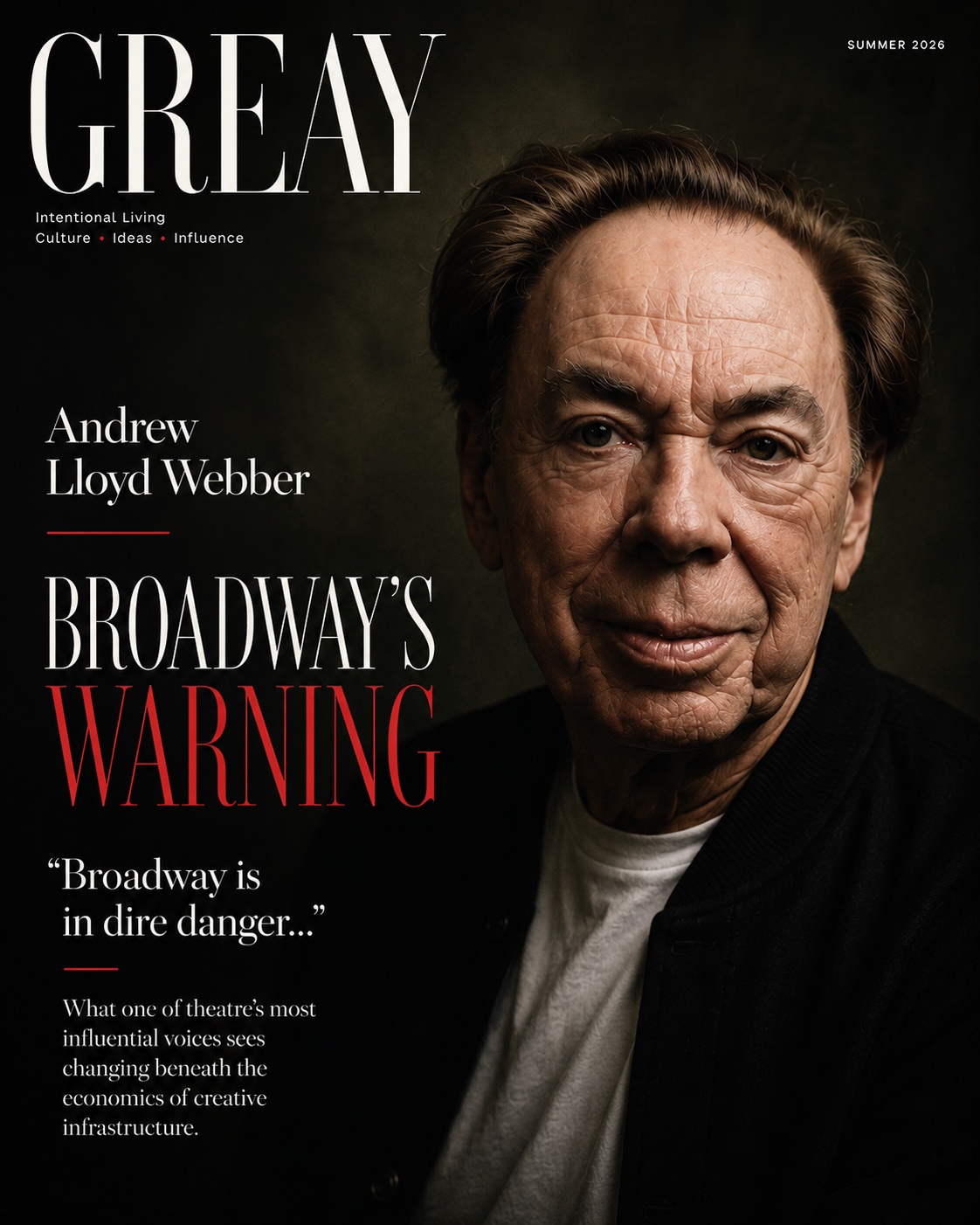
Andrew Lloyd Webber’s Broadway Warning Reveals the New Economics of Creative Infrastructure
When creativity meets financial reality

Detroit Black Small Business Community Members Become Eligible for $1 Million Small Business Investment Program
By Marc Holmes Metro-Detroit Black Business Alliance (MDBBA) launch

JAY-Z Will Headline the Super Bowl Halftime Show He Helped Shape
By DaMarko GianCarlo For seven years, JAY-Z has helped shape who stand
POST COMMENT