

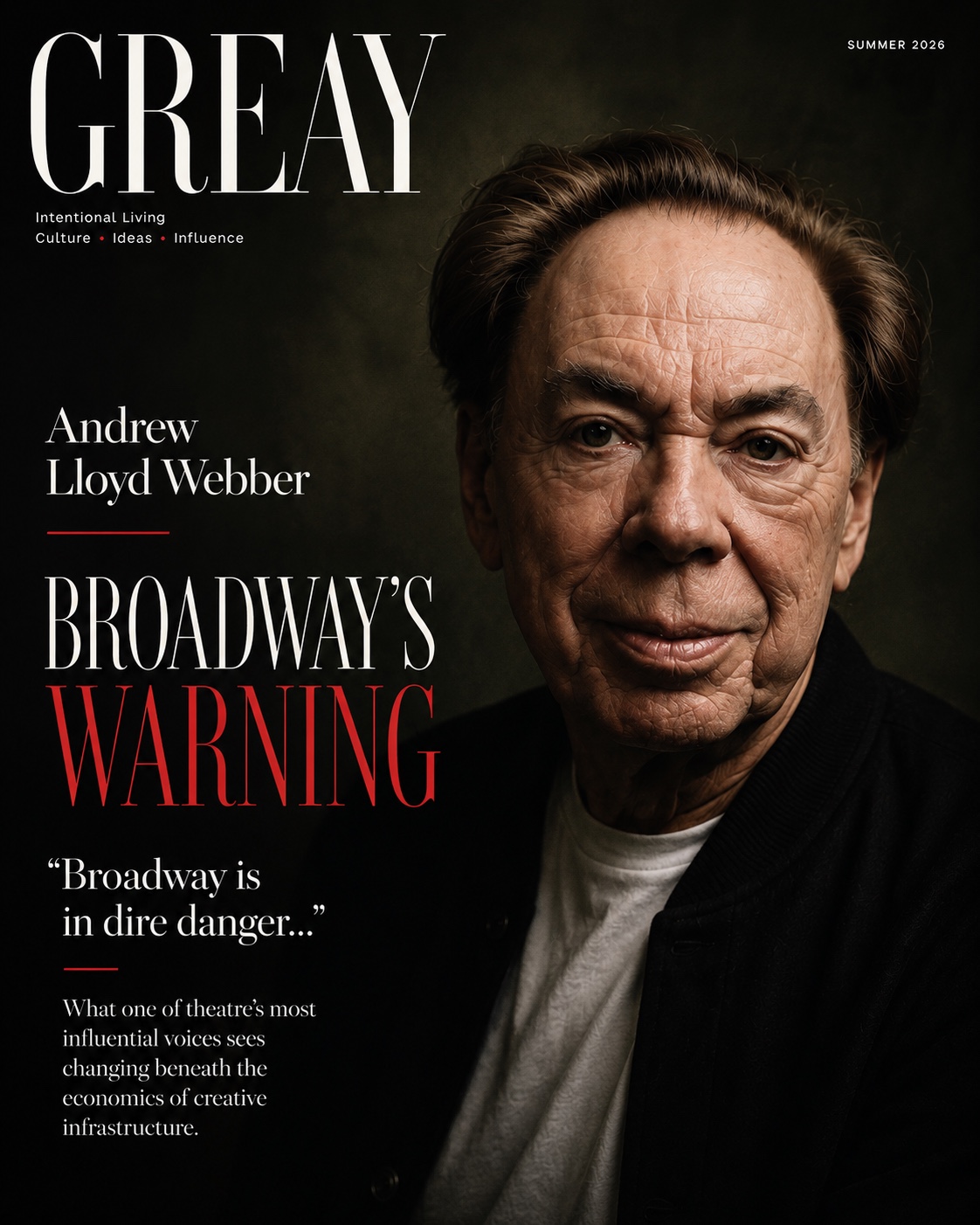
Andrew Lloyd Webber’s Broadway Warning Reveals the New Economics of Creative Infrastructure
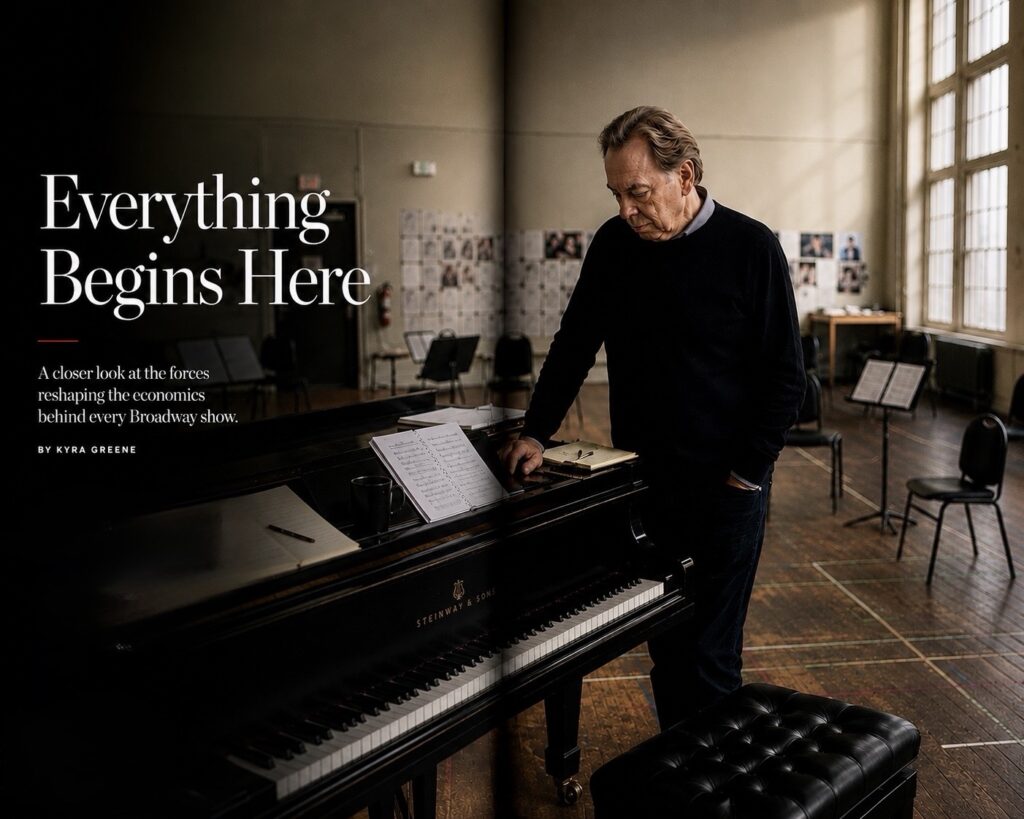
By Kyra Greene
When Andrew Lloyd Webber warned that Broadway was in “dire danger” and compared the prospect of dark theaters to Hollywood’s empty soundstages, he was responding to a moment unfolding in real time. His remarks followed the announcement that Cats: The Jellicle Ball would close despite strong audience support, reigniting a conversation about whether Broadway’s current economics can continue to support the next generation of productions.
On the surface, his warning appears to conflict with the numbers. Broadway has recently posted record attendance and box office revenue, demonstrating that audiences continue to value live theater. Yet one of the industry’s most accomplished creators believes the financial foundation beneath that success is becoming increasingly fragile.
That apparent contradiction reveals the real story.
Broadway is not facing an audience crisis.
It is confronting an investment challenge.
For generations, commercial theater operated on a relatively straightforward assumption: if audiences embraced a production, the economics would eventually reward the investment. Ticket sales validated creative risk, and successful productions helped finance the next generation of work.
Today, that equation has changed.
Major productions require larger capital commitments than ever before. Construction costs, labor, marketing, insurance, and ongoing operating expenses have all increased, raising the financial threshold required simply to bring a show to the stage. Success is no longer determined solely by audience demand. Increasingly, it is determined by whether the economics can sustain that demand long enough to recover the investment behind it.
That distinction explains why Andrew Lloyd Webber drew a comparison to Hollywood.
Hollywood has not stopped producing films because audiences lost interest in storytelling. It has become more selective because studios have become more disciplined in how they deploy capital. Expensive soundstages create value only when economically viable productions keep them active.
Broadway theaters operate under the same principle.
A theater is not simply a building. It is creative infrastructure. Its value depends on a continuous cycle of productions, investment, and audience engagement. When financing becomes more cautious, the effects extend beyond individual productions. They influence which ideas are developed, which stories are produced, and ultimately which voices reach the stage.
This is not unique to entertainment.
Across the broader economy, capital is becoming increasingly disciplined about capacity.
Office developers increasingly seek committed tenants before beginning construction. Retail owners prioritize concepts capable of creating destination value rather than simply occupying space. Luxury hospitality continues to expand, but often where long-term demand has already been demonstrated. In each case, the underlying principle is remarkably similar.
Capacity is no longer being built simply because future demand is expected.
Demand increasingly has to justify capacity before investment occurs.
Creative industries are entering the same economic era.
That does not suggest creativity is becoming less valuable.
Nor does it suggest audiences have become less interested in live performance, music, film, or storytelling.
Ideas remain abundant.
Talent remains abundant.
Audience demand remains abundant.
What has changed is the financial confidence required to transform those ideas into reality.
That shift is reshaping creative decision-making throughout the industry. Investors naturally gravitate toward projects with clearer commercial pathways. Producers become more selective about risk. Established intellectual property, recognizable creative teams, and proven audiences become increasingly attractive because the consequences of financial failure have grown significantly more expensive.
The result is not necessarily fewer creative ideas.
It is a more disciplined marketplace for deciding which ideas receive the capital required to exist.
That is why Andrew Lloyd Webber’s warning deserves attention beyond Broadway.
His remarks are not simply about one production or one industry.
They reflect a broader transition in the economics of creation itself.
For much of the twentieth century, growth was driven by confidence. Producers built productions believing audiences would come. Studios expanded production capacity expecting future demand. Creative industries invested first and allowed success to follow.
Today, that relationship is reversing.
Capital increasingly waits for evidence before it creates capacity.
Andrew Lloyd Webber’s warning is therefore not simply a warning about Broadway.
It is an early signal that creative industries have entered a new economic era—one in which imagination alone is no longer enough. The future of creativity will increasingly be shaped by the financial systems capable of sustaining it.
Broadway is simply where that transformation has become impossible to ignore.
Related Posts
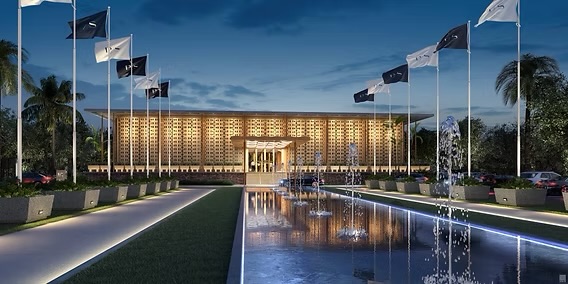
The Airport Experience Is Evolving, PS Miami Is Proof
By Carlos Mendez The most important changes in business rarely announc

The Sunset Strip After Relevance
The Place Is No Longer the Platform

Pharrell Williams Unveils LVERS: His Debut Fragrance for Louis Vuitton
Pharrell Williams unveils LVERS, his first fragrance for Louis Vuitton
Marco Grazzini: The Discipline of Restraint
Behavior, Not Speeches

MTN DEW Launches Limited-Time RED, WHITE & BLUE Flavors to Celebrate Summer Outdoors
MTN DEW ® CELEBRATES SUMMER WITH THREE NEW MTN DEW
Red Sole Evolution: Jaden Smith Named Christian Louboutin’s First Men’s Creative Director
A New Era of Luxury