

Elysia Rotaru Is Building a Life Bigger Than the Roles She Plays
By Kyra Greene
For much of her career, Elysia Rotaru has made a living becoming someone else. Her voice has given life to superheroes, warriors, and characters inhabiting worlds far removed from her own. In Marvel Cosmic Invasion, she takes on three distinct roles—She-Hulk, Sif, and Lady Hellbender—each requiring her to find something different within herself. But the woman behind those performances is increasingly interested in what she can build beyond them. Through Little Psycho Productions, she is developing projects that allow her to participate in storytelling from another side of the industry, while navigating the everyday realities of marriage, motherhood, and a career that rarely promises certainty. Raised by Romanian immigrant parents in Canada, Rotaru understands the value of work, discipline, and creating opportunities. Yet becoming a mother has complicated her understanding of achievement in ways she hadn’t anticipated. Her daughter, Nova, is growing up watching her mother build a career, but Rotaru is equally determined that she see the life happening outside the studio. In conversation with GREAY, she reflects on ambition, emotional boundaries, the people who sustain her, and the possibility that success has less to do with how much one accomplishes than with how fully one experiences the life being built along the way.
GREAY: Your parents came to Canada from Romania and raised you to be extraordinarily capable—you learned music, outdoor skills, Army Cadets, how to make and fix things with your hands. Now that you’re raising a daughter yourself, have there been moments when you’ve heard something come out of your mouth or watched yourself do something for Nova and suddenly recognized one of your parents in yourself?
Elysia: Yeah, for sure. Every time I speak Romanian to her… !
I feel like there’s been a lot about my upbringing that I didn’t really understand at the time. Obviously, I was still a child, but now that I’m a mother to a daughter, a lot of it starts to make sense.
And of course, we have to navigate this whole world of tech, being online, and social media, not to mention all the other things we’re seeing and hearing about. But my husband, Ryan, and I, thankfully, are aligned in the way we want to guide her, so that’s really exciting.
I will say that she’s definitely one of the best helpers around. She’s with me when I’m building stuff at my workbench in the studio, helping Ryan cook, and helping with chores around the house. Not to mention, she totally has a knack for golf, sports in general, and loves her downtime.
So it’s kind of cool to see a little bit of both of us in her, as well as having her own personality and interests shine through. We’re pretty fortunate and blessed.
GREAY: You spent years as a competitive classical pianist, and so much of becoming good at something happens when nobody is watching—the repetition, frustration and decision to try again. Do you think the people closest to you would say that same determination still exists in you today? And what does Ryan see about the work it takes to build this career that the audience never gets to see?
Elysia: I know my parents were trying to set me up for success by giving me that skill and, you know what? They did!
Sadly, it’s not something I practice any longer. I let it retire 20 years ago, and I do miss it here and there, but that training gave me a beautiful gift that I use daily in my work.
And determination, drive, and being better, as I like to say… it’s 1000000% still there in me, and I hope it never dies. (If it does, something is seriously wrong with me!)
I mean, I get that feedback every single day, not just from my immediate circle, but from people I work with and online on social media. I think they see that I’m honest about the work I’m putting in and the outcome of what happens when that work gets recognized.
I can’t really speak for Ryan on this one, but all I can say is that without him, I wouldn’t be able to do the caliber of work that I’m doing right now. He’s been by my side, helping promote and encourage my journey, as I do with his, and he’s no stranger to putting in the work as well. He’s been a competitive athlete all his life and a performer as well, so he knows what it takes.
So I think that’s what makes our relationship really beautiful and helps it flow so well. He supports me in ways that nobody really sees, but that I always try to bring to the forefront of conversations. Not only is he an active, present dad with our daughter, but his focus on taking care of me and making sure that my mind is right, that I’m being fed healthy, nutritious food, and that I have water in the studio because sometimes I’m in there for 10+ hours a day, is one of the most amazing things ever.
And yeah, don’t get me wrong. We have hurdles along the way, like everybody else. But I think those hurdles come from a place where we just feel a little strained at times. Raising a kid on our own without family and close friends nearby is a challenge in itself.
And truth be told, our village does show up when it can. Our family flies in from Canada as much as they can to be here. Our friends drive in from L.A. or wherever they can. But at the end of the day, it’s just the three of us, and we make it happen and try to find joy in every day, even when we’re tired AF.
GREAY: Your parents’ decision to immigrate meant that part of your story began with a sacrifice you were too young to fully understand. Has becoming a parent changed the way you understand what they gave up—and what they were trying to make possible for you?
Elysia: It’s hard for me to position it as a sacrifice based on the conversations I’ve had with them, which have been brief.
But at the time they left that country, it was under turmoil and a regime that, from the stories they’ve told me, I don’t think anyone enjoyed. So I think, for them, the sacrifice might have been staying there and possibly not having the life they have today.
But then again, I can’t speak for either of them.
All I know is that neither of them ever went back to that country and they’re very proud that they were able to establish and build a life for all of us when they immigrated to Canada.
And thus, I’m an immigrant too. I immigrated to the United States and brought my family along as well, so I completely understand the journey now, although my journey is different.
I’m not fleeing for my life. I’m expanding it globally with my family by my side, and I’m in a different position in terms of why I’m doing it and how I’m doing it. And yes, the foundation for having this opportunity came from them immigrating to Canada, so for that I’m very grateful.
GREAY: You began by studying psychology because you were interested in understanding people, and eventually found another way of doing that through acting. After spending so much of your life stepping inside other people’s emotions, has the work made you more understanding of the people you love—or has your family taught you more about being human than acting ever could?
Elysia: Awesome question! Is this where I get to write my thesis paper and get my master’s degree?
Studying psychology was awesome, and I feel like anyone who pursues college or university kind of starts there now. It didn’t really end up being for me, but it did teach me some valuable foundations that I apply to my work.
When I dive into a role, be it a video game, an animation, or a film, I’m immersing myself in the world of the character and bringing their story to life, and the emotions come up as they do. I think it gives me a better understanding of the world, humanity, and perspectives that I would’ve never known before, and lived experiences I would’ve never had or been privy to.
I wouldn’t say it just gives me a better understanding of the people that I love, but of people as a whole, and in a very detailed, niche scope as well.
And I can confidently say it gives me immense gratitude. Over and over. And my family fortifies that.
The joy of living, the joy of experiencing life, and understanding the vastness of where we are and how powerful, collectively, we could be as people when frequencies align. I think my family has a big role in helping guide me to being a better human, but I think just choosing every day to be a good person and do good work makes that possible as well.
GREAY: You’ve built a career in a profession where uncertainty is almost part of the job description. There are wonderful calls, disappointments, long days, auditions, jobs that disappear and periods when you simply don’t know what’s coming next. What has your marriage taught you about having somewhere emotionally steady to return to when the professional part of your life isn’t steady?
Elysia: I feel like I need my husband to chime in on this one with me. But at the end of the day, we’re very fortunate that we both understand the entertainment industry because we’re both in it. That’s how we met, of course, at an audition for a commercial. Did either one of us book it? No. But it connected us, and now look where we are.
So, to answer this question in the shortest way possible, I don’t even think the word marriage needs to be involved in this, but rather relationship or partnership in general.
I think having someone in your corner through and through, who helps champion you, enjoy the moments with you, support you, and also be their own person, is what helps make life a constant joy and allows you to be at peace with that person when your professional career can be as you’ve described above.
But if I’m being honest, I think a lot of it stems from your mindset and the world you’re choosing to build. If you’re viewing your professional life as something that bogs you down or disappoints you, I think that mindset has to change.
I don’t know if it’s ultimately healthy to come out of a work scenario and turn to your family, friends, or your partner as the one thing that’s going to make it all better and keep everything steady. I think that’s your job as a person. I think you need to be emotionally regulated, and you need to work on yourself so you can be who you want to be, while hoping your partner is also a fully regulated, actualized human. Then you can both level up and thrive together like two tall trees growing and rising in a forest alongside each other. Branches and leaves intertwined and touching. Roots entangled beneath the surface.
And yes, if there are moments when one person falls and needs a hug, or as I’d like to call it, “a day in the cave of darkness”…So be it. But then, at least you know the other person is right there, doing what they’re doing. And you’ll be the same for them.
My partnership with Ryan has also taught me a lot about communication. Holding things inside doesn’t work. You can be a mind reader to a certain degree, but not everyone is, and even that’s not fair.
Text messaging is not the way to go. Leave a voice note. Get on a phone call. Hear their voice. Look them in the eyes. And don’t forget to give them a hug and a kiss every single day.
By doing all those things, I feel you can help build something steady in your life when other things maybe aren’t. But hey, that’s life. You’ve gotta ride the waves, go with the flow, and perhaps that’s the steady after all. That sounds way more exciting to me.

GREAY: Before Nova was born, you spoke about pregnancy teaching you to surrender—something that wasn’t particularly natural for someone accustomed to constantly moving and accomplishing things. What has Nova taught you since then that you don’t think you could have learned from anyone else?
Elysia: She teaches me everything. Not only does she ignite my drive every single day to be a better person, work harder and smarter, enjoy what I’m doing, and be more efficient so I can spend more time with her, but I love thinking about how everything she’s experiencing at five years old right now is new to her.
The joy I see in her face when she tries a new task, like climbing a higher ladder, drawing a picture with more detail, learning how to read and write, or play piano, brings such a big smile to my face and truly helps me slow down and be more present in the moment. I think anyone can relate to this and say that kids teach you time flies, and it’s important to understand that concept.
It also makes me realize how important it is to be there with your kid while they’re growing up when you’re in their bubble. Not having your phone in your hand. Not listening to the TV in the background. Just holding space with them and showing them that stillness is OK. Being loud and singing is fun and OK. Crying and feeling all the emotions is OK. And learning to talk about them is huge.
One of my favorite things is having her work out alongside me and my husband, or helping me put up decorations and fix things around the house.
Kids are sponges and they copy what they see. So I’m under a microscope every single minute of my life when she’s around. Talk about being a role model. It just helps me overall be the person I want her to understand she can be and, actually, maybe be even better than.
Oh yeah, I can’t forget that she has amazing style. So, in fact, she is my stylist sometimes, and for that I’m very grateful.
GREAY: You’ve said that while recording Black Canary’s goodbye to her daughter in Justice League: Crisis on Infinite Earths, you allowed yourself to imagine your own daughter in that emotional space. When your life becomes part of the emotional vocabulary you use as an actor, how do you decide what you’re willing to give to a performance and what belongs only to you and your family?
Elysia: I think, for me, at this point it’s always important to make sure that I don’t endow and substitute too much of my family, friends, and personal life into the work to help achieve a certain performance.
I’m very fortunate that I’ve had many years of training in the craft, so I’ve been able to use different techniques throughout the years to help achieve great performances. And of course, I draw on all of the experiences that I have and use my imagination, the given circumstances of the scene, and the characters in it.
And yes, there are moments where things like what you’ve expressed above do happen, where my personal life gets embedded into the performance, but it just happens organically. I don’t really force it or aim to have those experiences alone give life to the work.
The technique of substitution, in my personal experience, is a very delicate one. It’s a great technique to help you harness the craft, get into the scene, and execute what you need to, but I don’t fully rely on it time and time again as a crutch for my work. If it’s necessary, I will use it to get the job done, and after the work is complete, sometimes it takes a lot of time for me to process and work through that energy because, in fact, I am quite sensitive to it.
That whole art-imitates-life-and-life-imitates-art thing is definitely true. I’m working on a project right now where one of the characters I play is dealing with her daddy issues. It’s a huge emotional journey for that character.
The relationship that I have with my dad easily comes up in that work and gets pulled into my performance, but I don’t actively engage it or make it the tool to activate the work and get that type of performance out of me. It just exists there. So sometimes the first few takes can be pretty raw and emotional, and that’s when I look to the guidance of the director to help navigate the next couple of takes, if needed.
You just have to work with what you’ve got. But I also think it’s important to recognize that the work is still very technical and it is a craft. You can’t just be giving raw performances after raw performances every single day of your career and positioning your family or those close to you as substitutions for characters in this completely different world you’re in.
And always imagining your friends and family in the most fucked-up, crazy scenarios, like if you’re in a horror movie, I truly believe that can burn you out, and I don’t know if it’s the healthiest thing either. But hey, you do you, boo, and get that job done. Just make sure you’re taking care of yourself so you can continue to have a fruitful, long career.
GREAY: A résumé records the moments when somebody said yes. It doesn’t record the auditions you didn’t get, the roles that nearly happened, the uncertainty or the days when continuing required belief without evidence. During those periods, who has Elysia needed to be at home so that the actress could keep going back out there?
Elysia: Well, I’ve been called a beast, a machine, a go-getter, a great mom, a fun friend, a supportive partner…A lot of those labels and things are what I am, but for me it’s mostly about being comfortable with those moments of rejection and using them to fuel my drive to be better. I don’t get feedback on every rejection, but I use it as a take to always improve and keep moving. And I have a higher belief system that I give all of that away to. What’s meant for me will always find its way to me, and I truly believe that. Sometimes when I don’t book jobs, I have to stop and think, “Huh, maybe it’s because the job I need to be doing right now is working on myself.”
Going out and living a life so that I can bring life to the characters that I play. Fixing up my house so I know my sanctuary is a place of peace when I come back from moments of chaos with work and being on set. Or making sure that I’m learning a new skill or training one that I already have so that when the time comes and I do book that project where they need me available quickly, I’m not scrambling and thinking, Oh… now I have to try to lose weight, get stronger, do this, do that, sound better, or train in this accent… I’ve been doing that all along, concurrently with all the times my résumé has shown a booking. And I can say this now with confidence because it’s taken me years to understand it.
And don’t get me wrong. I still get pissed when I don’t book work because I feel like it could’ve been such a fun opportunity. But perhaps the universe has other plans for me. Maybe I need to be present for an event at my daughter’s school. Or maybe there’s something better coming along because that door closed and another one opened.
I think it’s a lot about trust and that whole existential question of: Can you be at peace when you’re not always activated?
And that’s something I’m learning to practice every single day because those who know me know that when I rest, I still don’t like to lay down and lounge around. I’m in an active state of rest, and that, to me, is how I function, what brings me joy, and what regulates my system. So that when duty calls, the batteries are fully charged and loaded.
GREAY: Voice acting has allowed you to disappear physically into characters ranging from Black Canary and She-Hulk to Sif, Lady Hellbender and major video-game roles. When Nova hears one of those characters, does she hear the character—or does she immediately hear Mom? And has watching her experience your work changed the way you think about what you’re creating?
Elysia: Well, unfortunately, she’s only five, so she hasn’t been able to hear those characters. But some of the animated characters she has been able to experience, like my work in My Little Pony as Able Spirit, or She-Hulk in Spidey and His Amazing Friends, or Dilla the Armadillo in Chip and Potato…
Fortunately, she hasn’t really been able to tap into the fact that that’s my voice, which to me is awesome because it means I’m doing a great job. But if I tell her that it’s me and we watch the show again, her ears do perk up and she does start to hear little bits of my voice in the characters, for sure. But then again, she’s only just realizing what it is that I’m doing in my studio most of the time and putting the pieces together.
She also gets to experience, in person, most of our auditions. She sits there with us as Ryan tapes me and I tape him. She helps direct us, calling “action” and “cut.” She helps us pick wardrobe for our characters, so she’s pretty tuned in to seeing my husband and me practice the craft, and it excites her.
She also recently got an agent, which I’m thrilled about, so we’re going to test the waters and see if she wants to go that way. And as she’s becoming more aware, she’s also seeing the producer side of me. On phone calls, at my laptop reading scripts, showing her pictures from set when I come back from shooting. She’s always asking me what I’m doing, and there’s only so much I can share with her about that type of work, mostly because a lot of the content I’m working on isn’t exactly for her age group, if you know what I mean.
Right now, I’m in the middle of producing another indie horror short film called IDUMEA, which goes to camera at the end of this year; wrapping up post-production on a short film I produced this summer called TIL DEATH; and gearing up for two feature horror films. One of them is REUNION TOUR, which has been doing really well on the festival circuit as a screenplay and has already won its first awards. It’s written by my sister. The other is FERAL, a supernatural horror film. Both projects are currently in the financing phase so we can get them off the ground.
And I just recently launched my first digital product called MIC READY – a 90-day voiceover course with eight modules and a whole lotta truths to help people level up their voiceover game.
So overall, I think she’s seeing a lot of my work-life balance, and I love that she’s curious. I truly love that one day she’ll be able to come experience all of that on set. I know that as much as I champion her, she champions me, and that’s pretty awesome.
GREAY: You’re playing three very different women in Marvel Cosmic Invasion—She-Hulk, Sif and Lady Hellbender. After all the technical work of making each voice distinct, there must still be something unmistakably yours inside each performance. What parts of Elysia—the daughter, wife, mother, artist, immigrant child, woman you’ve become—do you think inevitably follow you into the booth?
Elysia: All of it. All of it comes into the booth with me, and then all of it has to leave the booth with me so that I can do it again and again and again… It just depends on what’s necessary for the role.
If I’m diving into an archetype, I’ll use what I have in my own experience to get there. I’ll use my imagination. I’ll use my resources and the given circumstances. I’ll look to my director for guidance.
Everything I’ve ever done that’s been part of my experience has to be there with me in the work, and that’s one of the biggest pieces of advice I can give actors about being an actor: make sure you’re out there living a full life so that you can draw on every experience you have to help infuse the performances you give.
If you’re constantly in your voice booth, studio, acting classes, or just working in a vacuum where you’re not out there experiencing life…If you’re living in a state of fear that if you go on that vacation or do something different you’re missing out, I think you should go to Bali or take that sommelier or cooking class.
I feel like there could be a lot of flavour missing in your performances, your personality, and even just the things you have to talk about as a person if you’re constantly working all the time.
Imagine this: you’re at a party and someone asks you what your hobbies are, and all you talk about are your work hobbies like reading scripts or auditioning. To me, that might come across a little flat.
GREAY: Starting Little Psycho Productions meant moving from spending much of your career hoping someone would choose you to having greater power to choose stories yourself. When you think about Nova eventually understanding what her mother built, is there anything you hope she learns from watching you create something of your own rather than waiting for permission?
Elysia: Ha! As much as I would love to say that it’s giving me greater power to choose the stories that I’m performing in myself, that’s not always the case. But it is one of the reasons I wanted to start producing. And it was also a way to support and champion my fellow friends and creatives because, for me, that’s the ultimate win.
Being on set and collaborating with friends and people who have been with me throughout my career, helped me get where I am, and then being able to put that back into my community is huge for me. And of course, I love meeting new talent and creatives as well, but there’s something magical about being able to shop a script that a friend wrote, help sell it, and then help create it as it goes into production and filming.
I think Nova is too young for those existential conversations at the moment, but for her five-year-old brain, I can see the wheels turning and that what I’m doing helps move the needle forward in terms of following your dreams and trying things out.
It’s kind of how we are in our house as well. We create healthy boundaries for her to explore, create, and flourish, and of course we’re there as her guides. Maybe we circle back to this question in five years when she’s 10 and see how she responds . But I think she gets it. I mean, she’s only really understanding now that sometimes I have to leave for work and then come back home, so that’s a concept we’re navigating.
GREAY: One day Nova will be old enough to understand your career differently. She’ll be able to look back at the characters, films, television shows, games and everything her mother built—but she’ll also know the version of you that none of us get to see. When that day comes, what do you hope she’s proudest of when she thinks about her mom?
Elysia: That I was a fun mom, one of her best friends, and will always be there to cheer her on, along with her dad. And that I got to grow, flourish, and enjoy my career with her by my side. She already sees and understands that I work every day in the office, the booth, the studio, etc.
But I think it’s important that she also understands that there’s a life to be had outside of work. I really make sure I spend time with her in nature, getting my hands dirty, and giving her opportunities and exposure to various things in her life so that she enjoys her experience here in every way possible.
But I can’t wait to work alongside her one day, in the booth or on set. That would be so much fun.
For Rotaru, the distinction between the life she lives and the work she creates has become increasingly difficult to separate, though she has learned the importance of protecting both. Her career continues to expand through voice acting, independent production, and the stories she hopes to help bring into the world. But what emerges most clearly from the conversation is a woman who no longer sees ambition as a reason to postpone living. She understands that discipline can build a career, but experience gives that career something worth expressing. The daughter of immigrants who created a new life in Canada has now built a life of her own in another country, carrying forward some of what her parents taught her while discovering what she wants to do differently. And perhaps the clearest measure of that evolution is found not in the characters she has played or the projects still ahead, but in what she hopes her daughter will remember: a mother who worked hard, remained curious, made room for joy, and was present enough to share it.
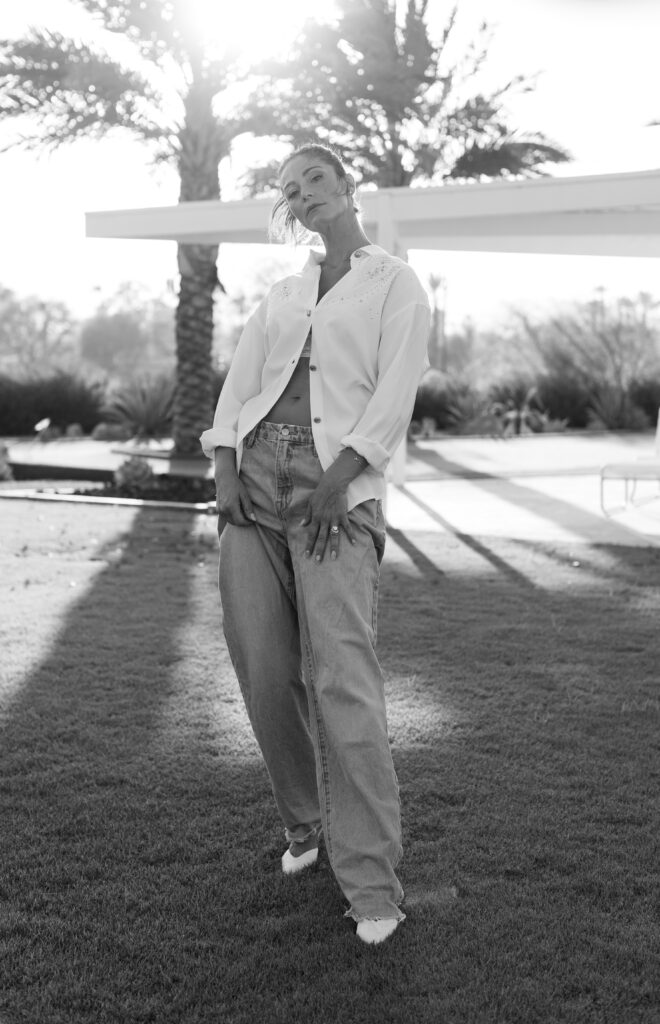
Photo: Niki Rhodes Photo @nikirhodesphoto
Hair: Brooklyn Savoy @hair_with_brooklyn
Skin Prep: Courtney Lauren Skin Care @courtneylaurenskincare
Make-up: Nancy Andrade (@nancyartistry)
Styling: TheFine Art of Design @thefineartofdesign
Nails: Julie Nguyen @julieandco.studio
Location: Desert White House @desert.whitehouse
Related Posts
Grant Feely Is Finding His Place in the Bigger Picture
Every set is another chance to learn

Andrew Lloyd Webber’s Broadway Warning Reveals the New Economics of Creative Infrastructure
When creativity meets financial reality
From Thrift to Platform: Pacsun Launches PS Vintage for a Gen Z–Driven Resale Moment
Pre-Loved, Reimagined

Exfinitum: Revolutionizing Tabletop Gaming with Peter J. Wacks at the Helm
Cyberpunk CCG Creator Builds New Genre Defining TCG: Exfinitum
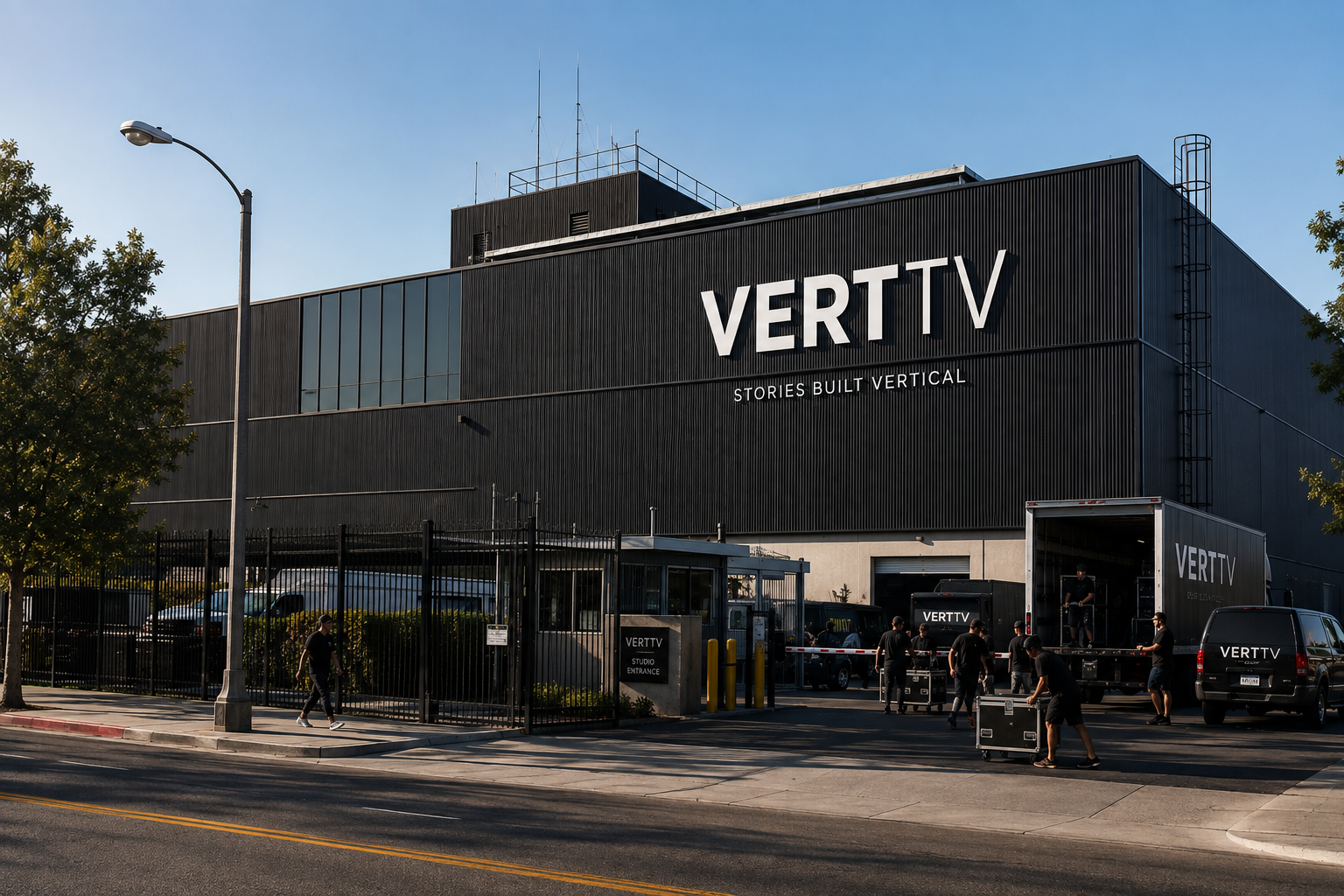
VertTV Shows That Hollywood Is Building the Next Generation of Television
A filmmaker-led studio built for the vertical era

adidas Originals Teams Up with BAPE® for Special Stan Smith Collaboration Celebrating BAPE®’s 30th Anniversary
Stan Smith Collaboration Celebrating BAPE®'s 30th Anniversary
POST COMMENT