

The U.S. Open Opened the Press Box to Creators. Wimbledon Is Drawing a Line
By Jacob LeFranc
For most of modern sports history, deciding who counted as media was relatively straightforward. Newspapers sent reporters. Magazines sent writers and photographers. Television networks sent broadcast crews. Accreditation connected those people to organizations whose business was documenting the event. The creator economy has complicated that arrangement. An individual with a phone can now distribute a sporting moment to an audience larger than the readership of some traditional publications. At the U.S. Open, that change has moved beyond the stands and into the accreditation system itself.
The U.S. Open introduced a formal content-creator credential in 2025. Jeanmarie Daly, the USTA’s director of media and photo operations and special events, told Vogue that 54 creators were credentialed during the program’s first year and received access that included the media center, work areas and general press conferences. The organization deliberately looked beyond traditional tennis coverage, working with creators focused on fashion, food and beverage, lifestyle, health and wellness, music and entertainment. By the 2026 tournament, Reuters reported that organizers had credentialed around 100 creators, including approximately 20 focused specifically on food and beverage.
That is more consequential than inviting popular people to a tennis tournament. Selected creators are being recognized within the U.S. Open’s formal media structure. They are not simply spectators documenting what they see from their seats or guests invited through hospitality arrangements. The USTA has created an institutional pathway through which certain creators can perform a media function at one of the largest sporting events in the world.
That distinction became particularly important during this year’s tournament.
Content creation and tennis etiquette became a visible part of the conversation after several incidents interrupted play. During Naomi Osaka’s first-round match against Anastasia Zakharova, people in a hospitality suite were recording content during competition, prompting chair umpire Kader Nouni to intervene. Bright lighting also became an issue, and the U.S. Open began displaying reminders asking spectators to refrain from flash photography and other distracting lights. The Associated Press documented the incidents and the conversation they generated among players.
But one of the easiest conclusions to draw from those images is also one of the most important to avoid.
The people involved in the widely discussed hospitality-suite incident were not members of the USTA’s officially credentialed creator program, according to the tournament. The U.S. Open’s approximately 100 accredited creators were one group. Creators attending through hospitality arrangements were another. Ordinary spectators making social content were another still. From across a stadium, those distinctions may be invisible. Institutionally, they are not the same.
That means the story cannot responsibly become: the U.S. Open credentialed influencers, those influencers disrupted matches, and Wimbledon responded by rejecting them. The available evidence does not establish that chain of causation.
The players themselves have described something more complicated. Osaka, despite experiencing a disruption during her own match, did not characterize the arrival of creators as inherently damaging to tennis. “Overall, I think there is huge positives,” she told AP, while emphasizing the importance of newcomers understanding the rules and etiquette surrounding the sport. Coco Gauff approached the issue similarly. “I think it’s just follow the etiquette of the sport,” she said. Her concern was less about the category of person entering the stadium than whether people unfamiliar with tennis understood how spectators are expected to behave during competition.
Jessica Pegula also recognized the value of creators “showcasing the U.S. Open experience,” while drawing a boundary when producing that content begins interfering with players doing their jobs. “It seems like a bit disrespectful,” she said of behavior that crosses that line. Daniil Medvedev emphasized the opportunity on the other side of the equation: “The more we try to raise awareness about tennis, the better it is.”
Those positions are not as far apart as they initially appear. None requires creators to disappear from tennis. They instead describe the same tension now facing the institutions around them: bringing new audiences into a sport can have value while still requiring those audiences to operate within the conditions necessary for the competition itself.
Wimbledon is encountering the same changing media environment from a different position.
The distinction is not that the U.S. Open embraces creators while Wimbledon rejectss them. Wimbledon already works with creators. Will Giles, Wimbledon’s managing editor of content, told Vogue that creators can “bridge that gap” between the tournament and audiences who may not otherwise understand its appeal. Wimbledon has worked with creators around areas including fashion and food and has used them to reach audiences outside traditional tennis circles. But Giles also described where the institution wants the center of gravity to remain: “We want Wimbledon to still feel like the hero of it.”
What Wimbledon has not created is a dedicated accreditation category for influencers or content creators. Current reporting says that will remain its position for the 2027 Championships. That does not mean creators are banned from Wimbledon. They can attend through tickets, invitations, hospitality and other legitimate forms of access, and Wimbledon can continue working with creators as part of its own content strategy. The distinction is narrower: creator status itself is not being turned into a dedicated pathway to Wimbledon media accreditation.
That leaves two of tennis’s most important institutions confronting the same structural change and placing the boundary in different places.
The U.S. Open has brought selected creators formally inside its media-accreditation structure. Wimbledon recognizes creators as useful cultural and distribution partners while maintaining a distinction between creator participation and a dedicated creator-media credential.
Neither decision requires a winner.
The more important question is what those decisions reveal about what media now means.
Traditional accreditation systems were created in a world where distribution largely belonged to institutions. A newspaper reporter represented a newspaper. A magazine photographer represented a magazine. A television correspondent represented a network. The organization provided the distribution, and the individual received access partly because of the institution standing behind them.
Digital platforms separated those two things.
An independent creator can now build an audience without a publisher, television network or newsroom. A fashion creator can introduce a Grand Slam to people who rarely watch tennis. A food creator can turn what is being served inside a stadium into content seen by millions. A tennis specialist can build an international audience without ever receiving a paycheck from a traditional sports publication. The ability to distribute information no longer necessarily comes with an institutional media affiliation.
But audience and journalism are not automatically interchangeable either.
A media credential can provide access to workspaces, press conferences, information and proximity that ordinary spectators do not receive. Granting one is therefore more than acknowledging someone’s popularity. It is an institutional decision about who is there to document an event, what function that person is performing and what responsibilities accompany the access being provided.
The U.S. Open has begun allowing selected creators inside that system.
Wimbledon is choosing not to create a dedicated creator category within its own.
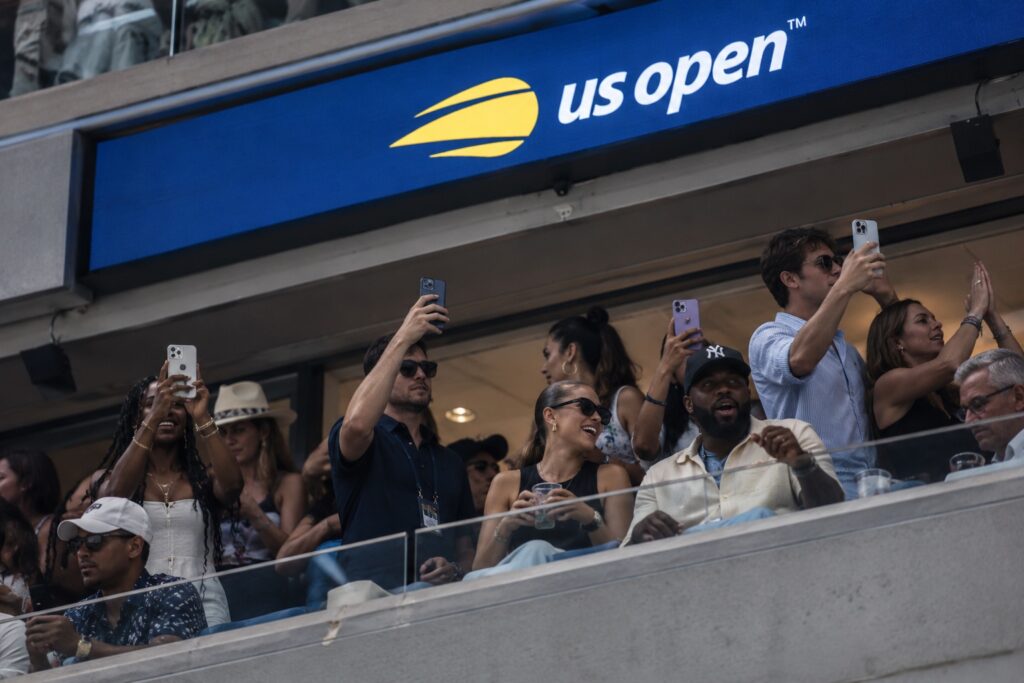
And the hospitality-suite controversy demonstrates why those distinctions are becoming increasingly difficult for the public to see. A credentialed creator, a journalist, a brand guest and a spectator making social content can all be holding the same phone inside the same stadium. Calling all four of them influencers may make the story simpler. It also makes the story less accurate.
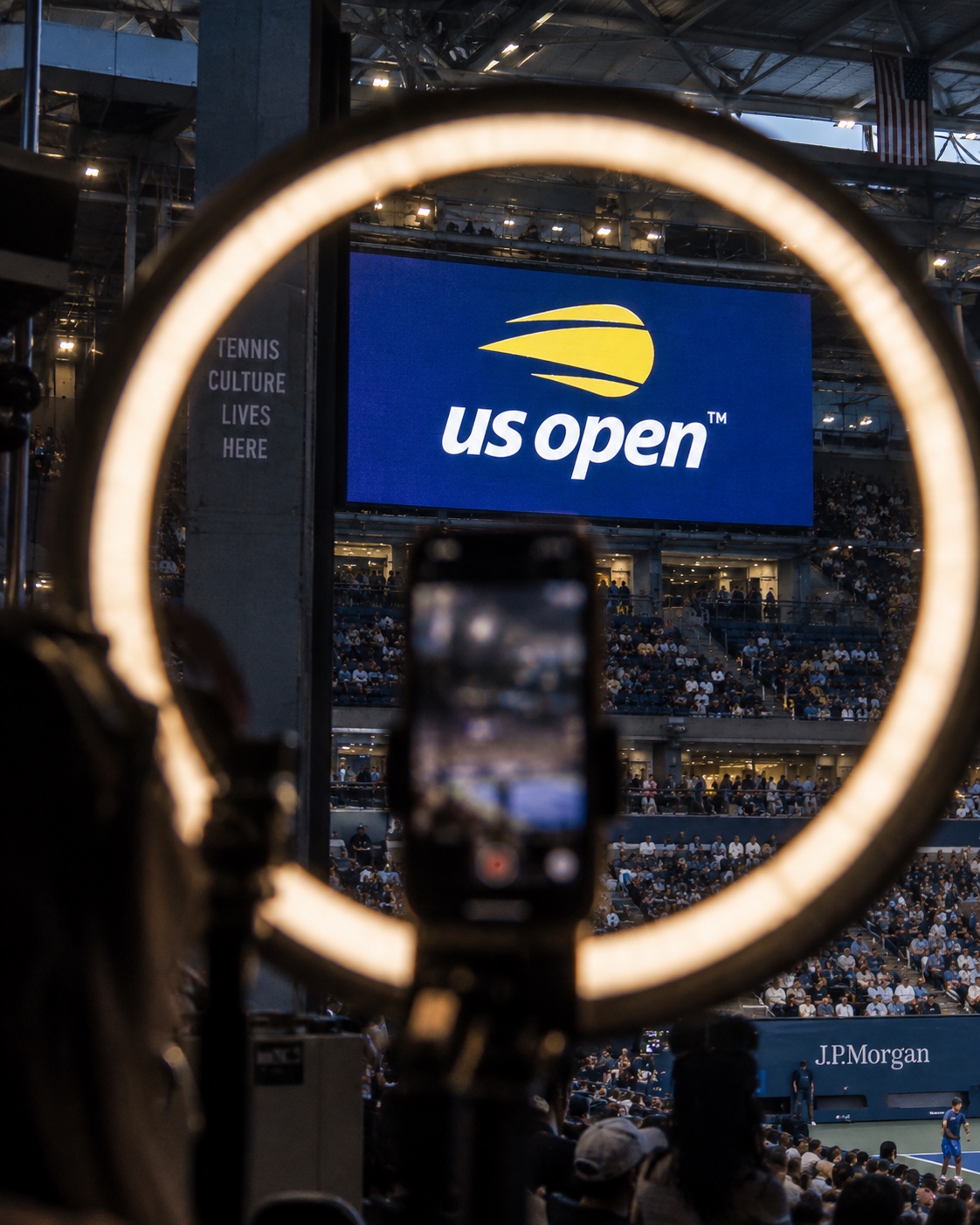
The larger change was underway before anyone switched on a ring light.
Creators have already become part of the distribution system surrounding major sports. The unresolved question is whether — and under what conditions — they should also become part of the accreditation system historically associated with professional media.
The U.S. Open and Wimbledon are beginning to provide different answers.
For the first time, the person sitting in the press room and the person capable of reaching the largest audience may not be the same person.
Tennis is beginning to decide what to do about it.
Related Posts

Maison Kitsuné Unveils Its Latest Footwear Innovations: The Sora Runners and Chiru Trainers
Maison Kitsuné Unveils Its Latest Footwear
Alexie Olivo Is Learning That Success Means Choosing Her Own Direction
Choosing purpose over expectation
Not Every Blockbuster Is Meant for Theaters Anymore
Hollywood Is Building Subscriber Cinema
PEPSI® Names Football Sensation Jack Grealish as Global Brand Ambassador in Multi-Year Collaboration
PEPSI® Names Jack Grealish as Global Brand Ambassador
Russell Westbrook Did the Extraordinary Until Basketball Started Calling It Ordinary
The Evidence of an Extraordinary Career

Born Again, Uncontrolled: Inside the Radical World of Maggie Gyllenhaal’s THE BRIDE!
A Monster Falls in Love