
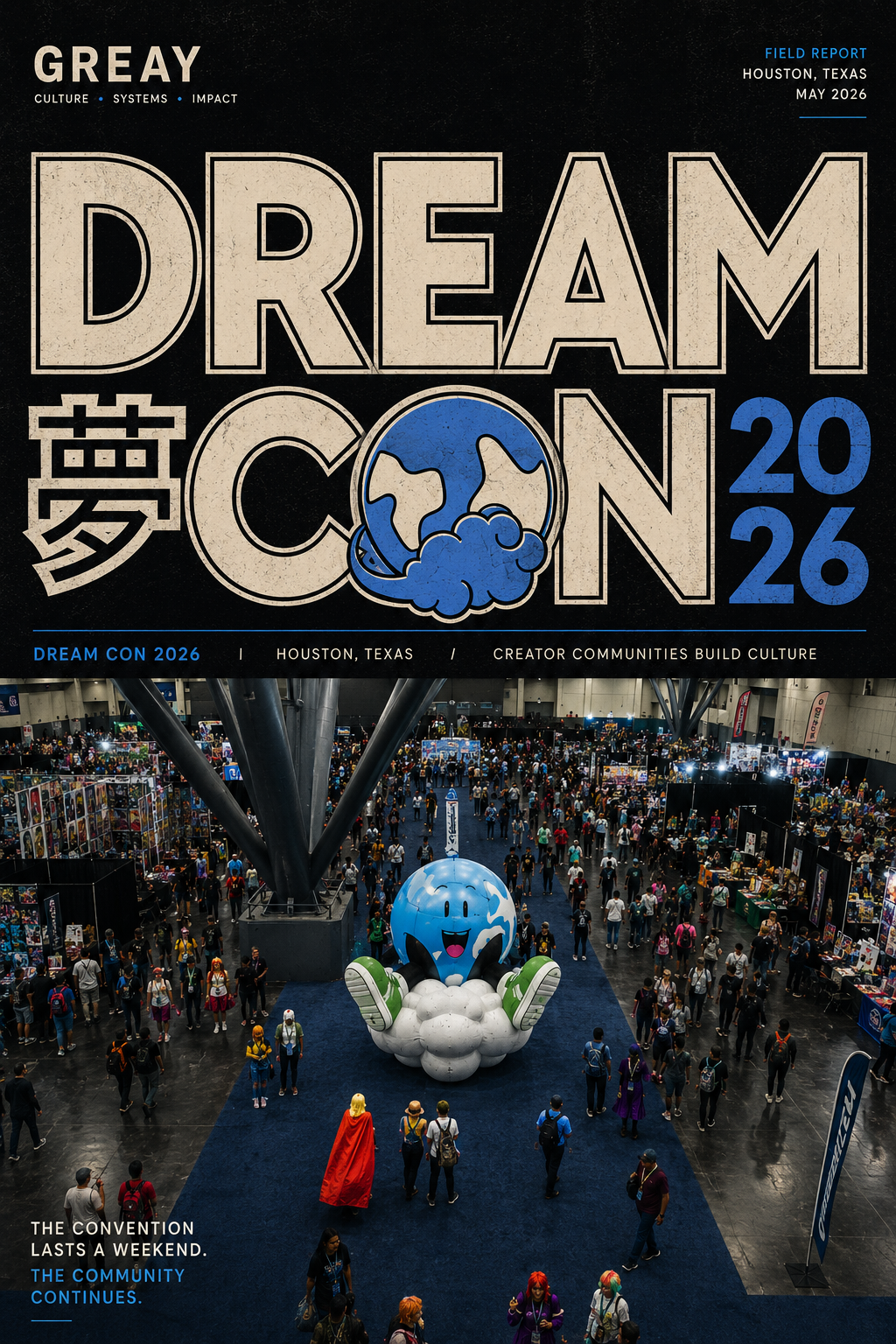
Dream Con Shows What Creator-Led Culture Looks Like in Real Life
By Kyra Greene
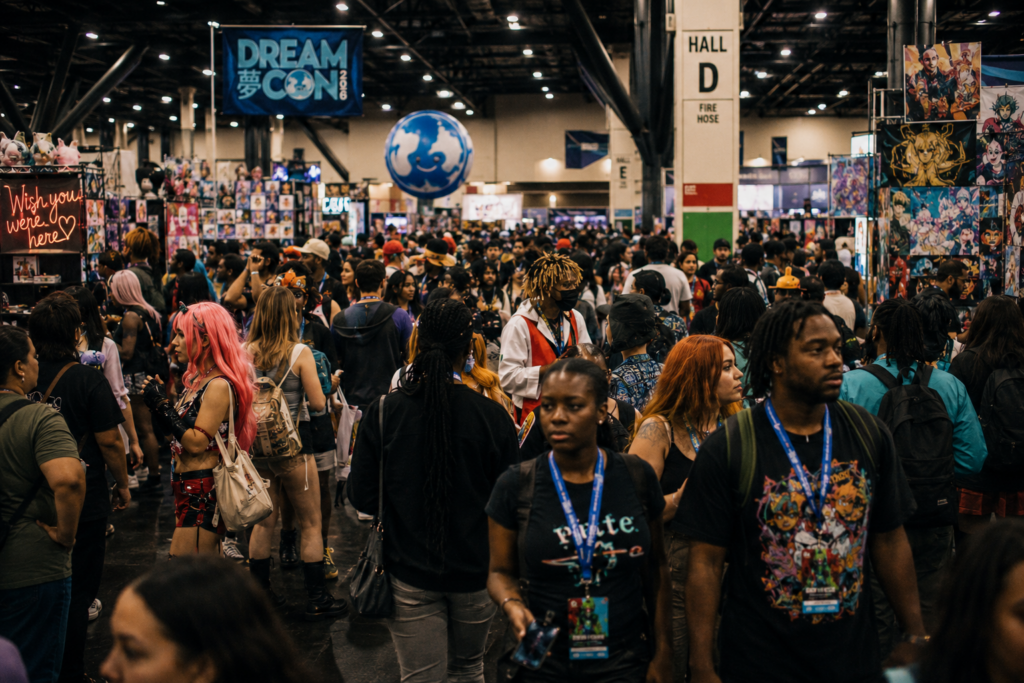
The first thing we noticed wasn’t a celebrity. It was the crowd. Long before the first main-stage conversation began, thousands of people were already moving through Houston’s George R. Brown Convention Center with the confidence of people returning somewhere familiar. Cosplayers stopped every few steps to pose for photographs. Artist Alley filled early as independent illustrators, comic creators and small businesses tried to keep up with demand. Attendees greeted returning vendors by name. Friends who had known one another only through livestream chats embraced in the middle of crowded aisles. Everywhere we looked, people weren’t trying to figure out whether they belonged. They already knew they did. It felt like a homecoming, and that feeling shaped everything that followed.
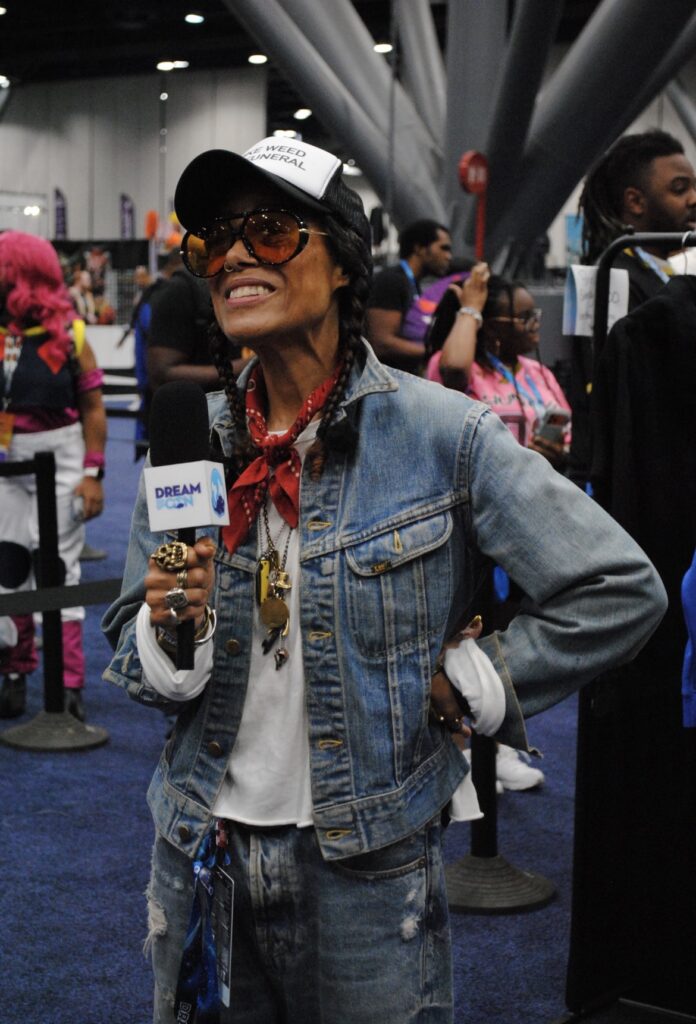
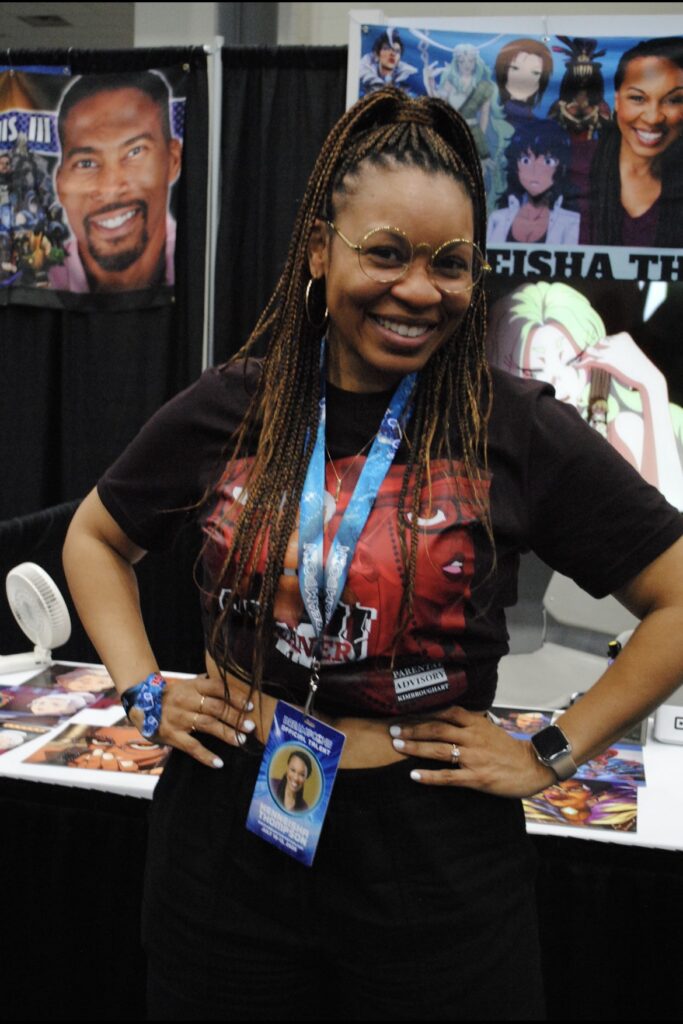
As accredited press covering Dream Con 2026, we expected to document celebrity appearances, packed panels and a convention that had grown large enough to command one of America’s major convention centers. Those things were certainly there. Conversations featuring Issa Rae drew enormous attention. Legendary voice actors Cree Summer and Phil LaMarr and Kenneisha Thompson represented generations of animation history. Leon Thomas, Wale, Noah Lyles, Jessie T. Usher and many of the creator personalities who define internet culture today contributed to a weekend that comfortably moved between gaming, music, sports, animation and Hollywood. But somewhere between the panels, interviews and convention floor, we realized we were covering the wrong story. The celebrities were not why Dream Con mattered. They were evidence of why it mattered.
For decades, entertainment followed a familiar pattern. Studios created films, networks produced television, publishers launched comics and game developers released new titles. If those projects became successful, audiences gathered around them. Community was the outcome. Dream Con reverses that equation. Community is the beginning. That distinction is larger than one convention. It represents one of the most consequential changes taking place across modern entertainment.
Long before Dream Con filled convention halls, RDCWorld had spent years building something every entertainment company hopes to create but very few actually earn: trust. Through consistency, humor, storytelling and genuine interaction, they cultivated a relationship with millions of people who didn’t simply watch their content. People built friendships around it. They quoted it, shared it and introduced it to others. Over time, an audience became a community. The convention didn’t create that community. It revealed its scale.
That became obvious everywhere we looked. Artist Alley wasn’t simply a marketplace; it was a living expression of the creator economy. Independent illustrators, designers, comic creators and small businesses weren’t waiting for permission from traditional gatekeepers. They were building careers through communities willing to support original work directly. Across the convention floor, panel lines naturally became conversations. Creator meet-and-greets often felt less like conventional celebrity encounters and more like reunions between people who had spent years growing together online. The distinction between creator and audience was still there, but the distance between them felt considerably smaller. Every interaction reinforced the same idea: Dream Con wasn’t built around transactions. It was built around relationships.
The official programming reflected that philosophy. Hollywood actors shared the weekend with internet creators. Voice-acting legends occupied the same schedule as livestream personalities. Musicians appeared alongside gamers, athletes and entrepreneurs. Rather than separating entertainment into the categories that once defined the industry, Dream Con acknowledged the reality audiences already live every day. Culture has become interconnected. Dream Con simply built a place where that reality could exist in person.
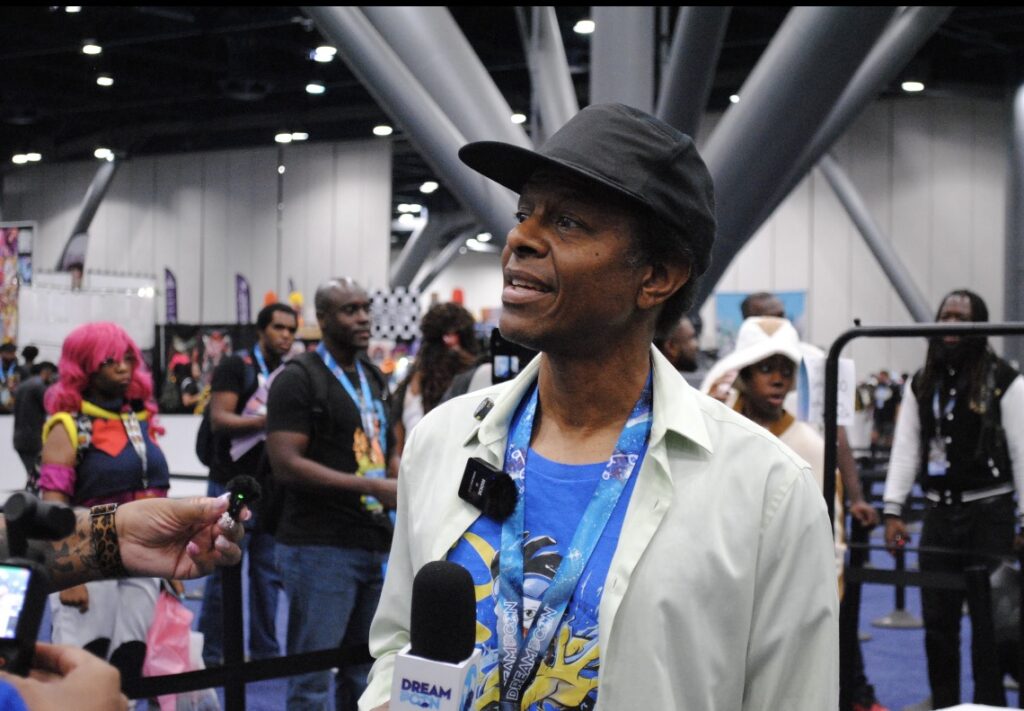
Its growth reflects how powerful that idea has become. From its beginnings in Waco through larger chapters in Texas before arriving in Houston, Dream Con expanded alongside the community that made it possible. Each move represented more than a need for additional square footage. The physical event was trying to keep pace with something that had already grown beyond it.
Houston proved to be more than a host city; it became part of the experience. Throughout the weekend, Dream Con’s energy extended beyond the walls of the George R. Brown Convention Center. Creators and recognizable talent moved through the convention floor alongside attendees. Restaurants welcomed visitors still wearing convention badges. Hotels filled with people who had traveled from across the country. Discovery Green became a natural extension of the gathering as conversations continued after scheduled programming ended. Dream Con wasn’t simply happening inside a convention center. For a weekend, it became part of the rhythm of downtown Houston.
That movement also has measurable consequences. Houston First estimated Dream Con’s 2025 edition generated approximately $19.2 million in economic impact through visitor spending across hotels, restaurants, transportation and other local businesses. That figure deserves attention, not simply because it measures the economic success of a convention, but because it puts a number behind the movement of a community.
The convention is the event. The community is the economic engine. Communities book flights, reserve hotel rooms, support restaurants and buy artwork, clothing and comics from independent creators. Communities create demand that cities increasingly recognize as meaningful. The economy follows the community.
There was another small detail on the convention floor that revealed something about Dream Con’s philosophy. Adjacent communities and conventions, including BlerDCon, were given space to introduce themselves to the same audience. In an entertainment environment frequently organized around competition for attention, Dream Con demonstrated that building a strong community doesn’t necessarily require closing the door behind you. There can be room at the table.
Perhaps that is Dream Con’s most important lesson. For generations, entertainment companies invested in productions hoping communities would eventually follow. Dream Con suggests another model is emerging: communities themselves are becoming the foundation upon which entertainment experiences can be built. That doesn’t diminish Hollywood; it expands it. It doesn’t replace traditional entertainment. It reshapes the relationship between creators, audiences and the places where they gather.
By the time we left Houston, the attendance figures, celebrity lineup and economic impact all mattered, but they no longer felt like the story. They felt like the evidence. The real story was something less tangible and considerably more difficult to manufacture: a community that had spent years growing online had become strong enough to fill convention halls, attract world-class talent, contribute to a major city’s visitor economy and create a space where thousands of people arrived already feeling that they belonged.
Dream Con is ultimately about more than gaming, celebrity appearances or internet culture. It demonstrates what can happen when creators spend years earning trust instead of simply chasing attention. Communities begin to take on lives of their own. They don’t just consume entertainment. They shape it, support it, travel for it and invest in it. Eventually, they build traditions around it.
Dream Con didn’t become one of the country’s most important creator-led conventions because it assembled an impressive guest list. It assembled an impressive guest list because it built an extraordinary community. The convention lasts a weekend. The community continues long after everyone goes home.
This is the format I would publish. The argument hasn’t changed; it just breathes like an essay now rather than reading like a sequence of declarations.
Related Posts
Anissa Borrego Is in Her Comedy Era — And Stumble Is the Proof
Injury, Vulnerability, and Star Power
Kitty Pryde and Emma Frost Guide New Mutants in ‘Exceptional X-Men’ Trailer
Kitty Pryde and Emma Frost Guide the Next Generation of Mutantkind.
Russell Westbrook Did the Extraordinary Until Basketball Started Calling It Ordinary
The Evidence of an Extraordinary Career

Lion Star, Everest Place, and Paramount Announce Nickelodeon Hotels & Resorts Orlando, Opening in 2026
Nickelodeon Hotels & Resorts Orlando, Opening in 2026
The Fans Didn’t Change—The System Did
Culture Doesn’t Spread Anymore. It Circulates

The Weeknd and Blue Bottle Debut Two Fresh Ethiopian Single Origin Coffees
The Weeknd continues to expand his collaboration with Australian coffe