

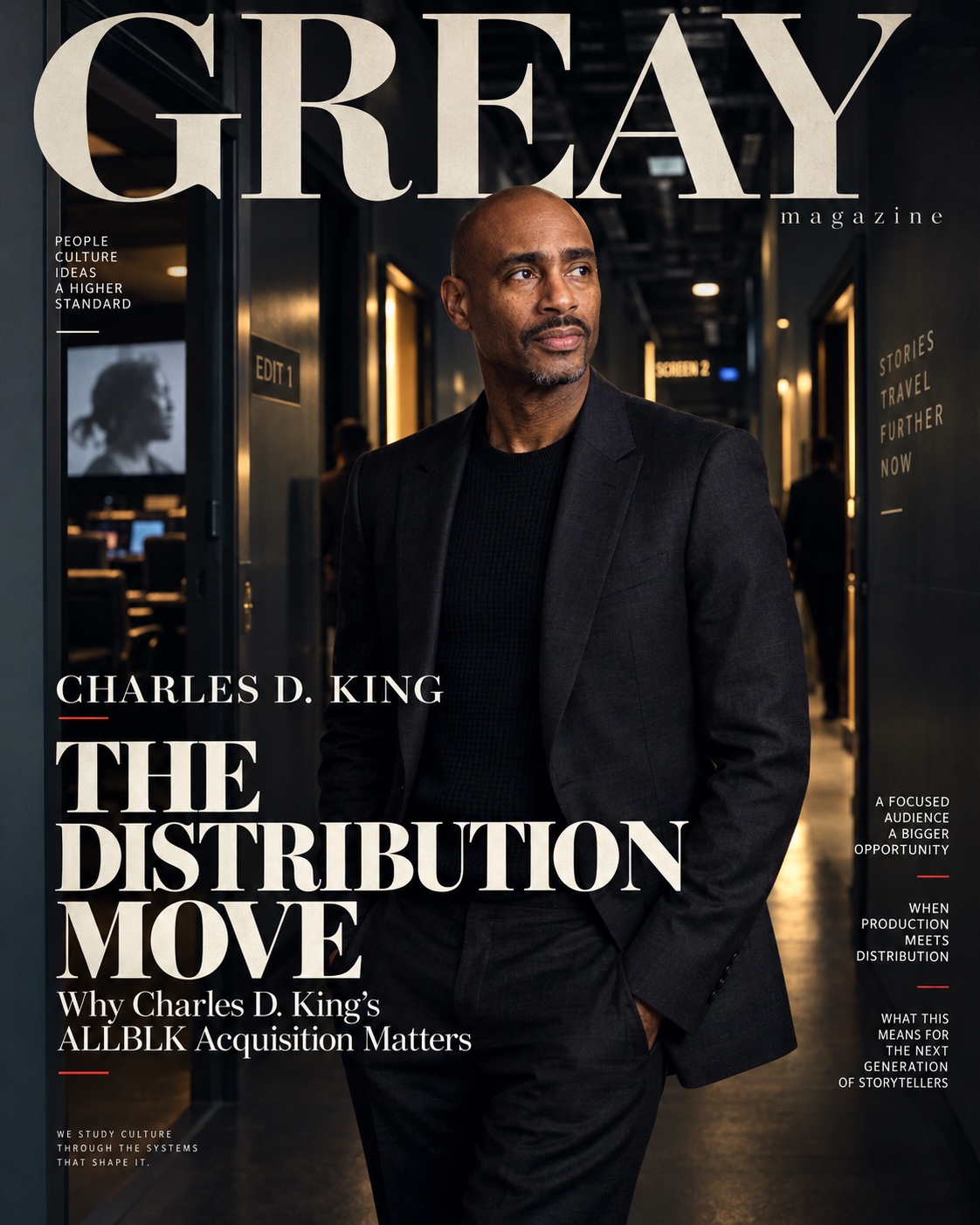
Why MACRO’s ALLBLK Acquisition Is Really About Distribution
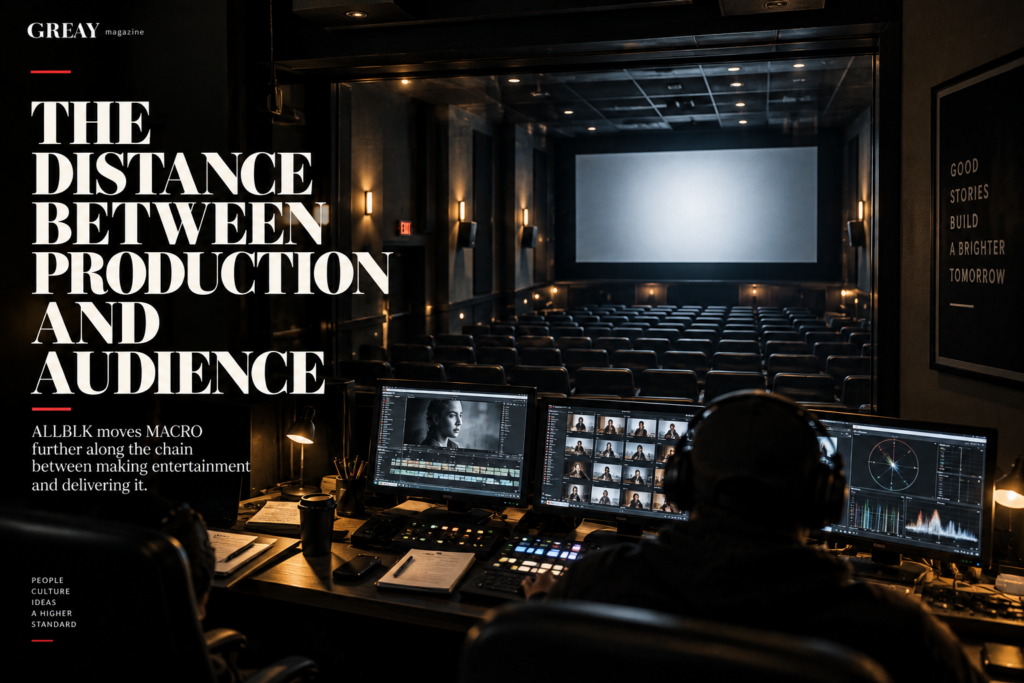
By DaMarko GianCarlo
Charles D. King has spent more than a decade building MACRO around the part of the entertainment business where stories begin: development, financing and production. With the acquisition of ALLBLK from AMC Global Media, the company is moving farther down that chain. For the first time, MACRO owns a direct-to-consumer streaming platform, giving it something fundamentally different from another production label, another financing vehicle or another piece of intellectual property. It gives the company a distribution channel of its own.
That is the part of the September 16 deal that matters beyond the acquisition itself. MACRO acquired ALLBLK, the streaming service centered on Black film and television audiences, for an undisclosed price. ALLBLK will continue operating with its existing programming and library, while MACRO has said it plans to invest in original content, audience development, community engagement and closer collaboration between the service and its broader studio operations. King described the transaction as part of the vision he has had for MACRO as a vertically integrated media company, saying ALLBLK “adds an additional piece to that vision.” That distinction is important. MACRO is not presenting ALLBLK as the final piece of its business. It is adding another capability to a company that already operates across several stages of how entertainment gets made.
What changed is where MACRO can now participate in that process. The company has spent years developing, financing and producing films and television projects, including work connected to Judas and the Black Messiah, They Cloned Tyrone and One of Them Days. Those projects ultimately reached audiences through distribution systems operated by other companies. There is nothing unusual about that arrangement; it is how much of Hollywood functions. Producers make projects, studios and distributors release them, and streaming services or theaters provide the final connection to the consumer. ALLBLK does not eliminate MACRO’s need for those relationships, nor is there evidence that King intends it to. A project suited to a major theatrical distributor can still take that route, just as a series that makes sense for a global streamer can still be sold to one.
What ALLBLK changes is that outside distribution is no longer the only possible route. A film, series, documentary, acquisition or emerging filmmaker whose work fits the service can potentially move through a platform MACRO itself owns. That gives the company something more consequential than another place to put content: it creates optionality. A major studio can still be one door. A global streaming service can still be another. ALLBLK is now a door MACRO controls.
That matters because there has always been a structural break between making entertainment and delivering it. A company can discover a filmmaker, develop the script, finance the production and get the project finished, but somebody still has to connect that work to an audience. For independent producers in particular, that final step can place enormous power in the hands of companies farther down the distribution chain. ALLBLK does not suddenly give MACRO the reach of the largest studios or global streaming platforms, but it allows the company to participate on both sides of that line for projects that make sense for the service.
MACRO is also not starting that experiment from zero. ALLBLK traces its history to 2014, when BET co-founder Robert L. Johnson launched Urban Movie Channel through RLJ Entertainment. AMC Networks acquired RLJ Entertainment in 2018, and UMC was later rebranded as ALLBLK. The service therefore arrives at MACRO with something that would take years to create from scratch: an established brand, a programming operation, a content library and an existing relationship with consumers interested in Black film and television.
That audience relationship may ultimately be as strategically important as the platform itself. There is a meaningful difference between producing a project that eventually appears on somebody else’s service and operating one of the places where viewers actually encounter programming. A direct-to-consumer business can bring an operator closer to questions producers normally experience from farther away: what brings viewers into the service, what they return to, what programming works together and what keeps subscribers engaged. Exactly what information MACRO will have access to will depend on ALLBLK’s technology, distribution partners and privacy obligations, so the acquisition should not be interpreted as giving the company unrestricted access to every piece of viewer behavior. The structural difference is simpler: MACRO is now closer to the audience side of the equation.
That proximity can create a feedback loop between development and distribution. What a company learns from operating a service can potentially inform programming decisions, while what it learns developing and producing projects can shape what it puts on the service. King’s description of ALLBLK as a “focused platform with a clear audience” is particularly revealing in that context. For much of the first streaming era, the largest companies chased breadth: more subscribers, more territories, larger libraries and enough programming to serve almost everyone. ALLBLK represents a different proposition. Its identity is narrower and its intended audience is clearer.
That does not automatically make it a successful business, and it would be a mistake to frame this transaction as MACRO attempting to build another Netflix. ALLBLK does not have anything approaching the reach or resources of the world’s largest streaming platforms, and there is no public indication that King is trying to turn it into one. The more useful question is whether a smaller service with a defined audience becomes more strategically valuable when it sits inside a company already developing, financing and producing work that can overlap with that audience.
There are significant unknowns. Neither company disclosed what MACRO paid for ALLBLK, and there is not enough current standalone public information to establish the service’s subscriber count, revenue, profitability or churn. AMC has reported streaming performance across its broader portfolio, but those numbers cannot responsibly be assigned to ALLBLK alone. Without those figures, there is no way from outside the companies to determine the financial condition of the service MACRO purchased or how much investment may be required to grow it.
AMC’s continued involvement also makes this more nuanced than a simple exit. AMC is maintaining an investment relationship with MACRO, and the companies have established a content-licensing arrangement that can keep programming moving between them even though ownership of ALLBLK has changed. That allows MACRO to take control of the service without beginning its streaming operation with an empty library, while AMC retains an economic relationship with MACRO and another potential destination for programming. It is therefore difficult to reduce the transaction to one company abandoning streaming while another enters it.
For MACRO, the larger value may be having another choice at the moment distribution decisions are made. Owning ALLBLK does not mean every MACRO project belongs there. In fact, its usefulness may depend on resisting that temptation. Some projects will benefit from the marketing power and global reach of major studios and streaming services. Others may fit a smaller platform built around a particular audience. The strategic change is that MACRO can now participate in deciding whether its own distribution channel is the right answer rather than always requiring that capability to come from somewhere else.
That distinction also pushes the acquisition into a larger cultural conversation. For years, questions about representation in entertainment have rightly focused on who gets to appear on screen, who gets to write and direct, who receives financing and who gets to make decisions inside studios. Distribution sits one step beyond many of those conversations, but it carries its own form of influence. Producing culture and distributing culture are different positions. A company can discover a filmmaker and still need another company to release the film. It can understand an audience creatively while remaining dependent on someone else for the final commercial relationship with that audience.
ALLBLK moves MACRO farther across that distance, but not completely. Streaming is expensive. Original programming requires continuing investment, subscribers have to be acquired and retained, and a clearly defined audience does not guarantee sustainable economics. Until more information about ALLBLK’s standalone business becomes available, there is no responsible basis for declaring whether the acquisition will ultimately work financially. What can be established now is the change in MACRO’s position.
For its first decade, much of MACRO’s influence existed on the side of the entertainment business where stories are discovered, developed, financed and made. ALLBLK moves the company farther toward the other side of that equation: the place where those stories actually meet an audience. A studio can still be one route. A global streamer can still be another. But MACRO now owns a direct-to-consumer platform capable of becoming another route when the project, audience and economics make sense.
That is why this acquisition is bigger than MACRO buying a streaming service. Charles D. King is not simply adding another library of programming to the company. He is changing where MACRO can sit in the journey between making something and putting it in front of people. The success of that move will depend on what MACRO does with ALLBLK next, but the structural play is already visible.
Related Posts

SKIMS Designated Official Underwear Sponsor for the NBA, WNBA, and USA Basketball
By DaMarko GianCarlo The National Basketball Association (NBA) and SKI
SAINt JHN Unveils “Circles” Music Video: A Genre-Defying Artistic Statement
SAINt JHN Unveils Cinematic "CIRCLES" Music Video.

Ray-Ban Is Building Atmosphere
The Best Brands No Longer Feel Like Stores

Victor Wembanyama soars into the limelight as the latest house ambassador for Louis Vuitton
Victor Wembanyama is Louis Vuitton’s newest ambassador

Flame On! The Fantastic Four: First Steps Trailer Is Pure Retro Marvel Madness!
Galactus Looms! Marvel’s Fantastic Four Trailer Promises Cosmic Chao

POST COMMENT