

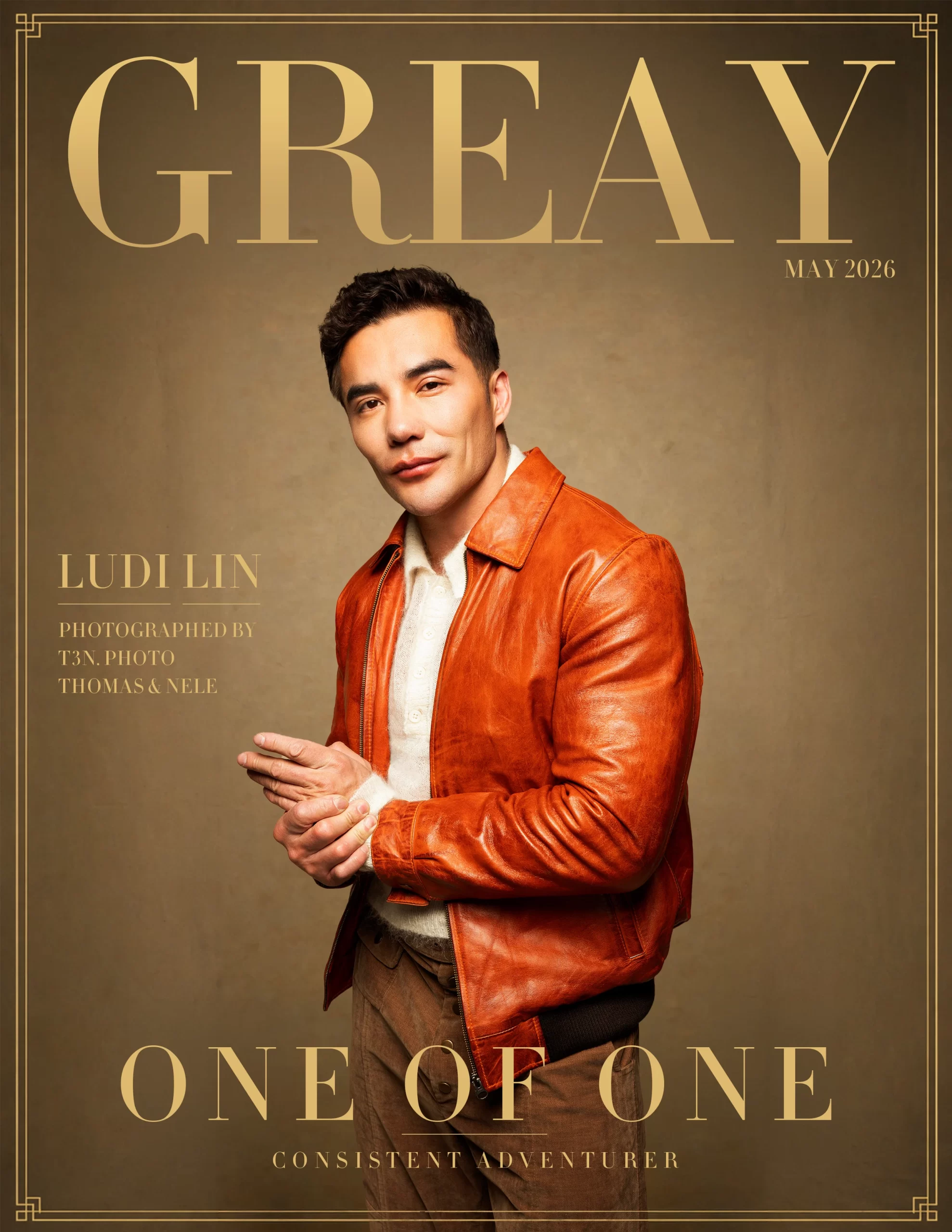
The Industry Wants Symbols : Ludi Lin Keeps Choosing Humanity
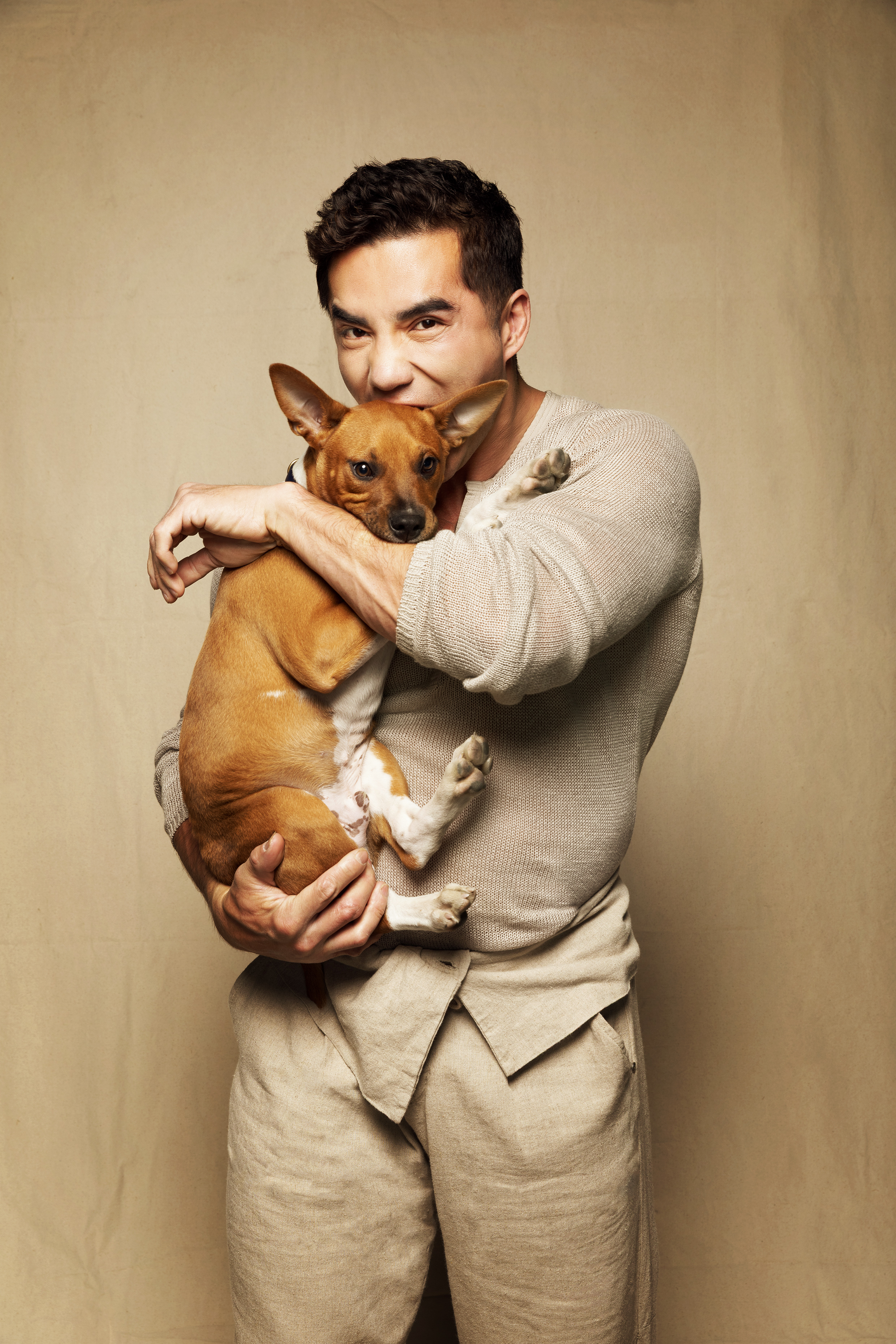
By Kyra Greene
There’s a moment during conversation with Ludi Lin where the mythology quietly falls apart.
Not in a dramatic way. Not through revelation or performance. It happens softly, almost accidentally, when he says, “The hardest fights I’ve had happened in my heart.”
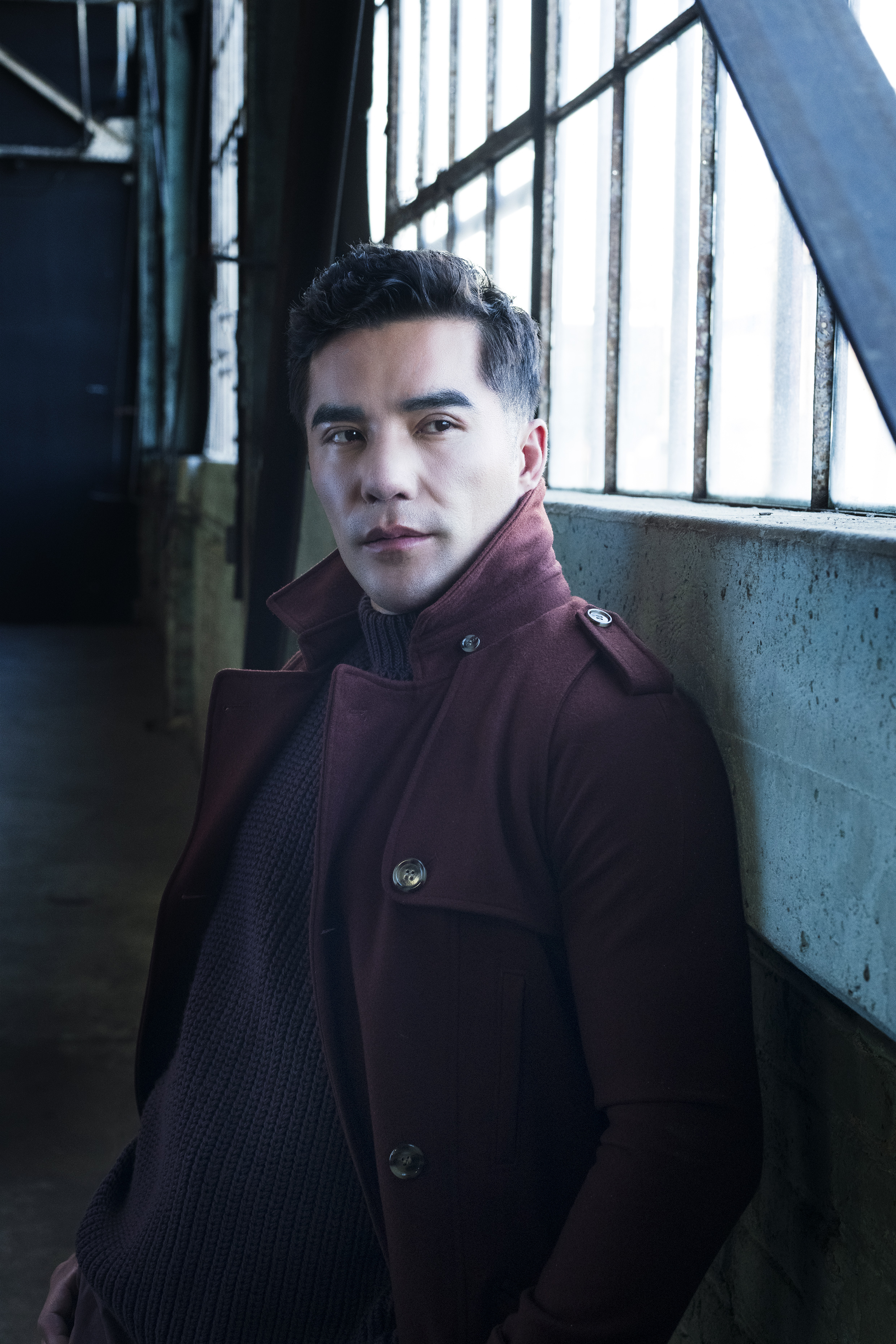
And suddenly the image people have projected onto him for years—the warrior, the franchise lead, the physical presence moving through massive cinematic worlds—stops feeling like the full story. Because underneath all the choreography, all the discipline, all the mythology surrounding characters like Liu Kang, there is still someone trying to understand what it means to remain emotionally intact while constantly moving between worlds.
That tension has always existed around Ludi Lin’s career. Hollywood tends to flatten actors into readable narratives. Action star. Representation figure. Leading man. But Lin has never fully fit any single framework. Maybe because his life itself was built through movement. Through adaptation. Through reinvention. He speaks about traveling, foreign languages, unfamiliar food, and new environments not as disruptions to identity, but as opportunities to expand it. “Every time you travel to a new place, chat in a foreign language, taste something you haven’t eaten, make some new friends, and put yourself out of your comfort zone is a new chance to reinvent yourself,” he says.
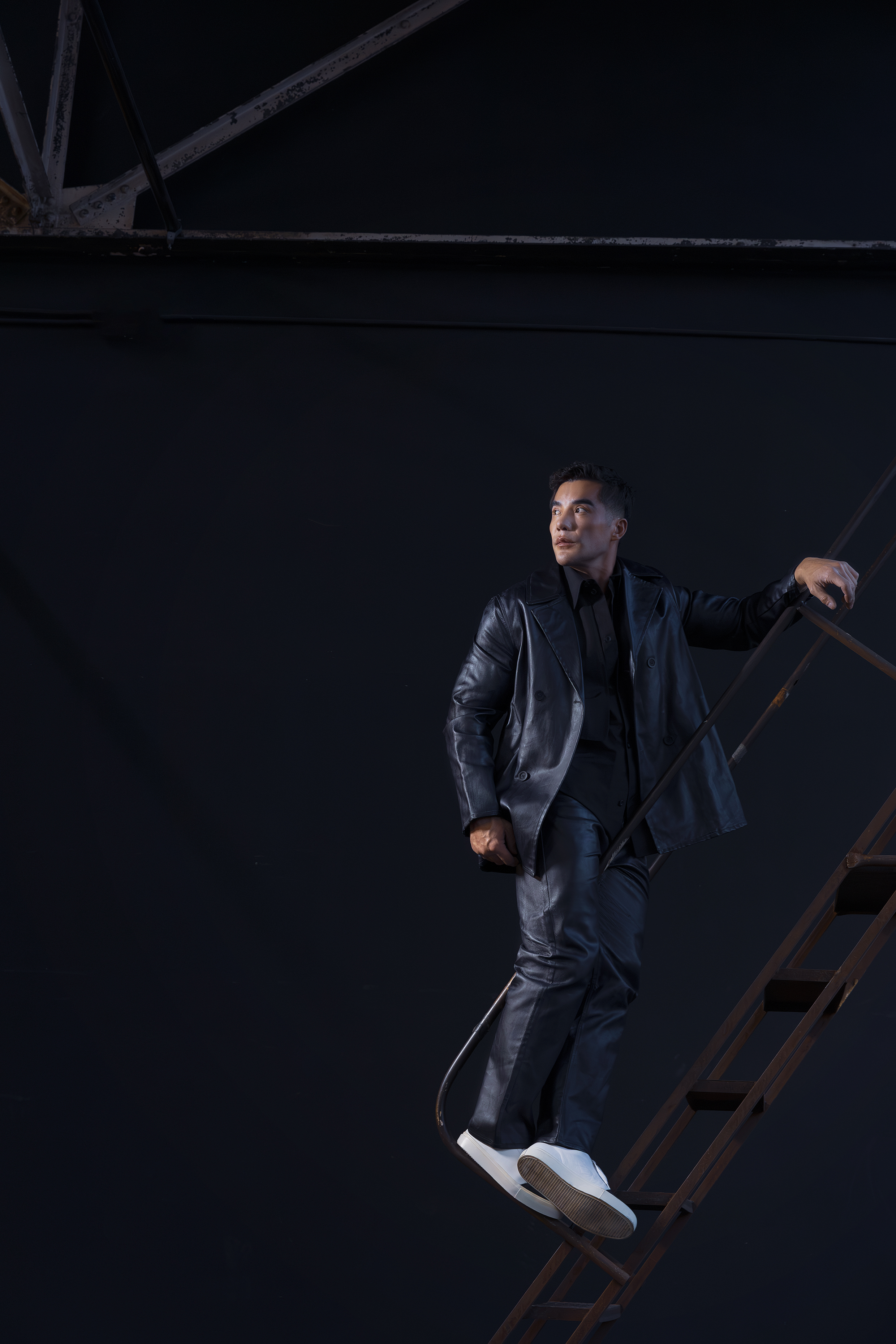
What’s striking is that he no longer speaks about reinvention with the exhaustion of someone searching for belonging. He speaks about it with curiosity. Like a person who has stopped asking where home is supposed to be and instead learned how to carry himself through unfamiliar spaces without losing softness.
That emotional openness is probably why his performances feel restrained instead of performative. There’s always a sense that he’s holding something underneath the surface. Not hiding emotion, but protecting it. When asked about the controlled nature of his screen presence, Lin says he’s “often holding back quite a lot because I think that’s how humans are.”
It’s one of the most honest descriptions of acting imaginable because real people rarely move through life fully expressed. Most people contain far more than they reveal. Lin understands that instinctively. Even inside enormous studio systems designed around spectacle, he continues searching for emotional truth instead of theatrical volume.
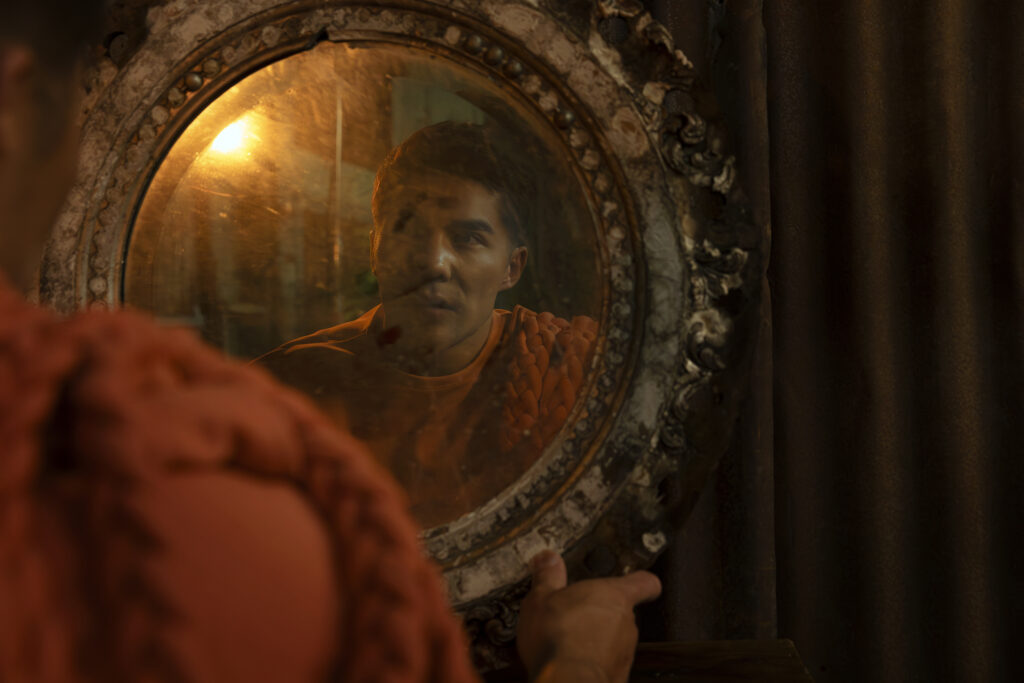
That becomes especially important in Mortal Kombat II, where Liu Kang evolves beyond fighter and into something closer to mythology. But Lin never talks about the character like a superhero archetype. He talks about him like someone carrying grief, consequence, and transformation simultaneously. “In the first movie, he’s a monk,” he explains. “In MK2, we will see him transform.”
The distinction matters because mythology without humanity is forgettable. Audiences do not connect to perfection. They connect to burden. To sacrifice. To the visible cost of becoming something larger than yourself.
And even while discussing fight choreography, Lin keeps returning to emotion instead of mechanics. “We’re fighting heart first and fists second… fireballs third,” he says, laughing.
That line lingers because it accidentally reveals his entire philosophy as a performer. Spectacle alone means nothing to him. Action only matters when feeling exists underneath it. The movement has to carry emotional consequence or it becomes empty repetition.
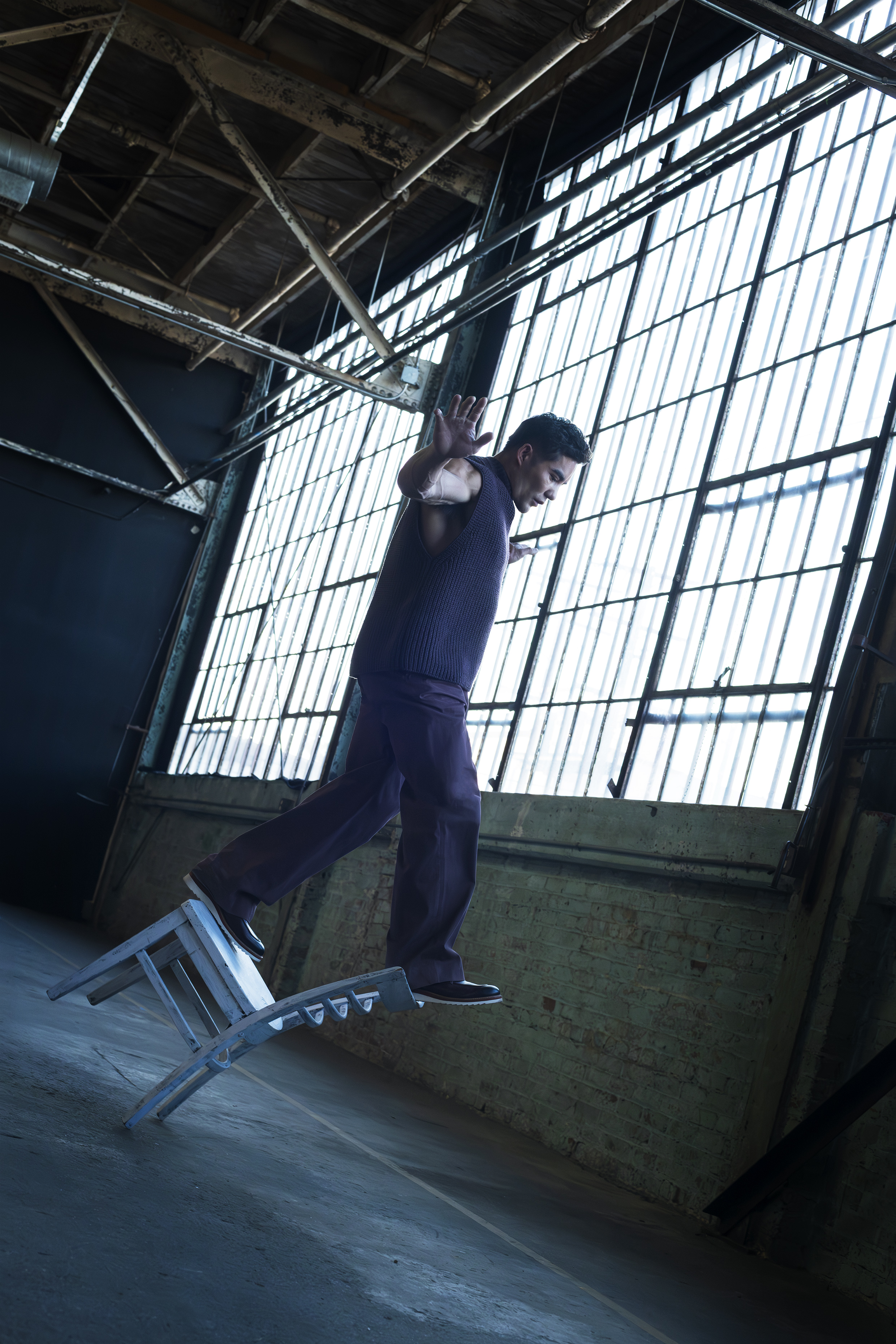
Maybe that perspective comes from understanding what it feels like to be perceived before being understood.
For years, conversations around Asian representation in Hollywood often reduced actors to visibility metrics instead of individuality. Lin admits there was a time he questioned whether people like him were seen as interchangeable inside Western systems. But eventually he realized the flaw in that thinking. “Every Asian, every human being, we are all one of one,” he says.
That sentence quietly becomes the emotional center of the entire conversation.
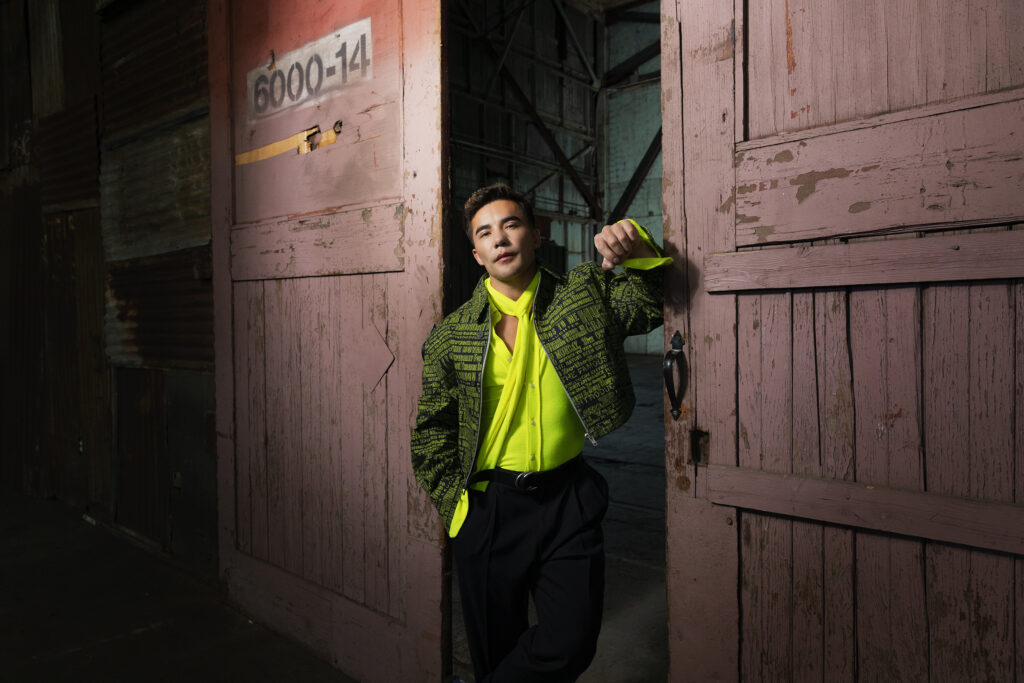
Because what Lin is really describing is the refusal to disappear inside expectation. The refusal to become symbolic at the expense of specificity. And specificity matters deeply to him. “I’m just too weird not to be specific,” he says with a laugh.“
That weirdness is important. Not quirky branding. Humanity. Contradiction. The thing that interrupts archetype.
It’s there when he talks about loving Spike Jonze’s Her. It’s there when he mentions watching animal videos and America’s Got Talent clips between giant franchise productions. It’s there when he openly admits that emotional pain has shaped him more than physical combat ever could. And it’s there in the way he speaks about identity itself—not as something fixed, but something continuously shaped through connection with other people.
“I like that my identity is a process and a conversation with the people around me,” he says.
Most actors spend their careers trying to become recognizable. Ludi Lin seems more interested in remaining real.
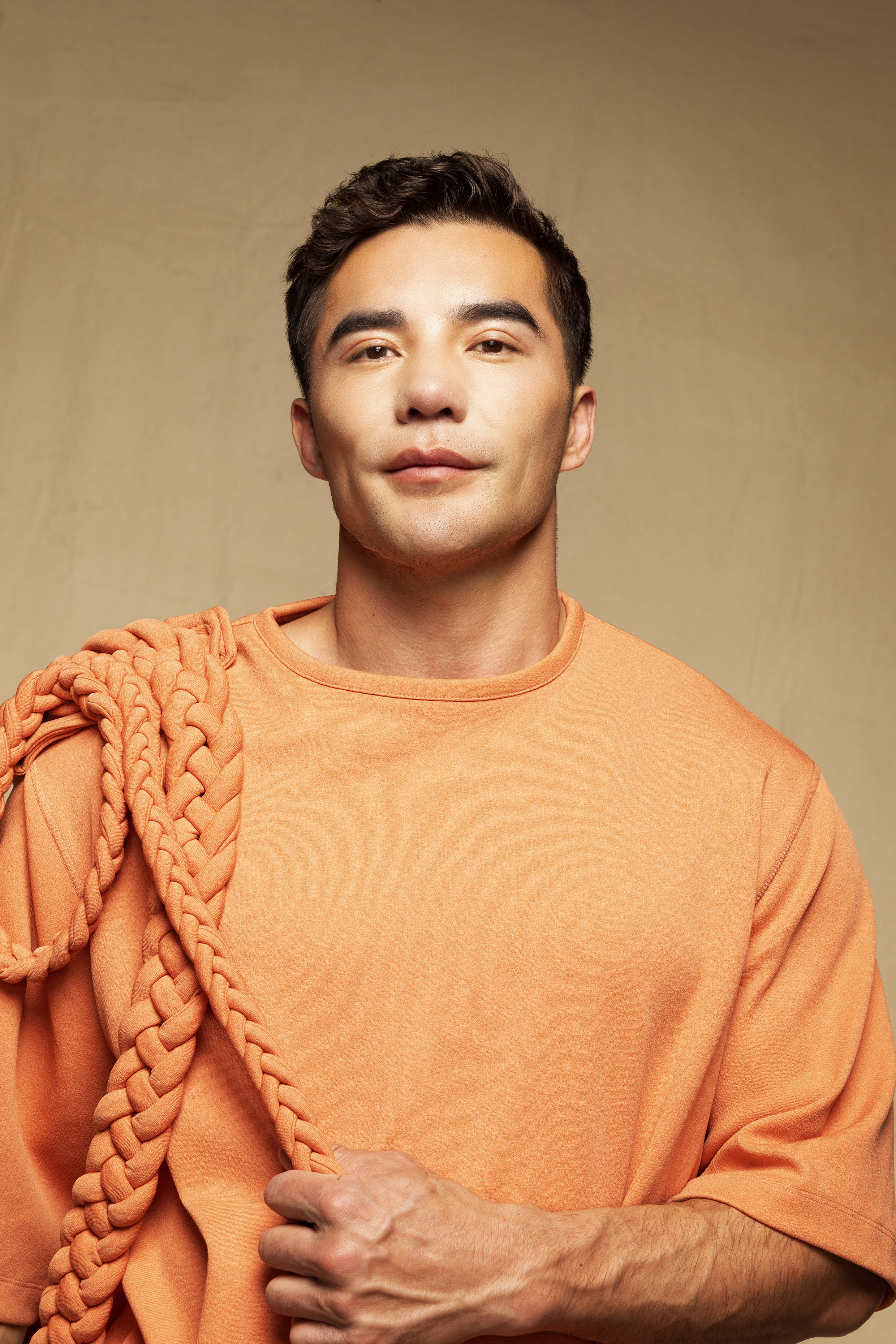
And maybe that’s why his presence feels different right now. Because in an entertainment industry increasingly obsessed with optimization, branding, and algorithmic certainty, there is something unexpectedly moving about a person willing to remain unfinished. Willing to evolve publicly. Willing to admit that strength and vulnerability are not opposites.
By the end of the conversation, the mythology surrounding Ludi Lin hasn’t disappeared. If anything, it becomes more powerful. But now it feels anchored to something human instead of manufactured.
Not a symbol.
A person.
Still becoming.
Photographers: T3N PHOTO – Thomas & Nele www.T3NPHOTO.com @t3nphoto
Wardrobe stylist Alvin Stillwell www.alvinstillwell.com @alvinstillwellstylist with Celestine Agency https://www.celestineagency.com IG @celestineagency
Groomer: Justine Fang www.justinefang.com @disc0_lem0nade
Lighting Director Geoffrey Nicholson @geoffrey_nicholson
Location Studios 60 @_studios60
Related Posts
Larry J. Sims: From Chicago’s West Side to Hollywood’s Elite
Larry J. Sims An Epic Life
Alexandra Breckenridge Craft, Courage, and the Characters That Changed Everything
The Vulnerability That Moves Millions
Nicole Mattox: Vertical Storytelling Human Impact
The Vertical Revolution Has a Face
Ruby Snowber Believes in the Long Way Forward
The Work Between Milestones
Chosen to Lead: Paras Patel on Faith, Representation, and Season 5’s Emotional Journey
Charting New Territory
Camille Sullivan: Craft, Courage, and the Chaos Between Takes
Survivor’s Guilt, Found Footage, and Faith