

The Director Didn’t Leave the Film — He Stayed Inside It

By DaMarko GianCarlo
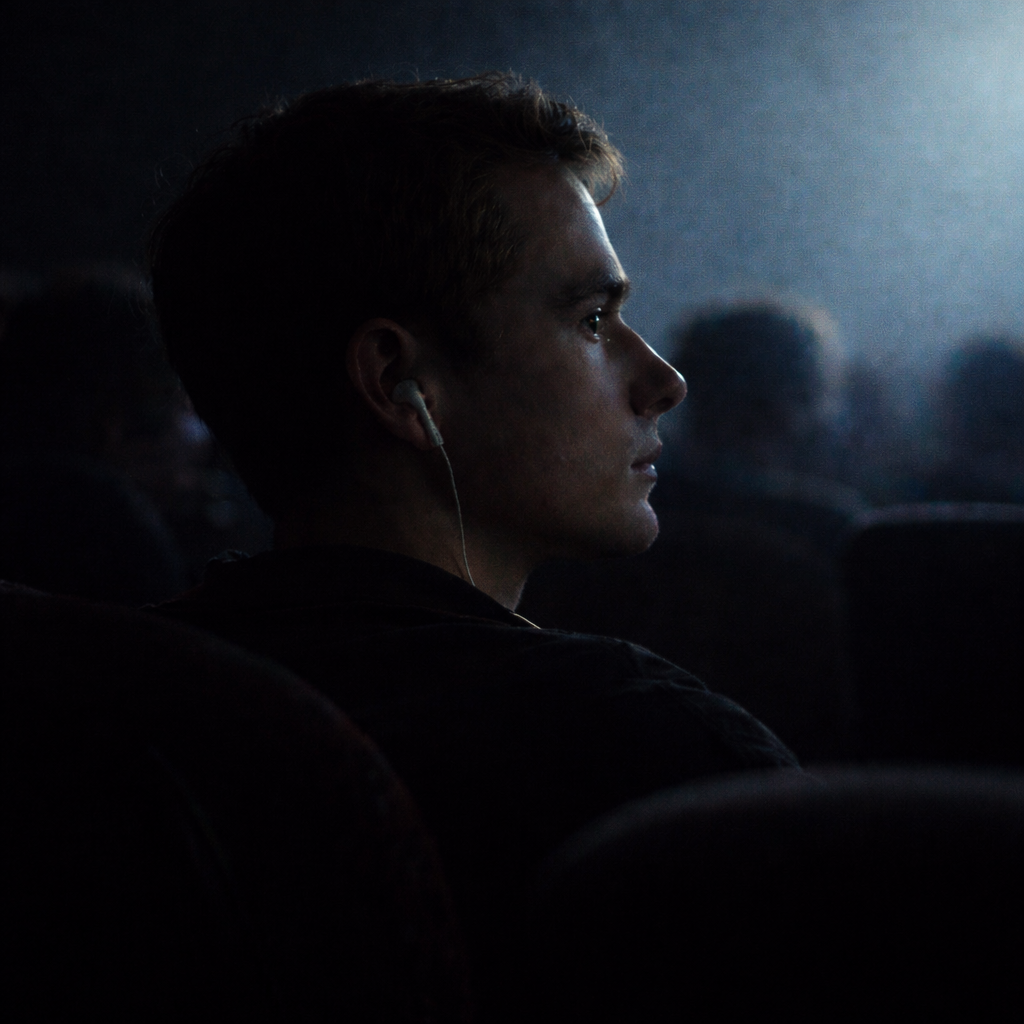
For most of its history, cinema has been defined by a kind of discipline: one screen, one sound, one shared experience. The director would disappear the moment the film began, leaving behind a finished object that asked to be watched, interpreted, and—at most—discussed afterward. Commentary existed, but only as a reflection, tucked away in DVDs or streaming menus, something accessed later, separate from the moment itself. What TheatreEars has introduced with its Director’s Experience, beginning with Project Hail Mary, quietly breaks that structure. The director is no longer absent during the film. He is present—synchronized, intentional, and layered into the experience itself.
This is not an enhancement. It is a redefinition of the medium’s architecture. Delivered through a personal device, synced in real time, the commentary does not interrupt the film—it runs parallel to it. The audience is no longer unified by a single version of the work, but divided—productively—into different depths of engagement. One viewer watches the film as it has always existed. Another watches while listening to the director think, explain, and expand. The same screening now contains multiple experiences, all occurring simultaneously, all equally valid. The theater, once a fixed environment, begins to behave like a platform.
What makes this shift meaningful is not the novelty of commentary, but its relocation. For decades, filmmakers like David Fincher or Christopher Nolan used commentary as a postscript—an archive of intention for those who sought it out later. It was optional, delayed, and removed from the emotional rhythm of the film. Now, it is immediate. It exists in time with the image. It has the potential to shape perception as the story unfolds, not after it has settled. This changes the role of authorship. The director is no longer just the architect of the film. He becomes a live presence within it.
The implications extend beyond commentary. TheatreEars began as a language layer—translating films in real time for audiences who needed access. That alone suggested a future where cinema could adapt to the individual without altering the shared screen. But once the infrastructure exists, language is only the first application. Commentary becomes the second. Others will follow: alternate performances, educational overlays, even perspective-based storytelling. The film no longer needs to change for each audience member. The experience around it can.
This is the moment where cinema quietly aligns with every other modern system. Streaming platforms taught audiences to expect multiple audio tracks. Games normalized the idea of spectator modes and layered information. Social media embedded commentary directly into the act of consumption. Film resisted this, holding onto the purity of a single, authored experience. But purity is not the same as permanence. What TheatreEars has done is not disrupt the screen—it has expanded everything around it.
There is a discipline required here. The danger is obvious: too many layers, too much noise, and the experience fractures instead of deepens. But when executed with intention, this is not dilution—it is precision. It allows the work to exist at multiple levels without compromising its core. The film remains intact. The audience simply chooses how close they want to stand to it.
What we are witnessing is not the return of commentary. It is the evolution of cinema into something more elastic, more responsive, and more architectural in its design. The screen stays the same. The system around it becomes dynamic.
The director did not leave the film. He stayed inside it—and for the first time, the audience can decide whether to hear him.
Related Posts

Apple’s HomeView Brings Personal AI Into the Shared Home
One household screen. A personal experience for everyone.

Experience a Nostalgic Throwback to BlackBerry Era with Clicks’ Innovative iPhone Keyboard
Clicks Keyboard a nostalgic offering reminiscent of the BlackBerry sil

Tech Meets Culture: LG Partners with will.i.am to Redefine Audio with Xboom
LG ELECTRONICS AND WILL.I.AM TRANSFORMS LG XBOOM'S SOUND.

The Quiet Screen: Why AR Is Finding Its Home Underwater
Swimming With Information—Without the Noise

Infinity Castle DLC Adds Muzan and More to Hinokami Chronicles 2
Demon Slayer Game Levels Up

New Era: Apple Unveils iPad Pro with M5 — Where AI Meets the Tablet
Power Unleashed