

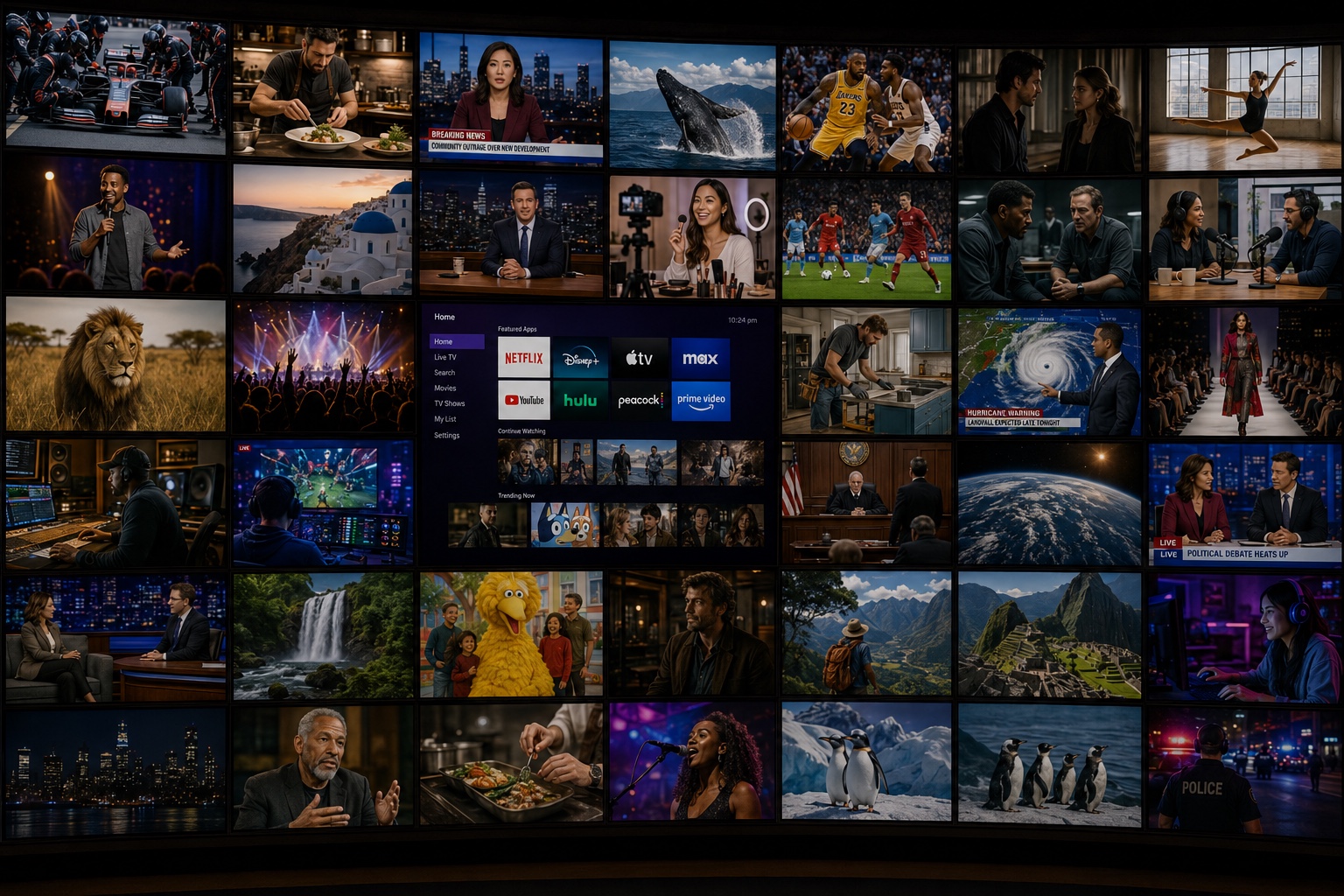
The Barrier to Production Is Falling: The Barrier to Taste Is Not

By Charles Lamont
For more than a century, the entertainment industry has been organized around scarcity.
Making a film required cameras, soundstages, crews, financing, post-production facilities, and distribution partners. Every step demanded specialized infrastructure, making production itself a competitive advantage. The companies that controlled the means of creation often controlled the future of entertainment.
That equation is beginning to change.
Recently, TheWrap documented an experiment using StoReel, an AI-native microdrama platform, to produce a four-episode series in only a few days for approximately $150 in AI credits. The finished project revealed the limitations of today’s technology. Some performances felt unnatural. Certain visuals remained inconsistent. Like every emerging medium, the work carried the imperfections of a tool still finding its language.
Those imperfections are easy to focus on.
They are also the least important part of the story.
Every transformative technology begins by exposing its weaknesses before revealing its consequences. Early photography struggled to match painting. Early television borrowed the grammar of radio. The first websites resembled digital brochures. History suggests that first versions rarely define what a technology ultimately becomes.
The larger shift is not that artificial intelligence can produce entertainment more cheaply.
It is that production itself is becoming less scarce.
History rarely eliminates work. It changes where work creates value.
The printing press reduced the cost of reproducing books, making editors and publishers more influential. Digital cameras democratized photography while elevating the importance of artistic vision. The internet made global distribution nearly instantaneous, but it increased the value of brands audiences trusted to help them navigate an overwhelming abundance of information.
Artificial intelligence appears poised to continue that pattern.
As the cost of creating content declines, the value of deciding what deserves to be created rises.
The bottleneck moves.
For decades, entertainment companies competed by controlling production. Tomorrow, they may compete by demonstrating judgment. When anyone can generate compelling visuals, write dialogue, or assemble a story with increasingly sophisticated software, production ceases to be the defining advantage.
Selection becomes the advantage.
This is where conversations about artificial intelligence often become too narrow. The debate usually asks whether AI will replace filmmakers, writers, photographers, musicians, or actors. A more revealing question is what becomes valuable after creation is no longer difficult.
The answer may be the one thing technology has never automated.
Taste.
Taste is often dismissed as subjective preference, but within creative industries it functions as something far more consequential. It is the ability to recognize significance before consensus forms. It knows what to remove when technology encourages excess. It understands that audiences are not searching for more content; they are searching for confidence that something is worthy of their attention.
Artificial intelligence can generate thousands of possibilities.
It cannot determine which one deserves to become part of culture.
It can imitate aesthetics.
It cannot establish conviction.
It can accelerate production.
It cannot build editorial trust.
That distinction becomes increasingly important in a world where content is no longer limited by production costs but by human attention. The scarcest resource in entertainment is no longer the ability to make something.
It is the ability to make something that matters.
Creative directors, editors, publishers, producers, and curators are not becoming less relevant because artificial intelligence exists. Their role becomes more valuable as creation becomes more accessible. In an economy of abundance, judgment becomes infrastructure.
Every technological revolution removes one bottleneck only to reveal another.
The printing press removed the bottleneck of copying books.
The internet removed the bottleneck of distribution.
Artificial intelligence is beginning to remove the bottleneck of production.
The next era of entertainment won’t be defined by who can make the most content.
It will be defined by who consistently knows what is worth making.
Related Posts

Clase Azul México Unveils Exclusive Limited Edition Tequila: The Loft Brooklyn Collection I
Clase Azul Tequila Pays Homage to New York City.

Michael B. Jordan Set to Direct and Star in New Thomas Crown Affair Remake
Michael B. Jordan is gearing up for his next big project

Future Unveils Debut Lanvin Lab Collection
Future Unveils Debut Lanvin Lab Collection

Yahya Abdul-Mateen II to Lead Man on Fire Adaptation for Netflix
Yahya Abdul-Mateen ll to Lead Man on Fire Adaptation for Netflix

Fresh, Bold, and For Everyone: AMP Launches TONE at Target
Any Means Personal

Jude Bellingham: The New Face of EA Sports FC 25
Jude Bellingham Is the ‘EA SPORTS FC 25’ Cover Star.