

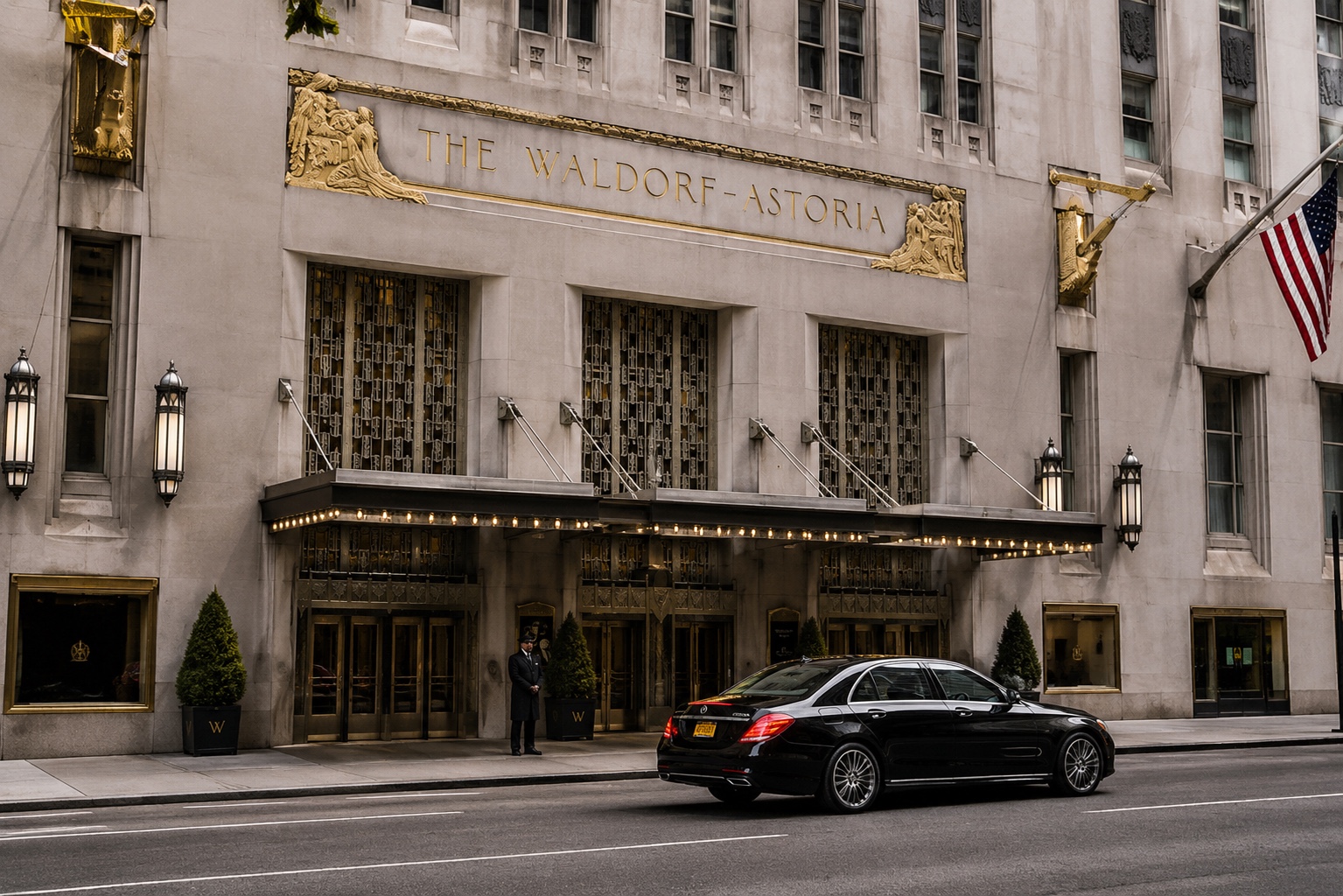
The Waldorf Astoria Sale May Reveal How Investors Value Trophy Assets
By Anna Klien
Luxury can be built.
Prestige takes time.
That distinction may sit at the center of one of the most closely watched real estate transactions in New York.
The Waldorf Astoria is expected to return to the market following a redevelopment that transformed one of the city’s most recognizable properties. The sale will undoubtedly be examined through the lenses of hospitality, real estate, and investment performance. Yet the most valuable asset attached to the Waldorf may not be found in its guestrooms, amenities, or financial statements.
It may be found in its reputation.
For nearly a century, the Waldorf Astoria has occupied a place few properties ever reach. It became more than a hotel. It became a landmark associated with a particular level of luxury, visibility, and significance. Its name entered public consciousness long ago, becoming recognizable far beyond New York itself.
That type of recognition is increasingly difficult to create.
Developers can build extraordinary hotels. Brands can create exceptional guest experiences. Capital can fund ambitious renovations. What none of those things can accelerate is the passage of time.
The Waldorf Astoria possesses something that cannot be replicated on a construction schedule.
It possesses history that people remember.
This is what separates a luxury asset from a trophy asset.
Luxury can often be reproduced. A new hotel can be built. A new tower can open. A new destination can emerge. Trophy status, however, is earned through decades of continued relevance. It develops when a property becomes woven into the story of a city and secures a permanent place within the public imagination.
The Waldorf Astoria belongs to that category.
Its value extends beyond what exists today. It reflects years of accumulated recognition, trust, and visibility. Over time, those qualities become assets in their own right.
That is why the upcoming sale carries implications beyond a single property.
The transaction arrives at a moment when investors are increasingly focused on measurable performance. Financing costs remain elevated. Markets have become more disciplined. Buyers scrutinize risk with greater precision than they did a decade ago.
Against that backdrop, the Waldorf presents a fascinating question.
How much is the market willing to pay for an asset that cannot be recreated?
A competitor can build another luxury hotel.
It cannot build another Waldorf Astoria.
That reality creates a tension between construction and legacy. One can be financed. The other must be inherited.
For decades, companies across industries have pursued the same goal. Luxury brands celebrate heritage. Institutions preserve archives. Businesses acquire iconic properties and historic names. They understand that recognition accumulated over time often becomes more valuable than anything that can be manufactured in the present.
The Waldorf Astoria represents that principle at architectural scale.
Its significance was not created by a single renovation, ownership group, or marketing campaign. It was built gradually through decades of relevance. The property’s identity was shaped by the people who passed through it, the events associated with it, and the place it secured within New York’s history.
The upcoming sale will not simply determine the value of a hotel.
It may reveal how investors value assets that have already achieved institutional status.
Because in a market filled with luxury, the rarest commodity may no longer be luxury itself.
It may be significance.
And that is something money alone cannot create.
Related Posts

VENOM #250 Brings the God of Symbiotes Back to Earth—and Mary Jane Into the Fight of Her Life
The God of Symbiotes Rises Again

Hollywood Built Stories for Theaters. The Phone Rebuilt Them for the Hand
The Device Is the Director Now

Cat Burns Joins Clarks as Brand Ambassador
By Joi Love Emerging into the spotlight with a unique and vibrant soun

Jacquemus and Four Seasons Unite for the First Time at The Ocean Club, A Four Seasons Resort, Bahamas
Jacquemus and Four Seasons Unite for the First Time at The Ocean Club

The Joker Has Always Needed Batman More Than Batman Needed the Joker
Who Are You Without Them?
Mugler Unveils Inside the Dream: A Documentary Exploring the French Fashion House’s 50th Anniversary
INSIDE THE DREAM: MUGLER, THE NEW DOCUMENTARY