

Streaming Spent Years Disrupting Television: Now It Is Building the System That Replaces It
By DaMarko GianCarlo
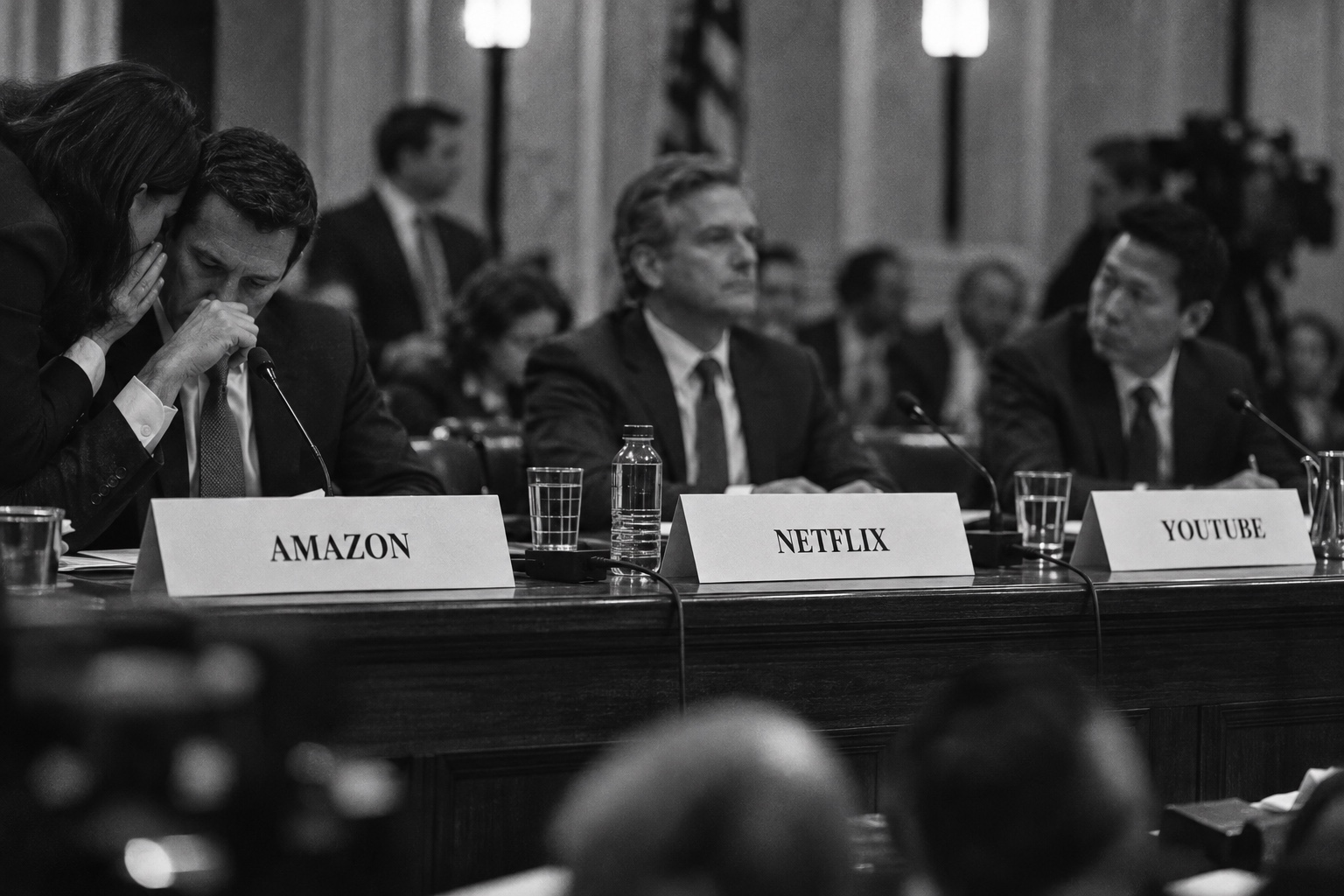
Nothing changed on anyone’s television when Amazon, Netflix and YouTube announced the Streaming Access and Choice Alliance.
Netflix still looked like Netflix. Prime Video still carried sports. YouTube still sold NFL Sunday Ticket. No services merged, no games suddenly changed networks and consumers were not presented with another subscription.
That is precisely why the announcement is easy to underestimate.
The Streaming Access and Choice Alliance, or SACA, launched on September 14 with Amazon, Netflix and YouTube as its founding members and technology trade association TechNet leading the coalition. Its stated purpose is to advocate in Washington for policies that expand access to content, preserve consumer choice and support streaming innovation.
Mike Ward, TechNet’s senior vice president of federal policy and government relations, framed the argument around viewers: “Americans want more content choices and flexibility” in how and where they watch programming, including sports and live events.
For the person sitting on the couch, another lobbying organization in Washington may mean very little.
For the television industry, it means something considerably larger.
The companies that spent two decades using the internet to disrupt television now have enough invested in television’s future that they want a dedicated voice helping shape the rules governing what comes next.
And increasingly, those rules are about more than what people watch.
They are about who controls the path between something people want to watch and the person willing to pay for it.
For most of television history, the different parts of that path belonged to different businesses. Studios produced programming. Networks assembled channels and purchased sports rights. Cable and satellite companies distributed those channels. Advertisers purchased audiences. Consumers paid distributors for access.
Streaming began pulling those relationships apart.
Now some technology companies are putting them back together around themselves.
Amazon can acquire an NFL or NBA game, distribute it through Prime Video, sell advertising around it, use the event to strengthen a Prime membership and connect that relationship to a commerce business extending far beyond television.
YouTube can combine video distribution, advertising, subscriptions and YouTube TV while also selling NFL Sunday Ticket directly to consumers.
Netflix can finance programming, distribute it globally through its own application, sell advertising against it and maintain the subscription relationship without needing a traditional television distributor between itself and the audience.
That is more significant than streaming replacing cable.
The functions television once divided among several companies can increasingly exist inside one platform relationship.
And live sports may be the asset that gives those relationships their greatest leverage.
Movies and scripted television taught audiences that entertainment no longer needed to arrive through a television channel. Sports proved harder to dislodge because much of a live game’s economic value exists precisely when it happens.
A series can wait until tomorrow.
The game cannot.
That urgency allows sports to produce something increasingly difficult to manufacture in a fragmented media environment: millions of people wanting the same thing at approximately the same time.
For years, that made sports one of traditional television’s strongest defenses against streaming.
Technology companies are now buying pieces of that defense.
Amazon carries Thursday Night Football and has expanded substantially into other major sports. YouTube holds NFL Sunday Ticket. Netflix has moved from building an on-demand entertainment business to carrying NFL games and other live events. Those investments put technology companies into increasingly direct competition with traditional television companies for programming that can still command mass audiences.
But they do not necessarily compete using the same economics.
A traditional television network generally needs an expensive sports property to create value within a media business.
Amazon can potentially create value across media, advertising, subscriptions and commerce.
YouTube can spread that value across advertising, YouTube TV, premium subscriptions and engagement throughout its larger platform.
Netflix can evaluate a live event through subscriptions, retention, advertising and its global audience.
The next sports-rights negotiation therefore does not necessarily put one television network against another.
It can put a television company against an ecosystem.
That changes what the same football game, basketball game or live event can be worth to different bidders.
For sports leagues, the opportunity is obvious. More credible bidders can create greater competition for rights. Technology companies bring enormous audiences, global distribution and balance sheets capable of competing for premium programming.
For traditional media companies, the calculation becomes more difficult. They can find themselves bidding against corporations that do not necessarily need television to produce television’s traditional return on investment.
And for viewers, the same competition that creates more destinations can also create more complexity.
That contradiction has become difficult for Washington to ignore.
Earlier this year, the Federal Communications Commission opened a proceeding examining changes in the sports media marketplace. The agency acknowledged that streaming has helped expand access to professional and college sports while warning that it also appears to have contributed to fragmentation.
The FCC noted that NFL games appeared across 10 different services in 2025 and cited estimates that watching every game could cost a consumer more than $1,500. Twenty regular-season games and one playoff game were nationally distributed exclusively through Amazon Prime Video, YouTube, Peacock and Netflix.
The question is no longer simply whether streaming gives viewers more choices.
It is whether more choices necessarily create easier access.
That distinction goes directly to one of streaming’s original promises.
Cable bundled television together. Consumers frequently paid for dozens or hundreds of channels because the programming they actually wanted existed somewhere inside the package.
Streaming offered another architecture.
Choose Netflix.
Choose Prime.
Choose the services you want and leave behind the channels you do not.
Sports is now exposing the limits of that proposition.
A fan does not experience media-rights strategy as an innovative collection of distribution agreements. A fan experiences it through a much simpler question:
Where is the game?
And increasingly, the answer can change depending on the night.
One game may be on broadcast television. Another on cable. Another on Amazon. Another on Netflix. Out-of-market Sunday games can require YouTube’s Sunday Ticket.
The consumer technically has more places from which to choose while potentially needing relationships with more distributors to follow the same sport.
Streaming did not necessarily destroy the bundle.
It may have decentralized it.
Instead of one cable company assembling the package, consumers increasingly assemble their own package one subscription at a time.
That creates a peculiar reversal.
The industry that taught consumers to escape television bundles is gradually creating an environment in which some viewers reconstruct a bundle themselves.
Washington is now examining the laws underneath that system.
In June, the House Judiciary Subcommittee on the Administrative State, Regulatory Reform, and Antitrust held a hearing examining the Sports Broadcasting Act of 1961 and whether its limited antitrust exemption remains appropriate for a sports-distribution market fundamentally different from the one that existed when Congress enacted the law 65 years ago. The hearing explicitly considered whether professional leagues’ use of that exemption has harmed consumers and whether legislative remedies might be necessary.
That scrutiny predates SACA.
Which makes the sequence important.
Washington began examining the changing economics of sports distribution.
The FCC began asking how fragmentation affects viewers and broadcasters.
Congress began reconsidering an antitrust framework created for another television era.
Then Amazon, Netflix and YouTube established a dedicated policy coalition.
That does not establish that SACA was created specifically to prevent Congress from changing the Sports Broadcasting Act, and the available evidence does not justify making that claim.
The reality is more nuanced—and ultimately more consequential.
These companies now have enough invested in digital entertainment distribution that decisions made in Washington can materially affect the markets in which they compete.
SACA says it will advocate for “technology-neutral” policies. That language matters because it advances a basic principle: internet-delivered entertainment should not automatically face different treatment simply because it reaches the viewer through an application instead of a broadcast tower, satellite or cable line.
Washington is confronting the other side of that argument.
What happens when technological change also changes the economics of access?
That is where the word choice becomes complicated.
SACA can reasonably argue that streaming created more choice. Consumers can subscribe directly, watch across devices, access programming outside traditional cable packages and use viewing features that conventional television could not easily provide.
Regulators can simultaneously ask whether fragmenting desirable programming among more distributors leaves consumers paying more to assemble everything they want.
Both realities can exist at once.
Streaming can expand access while making complete access more complicated.
And that tension may matter more to television’s future than any argument over whether streaming itself is good or bad.
There is another reason SACA deserves attention.
Streaming already has organizations representing policy interests. The new coalition is narrower. Amazon, Netflix and YouTube are three very different businesses that arrived at television through three different doors.
Netflix came through subscription entertainment.
Amazon came through commerce.
YouTube came through internet video.
They are increasingly meeting in the same room.
Sports.
Advertising.
Subscriptions.
Distribution.
And, increasingly, Washington.
That convergence tells us something about where television power is moving.
Each company already possesses something networks historically spent enormous amounts of money trying to create: a direct relationship with a massive audience.
Amazon has Prime customers before it purchases a football game.
Netflix has subscribers before it acquires a live event.
YouTube has viewers before it sells them Sunday Ticket.
Traditional television historically used programming to create the customer relationship.
Technology companies can increasingly bring an existing customer relationship to the programming.
That reversal may ultimately matter more than whether one company wins the rights to one particular game.
Because the most powerful position in the next television industry may not belong to the company producing the most programming.
It may belong to the company controlling access to the programming people feel they cannot afford to miss.
Sports provides exactly that kind of urgency.
And once a platform owns enough of the relationship surrounding that programming, the game can become more than something to watch. It can sell advertising. Retain a subscription. Encourage another purchase. Strengthen an ecosystem. Keep a consumer inside a platform.
That is why the creation of SACA matters even to viewers who will never know the organization exists.
It marks another stage in streaming’s transformation from challenger to institution.
Netflix once needed Hollywood to believe internet distribution could support premium entertainment.
Amazon needed leagues and viewers to accept a technology company as the home of a national sports broadcast.
YouTube had to evolve from a website associated with user-uploaded video into a platform capable of selling one of professional sports’ most valuable subscription packages.
Those arguments have largely been won.
The next argument is different.
It is about the rules governing the market those victories helped create.
Traditional broadcasters remain powerful. Sports leagues retain enormous negotiating leverage. Regulators could alter the economics. Consumers can reject a system that becomes too expensive or inconvenient. SACA itself does not determine any of those outcomes.
But its formation reveals that the industry’s center of gravity has moved far enough that the companies once disrupting television now have something substantial to protect within it.
That is the larger significance of Amazon, Netflix and YouTube sitting on the same side of this particular table.
Streaming’s first victory was building the audience.
Its next was convincing Hollywood that premium entertainment could live outside traditional television.
Sports gave the new system leverage that on-demand entertainment alone could not.
Now comes the institutional phase.
The companies that disrupted television are no longer simply asking for a place inside its future. They are organizing to have a voice in the rules governing that future.
The disruption phase built the audience.
The sports-rights race built the leverage.
Now the fight is over the rules.
Related Posts

Nothing OS 5.0 Wants AI to Make Your Phone More Personal
AI is changing what personalization means

BookBud.ai Unveils Groundbreaking Online Bookstore Showcasing Exclusively AI-Crafted Books
Archieboy introduces the world's first-ever AI online bookstore- libr

Unveiling the Galaxy Book4 Series: A New Standard of Intelligence and Power in the Galaxy Book Lineup
Samsung Electronics Co., Ltd. has unveiled its most advanced PC lineup

Ergatta Introduces Coach AI: Revolutionizing Rowing Learning with Computer Vision and AI
Ergatta, the innovative home fitness brand centered around game-based
Ergatta Launches Instructor-Led Studio Classes in Partnership with CityRow
ERGATTA PARTNERS WITH CITYROW
Adobe Next-Gen AI Photo Editing Engine is fantasTIC
By Jennifer Allure’ For those people who have been making use of