

Steph Curry and Li-Ning Are Betting on a Global Basketball Future
By Kelvin Jones
The most interesting part of Steph Curry’s partnership with Li-Ning may have nothing to do with basketball.
Or shoes.
Or even China.
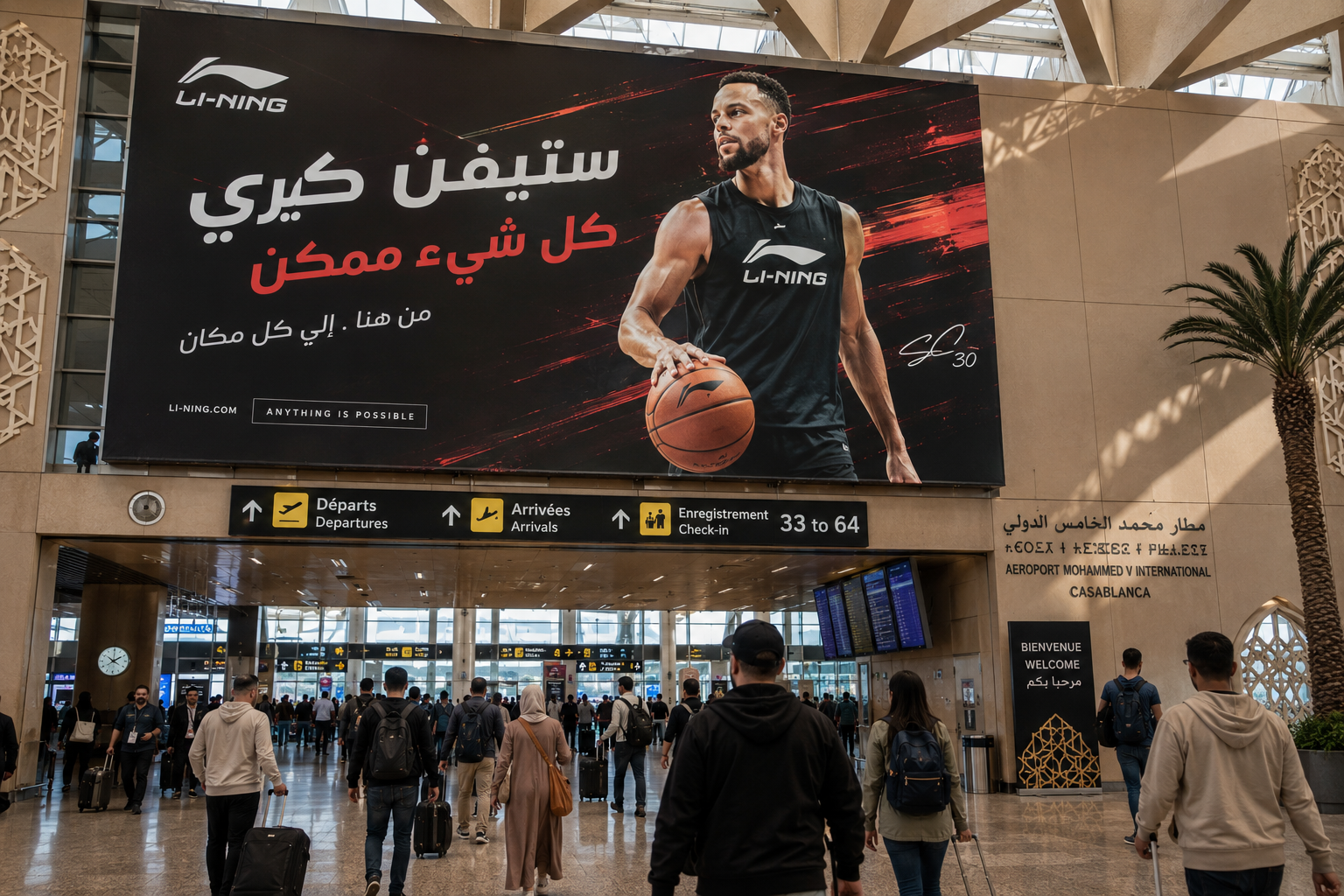
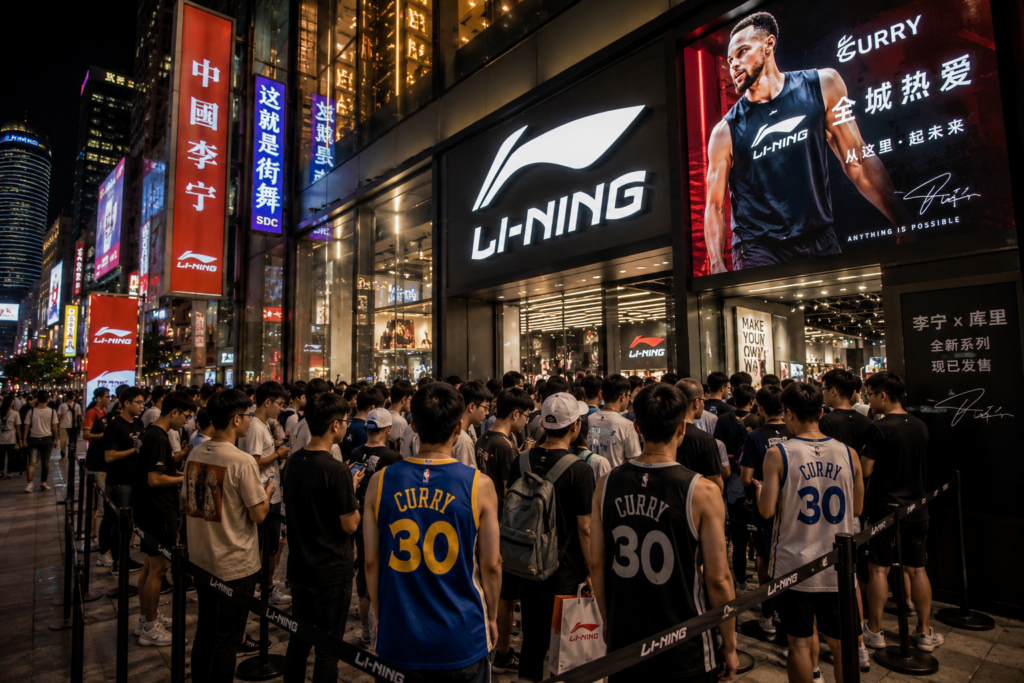
Imagine walking through an airport in Casablanca and seeing Steph Curry towering above international travelers on a massive Li-Ning billboard written in Arabic. A few hours later, on the other side of the world, hundreds of people stand in line outside a Li-Ning flagship store in Shanghai waiting for the latest Curry release.
Those moments may appear unrelated.
They are not.
Together, they reveal what basketball is becoming.
For decades, the sport’s center of gravity was easy to identify. Talent moved toward the NBA. Endorsement dollars flowed through American brands. Basketball culture spread outward from a relatively small number of institutions that controlled visibility, distribution, and access.
The game became global.
The business largely remained centralized.
That reality is beginning to change.
Steph Curry’s partnership with Li-Ning arrives at a moment when basketball is becoming less dependent on geography and more dependent on networks. Influence no longer travels in a straight line from league to fan. It moves through media platforms, retail environments, social feeds, youth academies, international partnerships, and global infrastructure.
The result is a sport that increasingly exists everywhere at once.
Michael Jordan helped define the era of athlete brands.
His partnership with Nike transformed sneakers into cultural currency and endorsements into empires. Athletes became brands capable of extending their influence far beyond the court.
But the next era appears to be asking a different question.
What comes after the athlete brand?
The answer may be ecosystem.
A brand sells products.
An ecosystem creates connections.
The distinction matters.
Ecosystems connect consumers to culture, products to communities, media to commerce, and audiences to aspiration. Every new connection strengthens the entire network.
That is why the most valuable athletes in the world increasingly resemble infrastructure.
LeBron James has built a media ecosystem.
Serena Williams has built an investment ecosystem.
Steph Curry appears to be building a basketball ecosystem.
The shoe is simply the most visible entry point.
This is what makes the Li-Ning partnership so significant.
Not because another superstar signed another contract.
But because two ecosystems decided to connect.
For Li-Ning, Curry provides one of the most recognizable and trusted identities in global sports. For Curry, Li-Ning provides access to a rapidly expanding international network capable of reaching consumers, athletes, and communities far beyond traditional basketball markets.
The future of the sport may not be organized around a single league, country, or company.
It may be organized around the ability to connect many worlds at once.
That future becomes visible when Steph Curry appears on a billboard in North Africa.
It becomes visible when consumers line up outside a flagship store in China.
It becomes visible when basketball culture begins speaking different languages while telling the same story.
The old basketball economy was built around borders.
The next basketball economy is being built around circulation.
Ideas circulate.
Products circulate.
Influence circulates.
And increasingly, so does basketball itself.
The league will remain important.
Teams will remain important.
Brands will remain important.
But the greatest source of value may belong to those capable of connecting all three.
That is what ecosystems do.
They make distance feel smaller.
They make geography feel less permanent.
And they allow culture to travel farther than the people who created it.
Steph Curry’s partnership with Li-Ning is ultimately a bet on that future.
A future where basketball’s power is not measured by where the game is played.
But by how many places it can go.
Related Posts
Swatch Is Teaching Luxury How to Circulate
Luxury Is Moving Closer to Everyday Life
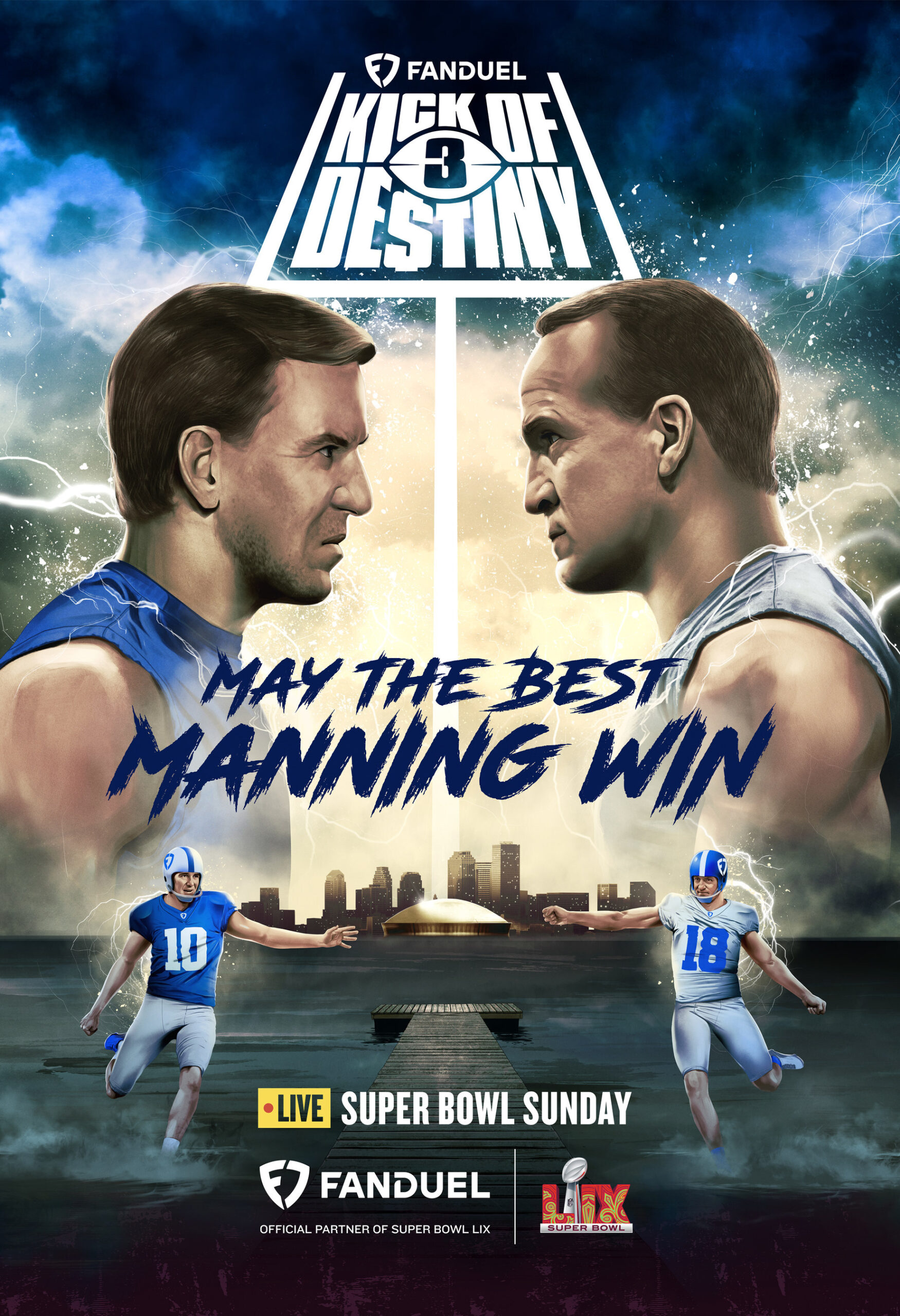
FanDuel’s “Kick of Destiny 3” Brings Peyton and Eli Manning Head-to-Head in a Super Bowl Sunday Showdown
Peyton and Eli Manning Head-to-Head Super Bowl Sunday

Gatorade Water Makes a Splash Nationwide, Diving into a Fresh Category
Gatorade has launched its first unflavored water, Gatorade Water, expa
Kane Parsons Shows Why Hollywood Is Looking to YouTube for Its Next Filmmakers
A new generation of filmmakers is arriving with proof already in hand
Fallout’s Hidden Layers Belong to Rafi Silver
Where Illusion Meets Control
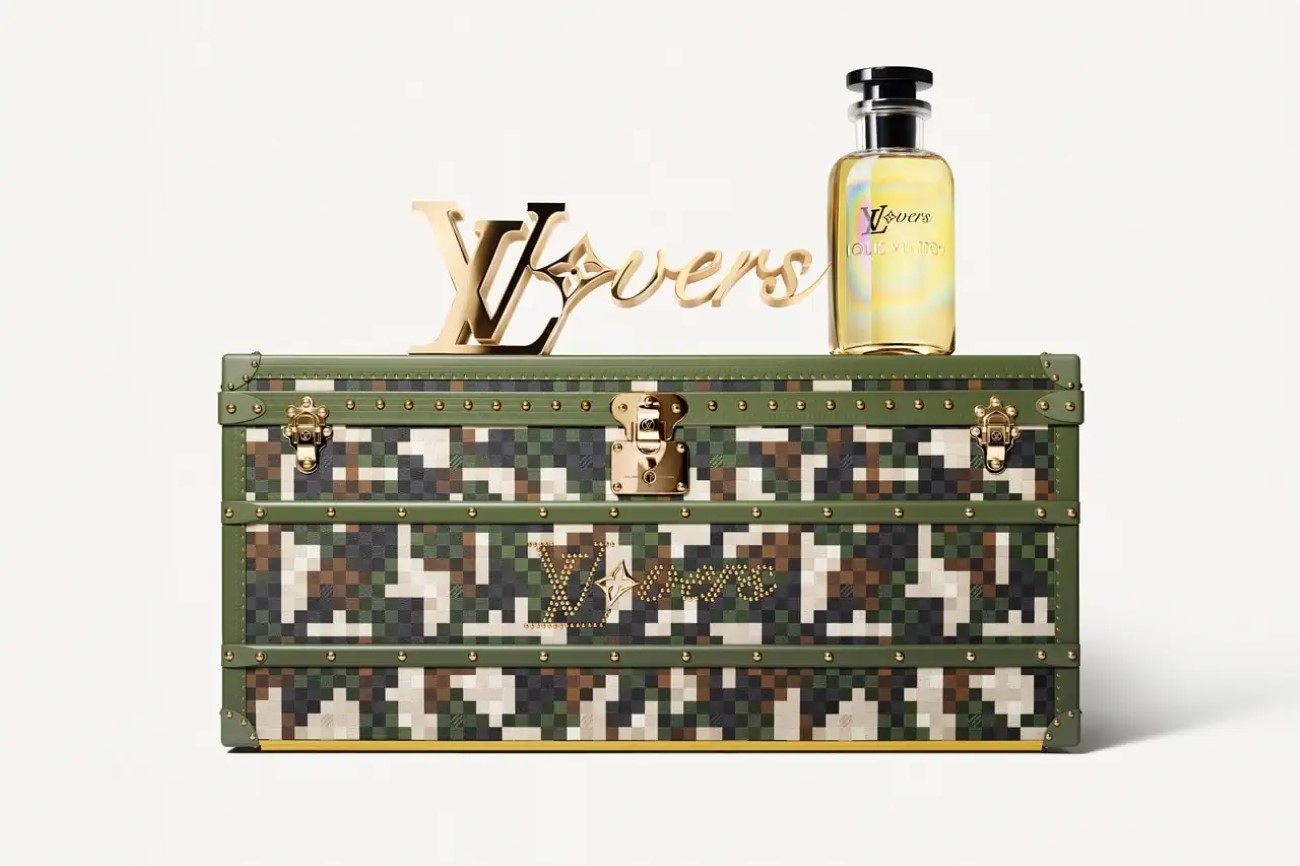
Pharrell Williams Unveils LVERS: His Debut Fragrance for Louis Vuitton
Pharrell Williams unveils LVERS, his first fragrance for Louis Vuitton