

Brands Don’t Sponsor Culture Anymore They Sponsor Control

By Kyra Greene
There was a time when sponsorship meant proximity. A logo near a stage. A bottle in a hand. A name threaded into a moment that felt alive, unpredictable, human. Brands didn’t need to understand culture. They only needed to stand close enough to absorb it.
That era is over.
What we’re watching now isn’t a reaction—it’s a reconfiguration. Not a moral stance, but a structural one. The withdrawal of sponsors from a live event doesn’t signal the collapse of culture. It signals the limits of where capital is willing to sit.
Because culture, left uncontained, is no longer a safe place to invest.
The shift didn’t begin with festivals. It began with distribution.
In the early days of radio, entire programs were shaped by a single sponsor—not subtly, but structurally. The brand didn’t sit beside the content. It defined the boundaries of what could exist within it. Control wasn’t a safeguard. It was the format.
Television refined this logic. As the medium scaled, the performer became secondary to the environment. Shows were engineered to be advertiser-compatible before they were culturally significant. The audience experienced spontaneity. The sponsor experienced predictability.
Cable didn’t disrupt this. It segmented it. Networks became controlled ecosystems—sports, music, news—each calibrated for a specific advertiser profile. You weren’t buying culture. You were buying containment at scale.
Then the internet arrived, and for a moment, control disappeared.
Content moved faster than infrastructure could manage. Context collapsed. A single piece of media could be interpreted infinitely depending on where it landed. For brands, this wasn’t expansion. It was exposure.
So the system adapted.
Not by limiting culture—but by reorganizing it beneath the surface.
A video can exist, travel, accumulate millions of views—and still be rendered economically invisible the moment it falls outside advertiser tolerance. It remains visible to the audience, but inaccessible to the brand. Culture continues. Monetization quietly disappears.
A creator can build an audience at scale and still find that access to revenue is not determined by reach, but by compatibility. The work circulates. The system decides whether it can sit next to money.
Platforms learned that they didn’t need to control what was created. They only needed to control what could be safely placed next to money.
This is the environment brands learned to trust.
Not culture—but containment.
And that’s why moments like this matter.
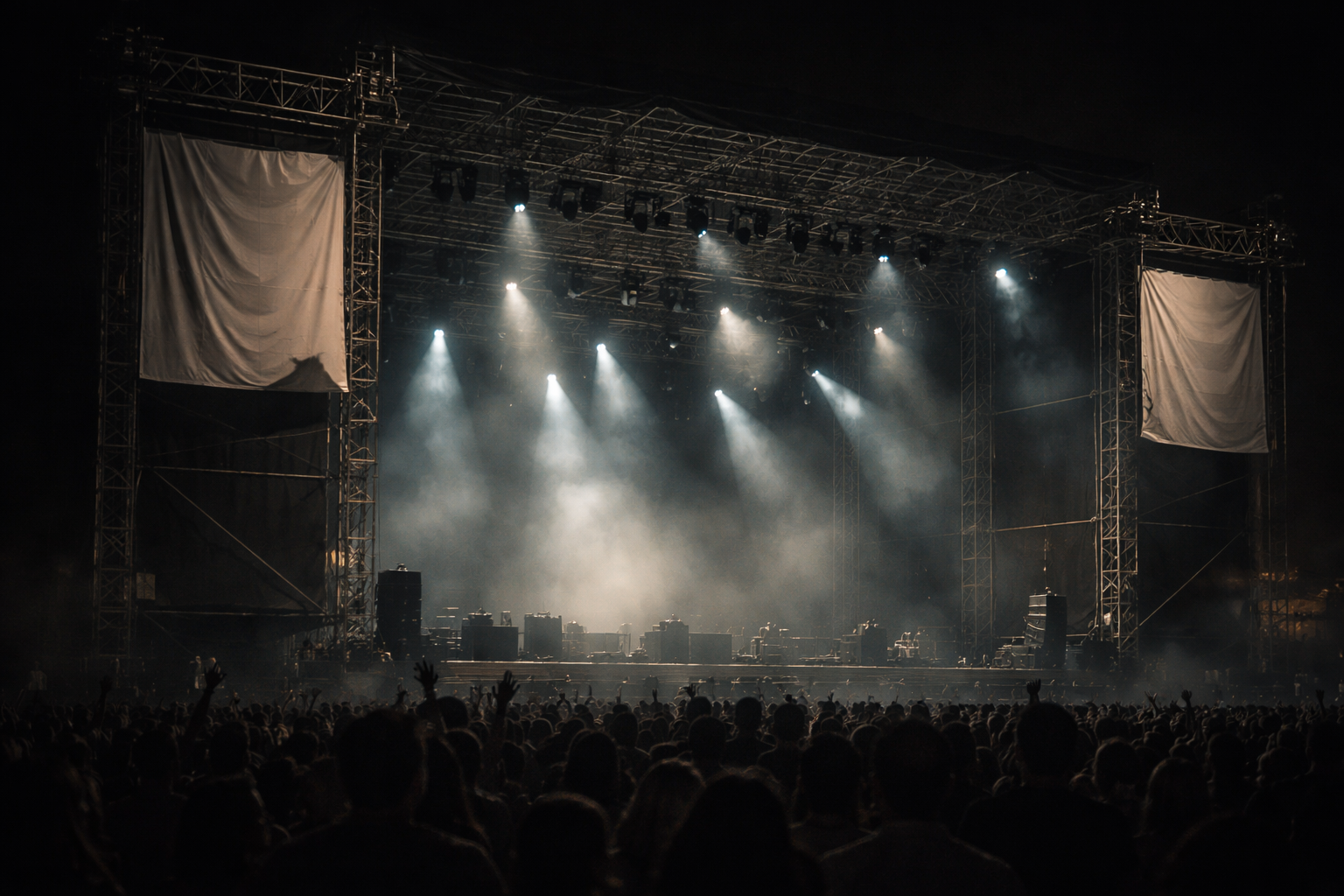
When Kanye West is announced as a headliner for Wireless Festival, the response isn’t framed publicly as a systems decision—but it behaves like one.
Pepsi steps back.
Diageo steps back.
PayPal limits its presence.
Not because the audience disappears. Not because the moment loses gravity. But because the environment can no longer be modeled.
A live stage is one of the last places where infrastructure cannot fully intervene. There is no buffer. No adjacency filter. No way to reroute the moment once it begins.
For brands, that’s not culture.
That’s unmanaged risk.
So they withdraw—not from the artist, but from the lack of control surrounding the artist.
This is the inversion.
Artists still generate gravity. They still create moments that pull people into shared attention. But attention is no longer the metric that determines investment.
Stability is.
Predictability is.
The ability to place a message inside an environment where outcomes are known before the moment happens.
That’s why a streaming platform can feel safer than a stadium. Why a curated feed carries more value than a live crowd. Why a controlled collaboration outperforms an unpredictable event—even if the event is more culturally significant.
Because the platform is infrastructure.
And infrastructure absorbs volatility.
The stage does not.
So value moves.
Away from the moment.
Into the system.
And once you see it, the pattern is impossible to ignore.
Creators are elevated not only by influence, but by predictability. Content is surfaced not only by engagement, but by adjacency compatibility. Entire cultural movements can exist—and still struggle to monetize—if they cannot be cleanly integrated into controlled environments.
This isn’t suppression.
It’s filtration.
And filtration is what makes scale possible.
So the question is no longer who is shaping culture.
The question is who is shaping the conditions under which culture is allowed to be funded.
Because that is where power now lives.
Not in the moment.
But in the environment surrounding it.
And that environment is no longer designed to amplify culture.
It’s designed to stabilize it.
Related Posts

Nike and SKIMS Join Forces to Revolutionize Fitness and Activewear with NikeSKIMS
NikeSKIMS Designed to Sculpt.
Marvel Comics Celebrates Native American Heritage Month with Kahhori’s Epic Comic Debut
First Look at 'Kahhori: Reshaper Of Worlds' #1

David Yurman Announces Partnership with NBA Stars and Launches Docuseries
David Yurman Collaborates With NBA

Timberland and Veneda Carter Unveil Their Sophomore Collaboration
Timberland and Veneda Carter launch their second collaboration

Spanx Collaborates with League One Volleyball to Empower Young Athletes
Spanx partners with League One Volleyball

Lara Croft Returns: Netflix Unveils Teaser for Animated Series
Lara Croft is back and its coming to Netflix