

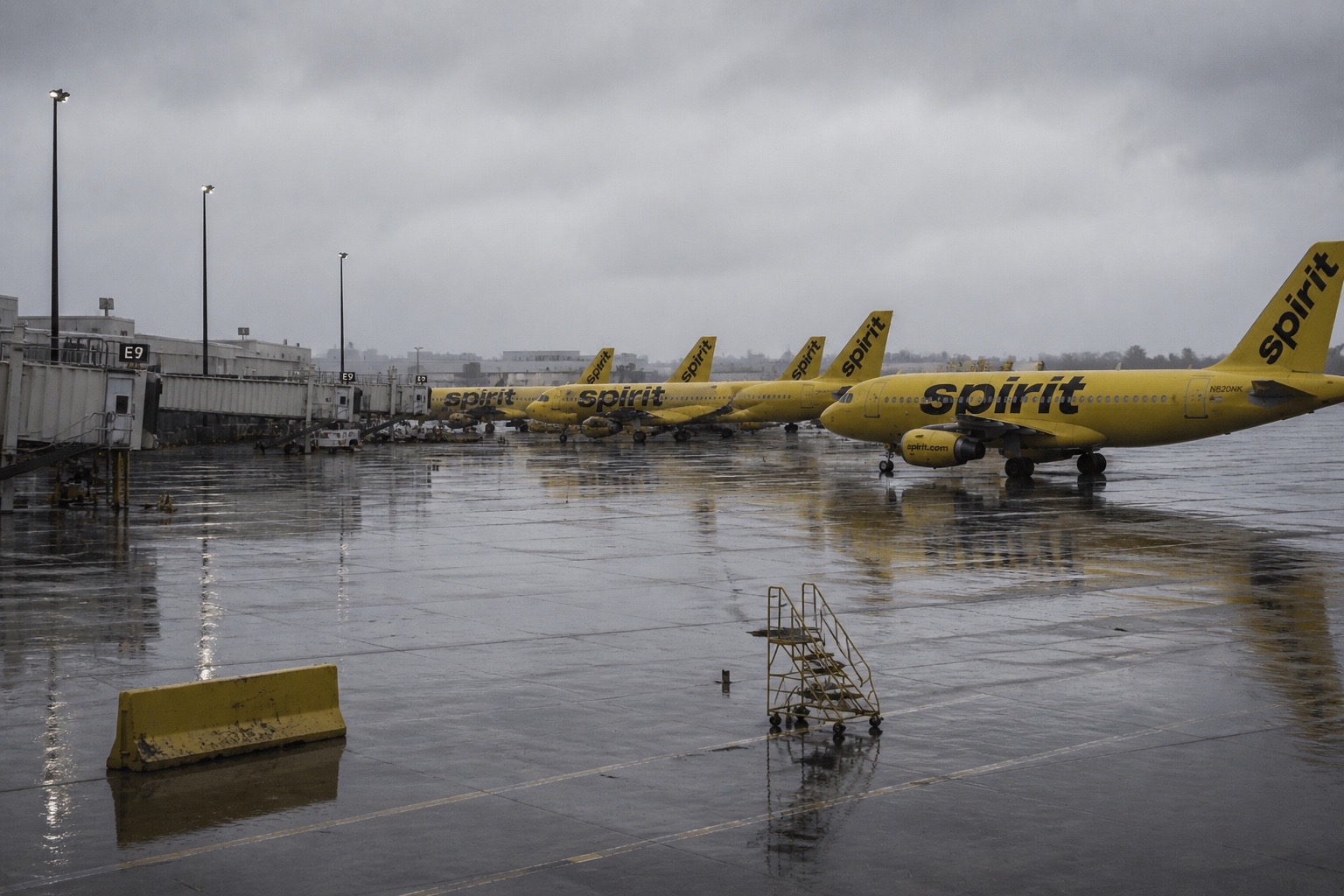
Spirit Airlines Didn’t Just Shut Down—The Floor of Air Travel Collapsed
By Randy Colehass
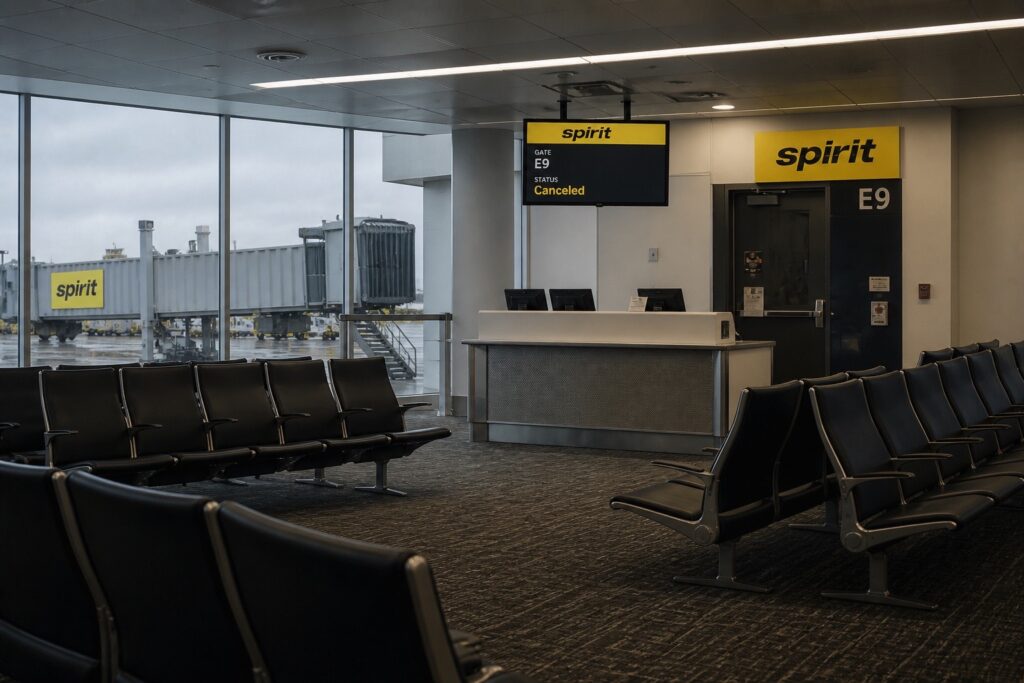
The cheapest seat in America didn’t disappear quietly. It stopped.
Not in a blaze. Not in a headline that could fully hold it. In a series of cancellations, a notice not to come to the airport, an orderly wind-down that sounded procedural and felt immediate. The kind of ending that doesn’t look like collapse until you realize nothing is moving anymore.
For more than three decades, Spirit Airlines wasn’t just a carrier. It was a constraint on price. A presence at the bottom of the market that forced everything above it to acknowledge a lower boundary. It proved that air travel could be reduced to its essentials—seat, route, time—and still function. Everything else could be optional.
That idea didn’t just build a business. It set a floor.
Once a floor exists, the structure above it reorganizes around it. Legacy airlines don’t become the floor, but they have to account for it. Basic economy appears. Fares compress. The lowest number on the screen becomes a reference point the rest of the system can’t ignore. Spirit didn’t need to dominate the market to shape it. It only needed to exist at the bottom.
Now it doesn’t.
Remove the floor and nothing collapses at once. Systems don’t behave that way. They adjust. Quietly. Incrementally. The lowest options thin out. The space between prices widens. What once felt reachable begins to drift, not dramatically, but consistently enough to be felt.
From the outside, the structure still stands.
From inside, it feels different.
What failed here isn’t only a company. It’s a model reaching its edge. Ultra-low-cost travel runs on a narrow equation: high volume, minimal margin, aggressive unbundling, constant motion. It works while pressure stays within range. But when costs rise beyond what can be passed through—fuel, labor, financing—the system has nowhere to absorb the shock.
There are no buffers left.
Efficiency becomes fragility. The same discipline that lowers prices removes the margin for survival when conditions change. What once made the model powerful becomes the reason it can’t hold.
Spirit didn’t miscalculate the market. It exposed its limits.
And once a limit is revealed, it becomes a boundary the system remembers.
To a traveler, the language doesn’t matter. Wind-down, restructuring, liquidation—these are internal terms for an external reality: the flight is gone. The seat is gone. The option is gone. In that moment, infrastructure failure and disappearance feel the same.
The system stopped, and people felt it immediately.
The deeper consequence arrives later, without announcement. As routes are redistributed and demand consolidates, the absence of the lowest-cost option reshapes behavior. Fewer entry points. Less pressure at the bottom. More room for prices to move without resistance.
Access narrows.
And once access narrows, it rarely returns to where it was.
This will be framed as a business story. A budget airline undone by rising costs and tightening conditions. That version is clean. Contained. Easy to process.
It’s also incomplete.
Because what just happened isn’t only about an airline ending. It’s about a system revealing its boundary in real time. The point where affordability stops being sustainable and becomes unsupportable. The moment where the lowest layer can no longer carry the weight above it.
The system didn’t lose a participant. It lost its floor.
And without a floor, everything above it begins to shift.
Related Posts

MTN DEW Launches Limited-Time RED, WHITE & BLUE Flavors to Celebrate Summer Outdoors
MTN DEW ® CELEBRATES SUMMER WITH THREE NEW MTN DEW

Netflix Unveils Tense New Trailer for The Waterfront, a Southern Gothic Family Drama
The Buckleys Are Sinking
From Shakespeare to Nas: Who Gets to Be Called a Poet
From Page to Microphone

Lunella’s Back! Marvel’s Moon Girl and Devil Dinosaur Season 2 Set to Premiere
Brains, Beats, and a Big Red Dinosaur

Michelle Núñez: Fearless in Film, Music, and Storytelling
Michelle Nunez multi talented.

The RLJ Companies Appoints Scott Royster as CFO of Caribbean CAGE
CAGE is licensed to operate video lottery and video gaming terminals,