

Ralph Lauren Is Bringing Skateboarding Into the American Archive
By Kyle Tatter
For decades, Ralph Lauren documented America’s institutions. Now the brand is making room for one of its most influential subcultures.
Ralph Lauren has always understood that clothing is only part of the story.
What the brand truly sells is a vision of America.
For more than fifty years, Ralph Lauren has built an expansive cultural landscape populated by ranches, Ivy League campuses, coastal marinas, equestrian fields, small towns, and wide-open roads. The people change. The collections evolve. Yet the underlying idea remains remarkably consistent: Ralph Lauren is documenting a version of American life.
That is what makes the brand’s relationship with skateboarding so interesting.
For much of its history, skateboarding existed outside many of the institutions that traditionally defined American culture. It was independent by design. Built in parking lots, schoolyards, empty pools, and city streets, skateboarding developed its own language, aesthetics, and communities. It wasn’t looking for permission to belong.
Over time, however, skateboarding became impossible to ignore.
Its influence spread far beyond the board itself. Fashion adopted it. Music embraced it. Brands studied it. Entire generations grew up seeing skateboarding not as a niche activity but as a permanent part of the cultural landscape.
The question was never whether skateboarding would become influential.
The question was when the larger institutions of American culture would begin treating it that way.
Ralph Lauren appears to be answering that question.
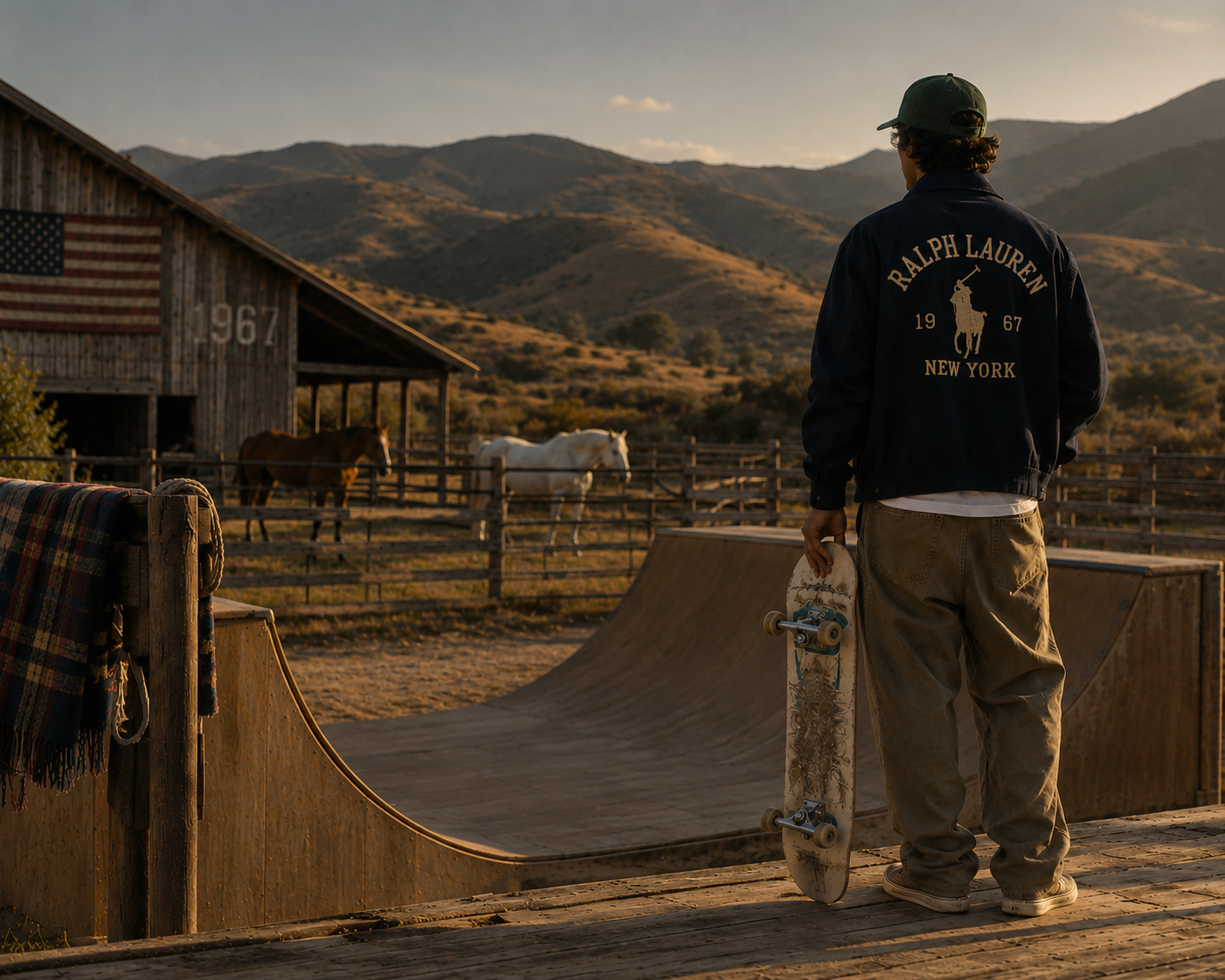
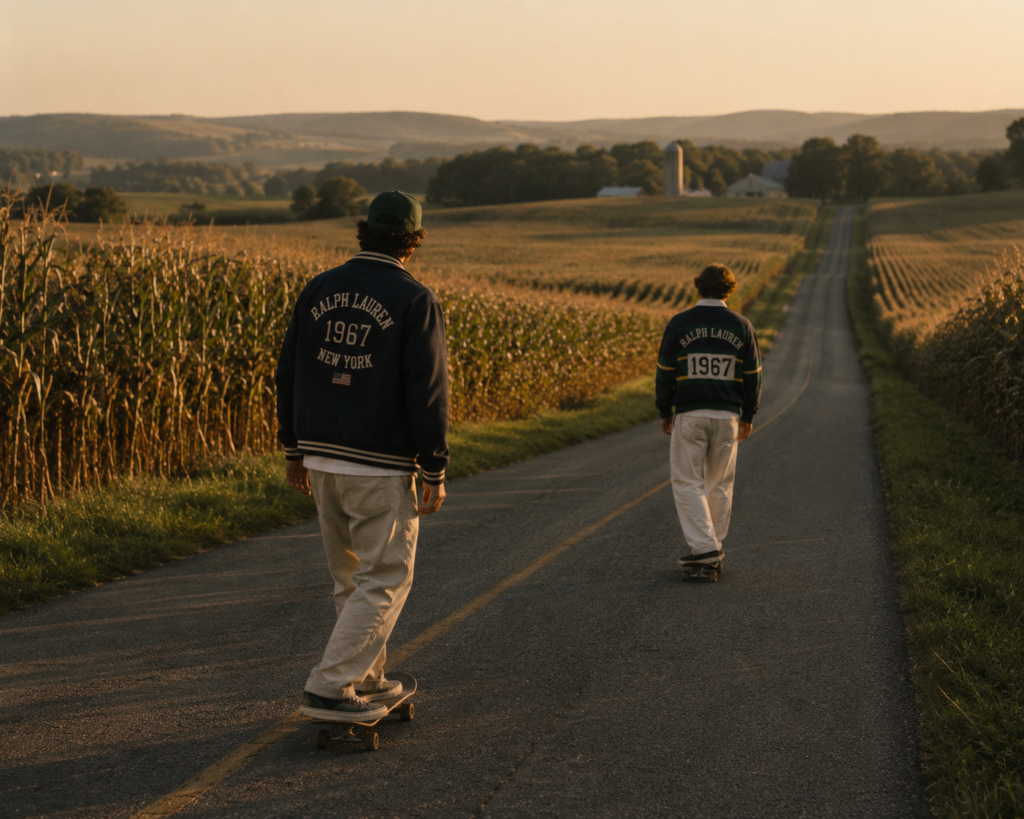
What’s striking about the brand’s recent imagery is not simply the presence of skateboards. It’s where those skateboards appear. A skater moving through a marina. A skateboard existing naturally within the visual language of heritage Americana. A skate ramp sitting comfortably on a ranch.
The environments remain unmistakably Ralph Lauren.
The skateboard is what changes.
That distinction matters because it reveals something larger than a fashion collaboration. Ralph Lauren isn’t abandoning its world. It is expanding it. The archive is making room for someone new.
A skate ramp on a ranch shouldn’t make sense.
And yet it does.
Not because the ranch has become skate culture. Not because skate culture has become ranch culture. But because both now occupy the same American landscape. The image feels surprising at first, then strangely inevitable.
That feeling is the story.
The most enduring cultural archives are not preserved by keeping new ideas out. They survive by recognizing which ideas have earned a place inside. Skateboarding has reached that point. It has evolved from subculture to institution, from outsider activity to cultural language spoken across generations.
Ralph Lauren’s imagery reflects that evolution.
The skateboard is no longer positioned outside the gate.
It is part of the landscape.
And in a world built around documenting American identity, that may be the strongest statement Ralph Lauren can make.
Related Posts
A$AP Rocky’s Wayfarer Puffers Channel Harlem Cool and Global Edge
Puff & Presence
Fruit or Condiment? Heinz Just Made Ketchup Drinkable
Savory Meets Sweet

adidas x Bad Bunny Gazelle San Juan: A Celebration of Puerto Rican Pride
adidas x Bad Bunny Gazelle San Juan: Celebrate Puerto Rican Pride
Travis Scott’s Paramount Deal Shows Hollywood Is Expanding Where Intellectual Property Begins
The business of building creative worlds
Stack Athletics Unveils New Summer 2024 Pickleball Apparel Collection
Stack Athletics Unveils New Summer Pickleball Apparel Collection

Zibby Allen: Acting in the Space Between Feeling and Form
Performing the Unspoken