

Luxury Brands Don’t Want Customers Anymore — They Want Geography
By Javon Simmons
Luxury used to live inside the store.
The aspiration was concentrated in the object itself: the trench coat, the handbag, the watch, the silk scarf, the room key handed across a marble desk. Ownership was the endpoint. Once the product was purchased, the transaction was complete.
But the modern luxury economy is beginning to evolve beyond products entirely.
Today, the most ambitious brands are no longer simply selling fashion. They are constructing emotional environments — temporary worlds where architecture, hospitality, atmosphere, leisure, memory, and visual identity all operate together under a single aesthetic language.
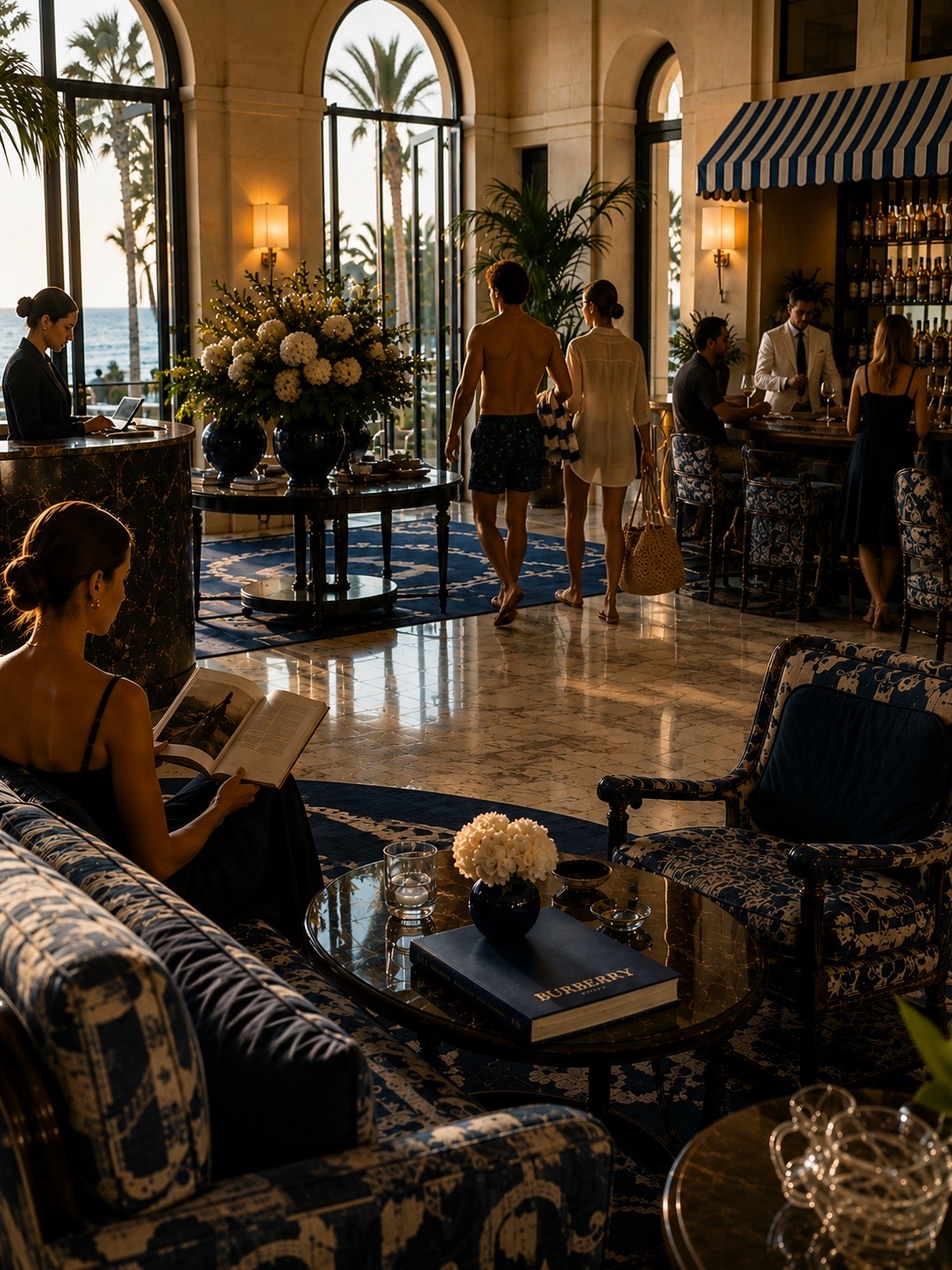
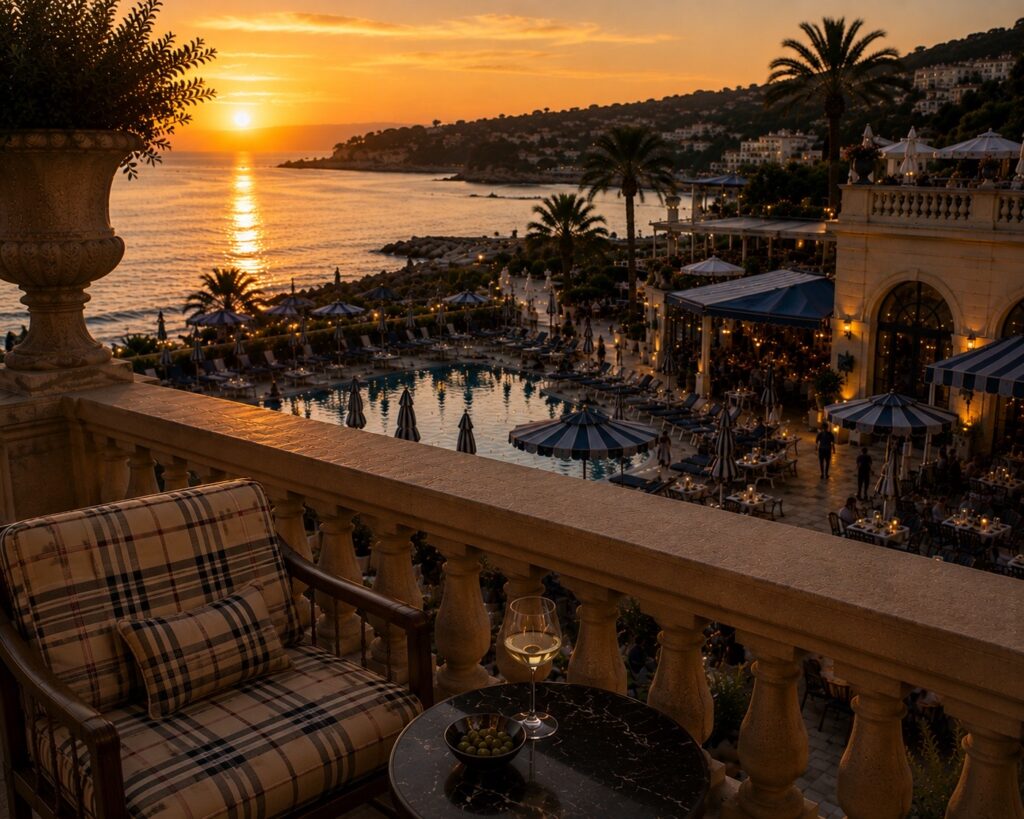
That is why Burberry’s takeover of Hôtel Belles Rives on the French Riviera matters beyond branding.
On the surface, it looks elegant but familiar: deep blue parasols, Riviera textiles, coordinated lounge environments, subtle heritage patterns integrated into furniture and hospitality spaces. Another luxury activation in another famous destination.
But structurally, something much larger is happening.
Burberry is not merely advertising inside a hotel.
It is temporarily redesigning geography.
The distinction matters.
Because the modern luxury brand increasingly understands that the internet permanently changed aspiration. Social media flattened visual access. Everyone can now see luxury in real time. Runway shows stream globally. Campaigns circulate instantly. Celebrity fittings, yacht parties, hotel suites, and front-row dinners all arrive on the same phone screen.
Visibility is no longer scarce.
Immersion is.
That shift is changing the behavior of luxury houses entirely.
The new goal is not simply to sell an object people wear. The goal is to create an environment people emotionally enter. A world they temporarily inhabit. A place where the brand exists not as a logo, but as atmosphere.
That is why hospitality is becoming one of the most important infrastructures in modern luxury.
Hotels are no longer just places to stay. They are now:
- emotional ecosystems
- content distribution systems
- architectural moodboards
- social environments
- cultural stages
- memory manufacturing machines
all simultaneously.
The Riviera itself makes this evolution even more powerful because the geography already carries inherited mythology. For decades, the coastline has represented overlapping systems of wealth, cinema, literature, fashion, and leisure. Old-money hotels, beach clubs, yachts, film festivals, and café culture all merged into a single emotional landscape long before social media existed.
Luxury brands are now learning how to temporarily occupy those emotional landscapes as extensions of themselves.
Not loudly.
Subtly.
That subtlety is important.
The most sophisticated part of Burberry’s takeover is that the branding does not need to scream. The heritage check integrated into balcony furniture. The coordinated navy textile systems. The environmental synchronization across the property. The guest begins feeling Burberry before consciously identifying it.
That restraint is what makes it luxury.
Because real luxury branding increasingly behaves less like advertising and more like environmental authorship.
The product is no longer isolated from the space around it. The hotel lobby becomes part of the fashion language. The pool terrace becomes part of the campaign. Sunset cocktails become part of the visual identity. Even the atmosphere itself becomes branded.
And social media accelerates the entire system.
Every guest photograph quietly extends the campaign outward. Every balcony dinner, pool reflection, and sunset story becomes ambient distribution. The customer is no longer just consuming luxury. They are circulating it.
That changes the meaning of the luxury experience entirely.
The future luxury winner may not be the brand with the loudest campaign or the largest logo. It may be the brand most capable of constructing environments people emotionally attach themselves to.
Not stores.
Worlds.
Because luxury brands are no longer satisfied with occupying closets.
They want coastlines.
Related Posts
Monster Energy Returns as the Official Energy Drink Partner of the BIG3
MONSTER ENERGY BACK AS THE OFFICIAL ENERGY DRINK OF THE BIG3

Carol’s Daughter Unveils Collaboration with Warner Bros. Pictures’ Contemporary Cinematic Interpretation of the Timeless Classic, The Color Purple
Carols Daughter The Color Purple Colloboration
UGG Reveals the Latest Evolution of Regenerate by UGG™ Collection
UGG®, the global lifestyle brand introduces new line .
Calm Is the New Power: Volvo’s EX60 Redefines Electric Luxury
Less Noise, More Meaning
Godzilla Returns: Minus Zero Targets November 2026 Global Takeover
The Monster Returns
The Op Games Unveils MONOPOLY®: Grey’s Anatomy Edition, Inspired by the Beloved Drama Series
MONOPOLY®: Grey's Anatomy Edition, Based on Popular Drama Series