

LeBron James, Kevin Durant and the New Battle for the Future of Youth Basketball
By Benjamin Webster
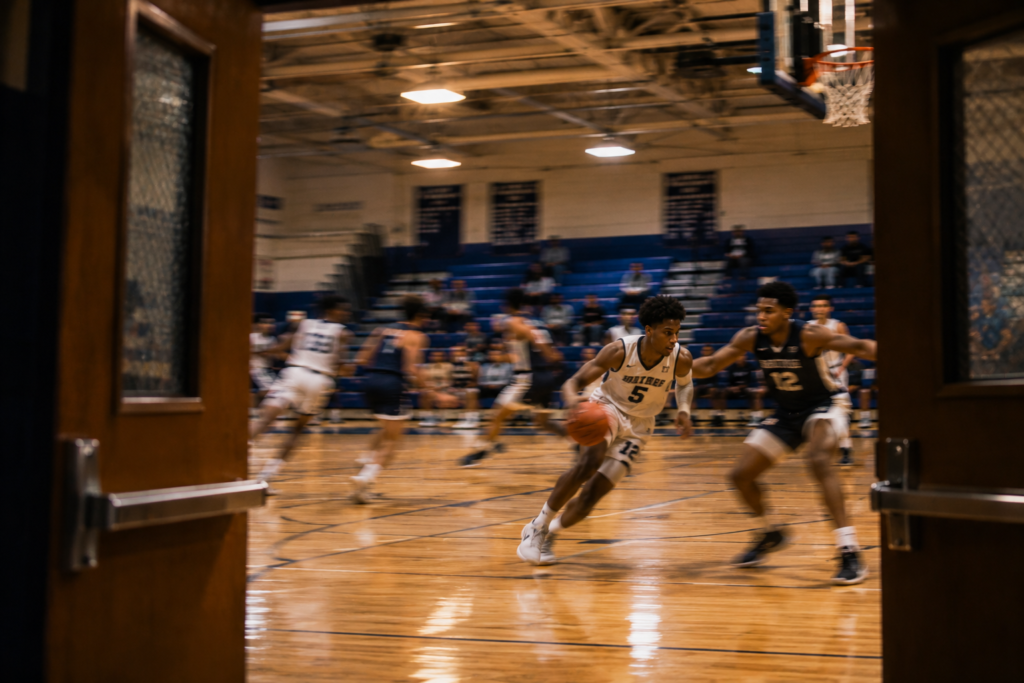
For generations, the road to professional basketball in America has begun long before the bright lights of an NBA arena. It has unfolded in high school gymnasiums, crowded summer tournaments and basketball courts where young athletes compete under the watchful eyes of college coaches, scouts and footwear company representatives. Families travel across the country, coaches build reputations around developing talent, and teenagers learn that their ability to play basketball can carry a value extending far beyond the scoreboard.
That system has produced extraordinary players. It has also grown into a commercial ecosystem in which the organizations surrounding young athletes can benefit from their talent years before those athletes reach college or professional basketball.
Now, a new venture backed by investments associated with LeBron James and Kevin Durant is proposing a different arrangement.
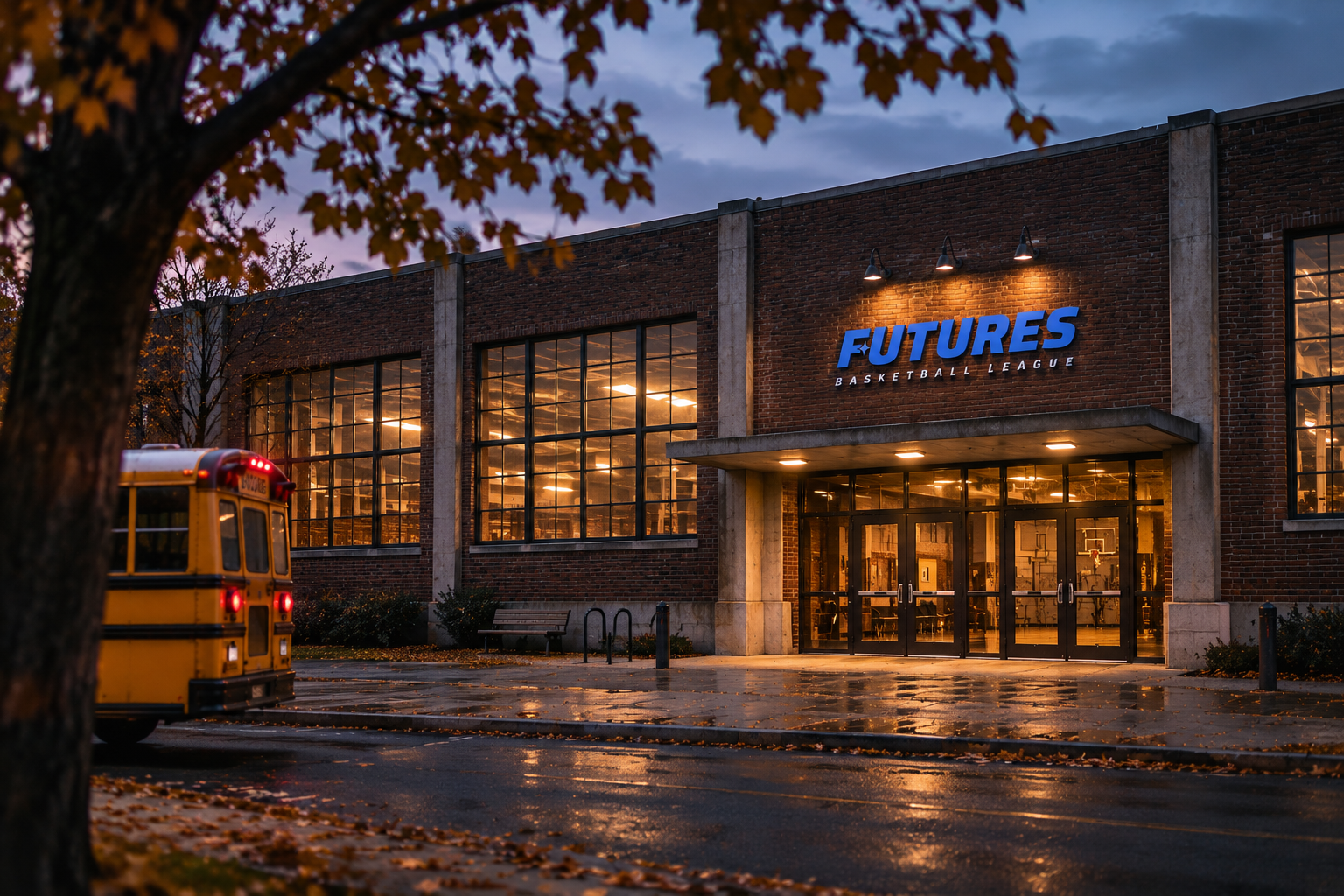
The Futures Basketball League, known as FBL, announced in November 2026 that it was establishing a national competition for elite boys under 18, with its inaugural season scheduled to begin in April 2027. The league plans to bring together 120 players from the high school graduating classes of 2028 through 2031 across 12 regional teams, offering structured development, national competition and compensation through name, image and likeness agreements.
Eligible players would be able to receive cash, potentially acquire league equity, or choose a combination of both, with equity arrangements subject to administrative approval.
The announcement places some of basketball’s most recognizable figures behind an effort to reorganize a significant part of the sport’s developmental economy. But its implications extend beyond celebrity investment or the creation of another competition.
At its center is a question American basketball has been approaching for years: if teenage athletes are already helping generate commercial value, how should they participate in the businesses built around their talent?
The answer is more complicated than simply paying them.
American grassroots basketball did not emerge as a single national institution. Independent clubs, school programs, local tournaments and Amateur Athletic Union competitions helped establish pathways for young players long before major footwear companies developed their own national circuits. As basketball’s commercial influence expanded, those companies became increasingly important to the organization, financing and visibility of elite youth competition.
Nike’s Elite Youth Basketball League, introduced in 2010, helped establish a recognizable national structure connecting sponsored grassroots programs through a coordinated schedule of events. Its annual Peach Jam tournament became one of the sport’s most prominent recruiting environments, bringing together elite prospects, college coaches and basketball industry representatives.
Adidas developed its own national grassroots infrastructure, now represented by its 3 Stripes Select Basketball circuit, while Under Armour established the Under Armour Association. Each provided opportunities for young athletes to compete against high-level opponents, gain exposure and develop relationships within basketball’s broader ecosystem.
These circuits have been influential for good reason. They offer organized competition, recruiting visibility and access to networks that can shape an athlete’s future. Many professional players passed through their programs, and the infrastructure surrounding them has become an established part of American basketball development.
Yet the existence of multiple major circuits also creates a fragmented competitive environment. The best players are not necessarily participating in the same tournaments or facing one another regularly. Different brands support different programs, and commercial relationships can influence where teams compete.
Jason Stein, chairman and co-founder of the Futures Basketball League, has identified that fragmentation as one of the problems his organization intends to address.
In an interview with ESPN, Stein described a landscape in which many of the country’s leading teenage players are distributed across numerous teams and competitions. He also argued that young athletes are not consistently receiving appropriate compensation for their NIL value or the professional coaching structure they need.
In the league’s official announcement, Stein put his broader criticism plainly: “the system around these athletes hasn’t risen to their level.”
His argument reflects a tension within youth basketball. The existing system can provide valuable opportunities while still leaving questions about competition, compensation, scheduling and development unanswered.
FBL is proposing to bring those functions into a more centralized structure.
Under its announced model, regional teams would recruit players within designated territories, while the league would contract with and compensate participating athletes through NIL arrangements. Its planned competition would span 10 league weekends between April and August 2027, concluding with a national championship.
The schedule is intended to accommodate high school basketball seasons, NCAA recruiting periods, USA Basketball commitments and the NBPA Top 100 Camp.
Rather than organizing a collection of independent tournaments, FBL wants to establish a recognizable national property with teams, recurring competition and a coordinated commercial identity.
The proposed structure is significant because the league would not simply serve as another tournament organizer. It would also operate as a business seeking revenue from team investments, sponsorships, media distribution and related commercial activity.
The involvement of James and Durant brings considerable visibility to that ambition, but the investment relationships deserve precision.
James and his longtime business partner Maverick Carter are connected to the venture through LRMR Ventures, while Durant and business partner Rich Kleiman are involved through Boardroom Sports Holdings. Carter and Kleiman are also among FBL’s co-founders and directors. Their participation is part of a broader founding group that includes former NBA Most Valuable Player Derrick Rose, Orlando Magic forward Paolo Banchero, entrepreneur Gary Vaynerchuk and other investors.
These are not interchangeable roles. Rose and Banchero have been identified as founding team owners, while James and Durant are connected through investment vehicles. Their involvement should not be interpreted as evidence that each will personally operate a team or manage the league’s daily activities.
Rose’s participation provides one of the more revealing human dimensions of the venture.
A former Chicago basketball prodigy who became the youngest Most Valuable Player in NBA history, Rose understands the expectations placed on exceptional young athletes before they reach professional basketball. He is expected to operate FBL’s Chicago team and has discussed developing a financial literacy program for its players.
Reflecting on his own childhood in the league’s announcement, Rose explained that his brothers protected him and helped ensure the right people were around him. “Most young players don’t have that,” he said.
His words speak to an experience familiar to many athletes who reach professional sports. Their financial value can develop rapidly, often before they have acquired the knowledge or support necessary to understand contracts, investments, endorsements and the responsibilities accompanying substantial earnings.
Rose also told ESPN that he had been meeting with representatives from Northern Trust about financial education for his team. The program has not been established as a completed initiative, but the intention introduces an important distinction between compensating young athletes and preparing them to manage that compensation.
For a teenager, the arrival of money does not automatically bring financial understanding. Nor does a lucrative opportunity guarantee that the adults and organizations surrounding an athlete will prioritize that person’s long-term interests.
That responsibility becomes particularly important when the athletes involved are minors.
FBL’s proposal to offer compensation through NIL agreements reflects the transformation already underway in college and high school athletics. The expansion of NIL opportunities has allowed athletes to receive compensation for legitimate commercial uses of their names, images and likenesses, altering a system in which restrictions historically limited their ability to benefit financially from their public identities.
But NIL compensation is not the same as an unrestricted salary for athletic participation.
The distinction matters because FBL intends for its players to retain high school and college eligibility. NCAA rules permit qualifying NIL arrangements, but covered agreements may be subject to disclosure and review requirements. High school eligibility policies also differ across state athletic associations, creating additional complexity for a national league recruiting players from multiple jurisdictions.
FBL has announced its intention to preserve eligibility, but that intention should not be mistaken for independent confirmation that every proposed contract or compensation arrangement has received the necessary approval.
The equity component introduces another layer of complexity.
Allowing a young athlete to receive an ownership interest in a league could create an economic relationship extending beyond a conventional endorsement agreement. Depending on the structure, that interest might allow the athlete to participate in future appreciation of the business. It could also expose the athlete to an investment whose value is uncertain.
The league has not publicly disclosed the precise ownership instruments, percentages, valuation terms or transfer restrictions that would apply to participating players. Its announcement explicitly makes the proposed equity arrangements subject to administrative approval.
For now, the promise of player ownership is a proposed feature of the business model, not a demonstrated financial outcome.
The league says it has already begun signing prospects from the four targeted graduating classes to NIL agreements. That represents a step beyond announcing an intention to recruit, although individual compensation amounts and the terms of those agreements have not been publicly disclosed.
And while the overall concept is compelling, FBL is not the first basketball organization to explore compensation and ownership-related opportunities for teenage athletes.
Overtime Elite, launched in 2021, introduced a professional development environment combining basketball training, education, media production and substantial compensation for young prospects. Its original model offered salaries and equity-related participation, while subsequent changes created a scholarship pathway through which players could preserve college eligibility.
The organization helped develop players including Amen and Ausar Thompson, who became top-five selections in the 2023 NBA Draft. It also demonstrated that teenage basketball could be presented as an entertainment property, using original programming and digital storytelling to build audience relationships with athletes before they entered the NBA.
Overtime Elite’s experience is important because it challenges any suggestion that FBL has invented the concept of compensating young basketball players or building a media business around their development.
The difference lies in the proposed organization of the enterprise.
Where Overtime Elite developed a basketball and entertainment ecosystem under the Overtime brand, FBL is proposing a national competition supported by outside team investors, regional representation and centralized commercial operations.
Another instructive example is NBA G League Ignite.
Introduced in 2020, Ignite offered elite prospects a professional alternative to college basketball, providing salaries and development opportunities within the NBA’s minor-league structure. The program produced NBA Draft selections, including several highly regarded prospects, but the NBA discontinued it after the 2023–24 season.
The league cited the changing landscape of basketball development, including the expansion of NIL opportunities and the growing financial possibilities available through college athletics.
Ignite’s closure did not erase the players it helped develop. It demonstrated that a development program can produce professional talent while its underlying purpose becomes less compelling as the surrounding market changes.
That history offers a useful caution for FBL.
A recognizable ownership group, ambitious compensation structure and compelling development philosophy do not guarantee that a new league will attract the best players, sustain an audience or remain commercially viable. The organization must offer something valuable enough to compete with existing opportunities, many of which have become more attractive as athletes gain additional financial options.
FBL’s investors appear to recognize that challenge.
ESPN reported that the league’s team investment price was $6 million, with investors also receiving an equity interest in the broader organization. That arrangement suggests an effort to build a network of team investors who have financial interests extending beyond their individual regional operations.
But the reported price should not be confused with a verified valuation of each team or the entire league.
The precise ownership percentages, voting rights, revenue-sharing arrangements and continuing financial obligations have not been publicly established in the materials reviewed. Nor has the league disclosed the individual compensation amounts that participating athletes would receive.
The business model also depends on commercial relationships that have not all been finalized publicly.
FBL intends to pursue sponsorship agreements and media rights while presenting its games through streaming and national television distribution. Connor Schell, a former senior ESPN executive associated with 30 for 30 and The Last Dance, has been named a special adviser on production, storytelling and distribution.
His involvement underscores the league’s ambitions beyond competition.
Modern sports properties are not built exclusively around what happens during a game. They also develop audiences through player personalities, behind-the-scenes access, documentaries, social media and the emotional investment viewers form with individual athletes.
For FBL, those relationships could become particularly important. A young player may arrive with an existing audience, a recognizable recruiting profile or a social media following developed before entering the league. Bringing those athletes into a coordinated national competition creates opportunities to connect individual popularity with a larger entertainment property.
But those opportunities remain prospective.
The league’s original announcement did not identify a completed broadcast-rights agreement or name its media distribution partners. Its ability to attract attention around an announcement is not the same as demonstrating sustained demand for a full season of youth basketball.
There is also the question of how FBL will coexist with the footwear companies that helped build the current grassroots landscape.
Former sneaker executive Sonny Vaccaro raised that concern in ESPN’s reporting. “It’s great they want to pay the kids, but the question is always what the sneaker companies are going to do,” he said.
Vaccaro’s observation points toward a commercial reality. Nike, Adidas and Under Armour have invested years in relationships with grassroots programs, coaches and emerging athletes. A new national league may offer a different organizational structure, but it cannot simply assume those established interests will disappear.
Stein has said he has held productive conversations with footwear companies and intends to work with them.
That position is significant. FBL does not necessarily need to eliminate the existing sneaker ecosystem to become influential. Its announced NIL structure would allow eligible players to pursue separate commercial partnerships, including with footwear companies.
The league could therefore change the relationship between those companies, the competition organizer and the athletes without removing the brands from youth basketball altogether.
The outcome will depend on agreements that have not yet been publicly established.
Beyond its financial architecture, FBL has identified organizations responsible for delivering its proposed development system.
MADE Hoops, an established grassroots basketball platform backed by Durant and LRMR Ventures, has been named the league’s operations partner. Its founder and chief executive, Chad Babel, previously worked on Nike’s high school basketball strategy, bringing experience from the same grassroots ecosystem FBL is seeking to reorganize.
Player development will be supported by HMBL Development, the Brooklyn-based training company founded by Justin Bright in 2014. As the league’s official training partner, HMBL is expected to create individualized development plans supported by its training facility and a national network of coaches and trainers.
Bright described the problem his organization hopes to address in the official announcement: “For too long, the system has prioritized the next tournament over long-term development.”
The observation identifies a challenge that extends beyond the creation of another competitive schedule. Development requires continuity, thoughtful coaching, recovery, education and attention to the individual athlete rather than simply the next opportunity to perform.
These partnerships give the venture an identifiable operating structure. They do not yet establish how consistently the proposed services will be delivered across every team or what outcomes participating athletes will experience.
The league has also announced a $1 million pledge to the MADE For All Foundation, which supports scholarships and community initiatives intended to expand access to youth basketball opportunities.
The pledge broadens the stated mission beyond the 120 players expected to compete in the inaugural season. Its announcement, however, should be distinguished from independently verified disbursement of the full amount or measured results from the funded programs.
Taken together, the partnerships and charitable commitment provide more substance to FBL’s development ambitions. They also create responsibilities against which those ambitions can eventually be evaluated.
And beneath the investment strategy, the media plans and the competition for elite talent lies a more fundamental question about the purpose of youth sports.
Tom Farrey, executive director of the Aspen Institute’s Sports & Society Program, has criticized the existing youth basketball environment for placing commercial incentives ahead of athletic and child development principles.
In ESPN’s reporting, Farrey warned that the system is “commercializing and monetizing them at every stage without any adherence to athletic or child development principles.”
His criticism presents a challenge that FBL cannot resolve through compensation alone.
A league created to address the commercialization of teenage basketball is itself a commercial enterprise. Its investors expect to build a valuable business. Its media strategy depends on attracting audiences. Its competitive identity depends on recruiting exceptional young athletes whose performances and personalities can generate attention.
Those objectives are not inherently incompatible with player development. But neither are they automatically aligned.
The number of games athletes play, the amount of travel required, the quality of coaching, access to education, medical support and the handling of financial relationships will all influence whether the league delivers a meaningfully different experience.
There is a distinction between giving young athletes access to money and giving them the tools, protections and opportunities necessary to build sustainable futures.
That distinction is where FBL’s promises will ultimately be tested.
The league’s proposed April 2027 inaugural season will provide its first opportunity to demonstrate whether a centralized competition can improve the experience of elite prospects while attracting the commercial support necessary to sustain its operations.
It will also begin to reveal whether a structure supported by prominent NBA figures can change relationships that have developed over decades among grassroots clubs, footwear companies, college programs and young athletes.
None of those outcomes can be declared in advance.
What can be established is that the economic relationship between basketball and its youngest stars is changing. The rise of NIL compensation has already challenged older assumptions about amateurism, while alternative development programs have demonstrated both the possibilities and limitations of building businesses around emerging talent.
FBL is entering that evolving environment with a proposed model that brings together regional team investment, player compensation, potential ownership and national media ambitions.
Its significance is not that it has already transformed American youth basketball. It is that its founders and investors believe the system can be organized differently, and are committing resources to that proposition.
For the young athletes who may eventually participate, the stakes extend beyond the opportunity to play in another nationally recognized competition. They involve the possibility of receiving financial value earlier in their careers, learning how to manage that value and participating in a structure that claims to place their development closer to the center of its business.
Whether the league fulfills those ambitions remains an open question.
For decades, American basketball has demonstrated that extraordinary young talent can create extraordinary commercial opportunity. The institutions, brands and businesses surrounding those athletes have helped turn that opportunity into an industry.
The next question is not whether young players have economic value. That has already been established.
It is how much of that value they should share, who should control the systems built around them, and whether the pursuit of commercial success can coexist with the responsibility to help them grow.
The Futures Basketball League has proposed one answer.
Its players, and the years ahead, will determine how much of that promise becomes reality.

DaMarko GianCarlo
DaMarko GianCarlo is the founder and Editor-in-Chief of GREAY Magazine, an independent publication examining the people, ideas, and industries shaping contemporary pop culture. Working across editorial direction, photography, and production, he approaches publishing as both a creative practice and a system for documenting culture. His work reflects a commitment to original storytelling, independent journalism, and the human experiences behind the stories GREAY tells.
Related Posts

Tyler The Creator Presents LACOSTE X le FLEUR
By Fall Lewis Tyler the Creator’s le FLEUR* and Lacoste have joi

Lacoste’s L003 Neo Shot: Where Sport Meets Style in Motion
Lacoste releases the L003 Neo Shot sneaker.
Walmart Is Redefining What a Retail Membership Can Include
wo Brands. One Membership.

SKIMS Designated Official Underwear Sponsor for the NBA, WNBA, and USA Basketball
By DaMarko GianCarlo The National Basketball Association (NBA) and SKI
Scrappy, Brilliant, Unstoppable: Riri Williams Is Back in ‘Ironheart’
Scrappy, Brilliant, Unstoppable

Harrison Ford Embarks on a Whisky Adventure in Glenmorangie’s New Campaign
Harrison Ford Has Become the Face Of Glenmorangie Highland Single Malt
POST COMMENT