

IShowSpeed Is the System — And the Sponsored Post Is Already Over
DaMarko GianCarlo
For years, brands treated creators like placements.
Find the audience.
Buy the post.
Measure the reach.
Hope something converts.
That model didn’t collapse all at once.
It became insufficient.
And then IShowSpeed made the gap visible.
Not by changing what he does.
But by revealing what it already is.
He goes live in a city and the world reorganizes around him. The camera isn’t a production tool—it’s a window. The behavior isn’t scripted—it’s happening. People don’t just watch. They show up. They follow. They film. They become part of the moment.
That’s not influence.
That’s a system in motion.
What Expedia recognized is what most brands still don’t:
You don’t need to insert yourself into attention
if you can exist inside it.
So instead of asking Speed to promote travel, they built around the way he already moves. A microsite that lets viewers book what he’s experiencing. A clipping engine that turns every second into distributed content. A structure that captures the moment while it’s still happening and converts it before it fades.
No handoff.
No delay.
No break in the experience.
The old path separated everything.
You saw something.
You left the moment.
You searched for it.
Maybe you acted.
This collapses it.
You watch.
You feel.
You move.
In the same breath.
This is why IShowSpeed matters specifically.
Because he doesn’t create content the way brands understand it. He creates events. His presence produces situations that can’t be predicted but can be captured, fragmented, and redistributed infinitely. The stream isn’t a piece of media—it’s a continuous source of moments.
And moments are what systems run on.
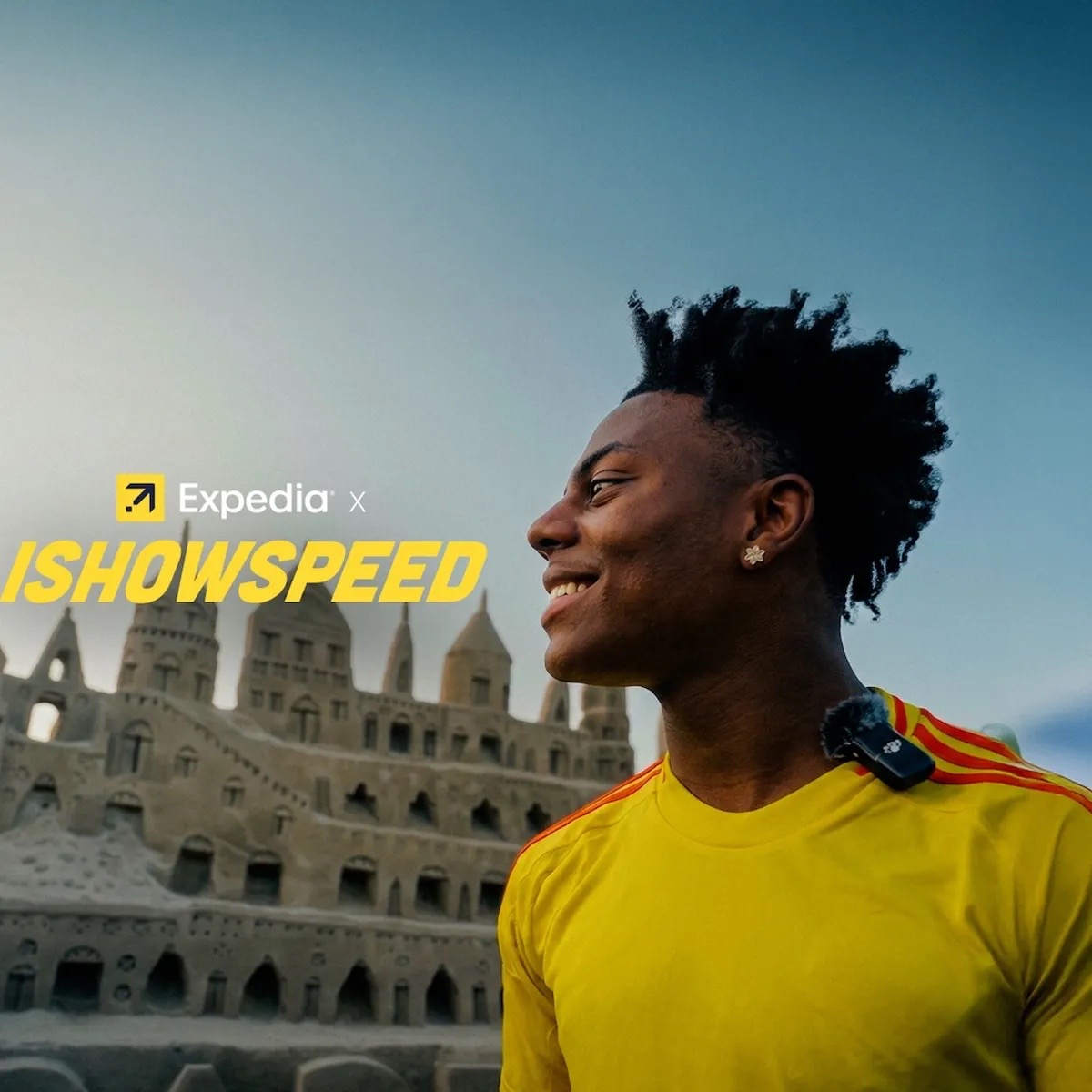
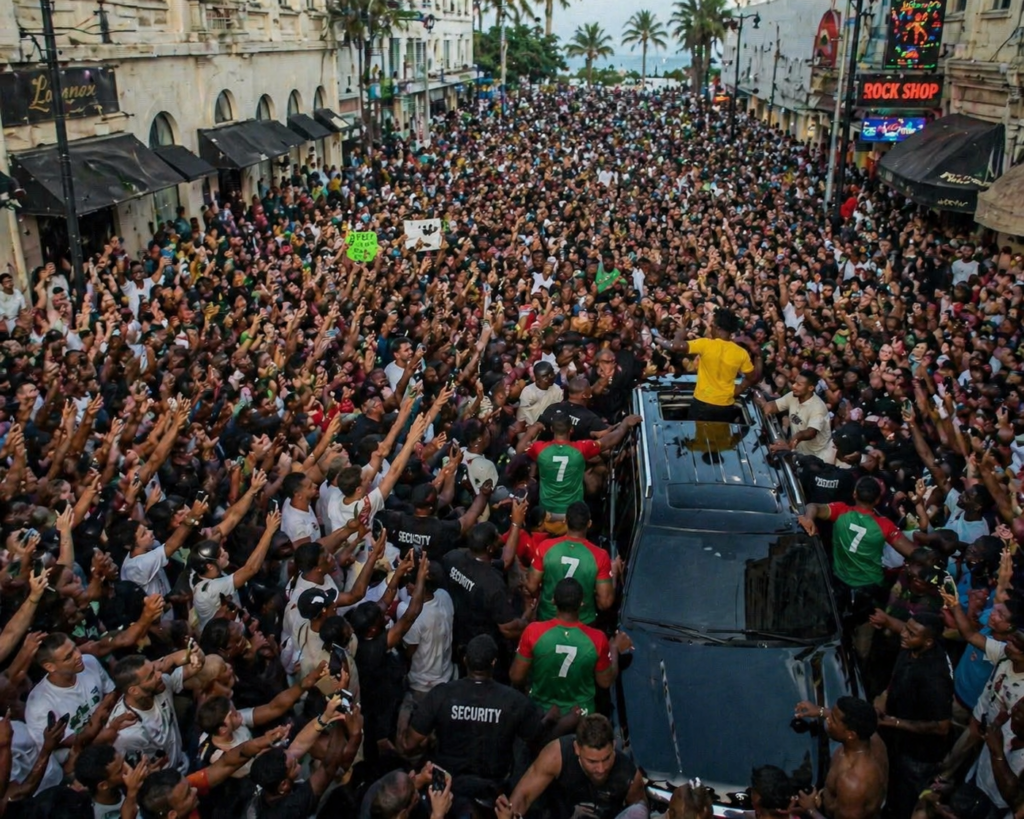
That’s why the inset matters as much as the hero.
The hero shows him in motion—human, present, inside the environment.
The inset shows what follows—crowds compressing, streets filling, attention turning physical.
One person becomes a signal.
The world responds.
That’s not reach.
That’s force.
Most brands will misunderstand this.
They’ll think the answer is to copy the format.
Hire a creator.
Film the travel.
Cut the clips.
Build the page.
And it won’t work.
Because the system isn’t built from content.
It’s built from behavior.
It depends on unpredictability.
On energy that can’t be scripted.
On trust that isn’t negotiated.
Without that, all you have is a better-looking ad.
What’s actually happening here is more precise.
The creator is no longer the face of the campaign.
He’s the environment the campaign exists inside.
He is the distribution.
He is the experience.
He is the trigger for action.
And the brand doesn’t sit beside him.
It plugs into him.
That’s the shift.
From sponsorship
to infrastructure.
If this holds—and early signs suggest it will—the language changes.
Brands won’t ask who has the biggest following.
They’ll ask who already behaves like a network.
Because that’s what they need now.
Not amplification.
Not awareness.
But proximity to moments that people actually move through.
There won’t be many of these.
Because very few people can carry this kind of system. It requires constant output, global attention, and a kind of volatility that still feels real. Too controlled, and it breaks. Too chaotic, and it collapses.
IShowSpeed sits in the narrow space where it holds.
And that’s why this moment matters.
Not because it’s new.
But because it finally makes the new model visible.
Related Posts

Ryan Coogler’s Creative Infrastructure
From film school collaborations to the Oscars

J.Lo Mesmerizes, Tonatiuh Transforms in Kiss of the Spider Woman
Love, Politics, and Poison Kisses

David Yurman Announces Partnership with NBA Stars and Launches Docuseries
David Yurman Collaborates With NBA

Flying Above the Gridlock: Archer’s Air Taxi Network Takes Off in New York
From Midtown to Takeoff in 10 Minutes: The Future of NYC Travel

Debut of First Teaser for ‘Deadpool & Wolverine
First 'Deadpool & Wolverine' Teaser

Nike Built the Myth-China Is Building the System
Not a Takeover. A Rebuild