


Isa Bernal Steiner Is Following Her Curiosity Wherever It Goes

Isa Bernal Steiner was making things before she had much reason to think about what any of it might eventually be called. She sang with her grandmother and cousins, drew alongside her mother, grandfather and uncles, turned costumes and wigs her parents brought home into characters, and made miniature movies with her father using Barbies and Lego people. Creativity wasn’t presented as a profession waiting somewhere in the future. It was part of the language of her family, something you could move between without needing permission to decide whether you were an actor, writer, director, musician or artist first.
That distinction matters as Isa arrives in her first feature film, Tiny Fugitives. At 13, she is entering an industry built around clearly defined roles without having learned to think about creativity that way herself. She has performed in theater and live music, written and edited comedy sketches, directed her own videos and recently finished the first draft of a short novel. None of those interests appear to exist as side projects around acting. They grew up together. Tiny Fugitives may be the first time a larger audience encounters Isa Bernal Steiner, but it isn’t where her creative life begins. It is simply the first piece of a much bigger imagination becoming public.
GREAY: You grew up in a family where creativity seems to have existed long before anyone called it a career—you sang with your grandmother and cousins, drew with your mother, grandfather and uncles, and watched your parents build creative lives of their own. When you think about the person you’re becoming now, what part of the way your family raised you do you hope you never outgrow?
ISA BERNAL STEINER: My infinite curiosity. About life in general, whether it’s acting, writing—I just finished a first draft of my short novel—directing, singing, music, and art. I hope I never outgrow wanting to be creative.
GREAY: Your mother is a costume designer, so before you ever started building characters as an actor, you grew up watching her help build characters through clothing. Has there ever been something your mom taught you about the way a person dresses, carries themselves or presents themselves that changed the way you think about creating a character?
ISA: Definitely. Watching my mom work inspired me to create my own characters. By the time I was 5 years old, I’d already been creating characters with costumes and wigs and props my parents brought home. And by 7, my dad and I were already making mini movies with my Barbies and Lego people.
GREAY: You started performing in theater when you were seven, but there’s a difference between a child who enjoys performing and someone who eventually realizes, I think this is part of who I am. Do you remember the first moment performing stopped feeling like something you did and started feeling like something that belonged to you?
ISA: I don’t think there was an actual moment in time where there was a shift. I always knew performing was a part of who I am. Even when I started, I took musical theater seriously. I think it’s always belonged to me.
GREAY: You’ve been writing, directing and editing your own comedy sketches and music videos since you were nine. That’s interesting because your imagination has never been limited to being the person in front of the camera. When you’re creating something entirely from your own sense of humor, what comes out of you that people might not immediately see when they first meet you?
ISA: I like being in control. I’ve always enjoyed being behind the camera. I like having a sense of control over the storytelling. I suppose that’s the serious side that people don’t immediately pick up on when they first meet me because I have a goofy side too.
Often when I ask friends or family to be in my films, they assume it will be a playful hour-long endeavor. However, soon they realize I’m not messing around and the once five-minute movie turns into a four-hour process. Maybe at our family reunion a few weeks ago in Northern Michigan, I shouldn’t have asked my cousins to do 20 takes of them rolling around on the hotel room floor screaming the word “boat.”
GREAY: You’ve also performed with your School of Rock bandmates at places like The Troubadour and The Viper Room—rooms with histories much older than you are. What has performing live music taught you about confidence, especially in those moments when you might be nervous but the room is waiting for you anyway?
ISA: Confidence? Oh no, I’m scared to death every time I go up there, like everyone else I’m guessing. Maybe not scared to death—maybe excited and scared, like Little Red Riding Hood says in Into the Woods. Those lyrics are burned into my memory from rehearsals, lol.
But seriously, for live music shows I prep tons of hours memorizing, rehearsing and singing, so when I go up on stage I know I’ve worked really hard and I’m already confident in the song. So when I look at the audience, I just remind myself to have fun!

GREAY: Tiny Fugitives follows a group of twelve-year-olds who essentially decide the adult world isn’t working for them and hatch a plan to escape to summer camp. Underneath all of the comedy and chaos, what did you understand about why these kids want to escape—and what did Tali understand about freedom that helped you find her?
ISA: In Tiny Fugitives, every kid had a different reason why they wanted to find freedom. Tali was escaping judgment from peers at school and from having to perform all the time, and at camp she could be herself.
But honestly, when I actually went to summer camp, I didn’t like it! And I certainly didn’t want to stay forever.
Tali’s character actually came to life once I met and got to know the cast and crew of Tiny Fugitives. I had the time of my life making this film, and building those relationships made me completely understand why Tali would have wanted to stay at Camp Fineman forever.
GREAY: Tiny Fugitives is unusual because young characters are at the center of a comedy with a much more grown-up comedic sensibility. As Tali, you still have to make her feel like a real kid rather than someone who knows she’s inside a joke. How did you learn the difference between trying to be funny and being completely truthful while something funny is happening around you?
ISA: Well actually, I think this is how kids act when grown-ups aren’t around and have to solve problems on their own. And Tali is the “straight man”—even better, “straight woman.” Her job is to keep the peace between Charness and Jacob and keep the whole crew on track. So “truthfully,” Tali just needed to stay grounded.
GREAY: This is your first feature film, which means there was a first day when years of training suddenly became something very real—a professional set, cameras, marks, takes and people depending on you to do your part. What do you remember about going home after that first day? Was there a moment when you were finally alone and realized, “I actually did this”?
ISA: There wasn’t really a “first day feeling.” From the moment I got the script with my name on it, I felt like, “I did this.”
And before the first shoot day, we had a lot of special FX testing, stunt testing and rehearsals, so by the “first day” of filming I’d felt like I’d already experienced that feeling of accomplishment several times. It was awesome.
GREAY: You’re experiencing that first film alongside other young actors who are building their own lives and careers too. Years from now, Tiny Fugitives will always represent this particular moment for all of you. Is there something that happened with the other kids when the cameras weren’t rolling—a conversation, joke, difficult day or tiny moment—that you already know you’re going to remember?
ISA: Oh wow, there are so many, but my favorite is actually, selfishly, my birthday. I turned 12 during rehearsals, and Michael and Jacob and the producers took me and my castmates to an arcade and we all had a blast. Also, I met my best friend Alyssa that day. Pretty good birthday gift.
GREAY: You’re Mexican-American, and you’re growing up inside a multi-generational creative family. Heritage isn’t always something we experience through big declarations; sometimes it’s simply there in our families, humor, food, music, language and traditions. Where do you feel your Mexican-American identity most naturally in your everyday life, and are there pieces of your family that you hope eventually find their way into the stories you tell?
ISA: My abuelita was a single mom and worked two factory jobs to raise her family. She was a strong woman and taught me resilience and bravery. She also taught me to dream big.
The characters I create, like Tali, carry that resilience and bravery with them. Hopefully those qualities come through when you watch her.
Hmmm, in everyday life I carry my heritage with me in my craving for horchata, arroz con leche y champurrado, which my abuelita often made for me when I was little.
GREAY: You’ve been pursuing this since you were very young, which also means there have probably been auditions you wanted and didn’t get, performances that didn’t go exactly as planned and days when confidence wasn’t automatic. When something doesn’t work out, who is Isa when she gets home—and what helps you find your way back to yourself?
ISA: I remind myself that if I did my best, that’s all I can do. I just take the hard work as my achievement, and then I go home and play with my teddy bear of a dog and maybe watch an episode of Ted Lasso.
GREAY: You’re standing in a very particular place right now: you’ve spent years learning, performing and creating, but most of the world hasn’t met you yet. That changes when your first films arrive. If you could preserve something about the Isa who exists right now—before Tiny Fugitives comes out, before anyone knows what happens next—what would you want your future self to remember about her?
ISA: I’d want my future self to remember the same excitement that I felt for acting when I first started. Acting has always been a thing that’s a part of me, and I always want to remember that feeling of excitement from my first film!
There will eventually be people whose job is to help Isa Bernal Steiner define what she does. An industry likes categories because categories make careers easier to understand: actor, musician, writer, director. Isa has the advantage, at least for now, of creating before those distinctions have become particularly important to her. A five-minute movie can become a four-hour production. Her cousins can spend 20 takes rolling across a hotel-room floor screaming “boat.” A short novel can exist beside an audition, a song beside a film. The point is still the making of the thing.
That freedom may become harder to protect as the opportunities become larger. Tiny Fugitives will introduce Isa to people who weren’t there for the Barbies, Lego movies, family performances or homemade sketches that came before it. More films may follow. So may writing, directing, music or something she hasn’t discovered yet. But when Isa is asked what she hopes the person she becomes remembers about the person she is now, she doesn’t choose a role, an accomplishment or even this first film. She chooses the excitement she felt when she started acting. That may be the most important thing to carry forward. Long before an industry gets to decide what kind of artist Isa Bernal Steiner becomes, she has already learned something more fundamental: she likes making things.
Photography Storm Santos @Stormsantos
Words Kyra Greene @noteasybeingreen
Hair / Makeup Aaron Barry @abhairmakeup
Wardrobe Anna Schilling @anna_schilling – styling
Related Posts

Timberland and Veneda Carter Unveil Their Sophomore Collaboration
Timberland and Veneda Carter launch their second collaboration

Paris Saint-Germain Set to Unveil World’s Largest Store on New York’s Fifth Avenue
Paris Saint-Germain, the prominent French soccer team, is unveiling a

Clase Azul México Unveils Exclusive Limited Edition Tequila: The Loft Brooklyn Collection I
Clase Azul Tequila Pays Homage to New York City.

Watson Renewed for Season 2 at CBS
CBS has officially renewed Watson.
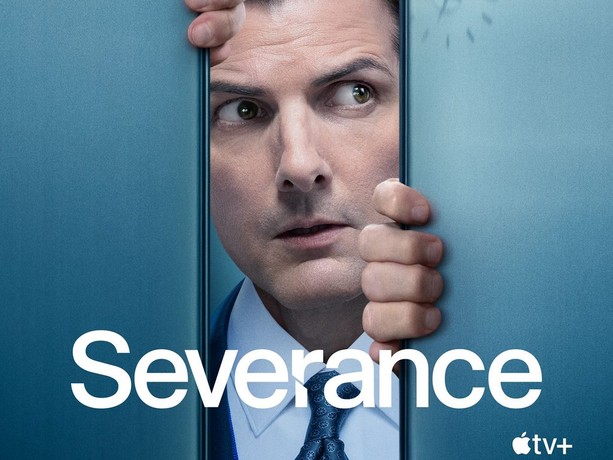
‘Severance’ Renewed for Season 3 at Apple TV+ Following Season 2 Finale
Apple TV+ officially greenlit season 3 of Severance

A$AP Nast Stars in adidas Originals’ Tribute to the Iconic SL 72
adidas Originals celebrates iconic SL 72.