

How Inter Alia Is Revealing the Bigger Business of Broadway
By Kyra Greene
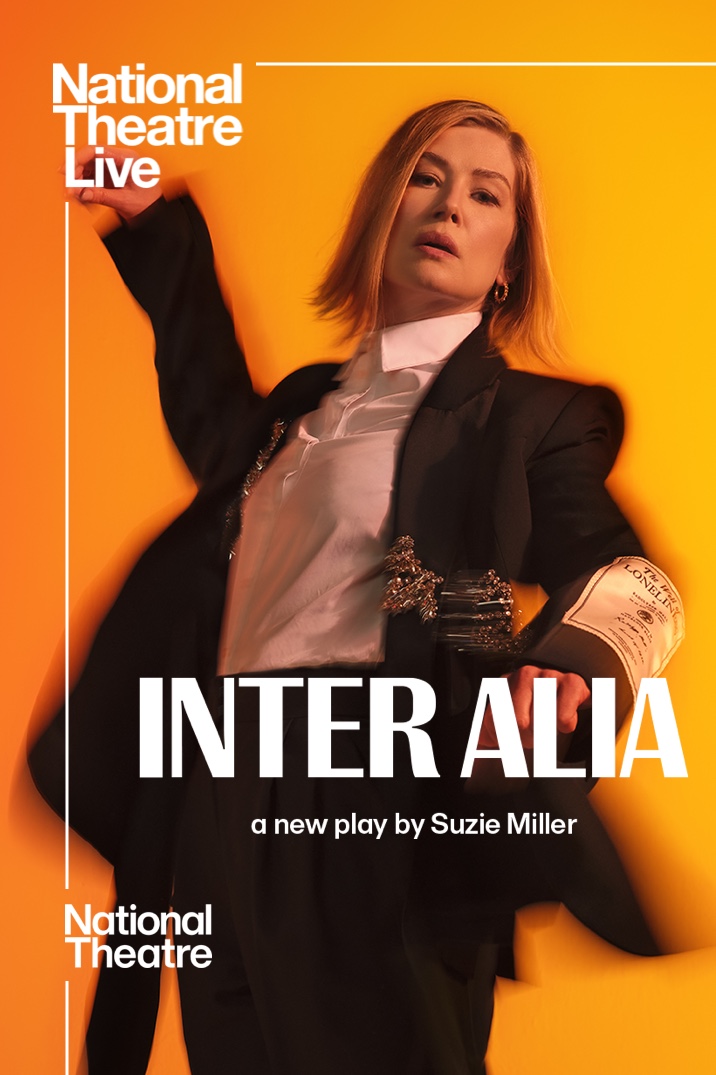
By the time Rosamund Pike makes her Broadway debut on November 10, the production bringing her to New York will already have reached audiences far beyond the walls of a traditional theater. Inter Alia, the legal drama written by Suzie Miller and directed by Justin Martin, premiered at London’s National Theatre in 2025, transferred to the West End, and reached international audiences through cinema screenings and streaming. According to an October 28 announcement from its Broadway producers, approximately 600,000 people worldwide have experienced the production across those formats. Its New York engagement has not yet begun.
That figure represents more than an impressive audience count. It provides a window into the expanding commercial life of theatrical productions, particularly those supported by institutions capable of distributing performances beyond the venues where they originate. Broadway remains one of the world’s most recognizable theatrical destinations, but Inter Alia demonstrates how a production can establish an international audience before reaching New York. Its Broadway opening is another chapter in a journey that has already crossed geographic boundaries and distribution platforms.
The distinction matters because the traditional economics of live theater are closely tied to physical capacity. A performance can sell only the number of tickets a venue can accommodate. Successful productions can extend their engagements, transfer to larger theaters, or launch touring companies, but each additional live performance requires space, personnel, and operating expenses. The audience grows through the repeated act of bringing performers and spectators together.
A recorded performance changes those conditions. Once filmed and prepared for distribution, a theatrical production can be presented in cinemas across multiple territories without requiring its original cast to perform in every location. Streaming creates another means of access, allowing audiences to encounter the work outside the schedule and geography of its live engagement. The performance remains rooted in theater, but its potential audience is no longer confined to the building where it was created.
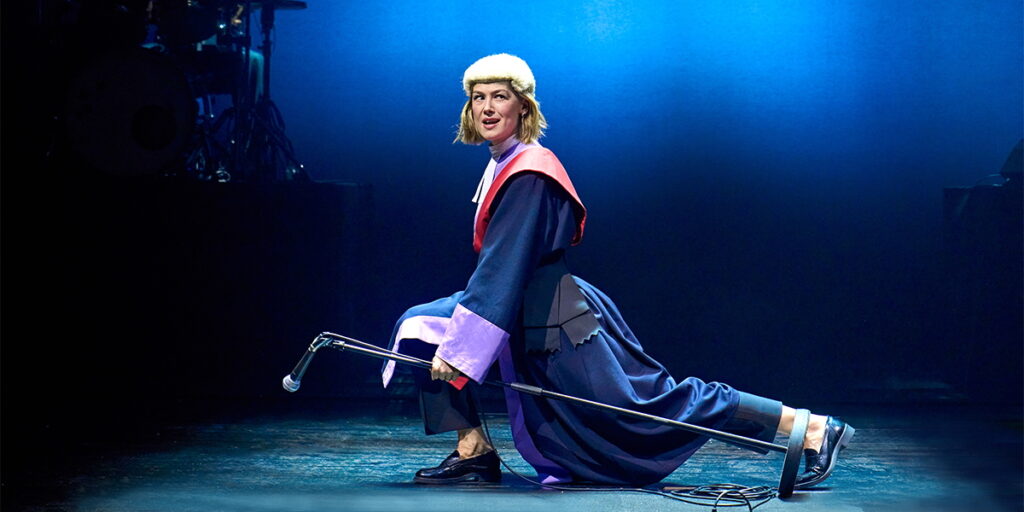
Inter Alia provides a particularly useful example because its distribution across different formats preceded its Broadway arrival. The play follows Jessica Parks, a London Crown Court judge whose professional convictions are challenged by a crisis within her family. Miller explores the competing demands of motherhood, career, marriage, and personal responsibility, examining what happens when a woman accustomed to exercising judgment must confront circumstances that resist easy moral conclusions.
The production reunited Miller and Martin following their collaboration on Prima Facie, the legal drama that traveled from London’s West End to Broadway and became a major National Theatre Live presentation. Pike, whose screen career includes Gone Girl and Saltburn, brought international recognition to the role of Jessica Parks. Her performance subsequently earned her the 2026 Olivier Award for Best Actress.
Speaking about the response to Inter Alia, Pike observed, “What surprises me night after night performing this play is how audience members tell me they recognize themselves on stage.” The statement, included in the Broadway announcement, points to the human connection beneath the production’s international circulation. Audiences may encounter the work through different formats, but its appeal begins with a story about responsibilities and relationships that can be difficult to reconcile.
That emotional foundation is important. Distribution can make a performance available, but it cannot guarantee that audiences will find it meaningful. The commercial opportunities surrounding Inter Alia exist alongside the artistic achievement of a production that attracted substantial attention in London before reaching New York.
The National Theatre’s distribution infrastructure helped extend that attention. National Theatre Live, launched in 2009, presents filmed theatrical performances in cinemas internationally. National Theatre at Home provides access to a library of recorded productions through streaming. These services allow theatrical work to circulate beyond its original engagements, creating opportunities for audiences who cannot attend performances in London.
In April 2026, when the Broadway transfer of Inter Alia was announced, producers reported that more than 450,000 people worldwide had already seen the production through National Theatre Live. By October, the producers’ broader audience figure had reached approximately 600,000 across live and recorded presentations. Those figures describe different measures of attendance and should not be treated as directly comparable totals.
Nevertheless, the scale of the cinema audience is significant. In May, The Guardian reported that the filmed presentation had reached more than seven times the number of people who attended the production during its original National Theatre engagement. A performance created for one venue had reached an audience many times larger through recorded exhibition.
The implications extend beyond a single production. A theatrical recording can remain available after the original engagement has concluded, subject to the rights and distribution agreements governing its use. It can introduce a playwright, performer, or production to audiences who may never have had an opportunity to see the work live. It can also create additional commercial activity around an artistic property whose original run was limited by time and seating capacity.
But reaching a larger audience is not the same as generating a larger profit.
A Broadway ticket, a cinema admission, and a streaming subscription operate under different economic arrangements. Cinema exhibitors, distributors, producers, performers, and other rights holders may participate in the revenue generated by recorded performances. Filming introduces additional production costs, while international distribution requires technical preparation, marketing, licensing, and commercial relationships. The number of people watching a performance does not reveal how much income the producing organization ultimately retains.
The National Theatre’s financial reporting offers a useful illustration of the scale involved. Its 2023–24 annual report recorded £13.9 million in expenditure associated with National Theatre Live and Digital activities. That spending covered a wider institutional operation rather than Inter Alia specifically, but it establishes that extending theater beyond the stage requires substantial investment.
For producers considering whether to film and distribute a production, the central commercial question is therefore not simply how many additional viewers might be reached. It is whether the income generated through those audiences can justify the costs and contractual obligations involved.
The public information available for Inter Alia does not establish the production’s specific cinema revenue, streaming income, distribution costs, or profitability. Nor does it demonstrate that the success of its filmed presentation caused or financed the Broadway transfer. The evidence supports a narrower conclusion: the production reached a substantial international audience through recorded distribution before beginning its New York engagement.
That conclusion is meaningful without being exaggerated. It demonstrates how theatrical productions can participate in multiple markets, even when the financial contribution of each market is not publicly disclosed.
The National Theatre’s wider operation also reveals why institutional infrastructure matters. Building an international cinema network requires relationships with exhibitors and distributors. Producing high-quality recordings involves specialized personnel and equipment. Maintaining a streaming platform requires technical resources and a continuing supply of productions. These capabilities are not automatically available to every theater company.
A major institution with an established reputation, recognizable performers, and an international distribution system may be better positioned to pursue those opportunities than a smaller independent producer. The potential to reach global audiences does not eliminate the differences in resources between theatrical organizations. In some circumstances, it may make those differences more consequential.
That creates an important tension within the promise of wider access. Filmed theater can reduce geographic barriers for audiences while introducing financial and operational challenges for producers. A person living far from London or New York may gain access to a performance through a local cinema or streaming service, but the organization creating that performance must still determine whether distributing it is financially sustainable.
The question of access also extends beyond geography. Theater attendance can involve transportation, accommodation, ticket prices, scheduling, and accessibility considerations. A recorded performance cannot reproduce every aspect of the live experience, but it may allow someone to encounter work that would otherwise remain beyond their reach.
Research commissioned by the National Theatre and conducted by audience research company Indigo offers evidence that filmed performances can coexist with enthusiasm for live theater. Published in May 2026, the research gathered approximately 5,500 responses from UK-based participants. Among respondents who had watched filmed theater, 93 percent had also attended a live performance. Across the survey, 89 percent identified live theater as their preferred way of experiencing a production.
Those findings challenge the assumption that audiences must choose permanently between live and recorded theater. Many appear willing to engage with both, depending on the production and their circumstances. The research also found that convenience, affordability, and the opportunity to discover unfamiliar work were among the reasons people valued filmed performances.
The findings, however, require careful interpretation. The survey does not establish that watching recorded theater directly causes people to purchase more live tickets. Respondents were drawn from audiences engaging with theater, and their preferences cannot automatically be generalized to the wider public. The research indicates that filmed and live experiences can coexist, but it does not prove that every digital distribution initiative increases attendance or revenue for physical venues.
Matt Risley, the National Theatre’s chief digital officer, addressed that distinction when discussing the findings. “Filmed theatre should never be framed as replacing the magic of a live performance,” he told The Guardian, describing recorded productions as a complementary offering that can improve access and discovery.
That position reflects an important part of the National Theatre’s strategy. Filmed performances are presented as an extension of theatrical access rather than a replacement for the live experience. The organization can reach audiences internationally while continuing to produce work intended to be performed before people gathered in the same room.
The relationship between those experiences is also artistic. A filmed theatrical performance is not simply a camera pointed toward a stage. Decisions about camera placement, editing, framing, and sound influence how audiences encounter the work. A close-up can reveal expressions and gestures that might be difficult to observe from a distant theater seat. At the same time, the recorded version cannot reproduce the full experience of sharing a physical space with performers and other spectators.
Martin discussed that distinction during a National Theatre panel examining filmed performance. Reflecting on the recorded version of Inter Alia, he said, “I had forgotten the nuance of what Rosamund was doing.” His observation suggests that filming can reveal elements of a performance differently, even to the director who helped create it.
The result is not necessarily a competition between two identical experiences. Live theater and filmed theater offer different ways of encountering the same artistic work, each shaped by its own conditions. The challenge for producers is determining how those experiences can coexist creatively and commercially.
That challenge introduces another important business consideration: ownership.
When a theatrical production is recorded, the resulting material can potentially be exhibited, licensed, and distributed beyond the original engagement. Those activities depend on agreements governing the underlying play, the recorded performance, the contributions of performers and creative teams, and the rights held by producers and distributors.
The value of those rights may extend beyond the immediate revenue generated by a cinema screening. A recording can remain part of a distribution library, subject to the terms of its agreements. It may reach audiences in new territories or become available through additional platforms. But the financial benefits depend on who controls the recording, how the rights are structured, and how income is shared.
These questions are familiar across film, television, and music, where ownership and distribution can influence the long-term commercial value of creative work. Theater has its own established licensing and royalty systems, and recorded performance introduces additional considerations within that framework.
For Inter Alia, the publicly available announcements identify the producing organizations and distribution platforms, but they do not disclose the full financial arrangements governing its filmed presentation. It would therefore be speculative to assign particular economic benefits to individual producers, performers, or rights holders.
What can be established is that the production’s recorded life has expanded its audience beyond its original theatrical engagement. Whether that expansion produces a proportionate financial return remains a separate question.
The Broadway transfer adds another dimension to that discussion. A production that has already been seen by substantial international audiences is now entering a major theatrical market with an established reputation, recognizable performers, and a history of successful engagements. That prior exposure may contribute to public awareness, but the available evidence does not establish how much influence it will have on ticket sales in New York.
Broadway remains a distinct commercial and cultural environment. Its productions face their own operating expenses, audience expectations, competitive pressures, and financial risks. Success in London or through international cinema distribution does not guarantee a profitable Broadway engagement.
The forthcoming production of Inter Alia will begin previews at the Music Box Theatre on November 10 and is scheduled to open officially on December 1. Its limited engagement is currently scheduled through February 21, 2027. Pike will reprise her performance as Jessica Parks alongside Jamie Glover and Cormac McAlinden.
The Broadway producers have also announced $45 rush and digital lottery tickets, alongside a new block of seats priced at $69. Those offerings reflect one approach to making a Broadway engagement accessible at different price points, although their availability is limited and does not establish the affordability of the production as a whole.
The production’s arrival in New York is therefore both a theatrical event and an opportunity to examine the wider business surrounding contemporary stage productions. It brings together an established London institution, a commercially successful creative partnership, an internationally recognized performer, and distribution channels that have already carried the work to audiences outside its original market.
None of those elements is entirely new. London productions have transferred to Broadway for generations. Filmed theater has existed for decades. International licensing and touring have long been part of the theatrical economy. The significance of Inter Alia lies not in inventing those practices, but in demonstrating how they can operate together around a contemporary production.
That is an important distinction. The available evidence does not establish that Broadway is being replaced, that filmed performances are becoming more profitable than live theater, or that the industry’s commercial center has shifted decisively toward digital distribution. It establishes that a major theatrical institution has developed multiple ways to extend the reach of its productions, and that Inter Alia has benefited from that infrastructure.
For audiences, the result is a wider opportunity to encounter theatrical work. For producers, it presents additional possibilities accompanied by costs, contractual obligations, and commercial uncertainty. For Broadway, it means some productions can arrive with an international audience that extends beyond the people who have previously seen them live.
When Pike steps onto the Music Box Theatre stage, the experience will belong to the people gathered in that room. The performers, the audience, and the particular circumstances of the evening will create something that cannot be reproduced exactly elsewhere. That remains the defining quality of live theater.
But the work will also carry the history of hundreds of thousands of people who encountered Inter Alia through other forms of presentation. Its audience has already extended beyond the physical limitations of its original venue, even as the financial implications of that reach remain incompletely documented.
The future of live theater cannot be measured solely by the number of people who occupy its seats. Nor can it be understood simply by counting the viewers who encounter recorded performances. Its long-term sustainability depends on the relationship between artistic creation, audience access, production costs, rights, and revenue.
Inter Alia does not provide a definitive answer to how that relationship will evolve. It provides a documented example of the possibilities and the questions that now surround it.
The stage remains where the performance begins. The business of bringing that performance to an audience can extend much farther.
Related Posts

MTN DEW Launches Limited-Time RED, WHITE & BLUE Flavors to Celebrate Summer Outdoors
MTN DEW ® CELEBRATES SUMMER WITH THREE NEW MTN DEW

Emerging Brazilian Soccer Talent Endrick Felipe Moreira de Sousa Joins Forces with New Balance in Major Collaboration
New Balance Football has recently inked a deal with the rising Brazil

Breitling Makes Acquisition with Purchase of Universal Geneve in Debut Major Transaction
Renowned Swiss luxury watchmaker Breitling

Marvel Comics Celebrates Native American Heritage Month with Kahhori’s Epic Comic Debut
First Look at 'Kahhori: Reshaper Of Worlds' #1

Volcanic Roots, Modern Rituals: Clase Azul’s Latest is a Smokey Ode to Jalisco
Fire, Earth, and Elegance

Michelle Núñez: Fearless in Film, Music, and Storytelling
Michelle Nunez multi talented.
POST COMMENT