

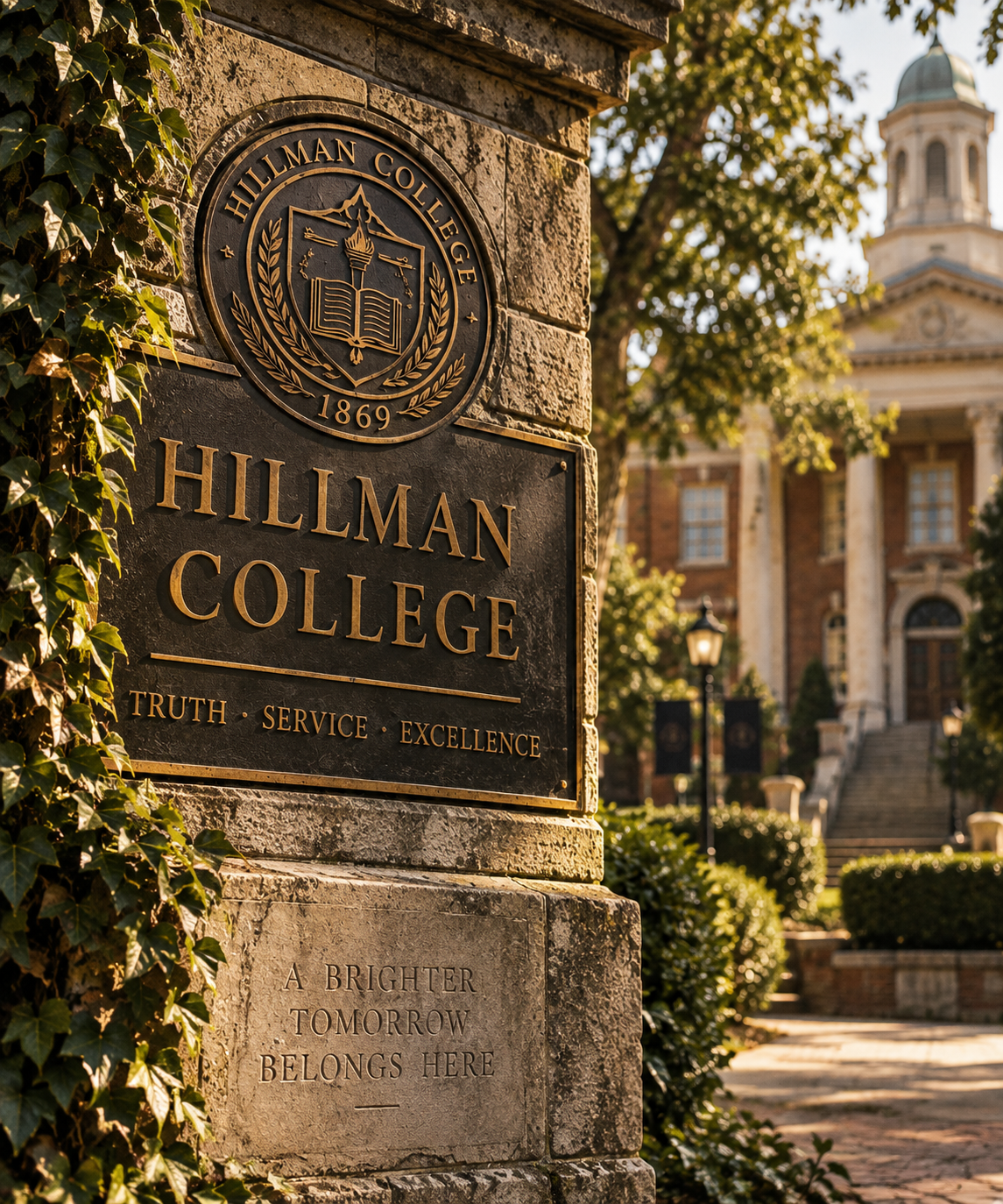
Hollywood Is Rebuilding A Different World — The Bigger Question Is Who Hillman Belongs to Now
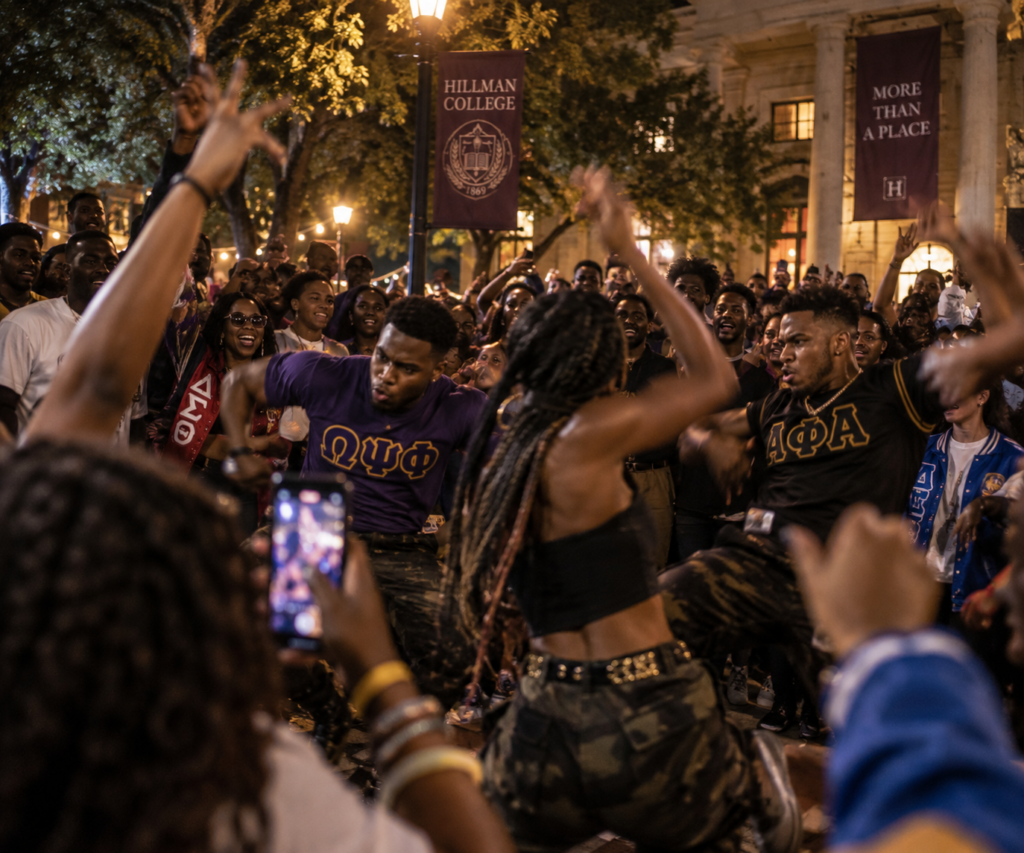
By DaMarko GianCarlo
Hollywood has become very good at bringing things back.
Finished television shows become revivals. Familiar characters return older. Younger actors arrive beside them, positioned to inherit stories audiences already understand. In an entertainment business increasingly built around recognizable intellectual property, memory has become one of Hollywood’s most dependable currencies.
But Hillman College presents a different problem.
When A Different World returns to Netflix, more than three decades will have passed since the original series ended its six-season NBC run. Maleah Joi Moon enters Hillman as Deborah Wayne, the youngest daughter of Dwayne Wayne and Whitley Gilbert. Jasmine Guy and Kadeem Hardison return as her parents, while Cree Summer and Darryl M. Bell are among the original performers returning alongside a younger ensemble. Felicia Pride leads the continuation as showrunner and executive producer, while Debbie Allen — whose influence became fundamental to what the original series ultimately represented — returns as an executive producer and directs the premiere.
On paper, that sounds like the increasingly familiar architecture of legacy television.
Hillman makes it something else.
Because A Different World did not simply create characters people remember.
It created a place people wanted to go.
The series began in 1987 as a Cosby Show spinoff, but Hillman eventually developed an identity that extended well beyond the television universe that produced it. Allen, a Howard University graduate, helped push the series toward a more specific representation of historically Black college life. Howard University has described itself as an important inspiration for the series, and Allen has called Howard “the blueprint” for what A Different World became.
That distinction matters.
For millions of viewers, Hillman offered a weekly environment in which Black students were not visiting somebody else’s institution.
They were the institution.
They were engineers, activists, athletes, artists and future professionals. They fell in love. They failed. They argued about politics. They confronted racism. They questioned one another. They made terrible decisions and occasionally extraordinary ones.
And millions of Americans watched them do it.
A Different World became one of television’s highest-rated programs during its original run. But ratings alone do not explain why Hillman survived in cultural memory. The series aired during a significant period of HBCU enrollment growth, and generations of students have subsequently described the program as influencing how they imagined Black college life. Howard President Ben Vinson III said in 2024 that prospective students were still mentioning the show when explaining why they considered attending an HBCU. That does not mean a sitcom can be credited with causing national enrollment changes. It means Hillman became part of the cultural conversation surrounding what an HBCU education could look and feel like.
That is a very different legacy from simply having produced successful television.
A Different World helped construct an idea of possibility.
And that is what Netflix is inheriting.
The new series makes that inheritance literal.
Deborah Wayne is not simply another freshman walking onto Hillman’s campus. She arrives underneath two names that already belong to its mythology. The daughter of Dwayne and Whitley must establish an identity inside an institution where her parents already have one.
It is difficult to miss what the construction is doing.
Deborah is confronting the same problem as the television series carrying her.
How do you inherit something culturally significant without becoming trapped by it?
Felicia Pride appears to understand the danger. “I came to understand we can never re-create the original show,” she has said while discussing the continuation.
Perhaps they should not even try.
The original A Different World belonged to the particular anxieties, possibilities and politics of the young people who walked into Hillman in the late 1980s and early 1990s. The series confronted apartheid, AIDS, date rape, racism and war. In 1992, Dwayne and Whitley’s honeymoon took them into Los Angeles against the aftermath of the Rodney King verdict, pulling a fictional television couple into one of the defining American events of that year.
Hillman was not culturally important because it preserved Black life.
It was culturally important because it engaged with Black life while it was happening.
That creates an unusually high standard for its return.
The Black students entering college now are arriving in a culture radically different from the one that produced Dwayne, Whitley, Freddie and Ron. Social media follows them into their dorm rooms. Creator economics has changed what a career can look like. Artificial intelligence is entering education and employment simultaneously. The cost and perceived value of college are being debated differently. Ideas around identity, relationships, politics and professional ambition have continued to evolve.
Their Hillman cannot simply be their parents’ Hillman with smartphones.
It has to become theirs.
And the production appears to understand that authenticity cannot be reconstructed entirely from the memories of people who attended college decades ago.
Pride has described bringing current HBCU students into the creative process through an HBCU council that could respond to scripts, ideas and production decisions. Current students and graduates have also been incorporated into the production itself. “One of the things that was important to me,” Pride explained, “was co-creating and involving current HBCU students.”
That decision is more consequential than it initially appears.
The production is not simply telling another generation what Hillman is supposed to mean.
Members of that generation are participating in constructing it.
Debbie Allen sees an even larger responsibility in returning to young people. “If the young people in the country don’t have a voice, that country is dead,” she said while discussing why this moment needed another A Different World.
That puts the continuation somewhere more interesting than nostalgia.
Because nostalgia asks an older audience to remember.
A Different World originally asked a younger audience to imagine.
Those are not the same function.
And this is where Hillman begins revealing something larger about Hollywood.
The entertainment business possesses an extraordinary archive of Black television institutions. Good Times. The Jeffersons. A Different World. Living Single. Martin. The Fresh Prince of Bel-Air. Moesha. Girlfriends. These programs did more than accumulate episodes. They created homes, workplaces, neighborhoods, friendships and communities that became part of Black popular memory.
But possessing an archive is different from building the next institution.
There is an obvious commercial logic to returning to Hillman. Netflix does not have to teach audiences what A Different World means. The name arrives with characters, iconography and decades of cultural memory.
A completely original series about Black college students would have to build that recognition from zero.
That is not an accusation against A Different World.
It is the economic architecture surrounding its return.
And therein lies the tension.
Every successful revival of culturally specific Black television can demonstrate that these worlds remain commercially and culturally valuable. But every successful revival can also make returning to an established Black institution appear less risky than creating another one.
Both things can be true.
The question, then, is not whether Hollywood should have returned to Hillman.
The more revealing question is what Hollywood does after it gets there.
If the new A Different World exists primarily to remind viewers how much they loved the original, Hillman becomes a museum. The buildings may still be standing, but culturally the institution has stopped producing anything new.
If the younger generation is allowed to challenge Hillman, reshape it and create relationships and conflicts that belong specifically to them, something different happens.
The intellectual property has not merely been extended.
The cultural ownership has begun to transfer.
Kadeem Hardison seems ready for that possibility. Speaking about the generation now entering the world he helped build, he put it simply: “This is where we are now. This is what we look like now. This is what we sound like now.”
There is something quietly significant inside that sentence.
Hardison is not asking the new Hillman to preserve 1991.
He is acknowledging the present.
And eventually, that means Dwayne and Whitley have to leave the room.
Not literally. Their presence is part of the continuation’s emotional architecture. But culturally, the younger characters cannot spend the life of the series orbiting people audiences already love.
Eventually viewers have to care about Deborah without thinking about her parents.
The new students have to become names that carry meaning independently of Freddie, Ron, Dwayne and Whitley. Their relationships need their own language. Their mistakes need their own consequences. Their generation needs arguments that the original characters could not have anticipated.
Their Hillman needs memories that did not originate between 1987 and 1993.
That is the difference between extending intellectual property and transferring cultural ownership.
Perhaps Brandy understands that cycle better than most. Long before she became the center of another Black television institution with Moesha, she was one of the young people watching Hillman.
“A Different World inspired me as a kid,” she has said. “It made me feel like I could go out into the world and become my own person.”
Now her voice is part of Hillman’s return.
There is an entire generational cycle inside that.
A young Black girl watched a fictional college and saw possibility. She eventually became the center of another television world in which young Black viewers could see themselves. Decades later, she returns to help introduce another generation walking onto Hillman’s campus.
That is what cultural inheritance can look like.
But inheritance only matters if the people receiving something are eventually allowed to change it.
That may be why A Different World is such an unusually revealing revival for this moment in television. Hollywood increasingly looks backward for intellectual property it can carry forward. Yet Hillman was never valuable simply because audiences recognized its name.
It was valuable because young Black people could recognize themselves there — and sometimes recognize who they might become.
Netflix can bring back the buildings.
It can bring back the theme.
It can bring back Dwayne, Whitley, Freddie and Ron.
What it cannot simply bring back is what Hillman meant.
That has to be created again.
Most television revivals ask whether audiences still love something they once loved.
A Different World has a harder assignment.
It has to discover whether a new generation can inherit Hillman, challenge it, reshape it and eventually stop treating it like something their parents gave them.
Because the real measure of whether Hillman survived will not be whether the new students remember what came before them.
It will be whether, eventually, Hillman belongs to them.
Related Posts

Garmin’s fēnix 8 Series: A Game-Changer for Multi-Sport Athletes
Garmin adds AMOLED displays to fēnix 8 Series.

UGG x Palace Turns Looney Tunes Nostalgia Into Streetwear Currency
When Comfort Meets Counterculture
Carl Friedrik Unveils the Sonder Collection: A Sleek Line of Soft Leather Travel Bags
Carl Friedrik has introduced a new collection of soft leather bags.
Zara and Willy Chavarria Don’t Collaborate—They Align
Where Meaning Meets Distribution

McDonald’s Introduces CosMc’s: A New Galactic Experience
McDonald's is expanding its universe an innovative small-format conce
Cadillac Makes Bold F1 Entrance: Bottas and Pérez Lead 2026 Debut
From Detroit to the Grid
POST COMMENT