

Hollywood And The Human Question
By Chance Shells
There was a time when Hollywood measured power through visibility. The actor on the poster. The director at the premiere. The speech on stage beneath the spotlight. Authorship felt tangible because audiences could still point to a face and say: that person made this.
Now the machinery behind creation is becoming harder to see.
Not because humans disappeared. Because the systems around them expanded.
Artificial intelligence did not arrive in Hollywood as a robot walking onto a set. It arrived quietly through infrastructure. Through editing assistance. Through voice reconstruction. Through generative environments. Through predictive scripting tools. Through image cleanup, automated localization, synthetic background generation, and machine-assisted production workflows that increasingly sit underneath modern filmmaking like plumbing beneath a building.
Most audiences will never see the shift directly.
They will only feel the results.
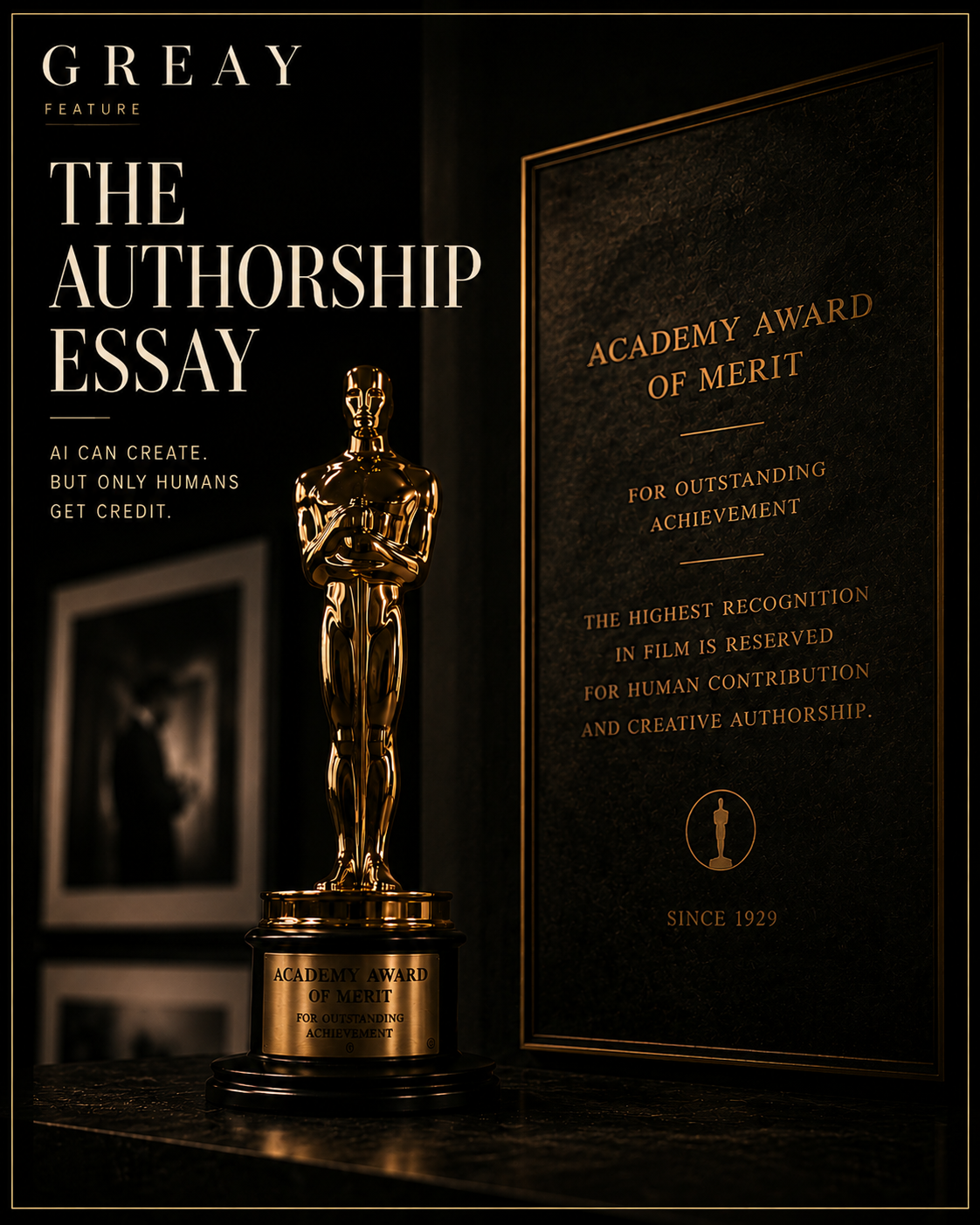
That is why the Academy’s position matters symbolically even beyond awards season. The conversation is no longer simply about whether AI can generate content. The real question is whether institutions still believe authorship belongs to people.
Because awards were never just trophies. They were cultural declarations. Public acknowledgments that human contribution mattered enough to separate one performance, one script, one vision from everything else released that year.
Recognition is a value system.
And value systems become fragile when the line between assistance and authorship becomes difficult to define.
What makes this moment complicated is that Hollywood itself has always been technological. Cinema has never been “pure.” The industry evolved through cameras, sound design, CGI, digital editing, performance capture, virtual production stages, algorithmic distribution systems, and streaming infrastructures that already transformed storytelling long before generative AI entered public conversation.
The difference now is psychological.
For the first time, the public is confronting systems that appear capable of participating in creativity itself.
That changes the emotional contract between audience and artist.
Not because machines suddenly became human. But because culture is beginning to ask what parts of creation must remain human in order for recognition to still feel meaningful.
That tension now exists everywhere across the production pipeline.
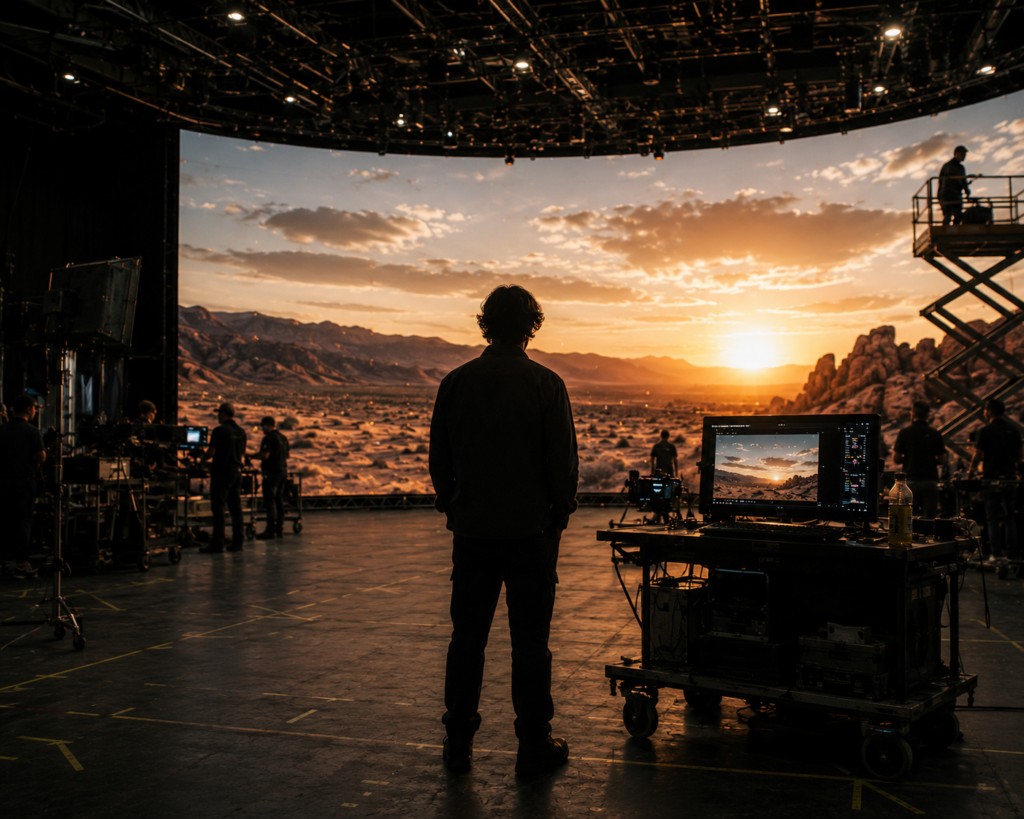
Inside LED volume stages where digital worlds wrap around actors before physical sets are even built. Inside editing suites where machine-learning systems accelerate workflows once handled frame-by-frame by exhausted assistants working overnight. Inside recording booths where voices can be reconstructed, translated, cleaned, or replicated. Inside writers rooms navigating a future where generation itself is becoming infrastructural.
The machinery is becoming inseparable from the art.
But even now, the emotional center of filmmaking remains strangely human.
A machine can accelerate production. It can imitate rhythm. It can study patterns. It can generate possibilities at industrial speed. But audiences still search for something deeper when they engage with stories. They search for intention. Perspective. Emotional risk. The feeling that another person experienced something and translated it into narrative form.
That feeling is authorship.
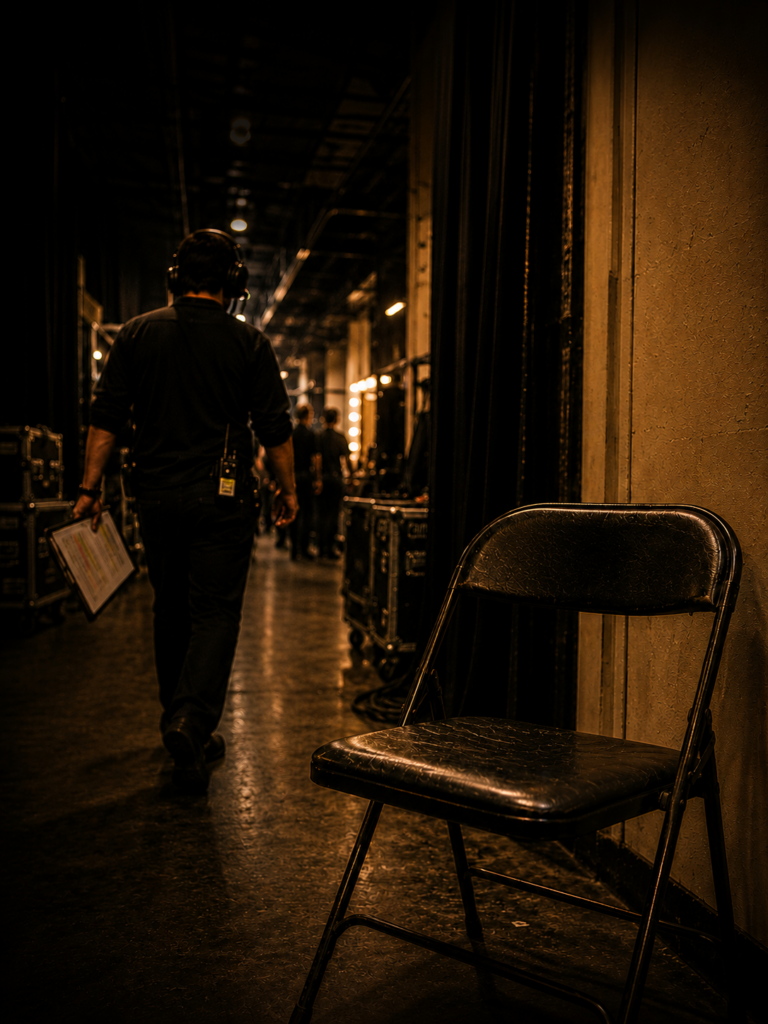
And authorship is not simply creation.
It is responsibility.
That is why this moment feels larger than entertainment. The argument spreading across Hollywood is really a larger cultural argument about legitimacy itself. About whether societies still want human beings attached to meaning. Whether recognition still requires lived experience behind the work. Whether emotional truth can remain connected to identity in systems increasingly built around generation and optimization.
The future of cinema may not belong to people who reject technology. It may belong to people capable of preserving humanity while working inside increasingly synthetic environments.
That is the real challenge emerging underneath the AI conversation.
Not how to stop the machine.
But how to prevent human authorship from disappearing inside it.
Because the danger is not that audiences will suddenly stop loving stories made by people.
The danger is that the systems surrounding creation may eventually make the people behind the work feel invisible.
And once culture loses sight of the human layer beneath the machinery, recognition itself begins to change.
Not just at the Oscars.
Everywhere.
Related Posts
Introducing Messages: Spotify’s New Way to Share What Moves You
From Playlists to Personal Notes
timbaland Joins Suno as Strategic Advisor, Leading Innovation in AI Music Creation
Timbaland has officially partnered with Suno, a leading AI-powered mus

Game Time, Prime Time: SGA, Reese & Melo Lead NBA 2K26’s Bold Era
Game Time, Prime Time

Luna Rising: The Smart Ring That Redefines Wearable Wellness
Smarter, Sleeker, Stronger

Unveiling the Xbox Sky Cipher: A Nostalgic Nod to Transparent Tech
Xbox has revealed an exciting new transparent controller
The Status Pro X and the Engineering of Sound
Built for Listening