


Gods Don’t Give Gifts Is Testing Whether AI-Generated Cinema Can Become a Commercial Reality
DaMarko GianCarlo
As an AI-rendered science-fiction feature prepares for American theaters, its release raises consequential questions about filmmaking, human performance, creative ownership and whether audiences are ready to pay for a new form of cinema
On December 4, 2026, Gods Don’t Give Gifts is scheduled to arrive in American movie theaters carrying a question that extends far beyond its science-fiction premise. Can a feature film whose visual world is generated through artificial intelligence become a commercially viable theatrical product?
The technology itself is no longer the only story. Generative artificial intelligence has demonstrated its ability to create characters, environments and moving images. What remains far less established is whether those capabilities can sustain a feature-length narrative that audiences are willing to pay to experience.
For Gods Don’t Give Gifts, the theatrical release represents an opportunity to test that proposition in the marketplace. Its success will not be determined simply by the sophistication of its imagery, but by whether audiences connect with its storytelling, whether distributors recognize commercial potential, and whether the economics of production and exhibition can support future projects developed through similar methods.
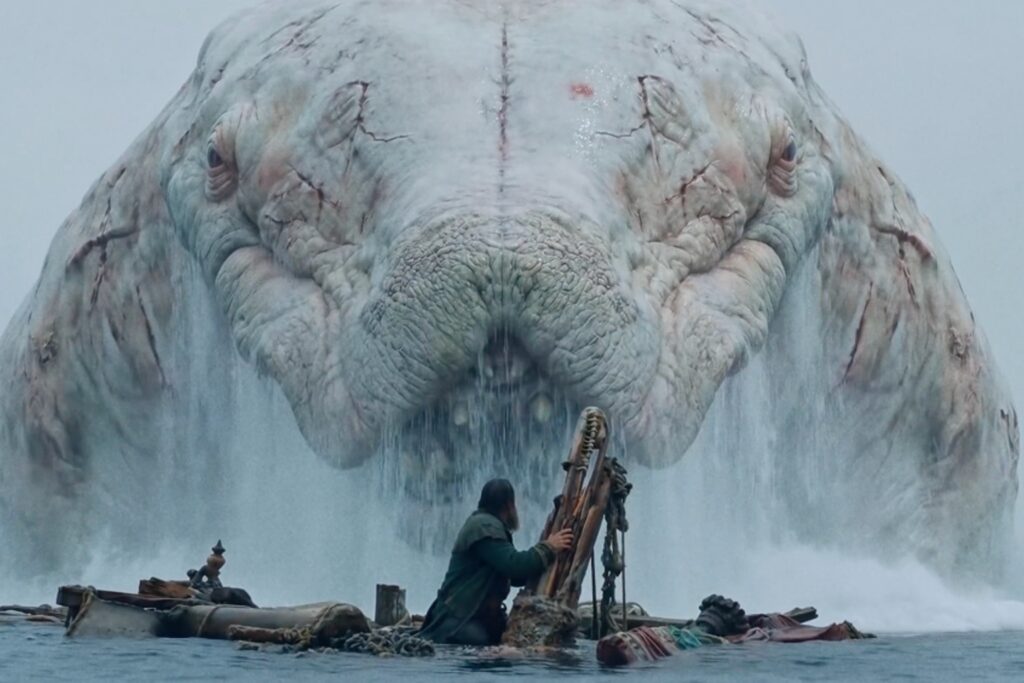
Directed by Zack London, known online as Gossip Goblin, and written by London and Jacob Batchelor, the R-rated science-fiction anthology comprises four interconnected stories set in a dystopian future where consciousness can be transferred between bodies and human identity has become increasingly detached from physical existence. The film’s fictional world explores the consequences of humanity’s attempts to transcend its biological limitations.
The production represents a departure from conventional filmmaking methods. Rather than relying primarily on photographed actors, physical environments or traditional animation pipelines, the filmmakers have used generative artificial intelligence to construct the imagery audiences will see on screen. Yet the film remains a human-directed creative undertaking.
Reporting from TheWrap identifies a production team of approximately two dozen contributors, including voice actors, animators, musicians, Foley artists and sound professionals. Their involvement complicates the assumption that AI-generated filmmaking is simply a matter of entering instructions into software and allowing a machine to produce a finished movie.
London has described the technology as a means of realizing stories that would otherwise be difficult to produce within the financial limitations of independent filmmaking. Speaking to TheWrap, he explained, “AI means I don’t have to write scripts with a budget in mind.”
That statement identifies one of the film’s most consequential possibilities. Generative AI may allow filmmakers working outside traditional studio structures to create elaborate visual worlds without requiring the same scale of production infrastructure associated with expensive science-fiction and fantasy features.
But creative freedom and commercial efficiency are not interchangeable.
The film’s complete production budget has not been independently established, making it impossible to determine whether its approach was less expensive than a comparable traditionally produced feature. Even when AI reduces certain visual production expenses, filmmaking still involves writing, performance, artistic development, sound, postproduction, marketing and distribution.
Lowering the financial barriers to creating images does not eliminate the business of bringing those images to an audience.
The involvement of musician Grimes introduces another dimension to the experiment, one that reaches directly into the evolving relationship between performers and their digital identities.
Grimes voices Zayinth Alda, an aristocratic character whose AI-generated appearance incorporates her likeness. Her vocal performance is real, while her on-screen representation is digitally constructed. London has said that the character’s appearance was developed collaboratively with the musician, incorporating elements of her established visual aesthetic into the film’s fictional world.
The arrangement demonstrates how a performer can contribute a recognizable identity and an original performance without necessarily appearing before a conventional motion-picture camera.
For the entertainment industry, the implications extend beyond a single casting decision.
Actors and other public figures may increasingly be asked to authorize digital representations of themselves, allowing their likenesses to appear in productions created through methods that differ substantially from traditional live-action filmmaking. Such arrangements could expand opportunities for performers, but they also raise questions about consent, compensation, creative control and the boundaries of future use.
Edward Saatchi, CEO of Fable and a producer of the film, has suggested that this model could become increasingly common. Speaking to Forbes, he predicted, “The likenesses of people, driven by vocal performances by them, are going to be in a lot of movies.”
That prediction should not be mistaken for an established industry outcome. The contractual terms governing Grimes’ participation have not been publicly disclosed, and her involvement cannot establish how similar agreements will be structured across the entertainment business.
Nevertheless, the production provides a tangible example of the relationship between human performance and AI-generated visual representation that filmmakers, performers and their representatives may increasingly have to navigate.
The film’s commercial ambitions are equally significant.
Rather than arriving through a conventional major-studio distribution campaign, Gods Don’t Give Gifts is being positioned for an independently organized U.S. theatrical release involving Fable and Gossip Goblin. Industry reporting identifies a planned rollout targeting fewer than 1,000 screens, with WME Independent consulting on the theatrical strategy.
AGC International is handling sales outside the United States, creating a potential pathway into additional territories. That arrangement does not establish confirmed international theatrical bookings, nor does the planned domestic screen count represent a final number of theaters committed to showing the film.
These distinctions matter because the presence of a distribution strategy is not the same as demonstrated audience demand.
The December release represents an attempt to enter the commercial theatrical marketplace, not proof that AI-generated cinema has already secured a lasting position within it.
London, however, enters that marketplace with something many independent filmmakers spend years attempting to build: an existing audience.
Through Gossip Goblin, he has developed a substantial following around science-fiction storytelling and AI-generated visual content. TheWrap reported approximately 1.6 million YouTube subscribers in early November, while Forbes reported that the studio claimed its trailer had accumulated approximately 16 million views across platforms.
Those figures establish an important distinction between this production and a film arriving without an existing audience. London is not introducing an unfamiliar creative identity to the marketplace. He is attempting to bring an established digital audience into a different form of entertainment consumption.
But the distance between watching content online and purchasing a movie ticket remains substantial.
Social platforms allow audiences to encounter videos with little financial commitment. The theatrical experience requires viewers to make a deliberate purchasing decision, travel to a cinema and spend time with a feature-length work.
A creator’s ability to generate millions of online views does not guarantee that those viewers will become paying moviegoers.
That conversion is one of the most important commercial questions surrounding Gods Don’t Give Gifts.
If the film attracts meaningful theatrical attendance relative to its costs, it could provide evidence that AI-generated visual filmmaking has commercial potential beyond online platforms. If audiences remain reluctant to purchase tickets, the result could demonstrate the limits of translating digital curiosity into theatrical demand.
Neither outcome would settle the broader debate about artificial intelligence and cinema.
A successful theatrical release would not establish that AI-generated productions can replace traditional filmmaking. A disappointing commercial performance would not prove that the technology lacks artistic potential. The results would instead contribute to a developing understanding of how this production method might fit within the wider entertainment economy.
The distinction between technical achievement and commercial acceptance is especially important at a moment when artificial intelligence is increasingly being discussed as a transformative force across creative industries.
For independent filmmakers, generative AI may offer access to forms of visual storytelling that previously required substantial financing. For actors, animators, visual effects professionals and other creative workers, the same technology raises questions about how production practices, employment opportunities and compensation may change.
Those possibilities can exist simultaneously.
A technology that expands creative access for one group of filmmakers may also alter the demand for certain forms of professional labor. Its long-term consequences will depend on how it is used, who controls the resulting work, and how the people contributing to that work are recognized and compensated.
The filmmakers are also pursuing recognition within established industry institutions.
Fable has begun an awards campaign seeking consideration for Best Animated Feature at the Academy Awards. The Academy’s published rules do not automatically disqualify films because generative artificial intelligence was used in their production. Its rules also permit additional scrutiny of the nature of AI use and the extent of human creative authorship.
An awards campaign does not establish that Gods Don’t Give Gifts has satisfied every eligibility requirement, nor does it constitute a nomination. The effort nevertheless places the production within a larger conversation about how artistic achievement should be evaluated when generative systems play a substantial role in creating the images audiences see.
That question is not simply about technology. It concerns the meaning of authorship.
Traditional filmmaking has always depended on collaboration among people whose individual contributions shape the finished work. Generative AI introduces another set of tools into that process, potentially changing how those contributions are performed and how creative responsibility is assigned.
The presence of artificial intelligence does not automatically eliminate human artistic intention. Nor does the presence of human direction resolve every question about the technology’s effect on creative labor.
Both realities deserve consideration.
There is also an unusually direct relationship between the film’s fictional world and the method used to create it.
Gods Don’t Give Gifts imagines a society in which consciousness and physical identity are no longer inseparable. Its production similarly allows human vocal performances to exist independently of the physical appearances audiences encounter on screen.
The parallel is not evidence that the film’s imagined future is inevitable. It is, however, a meaningful reflection of questions already emerging around digital identity, ownership and the representation of human beings through artificial intelligence.
The filmmakers are using a technology that challenges traditional ideas of performance to tell a story about a world in which the boundaries of human identity have become increasingly unstable.
London recognizes that relationship. Speaking to TheWrap, he observed, “Using a medium to interrogate that medium is one of the oldest moves in art.”
The statement points toward an ambition that extends beyond demonstrating what generative AI can accomplish visually.
For the film to establish artistic significance, its imagery must serve something more substantial than the novelty of its creation. The characters, narrative and emotional experience must provide audiences with reasons to remain engaged after the initial fascination with the technology has passed.
London has also expressed that ambition in explicitly cultural terms. Speaking to Film Threat, he asked, “My metric for success is really: does this have some actual cultural impact?”
That question introduces another distinction between artistic intention and measurable outcome.
Cultural significance cannot be established before a film has reached its audience. It emerges through public response, critical discussion, the influence a work may have on other creators, and whether its ideas continue to resonate beyond the initial release.
The filmmakers may hope that Gods Don’t Give Gifts contributes to a broader reconsideration of how movies are made. Whether it does so will depend on what happens after audiences have an opportunity to experience the finished work.
The film’s significance also does not depend on establishing an absolute historical first.
Earlier experiments with AI-generated cinema and international theatrical productions complicate broad claims that no comparable film has ever reached theaters. What makes Gods Don’t Give Gifts noteworthy is the specific commercial proposition being tested in the American marketplace: whether human-directed storytelling, AI-generated visual production, recognizable performers and an established digital audience can combine to support a theatrically distributed feature.
That proposition reaches beyond the film itself.
For distributors, a commercially successful release could encourage greater interest in acquiring independent productions developed through generative methods. For financiers, it could provide information about the relationship between production expenditure and potential theatrical returns. For filmmakers, it could offer another possible route from independently developed creative work to commercial exhibition.
But those possibilities remain conditional.
A meaningful assessment of the film’s financial performance will require more than opening-weekend attention. Ticket sales, production costs, marketing expenditure, distribution expenses and eventual revenue from additional platforms will all contribute to determining whether the model is sustainable.
Without those figures, claims that AI-generated cinema has already become commercially viable would be premature.
There is also a fundamental question about the audience itself.
Moviegoers have long accepted visual experiences created through animation, computer-generated imagery, motion capture and extensive digital effects. Generative AI introduces another method of constructing cinematic worlds, but its commercial acceptance cannot be assumed simply because audiences have embraced earlier technologies.
The finished experience will matter.
If audiences find the characters compelling, the story engaging and the visual presentation convincing, the method of production may become less central to their assessment of the film. If the imagery distracts from the performances or weakens the emotional connection, technological novelty may offer little protection against disappointment.
Those outcomes cannot be predicted from a trailer or an announcement.
They require an audience.
On December 4, Gods Don’t Give Gifts is scheduled to enter the American theatrical marketplace with a distinctive production method, recognizable talent, an existing digital following and an independent distribution strategy.
Its arrival will not establish that artificial intelligence has replaced traditional filmmaking, nor will it prove that Hollywood’s economic future depends on AI-generated productions.
What it may provide is something more useful: evidence.
Evidence of whether audiences are willing to pay for this kind of visual storytelling. Evidence of whether independent creators can build theatrical businesses around generative production methods. And, eventually, evidence of whether the financial structure can support continued filmmaking rather than isolated experiments.
The technology has made the film’s visual world possible. Human performers and filmmakers have shaped the work within it. Its distributors are preparing to bring that work to paying audiences.
What remains unresolved is whether those audiences will embrace the result.
The future of commercially distributed AI-generated cinema will not be determined by a filmmaker’s prediction, an awards campaign or the number of people who watch a trailer online. It will depend on whether the finished films give audiences something worth experiencing and whether the economics allow those productions to continue.
Gods Don’t Give Gifts may help answer those questions.
Its theatrical release is not proof that a new commercial era has arrived.
It is an opportunity to discover whether one can begin.
Related Posts

Madden NFL 26 Goes Big: QB DNA, Switch 2 Debut & Next-Level NFL Realism
AI Meets the Gridiron

Foresight Sports Announces Game-Changing Partnership with Sportsbox AI
Foresight Sports and Sportsbox AI Unite to Revolutionize Golf Training

LG Brings 6K Clarity and Thunderbolt 5 Speed to the Creative Workspace
Pixel Precision

Pearl TV: Tucson Television Stations Launch NEXTGEN TV Service
TUCSON TELEVISION STATIONS LAUNCH NEXTGEN TV

Playboi Carti Enters the Fortnite Multiverse as the Game’s First-Ever Music Blitz Boss
From Stage to Battle Royale

Infinity Castle DLC Adds Muzan and More to Hinokami Chronicles 2
Demon Slayer Game Levels Up
POST COMMENT