


France Is Changing Who Can Promote Ultra-Fast Fashion

By Pierre Lucas
New legislation targeting ultra-fast fashion is extending environmental regulation into advertising, digital retail, and the creator economy
France is preparing to change the relationship between ultra-fast-fashion companies and the influencers who help sell their products. Beginning January 1, 2027, creators promoting fashion brands covered by the country’s new legislation could face administrative fines of up to €100,000. The restriction extends beyond conventional paid sponsorships, reaching direct and indirect promotion, including commercial influence carried out without financial compensation. It marks a significant intervention in a fashion economy where social media visibility, constant product introductions, and rapid purchasing decisions have become closely connected.
The legislation, formally known as Law No. 2026-602, was enacted on July 8, 2026, and published the following day. Its stated purpose is to reduce the environmental impact of the textile industry, but its provisions go beyond manufacturing and waste. France is attempting to regulate several parts of the commercial process through which clothing is introduced, marketed, purchased, and ultimately discarded. Rather than banning inexpensive fashion, the law establishes conditions under which certain retail practices and the advertising supporting them will face new restrictions.
At the center of the legislation is the distinction between fast fashion and what French lawmakers describe as ultra-fast fashion. The law considers the volume of new product references introduced to the market and the extent to which businesses encourage the repair and continued use of clothing. These characteristics matter because the legislation does not simply identify products by price or country of manufacture. It examines the practices associated with bringing merchandise to consumers and encouraging its repeated replacement.
That distinction places companies such as SHEIN, Temu, and AliExpress within a larger conversation about digital commerce, although their business models are not identical. SHEIN operates as a fashion retailer and marketplace, while Temu and AliExpress offer merchandise across multiple categories through networks of sellers. Their prominence in debates surrounding ultra-fast fashion does not mean that every product offered through these platforms automatically falls within the French restrictions. The law establishes criteria for identifying qualifying practices, making the precise boundaries of its application important to retailers, regulators, and consumers.
The advertising provisions represent one of its most consequential developments. France has established a prohibition on advertising products associated with qualifying ultra-fast-fashion practices and on directly or indirectly promoting brands that use those practices. The legislation also amends the country’s existing framework for commercial influencers, extending regulation to creators who promote covered products or brands, whether the promotion is paid or unpaid. The advertising and influencer provisions are scheduled to take effect on January 1, 2027.
For the creator economy, the significance extends beyond the possibility of a financial penalty. Clothing hauls, sponsored try-ons, affiliate links, discount codes, and gifted merchandise have become recognizable parts of fashion marketing. These formats allow retailers to place products inside the everyday content audiences already consume, often reducing the distance between discovering an item and purchasing it. Under the French framework, qualifying commercial promotions could become prohibited activities rather than simply another category of advertising requiring disclosure.
That shift reflects the influence creators now hold within the retail business. A fashion recommendation delivered through a familiar personality can operate differently from a conventional advertisement. It can appear within a personal routine, a conversation about style, or a demonstration of products selected for a particular audience. Commercial influence has developed into a business of its own, with creators, agencies, platforms, and retailers participating in relationships that do not always resemble traditional media buying. France’s legislation recognizes that the promotional process is no longer confined to advertising purchased directly from a publisher or broadcaster.
The restrictions also extend into broader forms of commercial communication. French government guidance identifies event sponsorships, product placements in films and television, and favorable media coverage as possible examples of indirect advertising. That does not mean independent journalism or every positive review is automatically prohibited. The distinction between editorial reporting and commercial promotion remains essential, particularly for publishers covering fashion companies whose products may be affected by the law. But the inclusion of indirect advertising demonstrates how extensively regulators are examining the ways commercial messages reach consumers.
The environmental argument behind the legislation concerns more than the number of garments purchased. Ultra-fast-fashion practices can involve introducing large quantities of new merchandise at a pace that encourages consumers to treat clothing as increasingly temporary. Rapid changes in available styles can shorten the perceived relevance of products even when the garments themselves remain usable. The resulting patterns of production, distribution, consumption, and disposal are central to France’s decision to intervene.
The law consequently introduces obligations intended to make the environmental and social consequences of textile products more visible during the shopping experience. Qualifying online sellers will be required to display information encouraging restrained consumption, reuse, repair, and recycling, alongside information about the consequences of products and delivery. Separate provisions require manufacturing-location information to be presented clearly near online prices. These measures place information about how products are made and consumed closer to the moment a purchasing decision occurs.
France is also using financial measures associated with the textile industry’s environmental responsibilities to address products linked to ultra-fast-fashion practices. These provisions are distinct from the forthcoming influencer restrictions. Together, they illustrate an approach that seeks to influence both the economics of placing products on the market and the commercial activities that generate demand for them. Whether those measures ultimately change production volumes, retail prices, or consumer behavior will require evidence gathered after implementation.
The legislation has also introduced questions about competitive fairness. Traditional fast-fashion retailers frequently operate through international manufacturing arrangements, introduce new collections, and compete on accessible pricing. Critics have questioned whether the distinction between these businesses and ultra-fast-fashion operators will be applied consistently. If similar environmental consequences are associated with different retail models, the criteria used to determine which companies face advertising restrictions become particularly important.
That concern does not eliminate the environmental rationale for intervention. It does, however, place considerable responsibility on regulators to establish clear standards that can be applied across different commercial structures. A law designed to address harmful industry practices must be evaluated not only by its stated purpose but also by which companies are affected, which practices remain permitted, and whether its requirements produce the intended results.
Consumers introduce another important dimension. Affordable clothing serves an economic purpose, particularly for households that cannot easily absorb higher costs. The relationship between price, accessibility, and environmental responsibility is therefore more complicated than a distinction between inexpensive and expensive garments. Higher prices do not necessarily establish that a product was manufactured with fewer environmental consequences, just as lower prices alone do not determine whether a retailer meets the legal definition of ultra-fast fashion.
The law’s international implications are equally significant. Fashion marketing operates across borders, with creators in one country regularly reaching consumers in several others. A creator based in Los Angeles may have a substantial French audience, while an international retailer may distribute the same campaign across multiple markets. French law contains provisions addressing certain cross-border media and information services within the European Union, but the full implications for creators operating outside France cannot be established simply because their content is accessible to French consumers.
For international fashion companies and the agencies representing creators, these distinctions could influence campaign planning, contractual arrangements, and audience targeting. A promotional partnership that is permissible in one market may carry different obligations in another. The development illustrates a broader reality of the digital economy: commercial messages travel internationally, while the laws governing those messages remain tied to individual jurisdictions and regional legal frameworks.
The timing matters. France enacted the law in July 2026, but the principal advertising and influencer restrictions are not scheduled to take effect until January 2027. Important details of implementation and enforcement will determine how the new framework operates in practice. The legislation should not be confused with evidence that particular brands have already been penalized under the forthcoming influencer provisions or that its environmental objectives have already been achieved.
What is established is the decision to treat ultra-fast-fashion promotion as part of the industry’s environmental impact. For years, much of the discussion surrounding fashion sustainability has centered on manufacturing conditions, textile waste, material choices, and the lifespan of clothing. France’s approach adds the commercial systems that encourage consumers to keep purchasing. It recognizes advertising not simply as a means of communicating what is available, but as an activity capable of influencing how much is consumed.
The consequences may extend beyond the companies most frequently associated with ultra-fast fashion. If regulatory attention increasingly shifts toward the connection between environmental impact and consumer demand, fashion businesses may face greater scrutiny over the promotional practices supporting their growth. Creator partnerships, social commerce, and the continuous introduction of merchandise could become more prominent subjects of public policy, even in markets that do not ultimately adopt France’s particular approach.
France has not prohibited inexpensive clothing, nor has it eliminated the ability of consumers to purchase fashion through international online platforms. It has established a legal framework that challenges certain business practices and the advertising relationships used to support them. The outcome will depend on how precisely those practices are defined, how fairly the restrictions are enforced, and whether the measures produce meaningful environmental improvements.
The larger question is whether responsibility for fashion’s environmental consequences should end with the production and disposal of clothing or extend to the commercial activity that encourages people to buy more of it. France has chosen to include promotion within that responsibility. As the restrictions approach implementation, the country is becoming an important test of how environmental policy, commercial competition, and the creator economy can coexist under a changing set of rules.
Related Posts

Celebrating Hip-Hop’s Legacy: Wu-Tang Clan’s Influence Immortalized in New Board Game “Shaolin”
New Board Game "Shaolin"

Eddie Murphy’s Old School Meets Keke Palmer’s Criminal Cool in “The Pickup”
One Night Stand, One Big Heist

When Stephen Curry Wore Someone Else’s Shoes
Power Behind the Sneaker

Sanaa Lathan Takes Lead Role and Executive Produces in Legendary Entertainment’s ‘Miss Cleo’ Drama Series, Spearheaded by Sharon Hall
Sanaa Lathan executive produces Miss Cleo film.
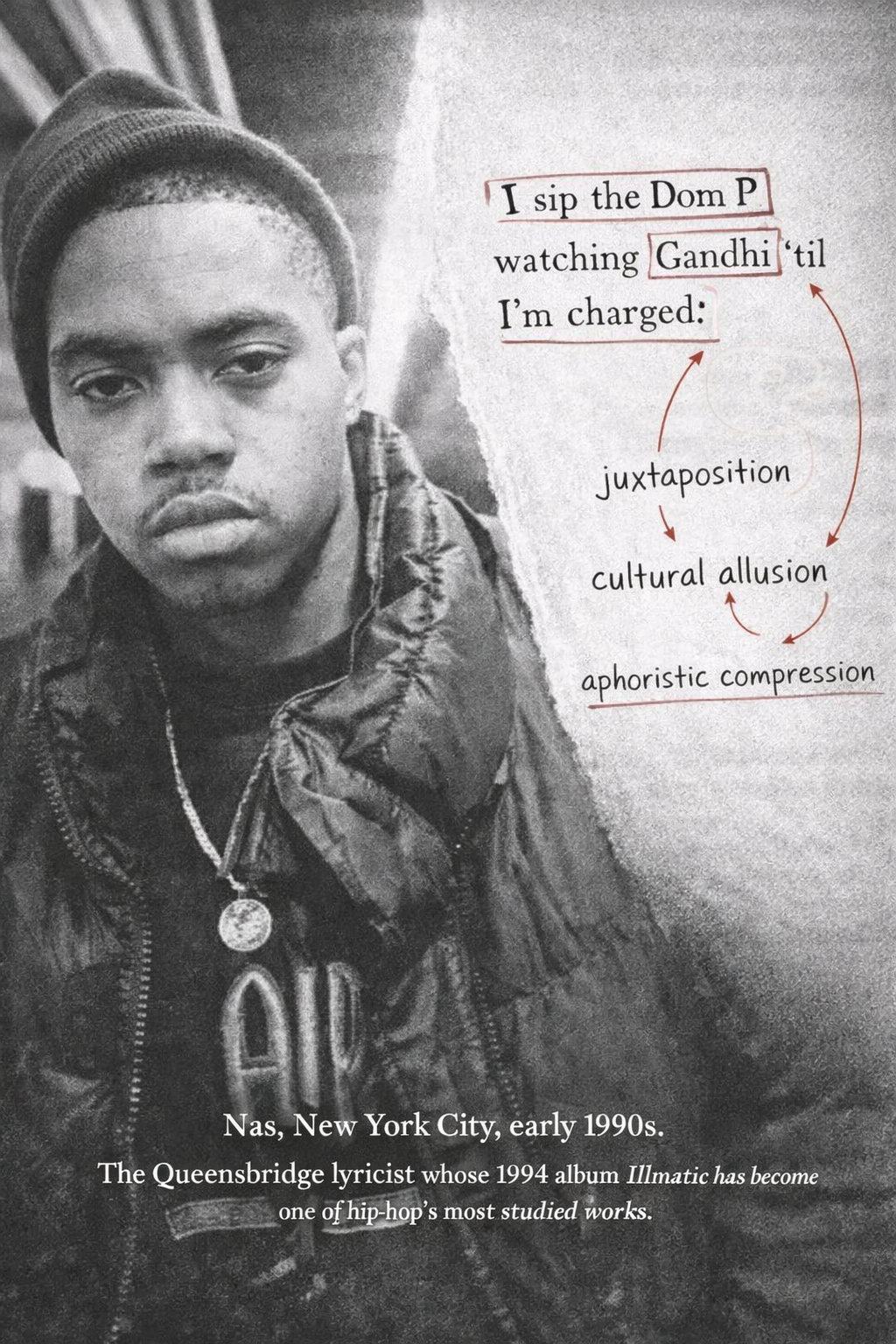
From Shakespeare to Nas: Who Gets to Be Called a Poet
From Page to Microphone
Hulu Not moving forward on Sammy Davis Jr. Limited Series; Project Seeks New Platform
Hulu has decided not to proceed with its previously announced limited
POST COMMENT