

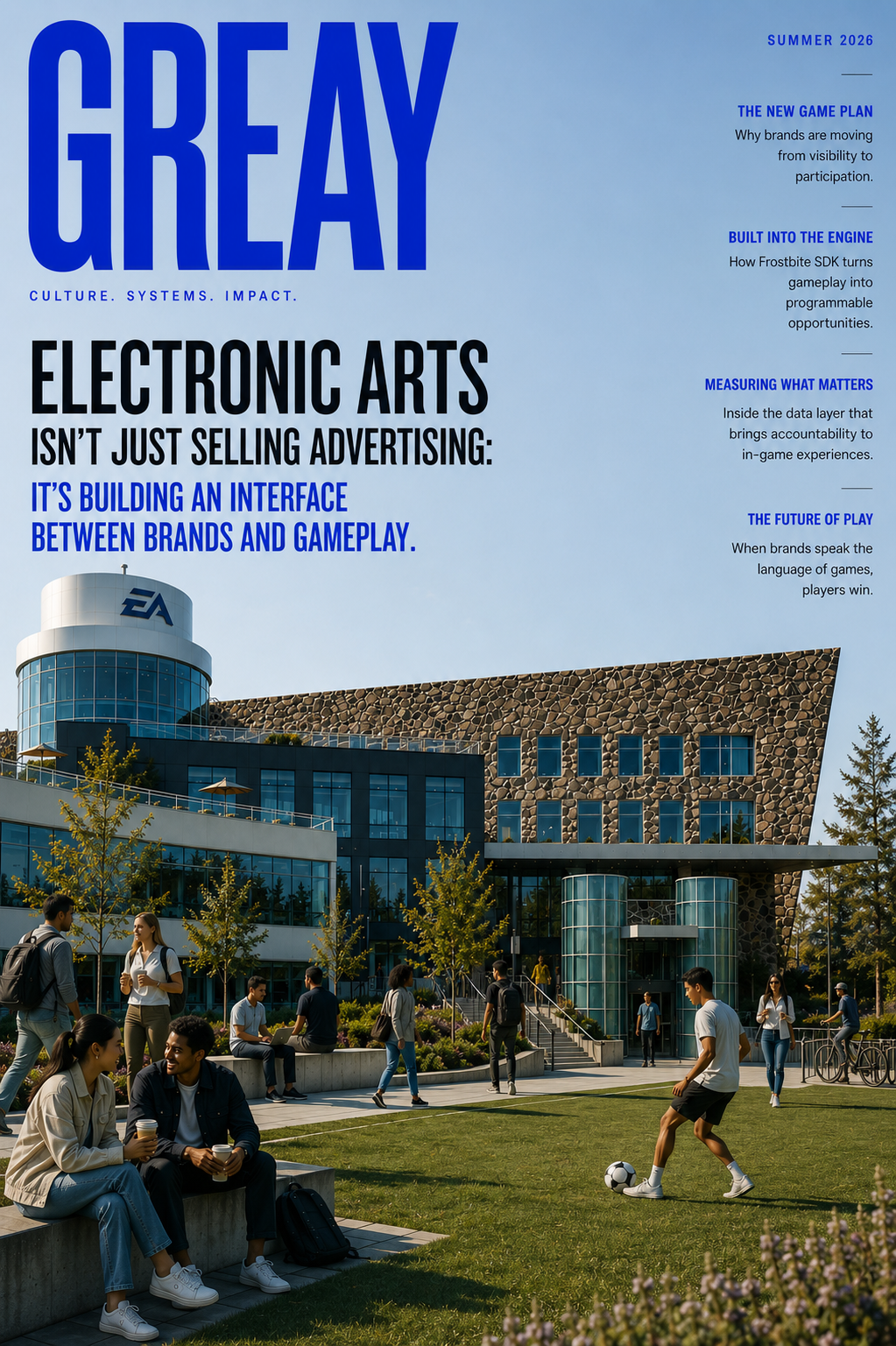
Electronic Arts Isn’t Just Selling Advertising: It’s Building an Interface Between Brands and Gameplay
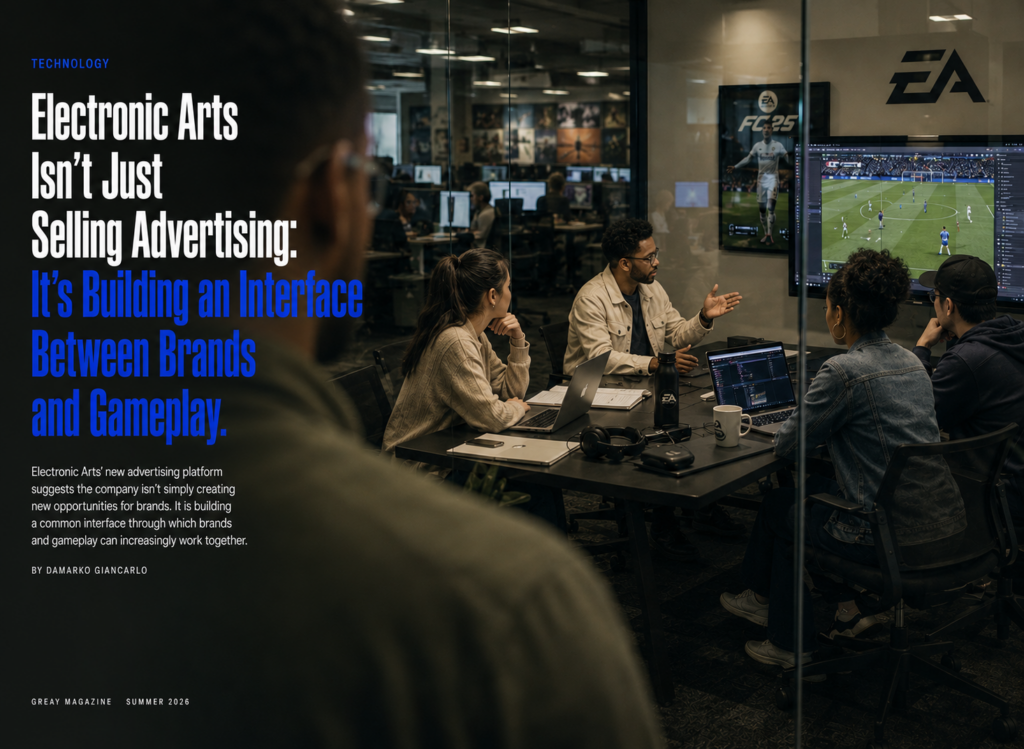
By DaMarko GianCarlo
Every generation of entertainment eventually reaches a moment when advertising has to evolve alongside the audience.
Television commercials became product placement. Websites became social feeds. Streaming introduced branded integrations. Video games experimented with digital billboards, sponsored tournaments, and cosmetic collaborations.
Electronic Arts is now taking the next step.
The company’s newly established advertising division suggests that it is no longer treating advertising as something inserted into games after they are built. Instead, it is building a framework where branded experiences can exist as native parts of gameplay itself. Through a dedicated advertising organization, a proprietary Frostbite software development kit, and measurable in-game activations, EA is creating a common interface through which developers, brands, and players can participate in the same ecosystem.
That distinction matters because interfaces do more than connect users to software. They define how entirely different groups interact with one another.
This announcement is less about advertising than it is about architecture.
For years, brands entered games from the outside. A billboard appeared in a stadium. A logo appeared on a loading screen. A sponsored event arrived for a limited time before disappearing again. The relationship remained transactional because the advertising itself remained external to the game.
EA’s platform proposes something fundamentally different.
Challenges.
Rewards.
Vanity items.
Broadcast overlays.
Integrated objectives.
These aren’t simply advertisements. They’re systems that can be designed alongside gameplay rather than layered on top of it. Instead of asking where an advertisement should appear, EA is asking how a brand might participate in mechanics players are already choosing to engage with.
That subtle shift changes the conversation entirely.
It also explains why the strategy feels unusually organic.
Electronic Arts has spent decades studying progression systems, player motivation, competition, customization, and engagement. Those disciplines have always existed to make games more compelling. The same understanding now provides the foundation for a new relationship between gameplay and commercial partnerships. The advertising platform isn’t replacing game design. It’s borrowing from it.
Seen through that lens, the company’s campus almost becomes symbolic.
Outside, employees gather on the field, talking, walking, and occasionally kicking a soccer ball before returning to their desks. Inside, designers, engineers, producers, and artists continue refining virtual worlds millions of people will eventually experience. Work and play don’t exist as opposing ideas. They exist as parts of the same creative rhythm.
That culture helps explain why this initiative feels less like a marketing experiment and more like a product decision.
The platform itself reinforces that impression. By introducing tools directly into Frostbite, partnering with measurement providers, and launching activations alongside brands such as Visa, Red Bull, and Mountain Dew, EA isn’t simply selling sponsorship opportunities. It is standardizing how those experiences can be created, measured, and expanded across multiple franchises. The capability becomes repeatable rather than bespoke.
That is how platforms mature.
The companies that reshape industries rarely succeed because they execute a single campaign better than everyone else. They succeed because they create systems that make the next thousand campaigns easier to build.
Electronic Arts appears to understand that distinction.
Whether this approach becomes a defining model for interactive advertising will ultimately be determined by players. If branded experiences continue to respect gameplay rather than interrupt it, the relationship between entertainment and commerce may begin to feel less adversarial and more collaborative. The interface succeeds only if players continue to believe they are there to play first.
Perhaps that’s the most revealing lesson of all.
The future of advertising inside games may not belong to the companies that can place the most logos on a screen. It may belong to the companies that understand gameplay deeply enough that brands can participate without becoming the point of the experience.
Electronic Arts isn’t simply creating another advertising business.
It is building the connective layer where brands and gameplay may increasingly learn to speak the same language.
Related Posts

Sony Electronics has launched the SRS-XV500, a cutting-edge party speaker designed for portable and powerful sound at any celebration
Sony has unveiled the latest addition to its lineup SRS-XV500

Hisense Redefines Home Entertainment with HT Saturn Wireless Home Theater System Debut at CES 2025
Hisense reimagines cinematic sound with HT Saturn.

Hisense Unveils CanvasTV™, Merging Art and Premium Entertainment
Hisense CANVASTV, a new blend of art and technology.

West Monroe Unveils Nigel: A Cutting-Edge Internal AI-Powered Platform
By DaMarko Webster West Monroe, a prominent digital services company,

Transform Your Tesla into a Private Karaoke Lounge with the CaraokeMic
Tesla is calling all karaoke lovers.

AI Isn’t Killing Creativity — It’s Exposing Who Never Had One
Taste, After the Tool