

Disney+ Shows What Vertical Has Become: A Gateway, Not a Teaser
By Leon Greggs
Vertical didn’t start as the main event. It was treated like an accessory—something fast, disposable, promotional. Now it’s becoming something else entirely.
For years, vertical video lived on the edges. It was where trailers were cut down, where moments were repackaged, where attention was borrowed but not held. It was a format built for speed, not for depth. Something you passed through on the way to the “real” experience.
That boundary is dissolving.
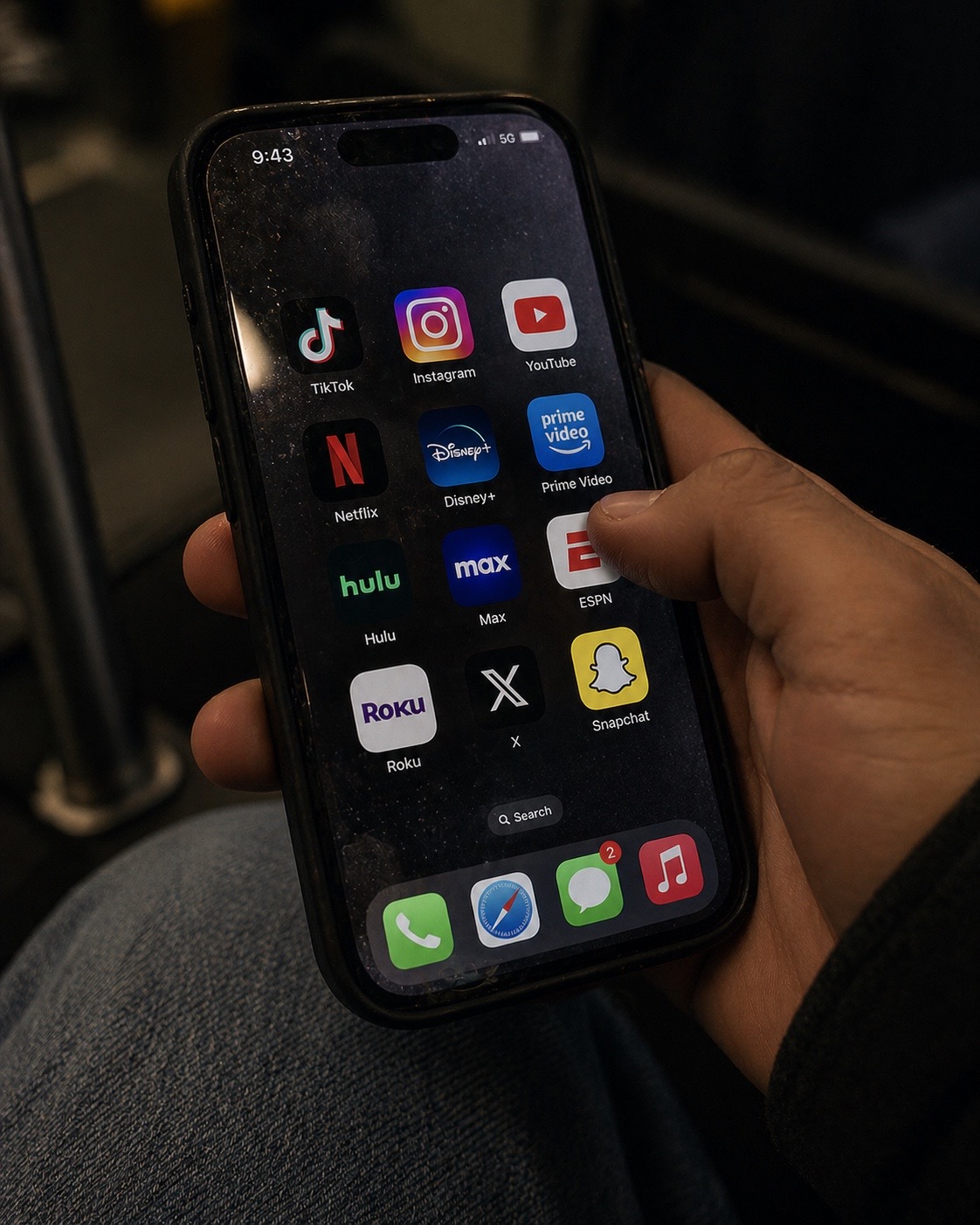
With its latest push into short-form, Disney+ isn’t defining the shift—it’s confirming it. A dedicated vertical feed, algorithmically driven and mobile-first, now sits inside the platform as a new layer of entry. Scenes surface before titles. Moments arrive before decisions. The platform no longer waits for you to choose—it meets you mid-scroll.
That changes the sequence.
What used to look like:
open → search → decide → watch
Now looks like:
scroll → feel → enter
It’s a small behavioral adjustment that carries structural weight. Because once the first interaction with a story becomes a moment instead of a menu, everything downstream begins to reorganize.
The homepage matters less.
Search becomes optional.
Even intent starts to fade.
In its place, something more immediate takes over—reaction.
This is where vertical becomes something more than a format. It becomes a mechanism.
Platforms like TikTok and Instagram trained an entire generation to engage with content as a stream of moments. No commitment required. No decision necessary. Just movement, feeling, continuation.
What’s different now is what happens next.
Instead of ending at the moment, the experience extends beyond it. A clip becomes a doorway. A scene becomes an invitation. One tap moves you from fragment to full narrative without friction.
That’s the shift.
Vertical isn’t replacing long-form. It’s restructuring how you arrive at it.
And once arrival changes, the entire ecosystem adjusts.
Trailers become less central because the feed is always on. Posters lose some of their power because the first impression is no longer static. Even release strategies begin to evolve, because discovery is no longer scheduled—it’s continuous.
Stories don’t wait to be found anymore.
They surface.
That’s why this moment feels familiar.
Every era has a format shift that quietly resets expectations. Black and white gave way to color, and storytelling changed with it. Heavy television sets gave way to flat screens, and viewing became more fluid, more integrated into everyday life.
Vertical belongs in that lineage.
Not because it’s new, but because it’s finally being taken seriously.
What Disney+ is doing is less about innovation and more about alignment—bringing premium storytelling into the same behavioral space where attention already lives. The phone is no longer just a companion to the experience. It is the experience.
And within that space, everything competes equally.
A blockbuster.
A clip.
A highlight.
A moment.
All waiting in the same feed. All one gesture away.
The thumb becomes the decision engine.
But more importantly, the decision itself becomes lighter. Less deliberate. More instinctive. You don’t browse in the traditional sense. You respond. And that response leads somewhere deeper before you have time to reconsider it.
That’s what makes vertical powerful now.
It doesn’t ask for commitment upfront.
It earns it in motion.
And once that model proves consistent, it stops feeling like an alternative and starts feeling like the default.
This is what a format shift looks like while it’s still happening.
Not loud. Not fully defined. But unmistakable in how it changes behavior.
Disney didn’t create that shift.
It stepped into it.
And by doing so, it makes something clear:
Vertical is no longer the preview.
It’s the way in.
Related Posts

Innovative Technology Meets Mountain Biking: Amflow PL eMTB Unveiled
Amflow introduces its latest product, the Amflow PL. Peter Archer

Coco Gauff and Coi Leray Unite as Trendsetting Ambassadors for Ray-Ban’s A.I.-Enhanced Smart Glasses
Tennis prodigy Coco Gauff and hip-hop sensation Coi Leray have been ch

Nothing Unveils Next-Gen Earbuds: Open Sound Tech Meets Immersive Audio
Nothing Shares Revolutionary Ear (open) Wireless Earbuds.
Technogym Ecosystem Unveiled: The Singular AI-Powered End-to-End Open Platform at IHRSA Los Angeles
Technogym Ecosystem Unveiled

Virtual Internet Unveils “Continuous Connectivity” with Virtual 5g
Virtual Internet, a pioneer in Software 5G (Fifth Generation) Mobile B

Clean Introduces Revolutionary Luggage Sanitization System at JFK Terminal 7
First-ever U.S. Baggage Sanitization System