


Bob Iger Didn’t Retire—He Moved Upstream

By Brian k. Neal
There’s a version of this story that reads simple: a legacy executive steps away from the day-to-day and takes on an advisory role. Clean exit. Soft landing. A respected figure easing into the next phase.
That version misses the point.
Bob Iger didn’t step away from power—he repositioned it. After years shaping the modern identity of The Walt Disney Company, he’s now aligning with Thrive Capital, a firm that sits closer to the origin point of what gets built, funded, and ultimately seen.
That’s not retirement. That’s upstream.
At Disney, Iger operated one of the most sophisticated cultural machines in the world. He understood not just how to distribute stories, but how to build systems that sustain attention—Marvel, Pixar, Lucasfilm. These weren’t just acquisitions. They were long-term frameworks for relevance, engines designed to keep culture in orbit.
But operating inside a system—even one as powerful as Disney—means you’re still downstream of something. Market forces. Platform shifts. Technological change. The pace is relentless, and even the most dominant players are responding to currents they don’t fully control.
Upstream is different.
Upstream is where those currents begin.
By stepping into venture, Iger moves from deciding what stories get told to influencing which platforms, tools, and companies will define how stories exist at all. It’s a shift from execution to authorship at a higher level. Not one narrative—many. Not one company—an entire portfolio of possibilities.
And Thrive isn’t just capital. It’s proximity to the next wave. Companies like Instagram, Spotify, OpenAI, and A24 represent different pillars of modern culture: distribution, access, intelligence, storytelling. Sitting inside that ecosystem isn’t passive. It’s vantage point.
That vantage point matters right now.
Because the system is shifting again.
AI is accelerating production. Platforms are compressing distance between creator and audience. The volume of content is exploding while attention remains finite. In that environment, the advantage doesn’t belong to whoever can make the most—it belongs to whoever can make meaning stick.
This is where Iger’s value compounds.
He doesn’t just understand scale. He understands resonance. The difference between content that circulates and stories that anchor. Between a moment and a system. That kind of pattern recognition becomes exponentially more powerful when applied early—before companies harden, before platforms calcify, before culture decides what matters.
That’s the real move: timing.
He didn’t wait until the system stabilized. He moved while it’s still forming.
The shift isn’t just positional—it’s structural.
When figures like Iger move upstream, culture stops being decided at the moment something is made. It starts being decided at the moment something is funded.
That compresses the timeline of influence.
It moves authorship earlier.
And it quietly redefines who the real gatekeepers are.
There’s also something else happening here—something subtle but important.
The boundary between Hollywood and Silicon Valley is dissolving.
For years, tech built the pipes and media filled them. Now those roles are converging. Platforms are becoming studios. Studios are becoming platforms. AI is blurring authorship entirely. In that convergence, the people who can bridge narrative and infrastructure become critical.
Iger is one of the few who can do both.
He knows how to scale a story globally, but he also understands the discipline required to protect it—how to maintain identity inside expansion, how to build trust with an audience over time. Those aren’t just creative instincts. They’re structural advantages.
Placed upstream, they become filters.
Which ideas get funded.
Which founders get believed.
Which visions are seen as durable versus disposable.
That’s a different kind of authorship. One that doesn’t show up in credits, but defines what exists to be credited in the first place.
So no—this isn’t a familiar executive shuffle.
It’s a signal.
Power is moving away from singular institutions and toward interconnected systems. And the individuals who understand how culture operates within those systems are stepping into positions where they can shape them from the beginning.
And that carries a consequence most people won’t see in real time.
The next era of culture won’t just be shaped by creators or executives.
It will be shaped by the people who decide which futures are worth betting on.
And most of those decisions will happen long before the public ever sees the result.
Iger didn’t leave the room.
He changed where the room is.
Related Posts
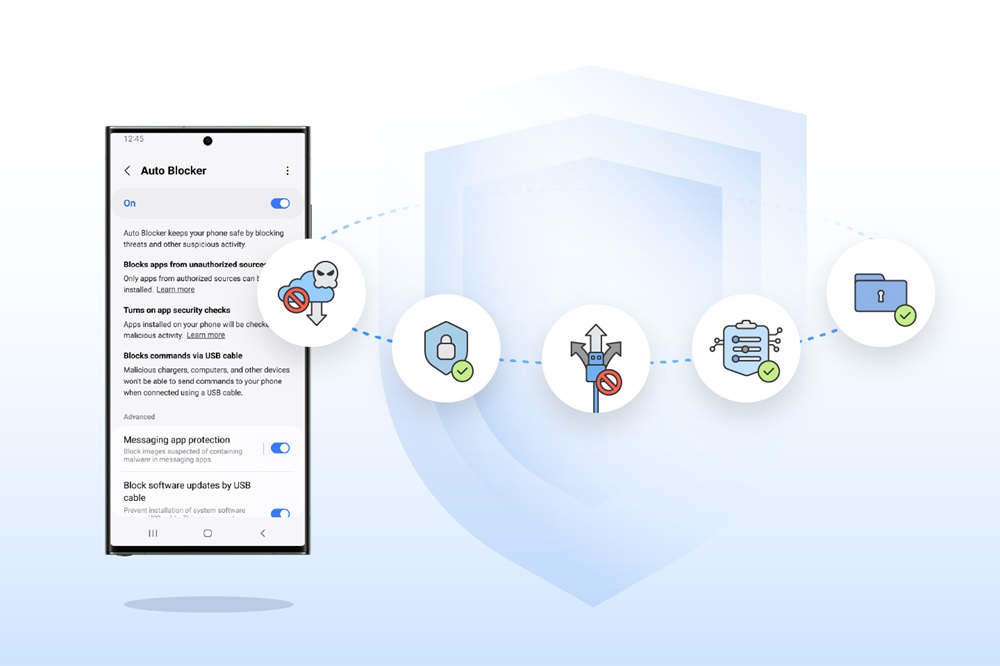
Secure Your Device According to Your Preferences with Samsung’s Auto Blocker
Samsung Electronics has unveiled Auto Blocker

YouTube’s Channel Search Experiment Shows How Creator Data Is Becoming a Bigger Part of Brand Partnerships
The Growing Value of Creator Audience Data

United Airlines Brings Apple TV+ Originals to the Skies with Largest Seatback Screens in the U.S.
Streaming in the Stratosphere

ROG Xbox Ally and Ally X: Where Console Soul Meets PC Power
Handheld Evolution

The Sound of Tomorrow: UMG and Stability AI Partner to Redefine Music Creation
When Art Meets Algorithm

The Store Is No Longer the Destination
The Store Is No Longer the Destination