

Apple Podcasts Is Going Deeper Into Video as Podcasts Become Shows
By Barry Levingston
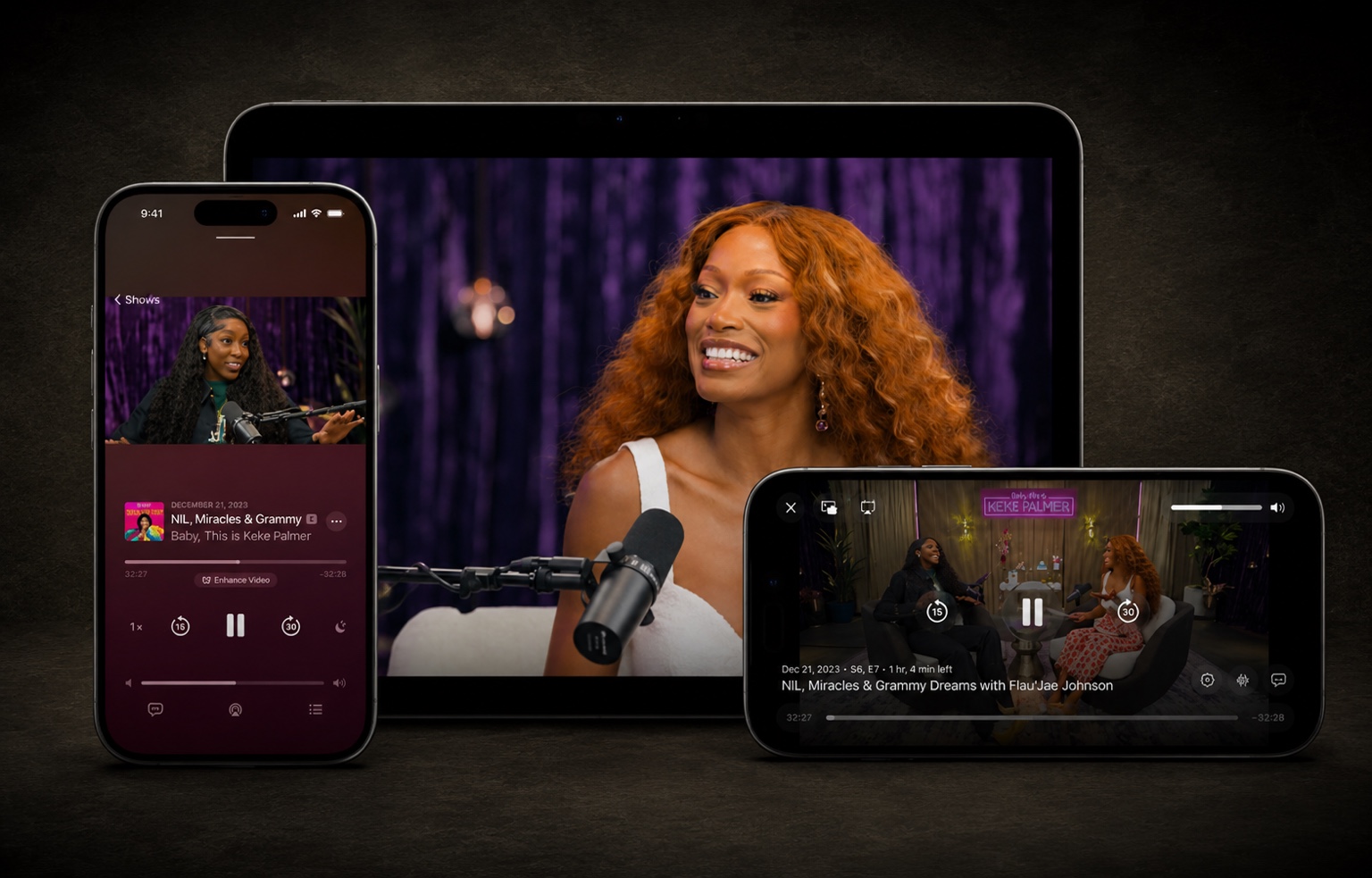
That is how Apple is introducing its latest evolution of Apple Podcasts to consumers. In a mass email, the company tells users that video has arrived, encouraging them to “watch or listen from anywhere,” move between audio and video, follow transcripts and discover shows they may want to watch rather than simply hear. Open Apple Podcasts and the strategy becomes even more visible: Video now has its own destination, complete with sections such as “Newly Added Video” and “Popular Video Shows.”
The important development is not that Apple Podcasts can suddenly play video. It has supported forms of video podcasting for years. The more consequential change is that Apple is now building a modern experience around video — one that increasingly treats it as a core part of what a podcast can be rather than an alternate format sitting beside the audio.
That distinction arrives at an important moment for podcasting.
The medium that was once defined almost entirely by listening has become increasingly visual. Cameras that initially documented recording sessions became part of the product itself. Studios became sets. Hosts began thinking about lighting, framing and visual identity. Full episodes moved onto television screens while individual moments traveled across social platforms as clips. Some of the largest podcasts now look and behave as much like talk shows as traditional audio programs.
YouTube has been one of the clearest beneficiaries of that transition. The company said in 2025 that more than one billion people were watching podcast content on YouTube each month. By October of that year, viewers were watching more than 700 million hours of podcasts on living-room devices in a single month. Edison Research has similarly documented how normalized watching podcasts has become, with YouTube emerging as the service used most often for podcasts among a significant portion of weekly U.S. podcast consumers.
YouTube did not have to convince audiences that video belonged there. It was already built around video when podcasts began putting cameras in the room.
That created a different challenge for Apple.
Apple played a foundational role in making podcasting mainstream, and Apple Podcasts remains deeply connected to the distribution architecture of the medium. But as podcasts became increasingly visual, much of that new behavior developed outside the traditional podcast application. A show could be distributed through Apple Podcasts while its visual identity, viral moments and full-length filmed episodes developed another life on YouTube.
Apple’s latest changes address that gap without requiring Apple Podcasts to become another YouTube.
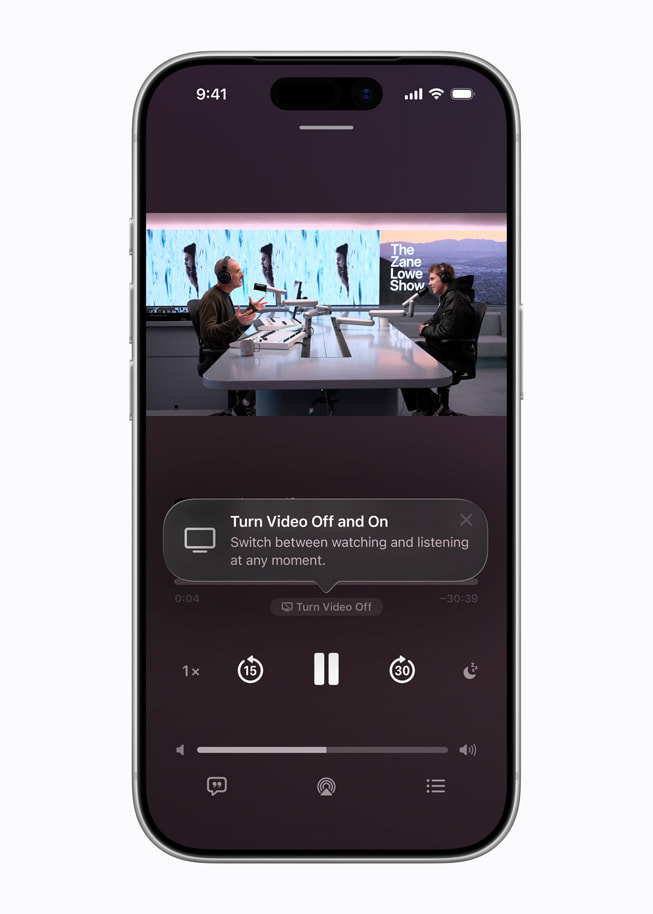
Its enhanced video system uses HLS streaming, allowing audiences to move between watching and listening while remaining inside the same program. Someone can begin an episode as video, switch to audio when they leave the house and return to the visual experience later. Video can be downloaded for offline viewing, while searchable transcripts allow listeners and viewers to find specific conversations and jump directly to moments within an episode.
Apple is also expanding the experience across its ecosystem. Video podcasts are not being conceived solely as something watched while holding an iPhone. The enhanced experience extends the idea of the podcast toward Macs and Apple TV, putting the same programming on screens traditionally associated with television and streaming entertainment.
That matters because Apple isn’t simply changing how a podcast looks. It is making the podcast increasingly independent of any single format.
A program can be video when someone is sitting on a couch, audio when that person gets into a car and searchable text when they want to find something the host said three days later. The underlying show remains the same. What changes is how the audience chooses to experience it.
The commercial architecture underneath the update makes Apple’s commitment to video even more significant.
Apple’s new video system supports dynamically inserted video advertising, while allowing publishers to continue working with their own hosting providers and advertising partners. That means video can become additional advertising inventory without necessarily requiring creators to abandon the distribution system that has historically defined podcasting.
This is where Apple’s approach begins to separate itself from simply copying a video platform.
Podcasting grew from a relatively decentralized architecture. Publishers could control their feeds, choose hosting companies and distribute the same program across multiple listening applications. The platform through which someone heard a podcast did not necessarily own the podcast itself.
Video complicated that relationship. As YouTube became increasingly important to podcast discovery and consumption, participating fully in the visual podcast economy often meant building a substantial presence inside YouTube’s ecosystem.
Spotify has been responding to the same shift from another direction. It has spent years expanding video podcasting, introducing video monetization and making it easier for publishers to distribute video through the platform. By May 2026, Spotify said more than 500 million users had streamed a video podcast.
Taken together, these moves reveal something larger than a competition over a feature.
The major platforms are responding to a change in what the word podcast now represents.
A podcast can still be two people speaking into microphones with no cameras in sight. But at the other end of the market, the category increasingly includes multicamera interviews, comedy programs, sports conversations and personality-driven franchises produced with the visual language of television. Audiences may listen to those programs during a commute, watch them on a phone during lunch and finish them on a television that evening.
The same piece of content can now move through several forms without changing its identity.
Apple’s own interface reflects that evolution.
“Newly Added Video” is more than a technical designation. It creates a place for audiences to browse. “Popular Video Shows” goes another step further. Apple isn’t merely telling users which podcasts contain a video file. It is beginning to merchandise those programs as shows.
That word is worth paying attention to.
For much of podcasting’s history, the format helped define the product. A podcast was something you listened to through a podcast application. Increasingly, podcast describes the origin and identity of the program more than the way the audience consumes it.
That is why Apple’s mass email matters.
Apple has moved beyond quietly making the technology available to publishers. It is now teaching consumers a new behavior: you can watch here, too.
The company doesn’t need Apple Podcasts to defeat YouTube for that strategy to succeed. YouTube’s recommendation engine, creator ecosystem and enormous video audience give it advantages that an upgraded Podcasts app does not suddenly erase. Nor does Apple need to convince every audio podcaster to install cameras.
It simply needs Apple Podcasts to remain relevant as the most ambitious podcasts stop being exclusively audio products.
That makes this less of an Apple-versus-YouTube story than it initially appears.
YouTube helped demonstrate what happens when podcasts become visual programming. Spotify has been building around the same behavior. Apple is now adapting one of podcasting’s foundational platforms to a world in which watching and listening increasingly coexist.
And Apple may have one particularly useful advantage: it does not have to decide which experience should win.
The audience can.
Watch when a screen makes sense. Listen when it doesn’t. Search the transcript when you’re looking for a particular moment. Move to the television when the program deserves a bigger screen.
What Apple is building around video suggests that the company understands where podcasting has already been heading.
The podcast isn’t disappearing.
It’s becoming a show — and the show no longer has to choose between being watched and being heard.
Related Posts
Game Mode: Activated — The REDMAGIC 10S Pro Is a Console in Your Pocket
The Future of Mobile Gaming Looks Like This
LG’s 3-in-1 Lifestyle Gadget: HD Projector, Mood Lighting, and Bluetooth Speaker in One
LG Unveils Groundbreaking Innovations Ahead of CES 2025.

Stüssy and Beats Collaborate on Exclusive Studio Pro Headphones
Beats, renowned for its collaborative ventures
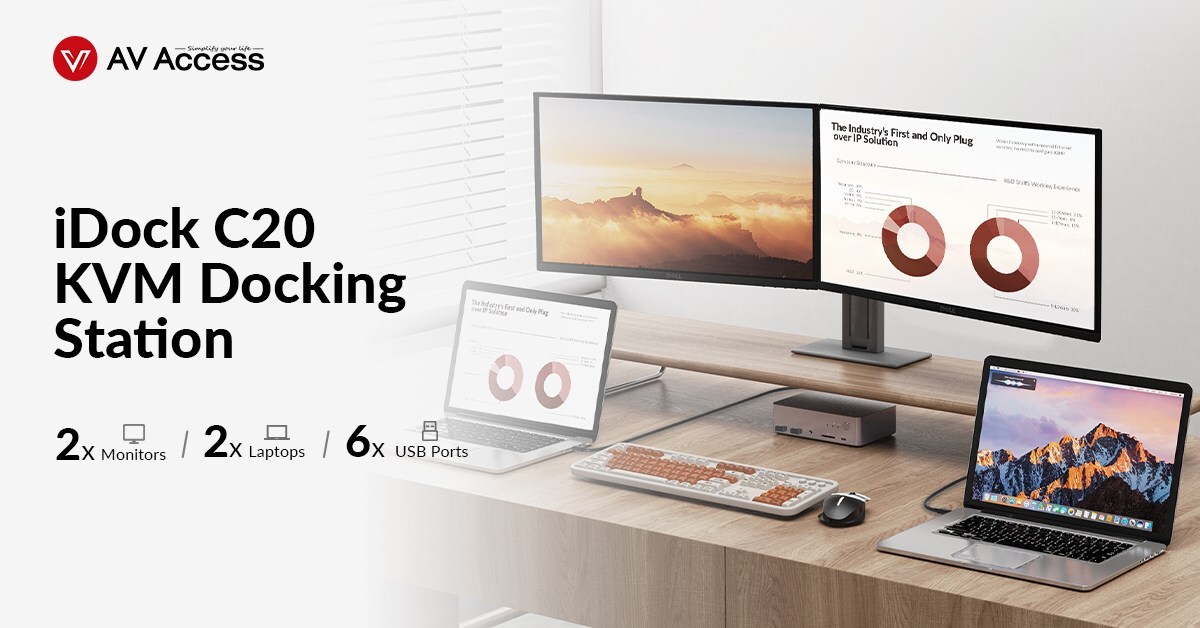
AV Access Launches the iDock C20: A Game-Changing KVM Switch Docking Station
AV Access Unveils iDock C20.
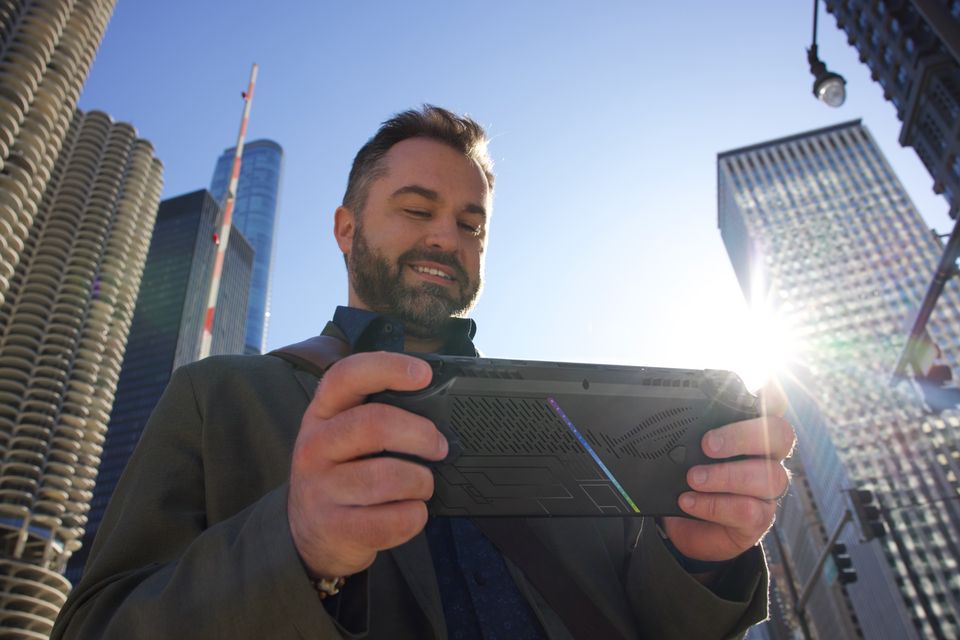
ASUS Republic of Gamers (ROG) Unveils the ROG Ally X: Enhanced Handheld Gaming Console
ASUS (ROG) Unveils the ROG Ally X
Luxury Reframed: Google Partners with Gentle Monster to Define the Future of Fashion-Tech
Frames of the Future