

Alo Didn’t Expand Into Europe — It Mapped Luxury Territory
By Gracie Scott
Luxury brands used to expand by opening stores.
Now they expand by constructing environments.
That is the real story behind Alo’s arrival in Cannes, Saint-Tropez, and soon the Champs-Élysées. On the surface, it looks like another American activewear company planting flags in Europe. But the geography tells a much deeper story. Alo is not simply increasing retail distribution. It is positioning itself inside the emotional and architectural centers of modern luxury life.
Cannes is not just a city during festival season. It becomes a temporary capital for celebrity visibility, global media, wealth, technology, fashion, and cultural power. Saint-Tropez is not merely a vacation destination. It functions as a symbol of curated leisure and elite seasonal lifestyle. The Champs-Élysées is not just retail real estate. It is one of the world’s most recognized corridors of institutional luxury legitimacy.
Together, those locations form a map.
And that map reveals the company’s real ambition.
Alo no longer wants to exist as a performance apparel brand competing for shelf space inside fashion. It wants to become part of the physical infrastructure of luxury wellness itself.
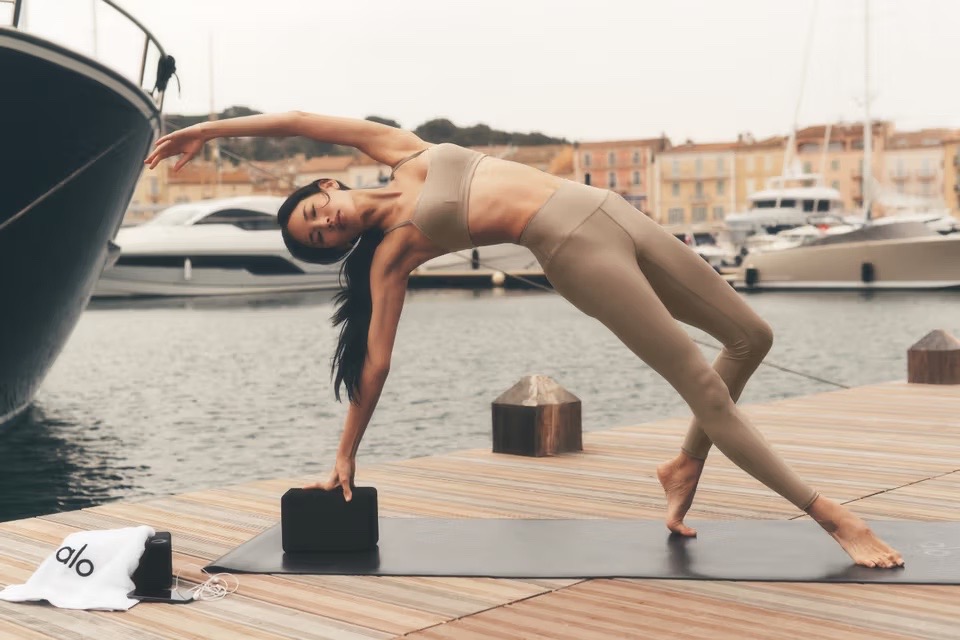
That is why the yacht matters.
That is why the beach club matters.
That is why the wellness activations matter.
The company understands that modern luxury consumers increasingly value emotional environments over objects. Historically, luxury signaled itself through possession: handbags, watches, couture, automobiles. Today, luxury increasingly signals itself through optimization, recovery, access, calm, movement, and spatial exclusivity. Consumers no longer only want products that communicate status. They want environments that regulate how status feels.
This is where Alo’s strategy becomes extremely intelligent.
The “Alo Yacht Club” activation is not simply experiential marketing. It transforms movement itself into branding infrastructure. Guests are not just seeing the brand. They are physically entering its worldview. Wellness becomes hospitality. Hospitality becomes identity. Identity becomes territory.
That shift matters because luxury retail is quietly undergoing one of the biggest structural changes in decades.
The boutique is no longer the final destination.
It is becoming an entry point into a larger ecosystem of:
- experiences
- events
- wellness rituals
- hospitality
- content
- community
- emotional positioning
In many ways, Alo is behaving less like a traditional fashion label and more like a hybrid of Equinox, Soho House, Aman, and Erewhon — companies that understand modern luxury is increasingly about belonging to a curated environment rather than simply purchasing products from it.
And the company’s choice of cities proves this is not random expansion logic.
This is territorial logic.
Mass brands expand through density.
Luxury brands expand through symbolic placement.
Alo is choosing globally recognized cultural nodes where aspiration is already concentrated:
- Los Angeles
- New York
- Paris
- Cannes
- Saint-Tropez
- London
- Seoul
These are not just markets. They are stages where luxury identity is publicly performed.
That distinction is critical.
Because once a brand successfully embeds itself into the geography of aspiration, the products themselves almost become secondary. The store becomes content. The activation becomes narrative. The environment becomes the advertisement.
This is why the phrase “mapped luxury territory” feels more accurate than “expanded into Europe.”
Expansion sounds commercial.
Territory sounds infrastructural.
And infrastructure is increasingly where the real power sits in modern culture.
Fashion companies once competed to place products inside luxury environments. Now they are competing to own the environments themselves.
Alo understands that the future of luxury may not belong to the brands with the loudest logos or the largest runways. It may belong to the brands capable of constructing entire emotional ecosystems people willingly organize their lives around.
The product is no longer the center of gravity.
The world is.
Related Posts
MCM has unveiled a new capsule collection for Euro 2024, highlighted by a campaign starring German footballer Jonathan Tah
MCM Drops Euro 2024 Capsule Starring Footballer Jonathan Tah
AMC’s Best Quarter in Its History Suggests the Future of Theatrical Exhibition Is More Resilient Than Many Predicted
The Reinvention of Moviegoing
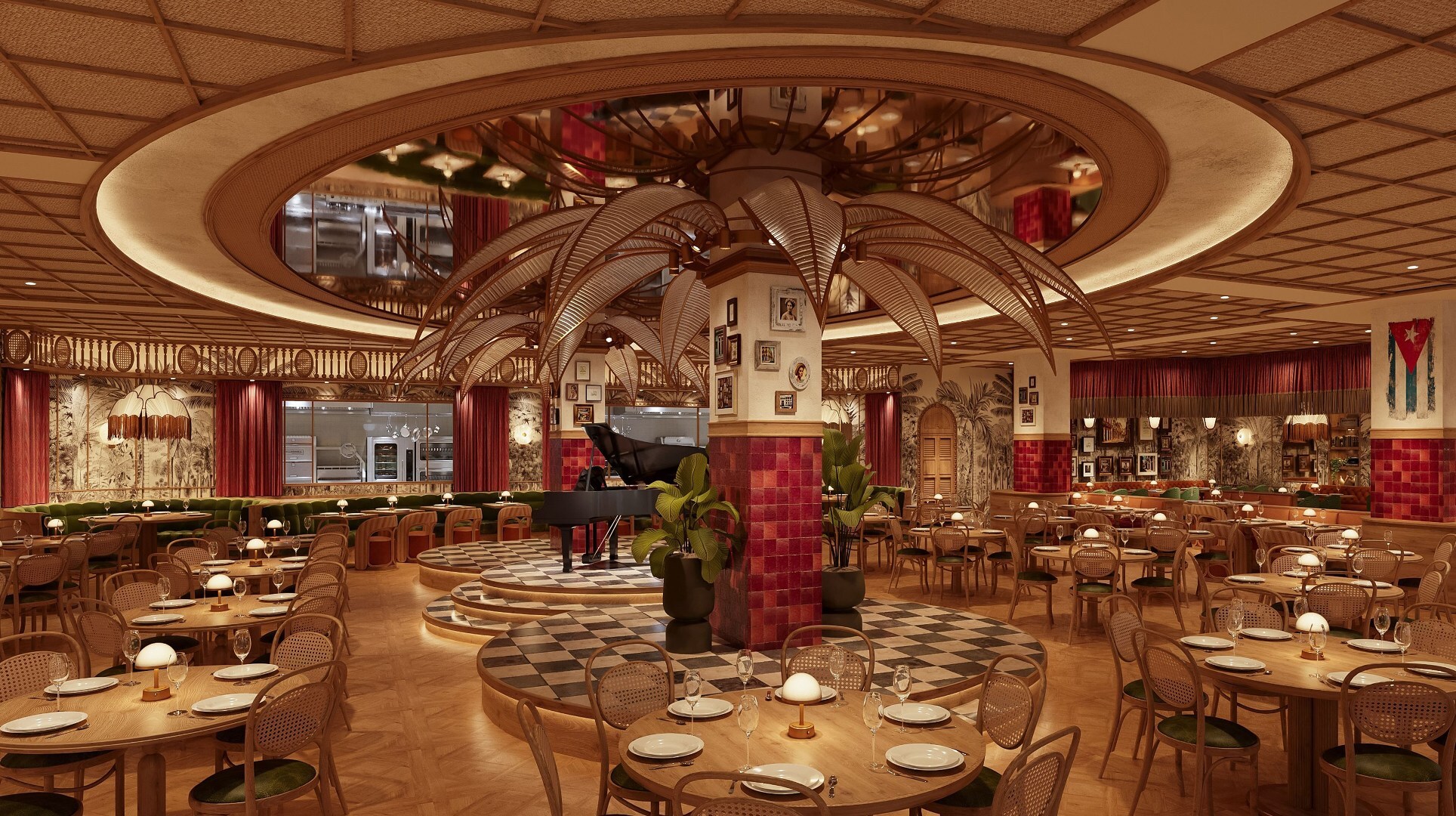
A Taste of Havana Hits the Las Vegas Strip: Havana 1957 and Cortadito Coffee House Open at Flamingo Las Vegas
Havana 1957 And Cortadito Coffee House Bring A Cuban American Affair T
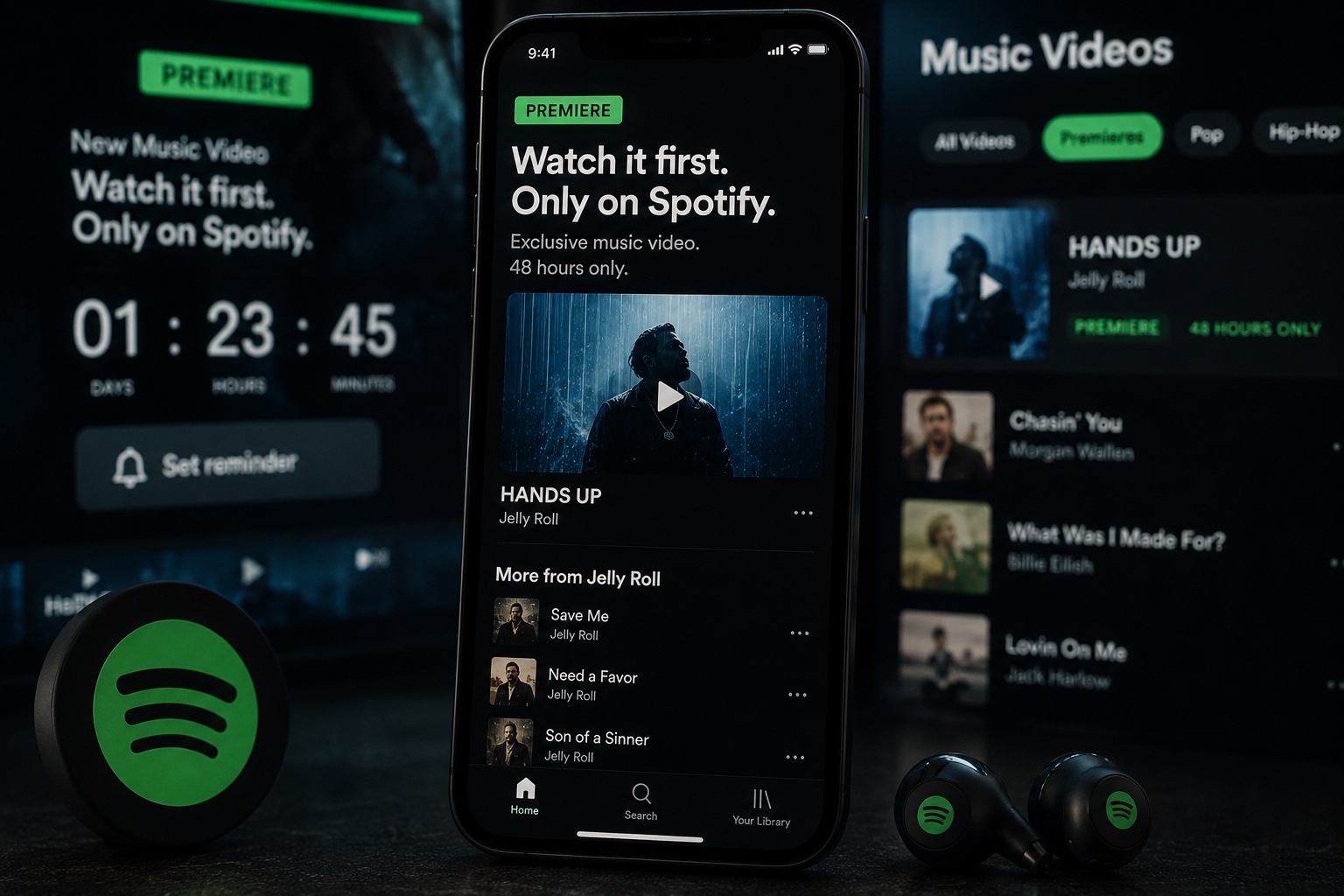
Spotify Doesn’t Need to Take Music Videos From YouTube—It Only Needs the Premiere
The first 48 hours are the new battleground
All the World’s a Stage — And Every Role, Erivo’s: ‘Dracula’ Reinvented
One Woman, Twenty-Three Faces
Steven Soderbergh’s Haunting Return to Horror: First Trailer for Presence Offers a Chilling Glimpse into a Supernatural World
First Trailer For Steven Soderbergh’s POV Horror Film 'Presence'