


Nathan Levy Is Right Where He Needs to Be

There is something extraordinary about reaching a place you once dreamed of and discovering that the experience feels entirely different from what you imagined. For Nathan Levy, Broadway arrived early, bringing with it the excitement of a young performer stepping into a world he had admired since childhood, along with responsibilities he was still learning how to carry. The opportunity represented everything he had worked toward, but behind the rehearsals, the preparation, and the promise of a professional career was a young man who worried about making mistakes. Years later, Levy can look back at that version of himself with affection, a little humor, and the perspective that comes from understanding that confidence does not always precede experience. Sometimes it develops quietly, somewhere between the things we fear and the moments we discover we can handle them.
Long before New York became home, Levy grew up in Southern California in a household where curiosity and physical expression were part of everyday life. With three brothers pursuing interests ranging from baseball and gymnastics to theater, there was no shortage of activity or possibility. For a time, Levy imagined becoming an Olympic gymnast, an ambition that might seem far removed from Broadway until he explains the similarities. Both disciplines demand athleticism, control, endurance, and the ability to communicate something extraordinary through movement. The body becomes an instrument, and the discipline required to make something appear effortless often remains invisible to the people watching.

Theater, however, offered him something beyond physical accomplishment. As a naturally shy child, Levy discovered that performing allowed him to connect with people while temporarily escaping the discomfort of being himself. At 11, he appeared in Bye Bye Birdie, with his older brother playing Albert. A year later, seeing Newsies on Broadway transformed his understanding of what the stage could offer. Watching performers sing, dance, and act with such energy and precision left an impression that would remain with him. What began as an opportunity to make friends was becoming something more substantial, a place where imagination and ambition could begin to take shape.
By the time Levy moved to New York to attend Pace University, the possibility of a professional career was no longer confined to childhood imagination. In November 2019, while still a student, he began rehearsals for Dear Evan Hansen, navigating the unusual experience of preparing for a Broadway production while continuing the ordinary responsibilities of college. He remembers traveling downtown for Spanish class while rehearsing material that could eventually place him before a Broadway audience. It was an extraordinary intersection of two very different stages of life, one in which professional expectations arrived before he had fully experienced the freedom of being young.
Although the opportunity represented a significant milestone, Levy remembers the pressure more vividly than any sense of arrival. He wanted to demonstrate that he understood the importance of the production, that he was prepared for the responsibility, and that his age did not diminish his ability to contribute. Beneath that determination was a young performer who worried about disappointing the people who had placed their confidence in him. “Now looking back, I was so scared haha. I was a scared little kid who just didn’t want to mess anything up. Now I can breathe a little more.”
It is a wonderfully unguarded admission, particularly from someone whose profession requires him to step into the emotional lives of other people with conviction. The distance between how an experience appears to the outside world and how it feels to the person living it can be considerable. For Levy, entering Broadway was not simply the fulfillment of a dream. It was an introduction to the complicated relationship between ambition, responsibility, and the expectations we place upon ourselves.
Then, just as that chapter was beginning, the world changed. Levy had completed his preparation to perform Evan Hansen by January 2020, but the arrival of the pandemic interrupted Broadway before he could step into the role. Returning to California, he used the unexpected time away from the theater to complete his remaining college coursework, an accomplishment he now appreciates with the understanding that his professional schedule might otherwise have made finishing his degree considerably more difficult. What initially felt like a pause in the life he had imagined became an opportunity to complete another important part of it.

When Levy finally stepped onto the Broadway stage as Evan Hansen in January 2022, the moment carried the weight of a journey that had taken an unexpected turn. He had spent considerable time preparing for a performance that circumstances repeatedly placed beyond his reach. When the opportunity finally arrived, he had approximately two hours of notice before the matinee. The experience required him to trust the preparation he had already completed rather than search for reassurance that he was ready.
There is a particular kind of joy in that memory. Not simply the excitement of stepping onto a Broadway stage, but the realization that something once imagined from a distance had become part of his actual life. After the uncertainty, the waiting, and the circumstances beyond his control, he was finally doing what he had prepared to do. The opportunity had not lost its meaning because it arrived differently than expected. If anything, the journey had given him a greater appreciation for it.
As his career continued through productions including Dear Evan Hansen, Once Upon a One More Time, Aladdin, and & Juliet, Levy developed an appreciation for the individuality of the creative process. He speaks enthusiastically about the people he has encountered, particularly the opportunity to observe artists whose approaches to performance differ from his own. Some prefer solitude, allowing ideas to settle before returning to the rehearsal room, while others discover their characters through conversation, questions, and experimentation. For Levy, these experiences have reinforced the understanding that meaningful work can emerge through many different approaches, and that remaining curious about how other people create can be just as valuable as refining one’s own instincts.

There is still something of the child who first watched Broadway performers with wonder in the way Levy describes those experiences. “I’ve been able to work with so many amazing artists little Nathan would never believe.” The sentiment is affectionate without being sentimental, a recognition that professional familiarity has not entirely diminished his capacity to be impressed by the people around him.
That openness has become an important part of his development, particularly in a profession where preparation and spontaneity must coexist. As an understudy, Levy learned to remain ready for a performance that might arrive with little warning, carrying the responsibility of knowing a role without the certainty of when he would be asked to step into it. His experience with Dear Evan Hansen required him to rely on the work he had already done rather than the comfort of additional preparation. There comes a point when preparation must give way to trust, and the only remaining task is to allow yourself to do what you already know.
That relationship between discipline and freedom continues to resonate as Levy takes on Lewis in the Broadway reimagining of The Fantasticks, which opened November 16, 2026, at the Hayes Theater. The production marks a significant chapter in the musical’s history, bringing the work to Broadway after decades of Off-Broadway performances. Originally created by Tom Jones and Harvey Schmidt, the musical has been reimagined for a contemporary audience, with Christopher Gattelli directing and choreographing a story centered on the romance between two young men. For Levy, becoming part of the production was an unexpected opportunity to explore both his craft and aspects of his own personality.

Initially, he admired the possibility of the production without imagining that it would necessarily have a place for him. “But now, it’s sort of been this amazing unexpected gift.” There is a genuine sense of appreciation in that description, particularly because the character has introduced him to an emotional temperament that feels both recognizable and distinctly different from his own.
Lewis is a young man whose feelings often seem larger than the world around him, someone who senses that life contains experiences he has not yet encountered and possibilities he is eager to pursue. There is an unapologetic quality to his curiosity, a willingness to reach beyond what is familiar without first requiring permission from the people around him. Levy recognizes that spirit, even as he acknowledges that his own everyday personality can be more reserved. Playing Lewis has encouraged him to explore a greater sense of openness, allowing the character’s confidence to influence the way he thinks about expressing himself.

The production also offers a different approach to portraying young queer love. Under Gattelli’s direction, the relationship between Lewis and Matt, played by Maxim Chlumecky, is presented without making their sexuality the defining obstacle of their romance. Instead, the characters are allowed to experience the idealism, uncertainty, excitement, and emotional vulnerability that accompany falling in love. For Levy, who has portrayed queer characters before, there is something refreshing about a story in which the relationship can exist without being primarily organized around struggle. The audience is invited to care about these two young men as individuals, becoming invested in their connection and the experiences that shape them.
Finding the right emotional balance within that storytelling has required its own discipline. The production combines movement, music, comedy, and character work, asking performers to maintain technical precision without sacrificing the spontaneity that makes a moment feel genuine. Levy acknowledges that this remains an ongoing challenge, particularly when comedy requires exact timing while quieter scenes benefit from greater freedom. Conversations with fellow cast members have helped him navigate the distinction, reminding him that not every moment requires the same degree of control. There is a difference between knowing precisely what a scene needs and allowing enough room for something unexpected to happen within it.
There is also the pleasure of belonging to a company, of learning from the people around him and contributing to something that no individual performer could create alone. Theater is a collaborative art, and Levy’s appreciation for that collaboration is evident in the way he speaks about his colleagues. The opportunity to perform is meaningful in itself, but so are the relationships, the shared discoveries, and the small moments of understanding that develop through working together.
Outside the theater, maintaining a similar balance can be considerably more difficult. During the intensity of rehearsals and previews, the demands of a production leave little space for the routines that ordinarily help create a sense of stability. Levy does not romanticize the exhaustion, although he recognizes the privilege of being tired from work he once dreamed of doing. “And it’s moments like this where I realize how exhausted I am but also how grateful I am to be exhausted from something that I’ve always dreamt of.”
There is something especially human about that contradiction. The work can be demanding, the hours consuming, and the separation between professional responsibility and personal life difficult to maintain. Yet the exhaustion exists alongside a genuine appreciation for the opportunity itself. Levy is not describing an uncomplicated dream in which every day feels extraordinary. He is describing the lived experience of doing something he loves, including the parts that require patience, sacrifice, and the occasional reminder to take care of himself.
For Levy, those reminders are wonderfully uncomplicated. Time with friends, a walk outside, swimming, or an occasional visit to Taco Bell can offer the kind of relief that requires neither an audience nor a rehearsal schedule. Flamin’ Hot Cheetos and sour gummy candy also make appearances among his preferred indulgences, small reminders that the person behind the professional discipline has tastes and habits that are not particularly concerned with theatrical sophistication. There is something appealing about that contrast, especially in an industry where so much attention is directed toward presentation. Away from the stage, the pleasures Levy describes are familiar, unpretentious, and entirely his own.
Travel has provided another opportunity to experience life outside those expectations. During a solo trip to Guatemala, he deliberately stepped away from the familiarity of New York, hoping to practice his Spanish, meet new people, and spend time in an environment where the demands of his professional life were temporarily absent. The experience came during a period when he felt the need for distance and perspective, and it ultimately offered something more meaningful than a change of scenery. “I learned that I can do hard things haha.”
There is humor in the simplicity of that observation, but also an important recognition. A person can possess the discipline to perform on Broadway and still discover entirely different forms of courage in everyday life. Traveling alone, navigating unfamiliar surroundings, and opening oneself to new relationships require a kind of confidence that cannot always be developed through professional accomplishment. For Levy, Guatemala became an experience that reminded him of his ability to move beyond the familiar, even when the outcome was uncertain.
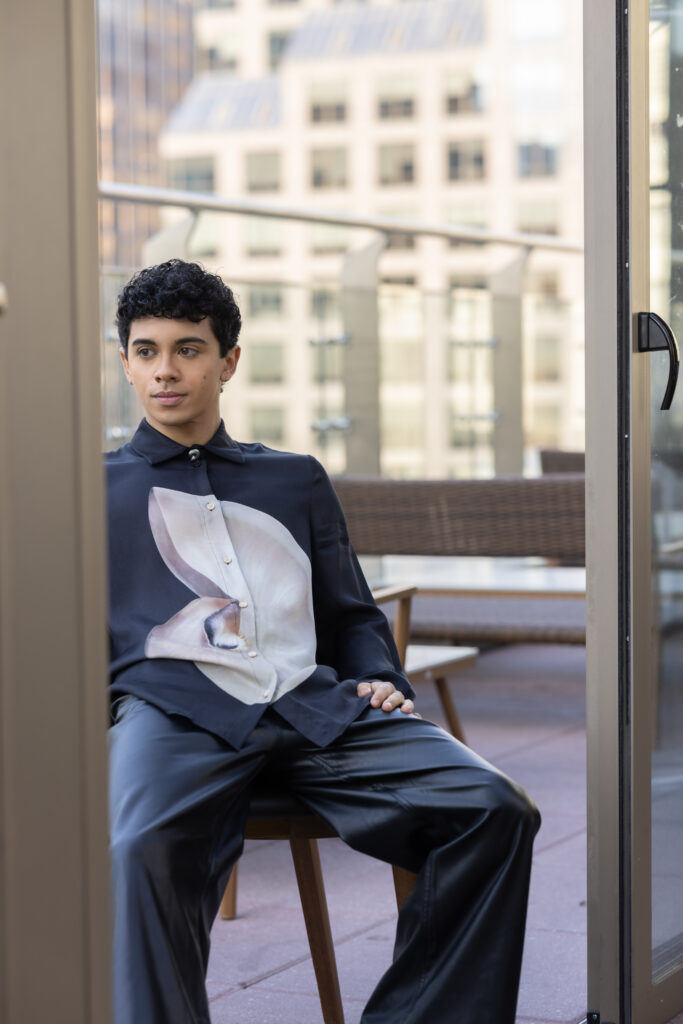
His reflections on the entertainment industry suggest a similar understanding of the emotional resilience required to sustain a career. Auditions, casting decisions, and professional opportunities inevitably introduce moments of disappointment, and Levy is candid about the fact that rejection does not necessarily become easier with experience. Greater responsibility can bring additional expectations, while the opinions of others can become increasingly difficult to separate from one’s own understanding of the work.
What has developed is the way he chooses to respond. Levy recognizes the futility of constantly measuring his progress against the careers of other performers, particularly when the person receiving an opportunity he wanted may also be someone he considers a friend. Rather than allowing professional disappointment to undermine those relationships, he tries to celebrate their achievements with the same enthusiasm he would hope to receive himself. It is a perspective rooted in generosity, but also in the understanding that another person’s success does not diminish the value of his own journey.
He is similarly thoughtful about the circumstances that have shaped his career. Although he recognizes the effort and preparation behind his accomplishments, Levy remains aware of the role timing and opportunity have played in bringing him into particular rooms. He does not dismiss the work required to earn those opportunities, nor does he pretend that determination alone can explain every professional outcome. His appreciation for the people and experiences that have helped him reflects a performer who understands that a career is rarely constructed in isolation.
Perhaps the most revealing part of Levy’s story emerges when he considers the person he was upon first arriving in New York. He believes his younger self would recognize the work ethic that continues to guide him, but he would also offer that young man an important piece of advice: no one will advocate for his ambitions more consistently than he must learn to do himself. There will always be people who are louder, more outgoing, or seemingly more comfortable occupying space. Their confidence, however, does not make his own ambitions any less worthy of pursuit.
It is a meaningful realization for someone who first found theater because being himself did not always come easily. The shy child who discovered friendship through performance eventually became a young professional determined to prove that he belonged. Now, with more experience behind him, Levy appears increasingly comfortable with the understanding that belonging does not require becoming the loudest person in the room. His work can speak with its own authority, while his personal life continues to develop beyond the expectations of his profession.
There is no suggestion that Levy has reached some final understanding of himself, and perhaps that is what makes his perspective so engaging. He remains ambitious, curious, and committed to the work, but he is also receptive to experiences that do not arrive with a clear set of instructions. The future, as he describes it, may include unfamiliar opportunities, unexpected challenges, and moments that require him to move beyond what feels comfortable. Rather than insisting on knowing precisely how those experiences will unfold, he is allowing himself to remain open to them.
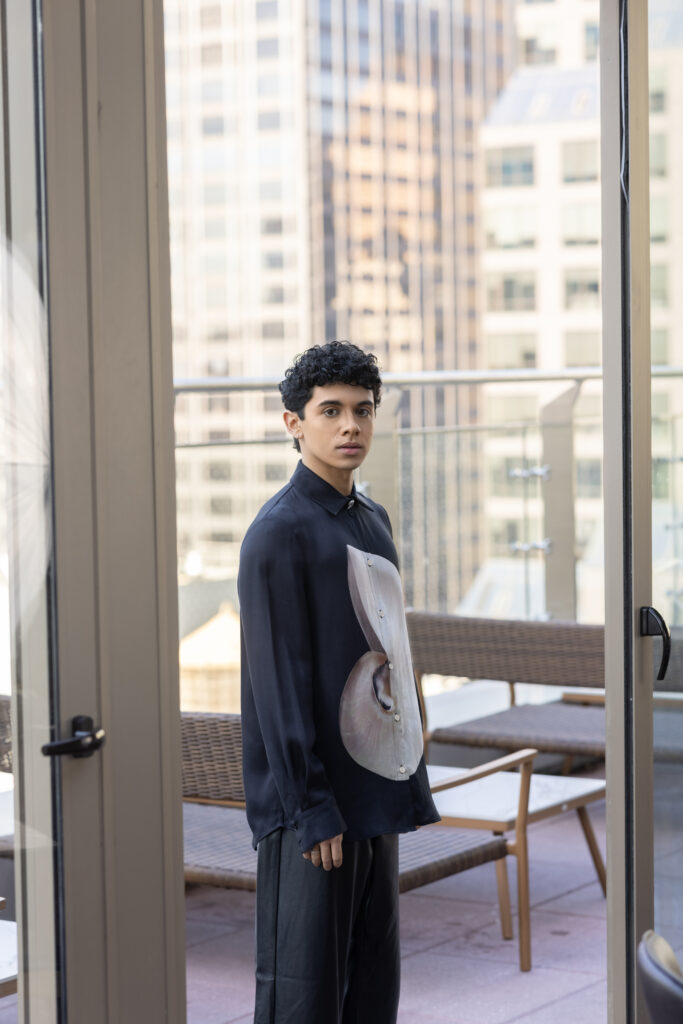
For a young man whose childhood imagination once carried him toward the bright lights of Broadway, there is something especially satisfying about seeing that ambition become part of his everyday life. The dream has not become less extraordinary simply because it now involves rehearsal schedules, long days, difficult decisions, and the ordinary responsibilities of being a working performer. Those experiences are part of what makes the opportunity real. Broadway remains a place of possibility for Levy, somewhere he can continue learning, contributing, and discovering what kind of artist he wants to become.
And perhaps that is the most meaningful part of Nathan Levy’s story at this moment. He is not standing at the end of a journey, looking back at everything he has accomplished. He is in the middle of it, surrounded by people he admires, doing work that challenges him, and learning to appreciate the experiences that come with it. There will be more auditions, more uncertainty, and, he hopes, more opportunities to step onto a stage and become someone else for a little while. But there is also the simple pleasure of recognizing where he is today. The shy child who once watched Broadway performers with wonder has become one of them, and the joy of being here is something he still has every reason to feel.
Photography By DaMarko GianCarlo @damarkogiancarlo
Words Kyra Greene @noteasybeingreen
Grooming Steven Harris @harristevenb
Wardrobe Aric L Johnson @aricljohnson
Produced by FSI Productions @firstsight.intl
Shot on Location Vaco Roofbar @vocoroofbar
Special Thanks Julia Rose

DaMarko GianCarlo
DaMarko GianCarlo is the founder and Editor-in-Chief of GREAY Magazine, an independent publication examining the people, ideas, and industries shaping contemporary pop culture. Working across editorial direction, photography, and production, he approaches publishing as both a creative practice and a system for documenting culture. His work reflects a commitment to original storytelling, independent journalism, and the human experiences behind the stories GREAY tells.
Related Posts
David Lim Creativity Has No Boundaries
David Lim from Actor to Jewelry Designer.

Daniella Pineda: Action, Advocacy, and Authenticity
Building Characters, Breaking Boundaries...
Cody Christian: From Small-Town Roots to Hollywood Stardom, A Journey of Resilience and Authenticity
No one puts Cody in a corner .

Camille Sullivan: Craft, Courage, and the Chaos Between Takes
Survivor’s Guilt, Found Footage, and Faith

The Industry Wants Symbols : Ludi Lin Keeps Choosing Humanity
Before the Fireball, There’s the Heart

Violet McGraw Is Learning That Becoming Yourself Is Not a Race
Growing with curiosity, kindness, and the freedom to remain herself
POST COMMENT